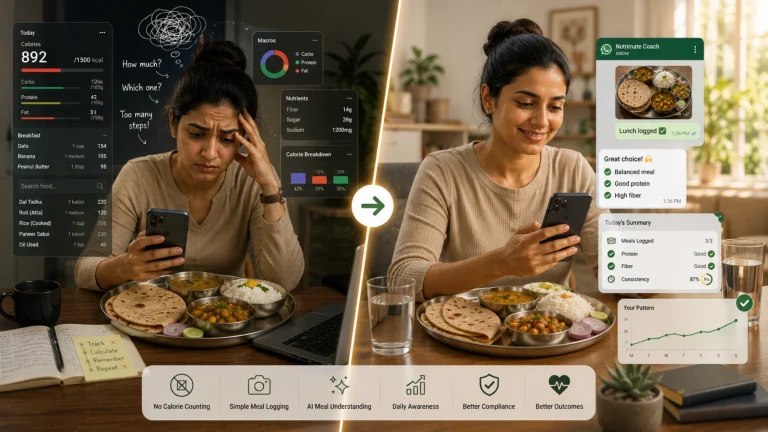
The Easiest Way to Track Your Meals Without Counting Calories
For many Indians trying to build a healthy lifestyle, one problem shows up quickly: You want to eat better.You want more awareness.You may even start strong. Then tracking begins to feel exhausting. Open app.Search food.Guess portion.Log ingredients.Repeat for roti, dal, sabzi, chai, snacks. By

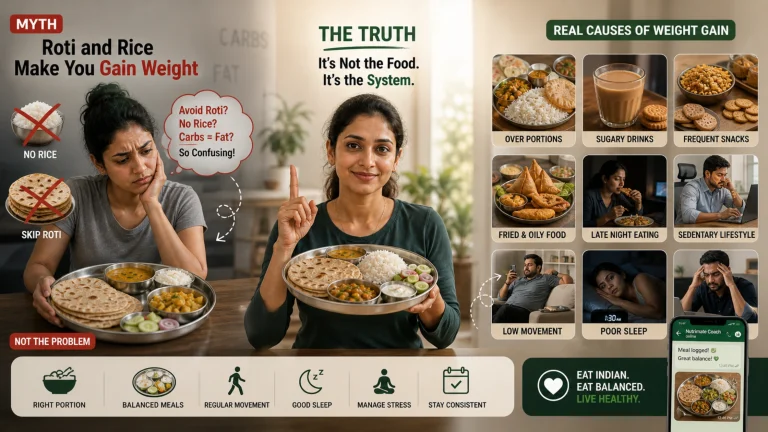
Roti and Rice Don’t Make You Gain Weight – Here’s What Does
For millions of Indians, the first step toward weight loss often looks familiar: Stop rice.Reduce roti.Avoid carbs.Switch to “diet food.” This belief has shaped countless meal choices across households, offices, gyms, and family conversations. But here is the reality: The roti rice weight gain
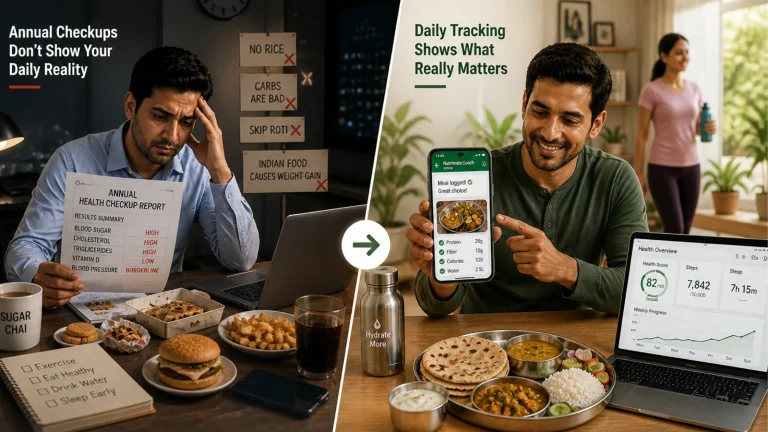
Why Preventive Health Fails Without Daily Tracking
For many people, preventive health monitoring tools sound like annual blood tests, health insurance checkups, or yearly wellness packages. Get tested.Review reports.Make small promises.Then move on. But this creates one of the biggest blind spots in modern preventive healthcare India. Because lifestyle diseases rarely
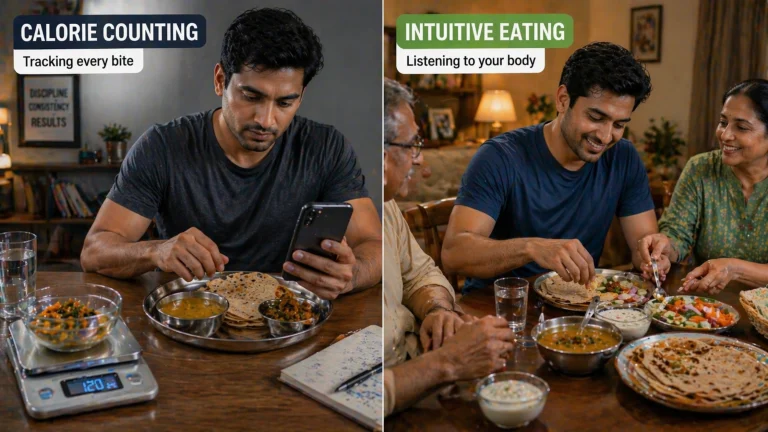
Calorie Counting vs Intuitive Eating — Which Works Better for Indians?
The calorie counting versus intuitive eating debate has a nuanced answer for Indian consumers specifically. Calorie counting — systematically tracking food intake against a numerical target — produces significantly better short-term weight loss outcomes in clinical trials: studies show 15 to 20% more weight
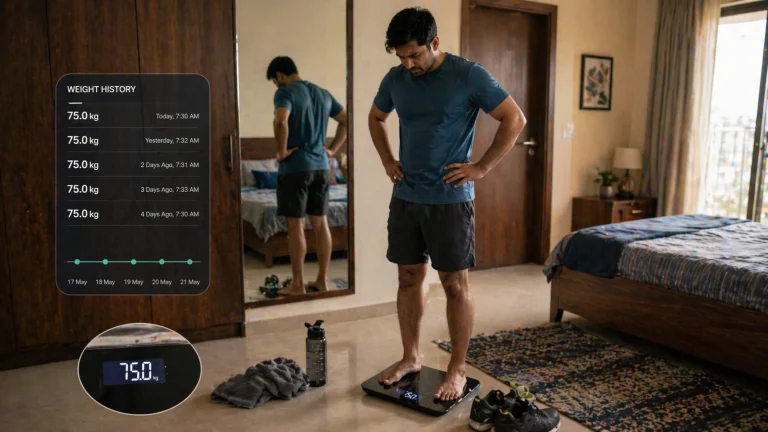
Weight Loss Plateau India — Why You Stopped Losing Weight and Exactly How to Break It
A weight loss plateau occurs when the body adapts to a reduced calorie intake and lower body weight by decreasing its total daily energy expenditure, making the same deficit that previously produced weight loss insufficient to continue losing weight. Research shows that metabolic adaptation
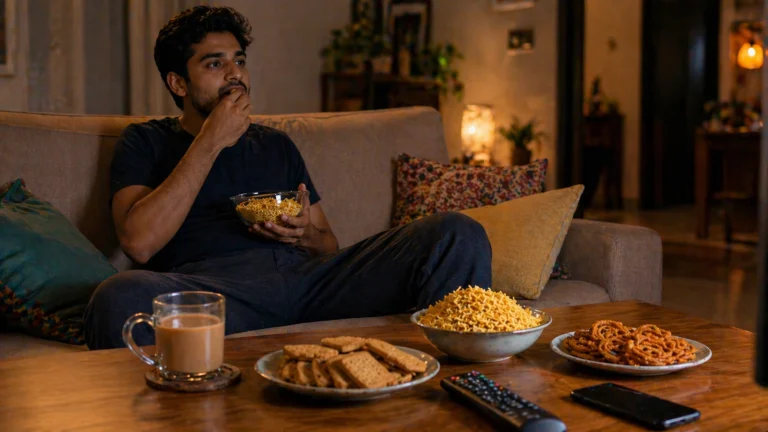
How Many Calories Are in Your Favourite Indian Snacks —Namkeen,Biscuits, and Chai
Indian snacks are responsible for 300 to 700 untracked calories per day in the average urban Indian diet. The most calorie-dense common Indian snacks are: Bhujia Sev at 550 calories per 100g, Mixture at 480 calories per 100g, Chakli at 510 calories per 100g,
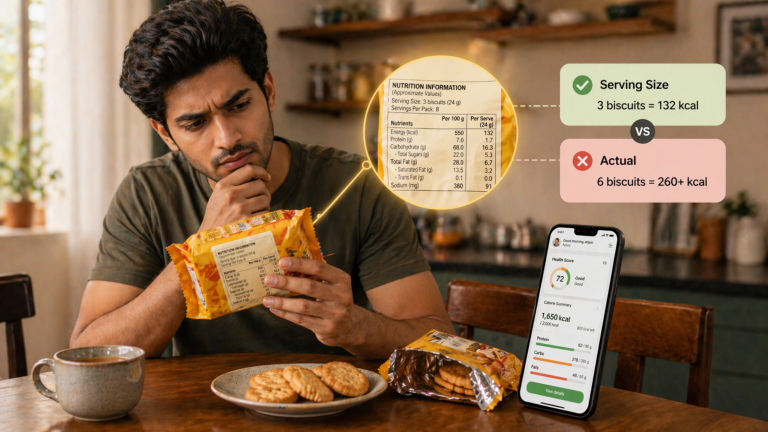
How to Read Indian Packaged Food Labels and Track Calories Accurately
Reading packaged food nutrition labels in India requires understanding FSSAI-mandated label formats, which display nutrients per 100g or per serving. Key fields are Total Energy in kcal, Total Fat, Saturated Fat, Trans Fat, Total Carbohydrate, Sugars, Protein, and Sodium. The serving size listed is
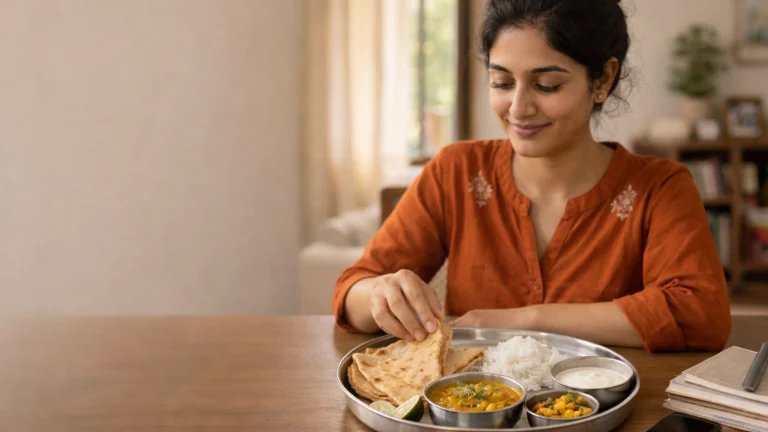
Indian Diet Without Dieting: A Sustainable Approach
For many people in India, the word “diet” immediately creates pressure. It feels restrictive. Temporary. Difficult to follow. You start by cutting things out—rice, roti, sweets, snacks. For a few days, it works. You feel in control. But slowly, the effort builds up. Cravings