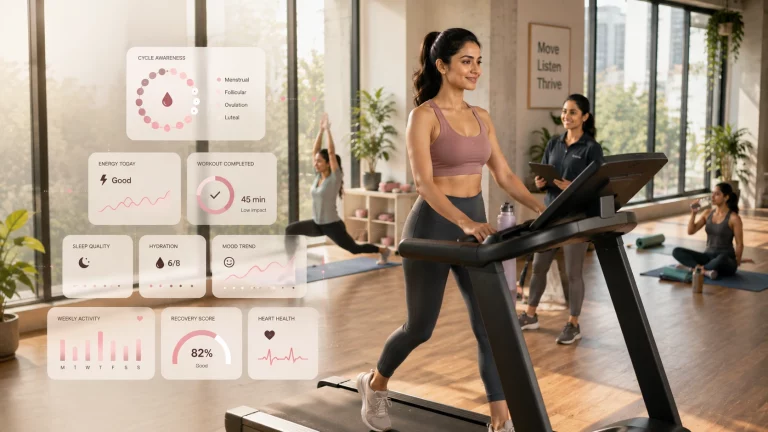
Exercise During Periods: What the Science Actually Says (No Myths)
Quick answer: Yes, exercising during your period is safe and often reduces cramps and improves mood. Listen to your body on heavy-flow days — lighter movement counts. As for “cycle syncing” workout plans: research shows hormonal phases have at most small, highly individual effects


Why Hormonal Awareness Will Become the New Fitness Trend
For years, women’s fitness has largely been measured by weight loss, calorie counting, and appearance. While these goals may matter to some people, they often overlook a much bigger picture. True wellbeing is influenced by everyday factors such as sleep, nutrition, stress, activity levels,

PCOS Diet: The Indian Food Guide, Backed by Actual Science
There is no magic PCOS food. What the evidence supports: a moderate calorie deficit if overweight (even 5% weight loss improves symptoms), low-glycemic-index carbs (whole grains, dals, millets instead of refined flour and sugar), adequate protein at every meal, and regular strength + cardio

Irregular Periods: What’s Actually Irregular, Why It Happens, and When to See a Doctor
Quick answer: Medically, a cycle is irregular when it falls outside 24–38 days, varies by more than about 7–9 days from cycle to cycle, or bleeding lasts beyond 8 days (FIGO definitions). Common causes include stress, significant weight change, over-exercise, PCOS and thyroid disorders.

Period Tracking: The Science-Backed Guide Every Indian Woman Should Read
Tracking your period means recording the start and end dates of each period, plus optional daily notes on flow, symptoms and mood. Doctors consider the menstrual cycle a “fifth vital sign” — like pulse or blood pressure — because changes in it often signal