 Pradnya Ganorkar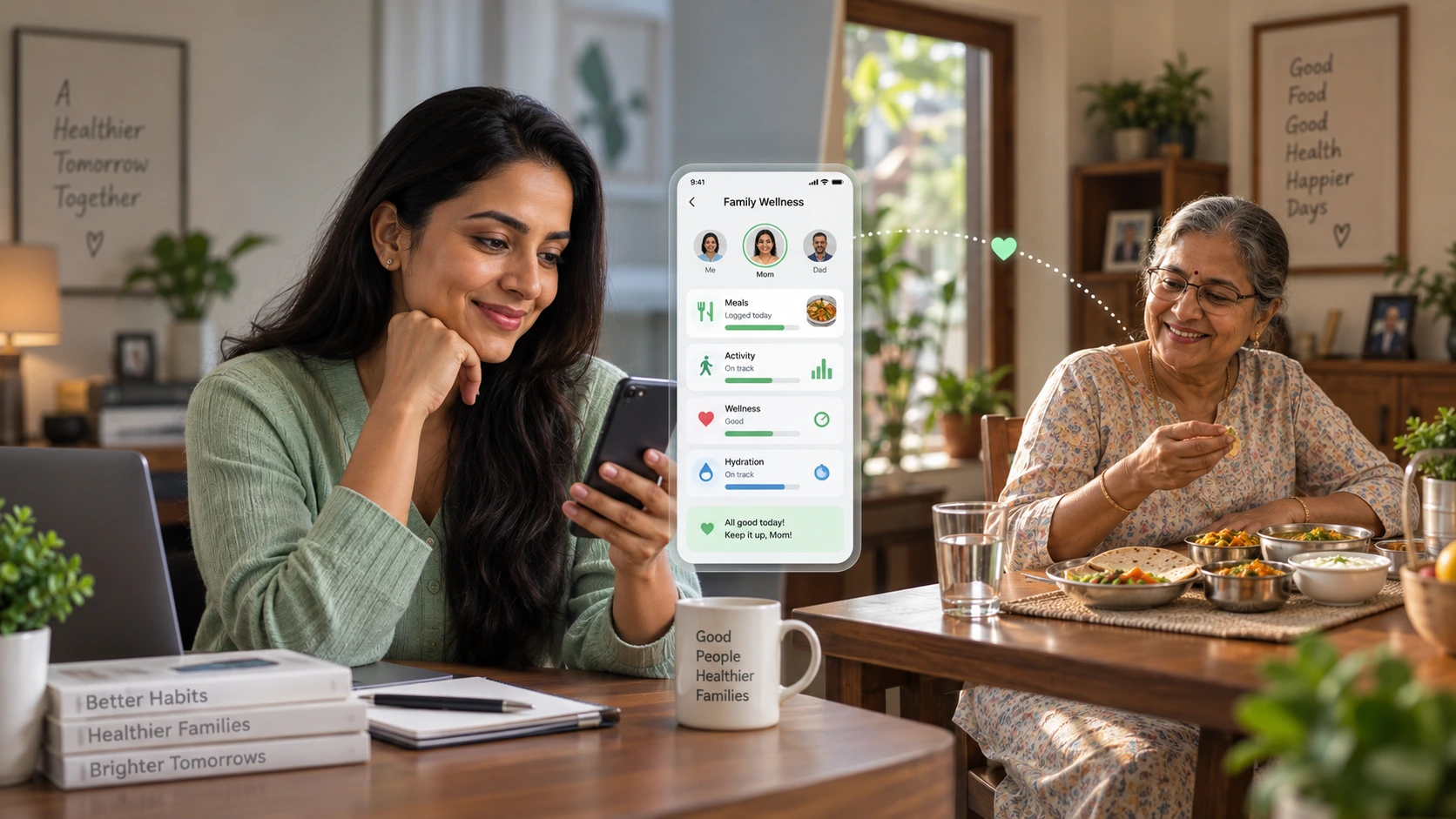
Caregiving in India is changing. Families are living across different cities, working longer hours and managing increasingly complex health needs, while ageing parents may still prefer familiar routines over complicated technology. In this environment, a family health tracking app can become more than another health tool. It can help families maintain everyday awareness without turning caregiving into a full-time administrative task.
The need is becoming more relevant as India’s population ages. UNFPA’s India Ageing Report 2023 projects that people aged 60 and above could account for more than 20% of India’s population by 2050.
This does not mean every family needs sophisticated monitoring. It means families need simpler ways to stay connected to family health, particularly around nutrition, routines and parents health, while respecting independence.
People searching for a family health tracking app are usually trying to solve a practical family problem.
They may want to understand:
- How can I support ageing parents while living in another city?
- How can I make health tracking for parents less intrusive?
- Can technology help a caregiver stay informed?
- How can families maintain better nutrition and everyday health habits?
- Can meal tracking help with conditions such as diabetes?
- What should families prepare for as parents grow older?
The underlying intent is not necessarily medical monitoring.
It is everyday awareness.
The most useful tools should help families notice patterns, communicate better and support healthier routines without replacing doctors or creating unnecessary anxiety.
Why India’s Ageing Population Is Changing the Caregiving Conversation
India’s ageing transition is changing what family caregiving looks like.
Traditionally, many Indian families could rely on relatives living in the same household or nearby. Today, children may work in Bengaluru while their parents live in Pune, Delhi, Mumbai or a smaller hometown.
The emotional connection remains strong, but physical proximity may not.
This creates a practical gap.
A daughter may speak to her parents every evening but still have little visibility into whether her father is eating regularly or whether her mother has maintained the habits recommended by her healthcare professional.
The challenge is even greater when several responsibilities overlap.
A working professional may be managing:
- Their own career
- Children’s routines
- Household responsibilities
- Their parents’ wellbeing
- Their own healthy lifestyle
This is why caregiving tools should focus on reducing effort.
WHO notes that India’s ageing population creates a need for integrated care approaches, coordination and long-term support designed around older people’s needs.
The opportunity is not to make families monitor everything.
It is to make the right information easier to share.
The Gap Between What Families Need and What Tools Currently Offer
Many health apps are designed around individual users.
That works when someone wants to track their own steps, weight, workouts or meals.
Family caregiving is different.
The person entering information may not be the person using it.
For example, an elderly parent may not want to learn a complex health application. A son or daughter may still need appropriate visibility into relevant routines.
This creates three common gaps.
1. Information is scattered
Meal information may be in WhatsApp conversations.
Medical reports may be stored in email.
Appointments may be written on paper.
Daily routines may exist only in someone’s memory.
The family has information, but not necessarily a simple way to understand it together.
2. Tracking becomes reactive
Families often pay attention when something goes wrong.
A better approach is everyday awareness.
If eating patterns become inconsistent over several weeks, noticing the change earlier may lead to a useful conversation with the parent or healthcare professional.
3. Caregiving can become repetitive
The same questions are asked repeatedly:
“Did you eat?”
“Did you take care of your diet?”
“Are you following your routine?”
These questions come from concern, but constant checking can become tiring for both sides.
Better tools should reduce this friction while preserving dignity and independence.
What Better Caregiving Tools Will Look Like
The next generation of family health tools should be built around simplicity rather than surveillance.
Shared visibility
A family member should be able to see relevant information without needing to control every part of another person’s health routine.
Multiple profiles
A household may need to support two parents with different needs.
A useful family health tracking app should therefore accommodate multiple people rather than assuming one account equals one user.
Simple nutrition tracking
Food is one of the most practical areas for everyday support.
Indian meals can include roti, rice, dal, vegetables, curd, poha, dosa, snacks and regional preparations. Tracking should fit those habits rather than forcing families into complicated food-entry processes.
This becomes particularly useful for healthy Indian eating habits and situations where a healthcare professional has recommended paying closer attention to diet.
For example, diabetes diet tracking india should not mean replacing clinical care with an app. It can simply help families maintain better awareness of meals and routines alongside professional guidance.
Reminders without overload
A useful tool should help people remember relevant tasks without producing notification fatigue.
The goal is fewer things for the family to remember manually.
Privacy and control
Family health information is sensitive.
A caregiver should have appropriate access, while the individual being supported should retain dignity and control over their information.
That balance will become increasingly important as digital health becomes part of everyday family life.
The Role of AI in Supporting (Not Replacing) Family Involvement
AI can be useful in caregiving when it reduces routine effort.
It can help organise information, identify patterns and make everyday tracking easier.
For example, instead of requiring an older parent to navigate multiple screens, conversational meal logging can make recording food more familiar.
This is particularly relevant in India, where WhatsApp is already deeply integrated into everyday communication.
Nutrimate’s approach is built around this principle. Its Indian-first, AI-powered platform uses WhatsApp-first meal logging to make everyday nutrition tracking simpler, while family-oriented functionality can help connect individual health routines with caregiver visibility.
The positioning is not about replacing family involvement.
It is about making that involvement easier.
Nutrimate’s India’s #1 whatsapp meal logging feature and Unique Caregiver feature reflects this broader direction: use familiar communication and simple tracking to support families without making health management feel like another complicated application.
AI can also help surface patterns, but it should not be treated as a diagnostic system.
If a family notices a concerning change in appetite, weight, symptoms or behaviour, the appropriate next step remains communication with a qualified healthcare professional.
Technology can help families notice.
People still make the important decisions.
Preparing Your Family for the Next Decade of Caregiving
Preparing for caregiving does not mean assuming that parents will become dependent.
It means creating systems before they become urgently necessary.
A simple family approach can begin with four areas.
1. Build everyday health awareness
Encourage manageable routines around food, physical activity, sleep and other relevant health habits.
The aim is consistency rather than perfection.
2. Make important information accessible
Families should know where essential health information is stored and who needs access to it.
Scattered information becomes especially difficult during emergencies or when multiple family members are involved.
3. Make nutrition easier to discuss
Food can become a sensitive topic when parents feel that their children are constantly telling them what to eat.
Instead of imposing restrictive diets, focus on awareness and practical healthy eating.
This approach can also help address common concerns around why staying healthy is hard, especially when habits have developed over decades.
4. Respect independence
Good caregiving is not the same as controlling someone’s routine.
Technology should support older adults while allowing them to remain active participants in their own health decisions.
The best tools therefore create visibility without turning family members into supervisors.
A Future-Readiness Checklist for Families
Families can use a simple checklist to assess whether their current approach is ready for the future.
Communication
- Do family members know who is responsible for supporting parents when needed?
- Can important health information be accessed when necessary?
- Are family members communicating regularly?
Nutrition
- Can parents record meals without excessive effort?
- Is everyday Indian food understood?
- Can family members encourage sustainable health habits without making food restrictive?
Health awareness
- Are changes in routine noticed early?
- Is there a simple way to maintain relevant information?
- Can family members distinguish everyday tracking from situations requiring professional medical attention?
Caregiving
- Does the caregiver have appropriate visibility?
- Can more than one family member participate when necessary?
- Does the system reduce repeated manual checking?
Technology
- Is the tool simple enough for older adults?
- Does it fit naturally into existing communication habits?
- Does it reduce complexity rather than create another task?
- Are privacy and access appropriately controlled?
The future of family caregiving will not be defined by how much information families can collect.
It will be defined by how easily they can use the right information to support one another.
For Indian families, this means moving from occasional health conversations to simple everyday awareness. A meal logged today, a routine noticed over time, or a change discussed early can make family support more proactive without making it intrusive.
As India’s population ages, better caregiving will increasingly require a balance of human connection and practical digital tools.
The technology should remain in the background.
The family should remain at the centre.
Reference:
FAQs
India’s ageing population is increasing the importance of long-term family support, particularly as more families live across different cities and households become smaller. This creates a greater need for simple coordination, everyday health awareness and appropriate support for older family members.
Future caregiving tools are likely to focus on shared visibility, multiple profiles, simple nutrition tracking, reminders, privacy controls and easier communication between family members. The emphasis will be on reducing caregiving friction rather than replacing personal involvement.
Technology can help caregivers organise information, track relevant routines, maintain appropriate visibility and notice changes over time. AI can make everyday tracking easier, but technology should support family involvement and professional healthcare rather than replace either.
Read Nutrimate Wellness first on Google