 Pradnya Ganorkar
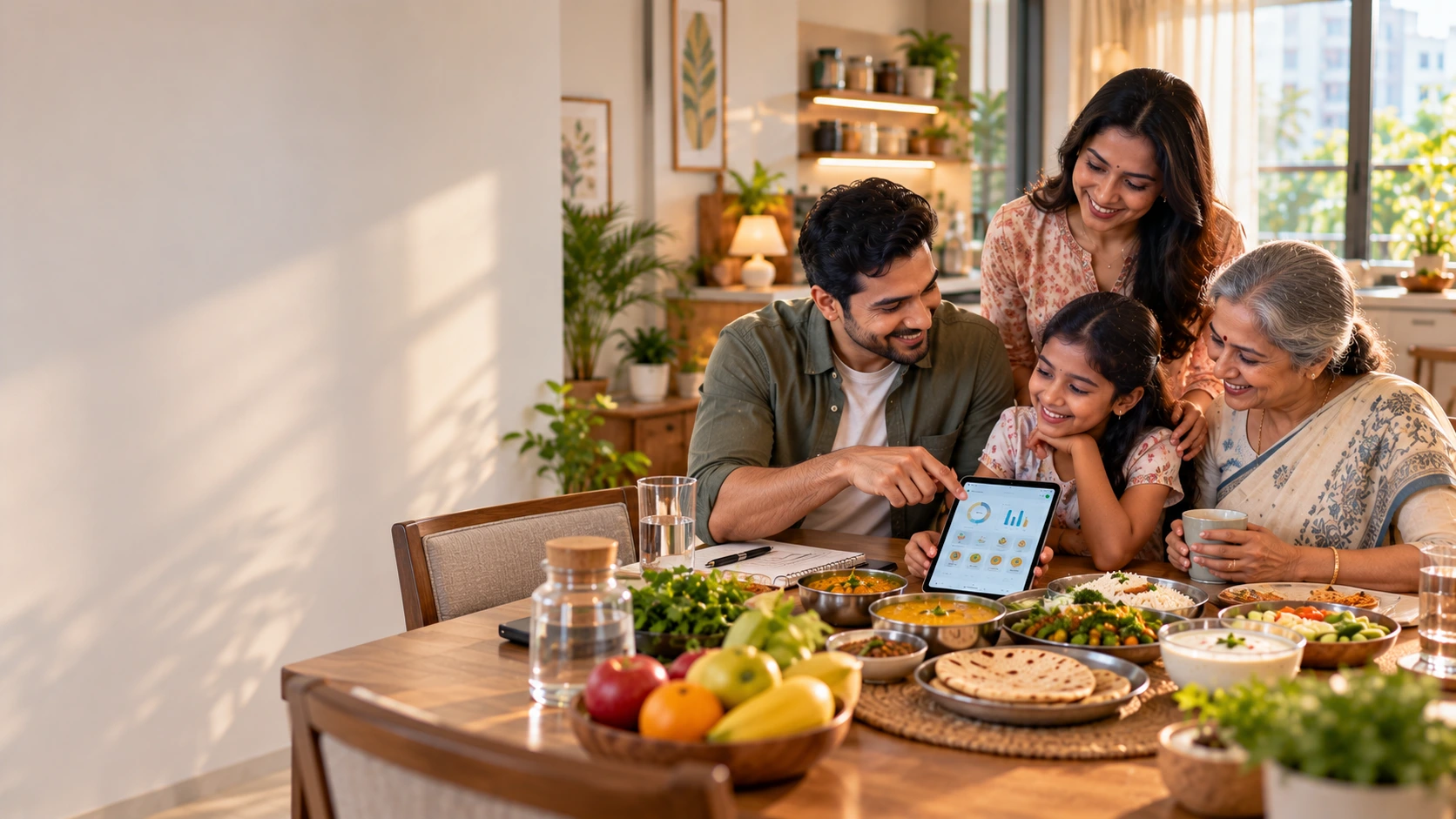
For many Indian households, family health is still managed reactively. A health problem appears, someone visits a doctor, medicines are started, and the family returns to its usual routine. The emerging model is different: use preventive health monitoring tools to understand everyday habits before they become bigger health concerns.
This shift is particularly relevant for families managing busy jobs, school schedules, ageing parents, changing diets, and limited time. A family health tracking app can make routine health awareness easier by bringing nutrition, activity, and habit information into one accessible place.
The goal is not to turn every family member into a health expert. It is to make small, useful health information easier to notice and act upon.
How Indian Family Health Management Is Changing
The traditional Indian family often has one person carrying much of the health-management burden. A parent may remember a child’s appointments, an older parent’s medicines, the family’s food preferences, and everyone’s daily routines.
That model becomes difficult when families are geographically separated or when both parents work full time.
At the same time, everyday risk factors are becoming more important. WHO identifies unhealthy diets and insufficient physical activity among the major behavioural risk factors associated with noncommunicable diseases.
This makes family health broader than medical appointments.
It includes questions such as:
- Are meals reasonably balanced?
- Are family members physically active?
- Are older parents maintaining regular routines?
- Are children developing healthy food habits?
- Are working adults regularly skipping meals?
- Is the family relying heavily on convenience foods?
For indian family wellness, the objective is not perfection. It is developing enough awareness to identify patterns early.
From Reactive to Proactive: The Shift in Family Health Thinking
Reactive healthcare asks, “What should we do after something goes wrong?”
Preventive health asks, “What can we understand and improve before the problem becomes serious?”
This does not mean families should diagnose themselves using apps. Screening, diagnosis and treatment still require appropriate healthcare professionals.
Instead, preventive thinking can focus on controllable daily behaviours.
For example, a family could establish a simple routine:
Track → Notice → Discuss → Improve → Reassess
A parent might notice that an older family member has become less active. A working professional might realise that lunch is frequently skipped. Parents might notice that children are consuming packaged snacks several times a day.
These observations do not provide a diagnosis. They provide an opportunity for a better conversation.
This is where preventive family health becomes practical. Instead of waiting for a major warning sign, families develop habits of awareness.
Technology That Makes Family Health Awareness Possible
Technology can reduce the effort required to maintain basic health awareness.
A useful digital wellness platform india should not force families to enter complicated information every day. The more effort required, the more likely people are to stop using it.
The most useful technology therefore focuses on simple actions:
- Logging meals
- Recording activity
- Reviewing health patterns
- Sharing relevant information with family members
- Maintaining consistent routines
- Identifying areas that may need professional attention
For parents managing multiple family members, health tracking for parents can be particularly useful when it improves visibility without creating another administrative burden.
Similarly, caregiver health tools india can help family members stay aware of everyday routines when they are supporting parents or relatives who live elsewhere.
The principle is simple: technology should reduce friction, not create another health task.
The Role of AI in Future Family Nutrition and Health Tracking
AI can make health information easier to interpret, particularly when people do not have formal nutrition knowledge.
Consider a normal Indian family meal: roti, dal, sabzi, curd and rice. A conventional tracking process may require someone to search for each food separately, estimate portions, and interpret the resulting numbers.
An AI-powered system can make the interaction simpler by helping recognise common foods and convert everyday meal information into understandable feedback.
This is particularly relevant to parent nutrition india and children nutrition india, where the priority is often understanding broad dietary patterns rather than obsessing over every calorie.
Nutrimate’s Indian-first approach is designed around this principle. Its AI-powered nutrition experience and WhatsApp-first meal logging reduce the effort involved in recording familiar Indian meals, including India’s #1 whatsapp meal logging feature and Unique Caregiver feature.
The important distinction is that AI should support awareness, not replace doctors, dietitians or other qualified professionals.
What Indian Families Will Expect From Health Technology in 2030
Future family health technology will likely be judged less by how many features it contains and more by how easily it fits into everyday life.
Indian families will increasingly expect health tools to understand their actual environment:
Indian food: Not just generic international food databases.
Family structures: Parents, children, grandparents and caregivers may all have different needs.
Busy routines: A working parent cannot spend an hour entering nutrition information every evening.
Simple communication: Health information needs to be understandable without specialist knowledge.
Continuity: Families should be able to see patterns over time rather than isolated daily numbers.
The idea behind the future family health india is therefore not simply more technology. It is lower friction.
A family photograph of a meal or a simple WhatsApp message can potentially become a practical starting point for nutrition awareness without requiring the user to understand nutritional databases or complex tracking systems.
This is where family health technology can become genuinely useful: it makes everyday information easier to capture and understand.
Building the Foundation Now for Long-Term Family Health
Future personalisation depends on having useful information about the past.
A family that starts recording basic health behaviours today can build a clearer picture of its routines over time.
That does not require expensive devices or complicated dashboards.
A simple foundation can include:
- Regular meal tracking
- Basic activity awareness
- Periodic health assessments
- Consistent sleep routines
- Awareness of food patterns
- Appropriate medical check-ups
For families with busy lifestyles in india, the system needs to be realistic.
Instead of tracking twenty different metrics, start with two or three behaviours that matter most.
For example:
Working parent: meal regularity + daily movement
Older parent: activity + relevant health measurements advised by their healthcare professional
Child: food variety + regular physical activity
Whole family: shared meal awareness + sleep routine
The goal is to create useful baseline information without making health management stressful.
The Everyday Prevention Framework for Indian Families
An effective family prevention system can be built around five simple areas.
1. Food awareness
Understand what the household actually eats rather than relying only on what the family intends to eat.
2. Protein and food variety
Include appropriate protein sources and a variety of vegetables, fruits, legumes, grains and other foods suited to individual requirements. WHO notes that healthy diets should be based on adequacy, balance, moderation and diversity, while recognising cultural and locally available foods.
3. Daily movement
Walking, household activity, exercise, sports and other forms of movement can all contribute to a more active routine.
4. Family visibility
Where appropriate and with consent, family members can support older parents or dependants by helping maintain awareness of important routines.
5. Periodic professional assessment
Technology should complement healthcare, not replace it. Persistent symptoms, abnormal measurements, or health concerns should be discussed with qualified healthcare professionals.
This framework supports sustainable health habits because it focuses on repeatable behaviour rather than temporary health challenges.
It also makes healthy lifestyle management more realistic for Indian families. The objective is not to eliminate every indulgence or follow a perfect diet. It is to make healthier everyday choices easier to recognise and repeat.
The future of digital family health will ultimately depend on a simple idea: better information should lead to better awareness, and better awareness should make healthier action easier.
Reference:
FAQs
AI-powered nutrition tracking with Indian food recognition, family health dashboards that surface risk early, and WhatsApp-integrated health guidance will make proactive family health management accessible to all Indian households.
Technology will reduce the friction of health awareness to near zero. A family photograph of their meal or a WhatsApp message will provide instant, accurate health feedback without requiring any health expertise from family members.
Start building health data now. Consistent meal logging, activity tracking, and periodic health assessments create the baseline data that makes future AI-powered health guidance personalised and effective.
Yes. The most impactful preventive health actions including regular meal tracking, adequate protein intake, daily physical activity, and consistent sleep are entirely free or very low cost. Technology makes monitoring these factors increasingly accessible.