 Pradnya Ganorkar
Most Indian families take nutrition seriously only after a health scare, such as a high sugar reading or a blood pressure diagnosis. By then, the goal shifts from staying healthy to managing a condition.
Preventive health monitoring tools help you move that conversation earlier. Paired with a simple family health tracking app and everyday habits, they show whether your family’s food is protecting you or quietly adding risk. This guide treats preventive family health as a smart, empowering investment and not a source of fear.
Why Indian Families Wait for Disease Before Thinking About Nutrition
Nothing hurts when a diet is slowly going wrong. High sugar, high blood pressure and rising cholesterol usually give no warning, so food feels like a non-issue until a report says otherwise.
Three habits keep families in reactive mode:
- Busy schedules. With busy lifestyles in india, meals become whatever is quick.
- Confusing advice. Every WhatsApp forward says something different about roti, rice or ghee.
- Cost thinking. People spend on treatment without noticing that prevention is cheaper.
Myth: “Indian food causes lifestyle disease.”
Reality: the pattern matters more than the cuisine. The roti rice weight gain myth ignores portion size, protein and fibre. Is Indian food healthy? Yes, when the plate is balanced and the snacks are controlled.
The Link Between Daily Food Choices and India Biggest Health Threats
The scale of the problem is clear. The ICMR-INDIAB national study in The Lancet Diabetes & Endocrinology reported diabetes prevalence of 11.4% and prediabetes of 15.3%. Hypertension stood at 35.5%, generalised obesity at 28.6% and abdominal obesity at 39.5%.
Daily food choices feed these numbers in ordinary ways:
- Refined carbohydrates dominate many plates, while the protein in average indian meal is often low.
- Salt adds up through pickles, papad and packaged snacks.
- Fried tea-time snacks arrive daily, not occasionally.
Take snacks. Namkeen calories are easy to underestimate. 100 gm namkeen calories commonly land around 500 or more depending on the mix, so even 1 katori namkeen calories can reach 150 to 200. Check the label, because the number is the useful part.
Foods That Lower Lifestyle Disease Risk in Indian Families
You do not need imported superfoods. Everyday Indian kitchens already hold the most evidence-supported options for lifestyle disease prevention india.
- Turmeric and ginger: in dal, sabzi and chai, for their anti-inflammatory properties.
- Green leafy vegetables: palak, methi and sarson add fibre and micronutrients.
- Legumes: dal, rajma and chana support blood sugar control and fullness.
- Millets: ragi, bajra and jowar are lower-glycaemic swaps for part of your rice or wheat.
- Curd: supports gut health and adds protein.
- Nuts and seeds: a small handful supports heart health.
For protein for indian vegetarians, combine dal with rice or roti, add curd, paneer or sprouts, and include a legume at more than one meal. The ICMR-NIN Dietary Guidelines for Indians also stress variety, more vegetables and legumes, less salt, fat and sugar, and regular physical activity.
The Prevention Advantage: Why Starting Early Matters
Prevention works like a savings account. Small deposits in your late 20s and 30s compound into lower risk in your 50s and 60s. It is also cheaper than years of medicines, tests and hospital visits.
There is no need to wait for perfect timing. Improvements at any age help, but earlier changes give the body more time to benefit.
This is also why why diets fail long term is worth understanding. Crash plans are strict, unfamiliar and hard to keep. Sustainable health habits are small, Indian and repeatable, like adding a vegetable to lunch or swapping one fried snack a day. That is how to stay healthy without dieting.
For parents aged 35 to 55, the timing is ideal. You are close enough to feel the risk and early enough to change it.
Building a Family Nutrition Culture Around Prevention
Children copy what they see on the table. A family culture of prevention is more effective than any single rule.
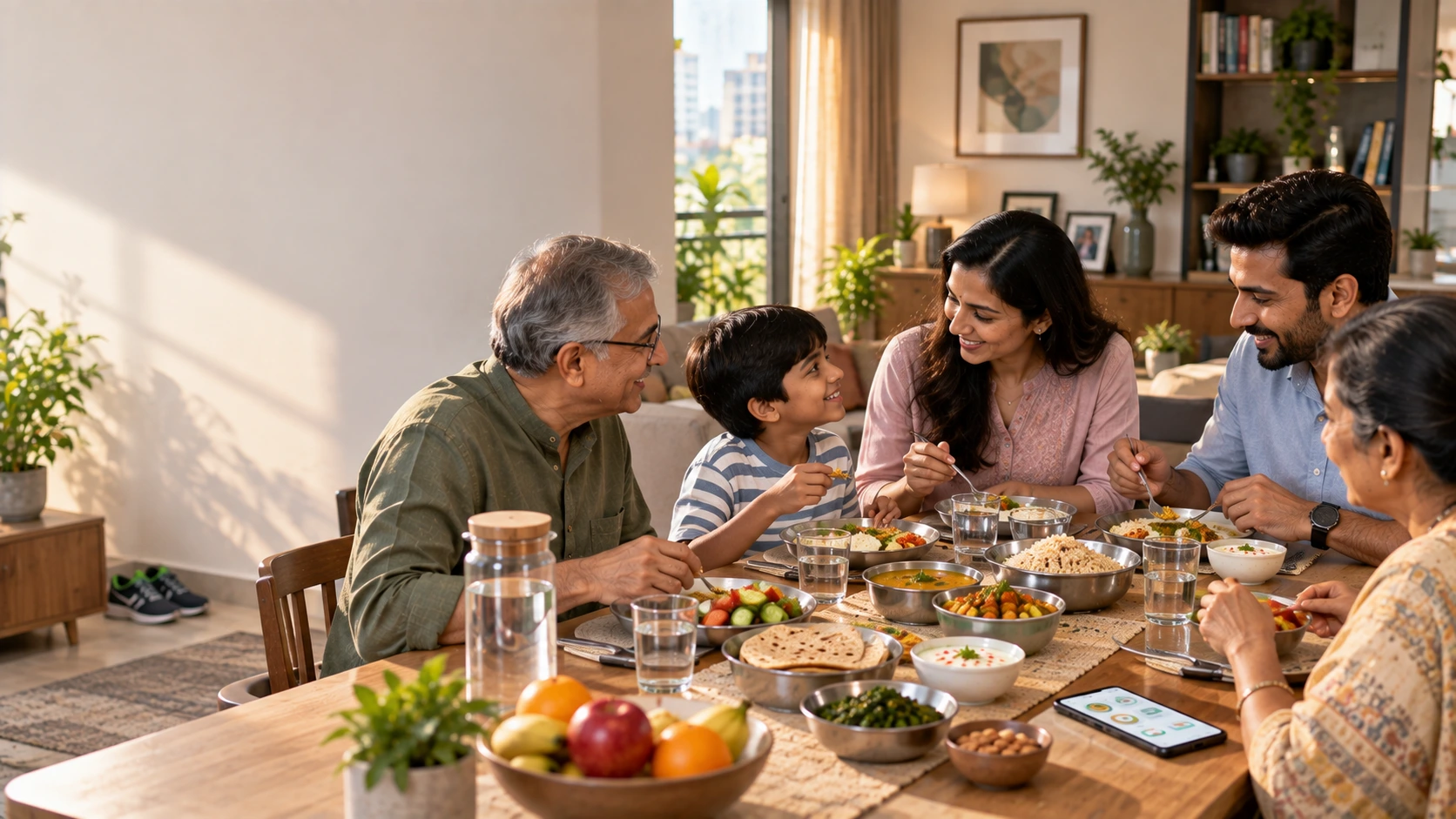
- Eat one meal together daily without screens and talk about what is on the plate.
- Build a balanced plate: half vegetables, a quarter protein, a quarter grains.
- Keep healthy options visible, such as roasted chana, fruit and curd.
- Make treats occasional, not forbidden. Restriction backfires.
- Involve children, since children nutrition india improves when kids help choose and cook.
For older relatives, parent nutrition india needs a gentle approach. Focus on adding foods, like more dal or vegetables, not removing favourites. This also supports stress free living, because nobody feels policed at mealtime.
Families who cook for several generations can use caregiver health tools india to keep everyone in view without constant reminders. That is the heart of indian family wellness.
How Tracking Supports Preventive Nutrition in Practice
Guessing is unreliable. Most families believe they eat well and only discover gaps once they look at real data.
Tracking for two to four weeks shows patterns: low protein at breakfast, few vegetables at dinner, heavy snacking on weekdays. This is where preventive health monitoring tools help, because they show risks before a lab report does. It works best with food tracking without calorie counting, focusing on protein, fibre and variety instead of obsessing over numbers.
Nutrimate supports preventive nutrition through daily meal awareness and pattern recognition that spots dietary risks before they become health problems. India’s #1 whatsapp meal logging feature and Unique Caregiver feature let one person log meals in seconds while family members stay in the loop. That makes health tracking for parents realistic, even for busy households and for parents who are not comfortable with apps.
If you are choosing among meal tracker app options, look for simple meal tracking for indian food, WhatsApp convenience and family visibility. The best tool is the one your family uses daily.
The Preventive Nutrition Checklist for Indian Families
Use this weekly:
- Include a green leafy vegetable at least four days a week.
- Have dal or another legume at least once daily.
- Swap part of your rice or wheat for millets a few times a week.
- Add curd and a small handful of nuts or seeds daily.
- Keep fried snacks, sweets and packaged foods occasional.
- Limit added salt and read labels on packaged foods.
- Walk or move for 30 to 45 minutes on most days.
- Track meals for two to four weeks, then review protein, fibre and vegetables.
- Involve every age group in planning meals.
- Book routine health check-ups after 30 for family members.
FAQs
Preventive nutrition involves choosing foods and eating patterns that reduce the risk of developing lifestyle diseases including diabetes, hypertension, and cardiovascular disease before symptoms appear.
Turmeric, ginger, green leafy vegetables, legumes, millets, curd, nuts, and seeds are among the most evidence-supported preventive foods in Indian cooking based on anti-inflammatory, blood sugar regulating, and cardiovascular protective properties.
Tracking dietary patterns for two to four weeks using a validated Indian food database reveals whether the family is consistently meeting protein, fibre, and micronutrient targets associated with reduced disease risk.
Preventive nutrition is most effective when started before symptoms appear, ideally in the late 20s or 30s. However, dietary improvements at any age produce measurable health benefits.