 Pradnya Ganorkar
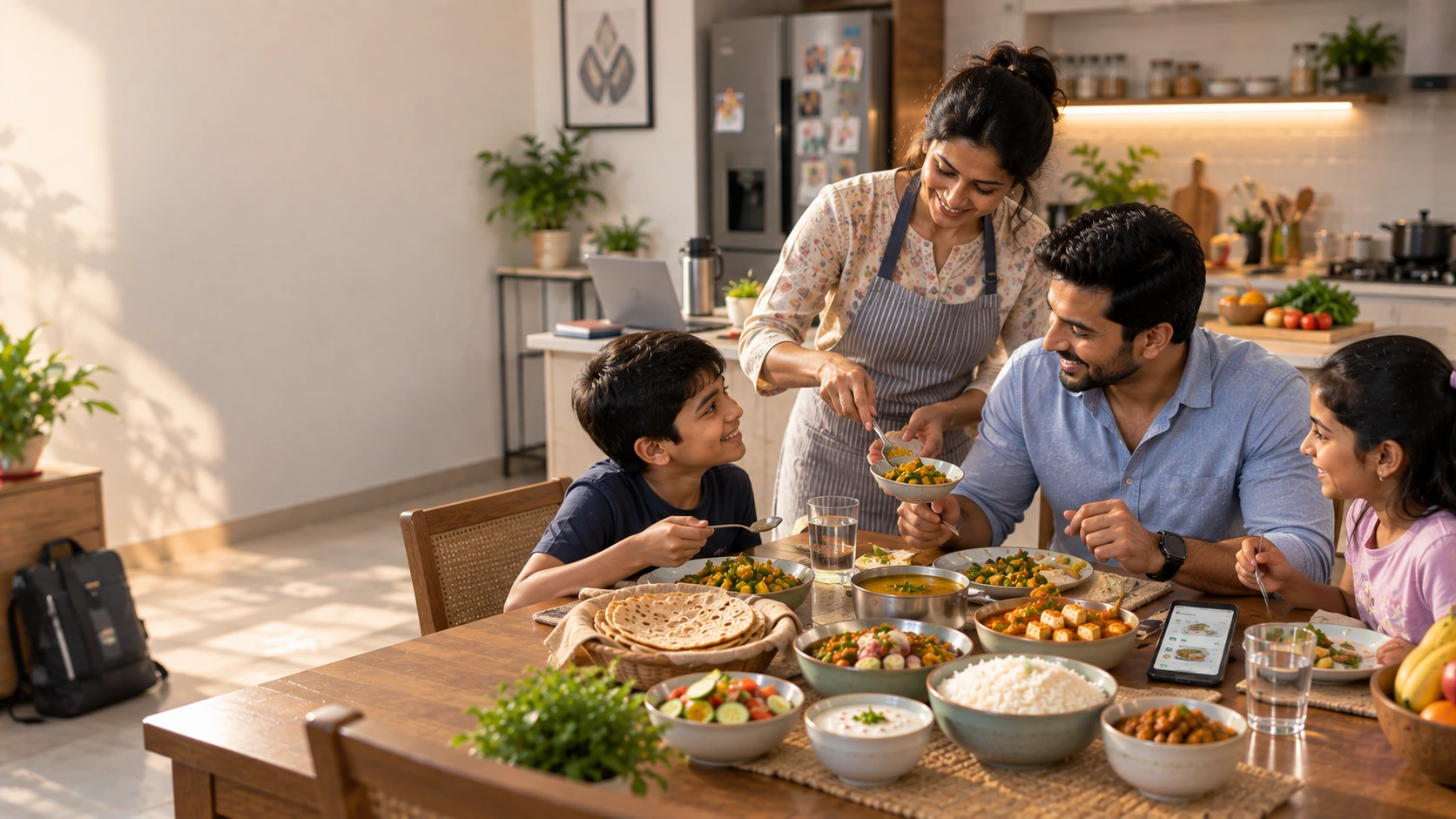
For working parents, family nutrition can become another responsibility competing with deadlines, school schedules, commuting and household tasks. The goal is not to create a perfect diet. It is to build a manageable system for health tracking for parents, family health tracking app use, and everyday family health that works even during busy weeks.
Indian families already have practical nutritious options. Dal, rice, vegetables, curd, eggs, paneer, poha and rajma can form balanced meals without expensive ingredients or complicated recipes. The real challenge is consistency.
The Double Burden of Working Parents: Career and Family Nutrition
Working parents often carry the mental responsibility of deciding what everyone will eat, when meals will happen and whether children are eating adequately.
This makes parent nutrition india less about knowing what is healthy and more about making healthy choices possible when energy and time are limited.
A common pattern is skipping breakfast, ordering food after a long workday, relying on packaged snacks or preparing separate meals for different family members. None of these choices necessarily indicate poor parenting. They often reflect a system that demands too many decisions.
A better approach is to create defaults.
For example:
- Breakfast: poha with peanuts and vegetables
- Lunch: dal, rice and sabzi
- Dinner: egg curry with roti
- Alternative: khichdi with curd
These choices reduce decision fatigue while supporting a healthy lifestyle.
For working parents, consistency is more useful than an ambitious meal plan that becomes impossible to maintain after a stressful week.
Why Family Meals in India Are Getting Less Nutritious Without Anyone Noticing
Nutrition gaps do not always come from obviously unhealthy foods. They can develop gradually when convenient choices replace balanced meals.
A busy weekday might look like tea and biscuits in the morning, a quick lunch between meetings, packaged snacks in the evening and a late dinner. Each individual decision may seem minor, but repeated patterns can affect family health over time.
This is why preventive family health should include awareness of everyday eating patterns, not only responses to illness.
Parents can start by asking:
- Are vegetables appearing regularly across the week?
- Does every main meal include a meaningful protein source?
- Are children getting regular meals rather than relying heavily on snacks?
- Are parents eating the same balanced food they expect their children to eat?
The objective is not to monitor every calorie. It is to identify obvious gaps and make one practical improvement at a time.
Quick and Nutritious Indian Meal Ideas for Busy Weekday Nights
A nutritious family dinner does not need to take an hour.
Several familiar Indian meals can be prepared in under 30 minutes when ingredients and basic preparation are planned in advance.
Dal rice with vegetables
Dal provides protein and rice provides carbohydrates, while a vegetable adds fibre and micronutrients. This is a practical foundation for healthy Indian eating habits.
Khichdi with curd
Khichdi is particularly useful on exhausting days because it combines staple ingredients into one simple meal. Adding curd provides another protein-containing food.
Poha with peanuts and vegetables
Poha becomes more substantial when combined with peanuts and vegetables. It can work as a quick breakfast or light meal.
Egg curry with roti
For families that eat eggs, egg curry with roti provides a convenient protein-focused meal without requiring complicated preparation.
Rajma rice
Rajma and rice are familiar, affordable and practical for family meals. A vegetable or salad can complete the meal.
The broader principle is simple: Indian food and health do not need to be separated from convenience. Familiar food can remain at the centre of a sustainable family routine.
Weekend Meal Preparation That Makes the Whole Week Easier
Weekend preparation should reduce weekday work, not turn Sunday into another full-time cooking shift.
A practical system is to prepare components rather than complete every meal.
For example:
- Cook or soak legumes in advance.
- Prepare a basic vegetable or curry base.
- Keep chopped vegetables ready.
- Boil eggs for quick meals if appropriate for the family.
- Portion nuts or other convenient snacks.
- Keep curd and other staple foods available.
This approach creates flexibility.
Parents can combine prepared ingredients differently throughout the week rather than eating identical meals every day.
For busy lifestyles in india, this kind of preparation can be more sustainable than following a highly restrictive meal schedule.
The goal is to make the healthier option the easier option when everyone is tired.
How to Teach Children Good Nutrition Habits Without Making It a Lesson
Children learn from repeated exposure and family behaviour. Nutrition does not need to become a daily lecture.
Instead of labelling foods as “good” or “bad”, parents can talk about variety, energy, growth and enjoyment.
Simple habits include:
- Offering vegetables alongside familiar foods.
- Including dal, paneer, eggs, curd or legumes regularly.
- Eating family meals when schedules allow.
- Allowing children to participate in simple food preparation.
- Avoiding unnecessary pressure to finish everything on the plate.
This supports children nutrition india in a practical way.
Parents should also remember that children do not need an adult-style diet. Their nutritional requirements vary by age, growth and individual circumstances.
The most useful lesson is often what children observe. If parents regularly eat balanced meals, include different foods and treat eating as a normal part of family life, healthy behaviour becomes less of a rule and more of a routine.
Managing Your Own Nutrition When Your Energy Goes to the Family
Parents frequently prioritise everyone else’s needs first.
Breakfast gets skipped because the school bus is arriving. Lunch is delayed because of meetings. Dinner is whatever remains after the children have eaten.
Over time, this can make working parent health an afterthought.
A sustainable approach starts with one rule: parents need a reliable meal structure too.
For example:
Breakfast: Include a protein-containing food such as curd, eggs, paneer or dal-based preparations.
Lunch: Build around a staple carbohydrate, protein source and vegetable.
Evening: Keep a planned snack available instead of waiting until extreme hunger develops.
Dinner: Eat a normal family meal rather than preparing a separate restrictive diet.
This is consistent with the broader principle of how to stay healthy without dieting. Healthy eating does not require eliminating familiar foods. It requires creating patterns that can be repeated.
For parents working towards Weight loss, muscle gain or fat loss, the same foundation applies. Portion sizes, protein intake, overall food quality and activity can be adjusted according to the individual’s goal.
Using Meal Tracking to Identify Family Nutrition Gaps Without Creating Stress
Meal tracking can be useful when it answers a specific question.
It does not need to become another demanding task on a parent’s schedule.
A family can begin with meal tracking for two or three days each week. The purpose is to identify patterns such as:
- Low protein intake
- Frequent skipped meals
- Heavy reliance on packaged snacks
- Limited vegetable variety
- Irregular meal timing
This makes easy way to track meals more useful than attempting to record every detail perfectly.
For families already struggling with time, a simple meal tracker app can reduce the friction involved in recording meals. Nutrimate uses a WhatsApp-first approach so parents can log meals without adding another complicated routine to their day.
The value of technology here is not the technology itself. It is the reduction of effort required to build awareness.
A family-level system can also support health tracking for parents while helping parents understand patterns across household nutrition. Nutrimate’s family tracking feature allows multiple family members to be tracked through one WhatsApp interface, making everyday awareness easier to maintain.
The phrase India’s #1 whatsapp meal logging feature and Unique Caregiver feature can be relevant in this context because the underlying need is simple: health tracking should fit into family life rather than create another burden.
For parents, the best system is therefore not the one with the most data. It is the one they can actually continue using.
References:
FAQs
The most effective approach combines simple meal prepping on weekends, default healthy weekday meals that require minimal decision-making, and awareness tracking that identifies gaps without creating additional burden.
Dal rice with a vegetable, khichdi with curd, poha with peanuts and vegetables, egg curry with roti, and rajma rice are all nutritionally complete meals that take under 30 minutes to prepare.
Include one concentrated protein source at every meal: dal, paneer, eggs, curd, or legumes. Track children intake for a week using a family health app to establish baseline awareness.
Yes. Simple meal tracking for even three days per week creates enough awareness to identify the specific gaps and habits most in need of change, without requiring obsessive daily monitoring.