 Pradnya Ganorkar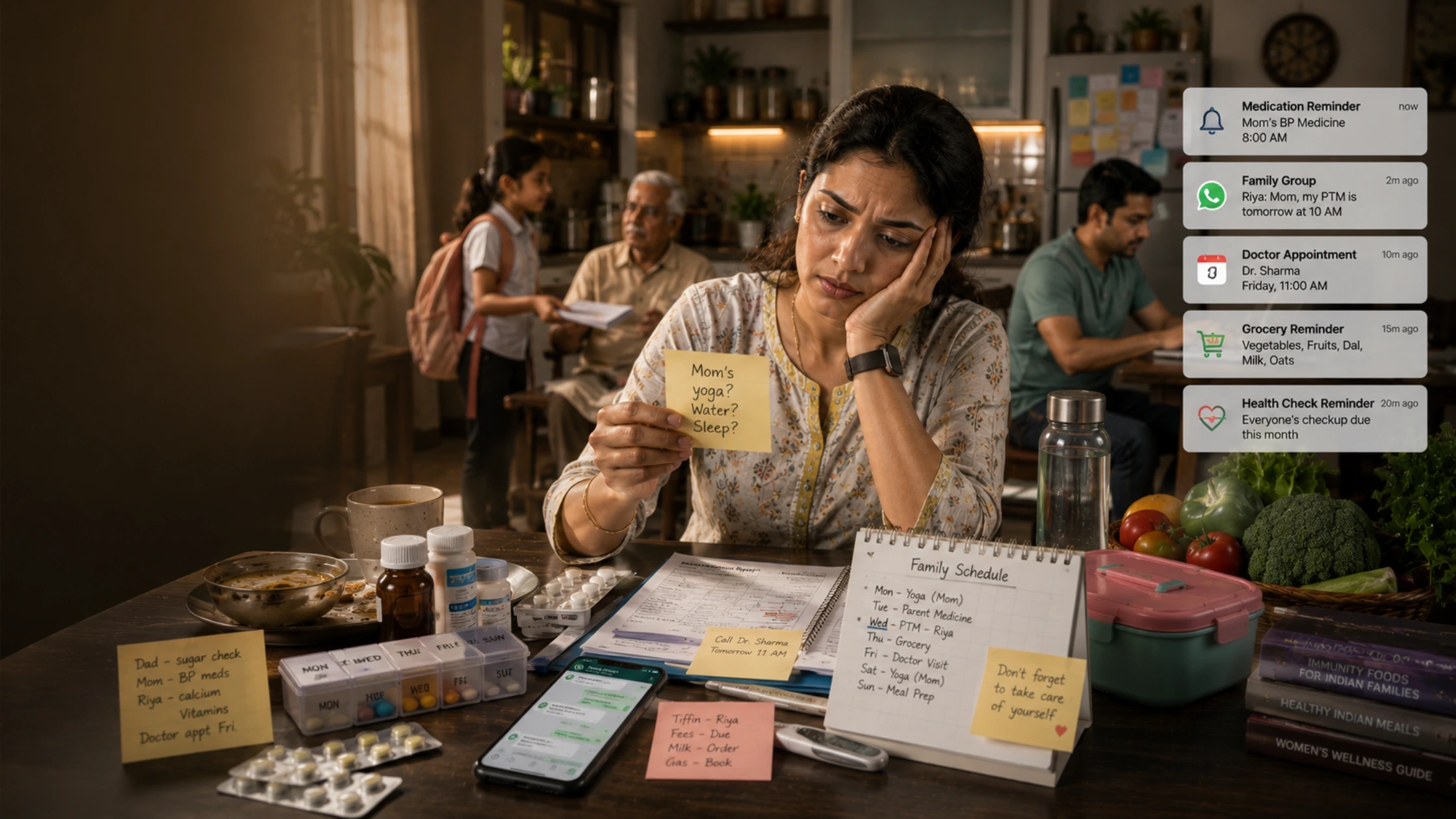
In many Indian homes, one person quietly becomes the center of the family’s health system.
She remembers:
- doctor appointments
- medicine timings
- grocery planning
- lunch preparation
- school nutrition
- parents’ dietary restrictions
- health checkups
- everyone’s routines
But often ignores her own.
This is one of the most overlooked realities in Indian moms health management.
Many Indian mothers become the default health managers of the household without anyone formally recognizing the responsibility.
Over time, this creates:
- exhaustion
- emotional overload
- inconsistent self-care
- poor nutrition
- delayed medical attention
- chronic stress
This invisible burden affects:
- physical health
- emotional wellbeing
- energy levels
- hormonal balance
- long-term preventive health
especially among women balancing:
- parenting
- careers
- caregiving
- household planning
The challenge is not lack of awareness.
Most mothers understand:
- nutrition matters
- sleep matters
- stress affects health
- regular eating is important
The real problem is prioritization.
The “everyone first, me later” mindset becomes deeply normalized.
This is why conversations around:
- family health management India
- caregiver burnout India
- family preventive health India
- sustainable family systems
are becoming increasingly important.
Modern wellness support must move beyond generic advice and focus on reducing invisible mental load.
Nutrimate approaches this through simple, Indian-first wellness systems designed around real family behavior. Its India’s #1 whatsapp meal logging feature and Unique Caregiver feature help create shared visibility instead of placing all health responsibility on one person.
The “Everyone First, Me Later” Pattern
One of the most common patterns in Indian households is silent self-neglect.
Mothers often become experts at managing:
- everyone’s meals
- everyone’s appointments
- everyone’s medicines
- everyone’s routines
while postponing their own health needs repeatedly.
Why This Pattern Feels “Normal”
In many families, caregiving becomes culturally expected.
Women are often taught to:
- prioritize family comfort
- sacrifice personal routines
- stay emotionally available
- manage household stability
without complaint.
Over time, this becomes automatic behavior.
Health Becomes Reactive Instead of Preventive
Many women delay:
- health checkups
- blood tests
- proper meals
- exercise
- sleep recovery
until symptoms become difficult to ignore.
This contributes significantly to:
- fatigue
- nutrient deficiencies
- stress-related health problems
- burnout
The Mental Load Is Constant
The exhausting part is not only physical work.
It is continuous mental tracking.
Examples include:
- remembering medicine refills
- planning meals for diabetes
- tracking children’s eating
- managing elderly parents’ nutrition
- handling appointments
This invisible cognitive burden is one reason women caregiver stress India is rising.
Quick Summary
Many Indian mothers are not ignoring health intentionally. They are operating inside systems where self-care constantly moves lower on the priority list.
Why Mothers Become Family Health Anchors
Most families naturally depend on one person to organize wellness-related decisions.
In Indian homes, that person is often the mother.
Food Leadership Shapes Household Health
Mothers often control:
- grocery decisions
- meal preparation
- cooking frequency
- eating schedules
- snack availability
This means they indirectly influence:
- children’s eating patterns
- family nutrition quality
- long-term household habits
This is why family nutrition planning India plays such an important role in overall family wellbeing.
Emotional Responsibility Also Becomes Centralized
Many mothers become emotional caregivers too.
They manage:
- stress inside the home
- emotional conflicts
- routines during illness
- motivation for healthy behavior
while simultaneously managing practical tasks.
Indian Family Structures Increase Responsibility
Multi-generational households can increase complexity significantly.
Women may simultaneously care for:
- children
- spouse
- elderly parents
- in-laws
while also working professionally.
This creates overlapping caregiving layers rarely discussed openly.
Invisible Coordination Creates Exhaustion
Health management is not only about food.
It includes:
- scheduling
- remembering
- planning
- coordinating
- checking
- following up
every single day.
This contributes heavily to:
- caregiver burnout India
- emotional fatigue
- chronic stress
Practical Insight
The more centralized family health responsibility becomes, the greater the emotional and physical strain on one individual.
Hidden Risks of Ignoring Personal Health
Many mothers become highly efficient at supporting family health while slowly disconnecting from their own.
This creates long-term health risks that often remain invisible initially.
Common Signs Often Ignored
Examples include:
- constant fatigue
- headaches
- poor sleep
- irregular eating
- emotional irritability
- digestive issues
- low physical activity
- chronic stress
These symptoms are often normalized instead of addressed.
Preventive Health Gets Delayed
Many women postpone:
- health screenings
- nutrition support
- medical consultations
- fitness routines
because family needs feel more urgent.
Over years, this increases risk for:
- diabetes
- hypertension
- obesity
- hormonal imbalances
- cardiovascular problems
Emotional Burnout Affects Physical Health
Continuous caregiving stress can influence:
- cortisol levels
- sleep quality
- eating behavior
- emotional regulation
This is why family preventive health India must include caregivers too, not only dependents.
Self-Neglect Also Affects the Family
Ironically, when the primary caregiver becomes exhausted:
- routines break down
- emotional tension increases
- family health consistency suffers
The family system itself becomes less stable.
Myth vs Reality
| Myth | Reality |
| Good mothers always sacrifice their needs | Sustainable caregiving requires self-care |
| Ignoring fatigue is normal | Chronic exhaustion is a warning sign |
| Family health only means caring for others | Caregivers are part of family health too |
| Health can wait until things slow down | Delays often worsen long-term outcomes |
Household Nutrition Leadership
One of the most powerful yet under-recognized roles mothers play is nutrition leadership.
They shape everyday eating behavior for entire households.
Everyday Food Decisions Matter
Small daily choices influence:
- children’s habits
- family weight trends
- energy levels
- long-term metabolic health
Examples include:
- breakfast consistency
- snack availability
- oil usage
- sugar frequency
- eating timing
Indian Food Is Not the Problem
Many families assume:
- roti causes weight gain
- rice is unhealthy
- traditional foods are bad
But in reality, most problems come from:
- overeating
- inconsistent routines
- processed snacking
- low movement
- stress eating
not traditional meals alone.
This is important when discussing:
- Indian food and health
- healthy Indian eating habits
- sustainable eating behavior
Mothers Often Eat Last
A very common pattern in Indian households:
- mothers serve everyone first
- eat leftovers later
- skip proper portions
- eat hurriedly
This disrupts:
- hunger regulation
- energy balance
- meal quality
over time.
Nutrition Awareness Needs Shared Participation
Family health improves more sustainably when:
- responsibilities are distributed
- meal planning is shared
- children participate
- spouses contribute
instead of depending on one individual alone.
Quick Summary
Mothers often become the nutritional backbone of the family while silently compromising their own consistency and wellbeing.
Building Shared Responsibility
The solution is not perfection.
The solution is reducing invisible overload.
Family Health Should Become a Shared System
Modern households need:
- collaborative routines
- shared reminders
- visible tracking systems
- realistic habit structures
instead of depending entirely on memory.
Small Distribution Helps Significantly
Examples:
- children track water intake
- spouses handle medicine reminders
- grocery planning becomes collaborative
- appointments are shared digitally
Small changes reduce cognitive strain.
Visibility Improves Consistency
Many health responsibilities remain mentally stored inside one person’s head.
Simple systems improve visibility for everyone.
This is why:
- parents health tracking
- family dashboards
- low-effort wellness tracking
are becoming increasingly useful.
Technology Should Reduce Friction
The best health systems:
- simplify routines
- reduce memory burden
- improve awareness
- support consistency
without creating additional complexity.
Nutrimate’s Indian-first approach focuses on low-friction wellness visibility through WhatsApp-based tracking designed around real Indian household behavior.
Preventive Health Requires Sustainable Systems
Long-term family health improves when families focus on:
- repeatable habits
- visibility
- shared accountability
- practical routines
instead of extreme health plans.
Practical Framework for Families
| Area | Shared Responsibility Example |
| Meal planning | Weekly collaborative grocery planning |
| Medication reminders | Shared family reminders |
| Nutrition tracking | Simple meal visibility system |
| Exercise | Family walking routines |
| Checkups | Shared calendar management |
Do vs Don’t
| Do | Don’t |
| Share health responsibilities | Depend entirely on one caregiver |
| Build sustainable routines | Expect perfection daily |
| Prioritize preventive care | Ignore symptoms continuously |
| Use simple tracking systems | Rely only on memory |
| Normalize self-care | Treat self-neglect as sacrifice |
| Focus on consistency | Chase extreme health plans |
Content Direction
“Mothers optimize everyone’s meals, appointments, and habits, except themselves.”
This silent reality exists in millions of Indian households.
The issue is not lack of care.
It is invisible overload.
Most mothers are simultaneously managing:
- nutrition
- schedules
- emotional caregiving
- family routines
- preventive health tasks
often without structured support.
Over time, this creates:
- exhaustion
- inconsistent self-care
- emotional fatigue
- long-term health risks
The answer is not forcing perfection.
The answer is building systems that reduce mental burden.
Simple visibility tools, collaborative routines, and shared responsibility structures can improve:
- consistency
- awareness
- emotional balance
- sustainable family wellness
This is where modern Indian-first wellness systems are becoming valuable.
Tracking can create visibility for both family and self, instead of making one person silently responsible for everyone’s health.
FAQs
Many mothers prioritize family responsibilities over personal wellbeing due to caregiving expectations, household responsibilities, emotional labor, and time constraints. Over time, self-care often becomes deprioritized unintentionally.
Mothers can prioritize themselves by:
– creating shared household responsibility
– scheduling preventive health checkups
– maintaining consistent meals
– reducing invisible mental load
– using simple health tracking systems
– setting realistic daily routines instead of perfection-based goals
Read Nutrimate Wellness first on Google