 Pradnya Ganorkar
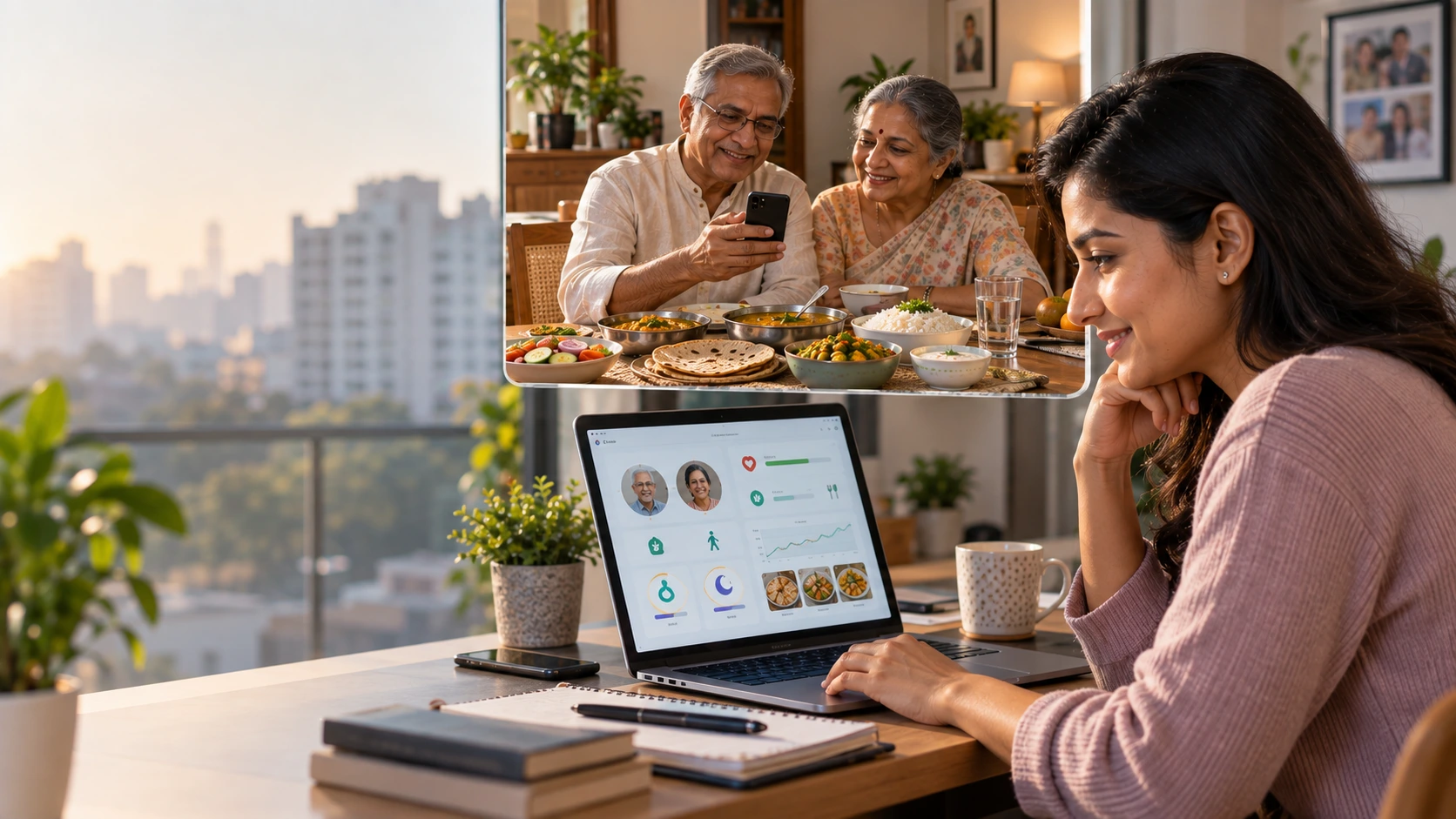
For adult children living in another city or managing demanding busy lifestyles in india, staying aware of a parent’s everyday health can be difficult. Regular calls often answer “How are you?” but do not always reveal changes in food intake, activity, sleep, medication routines, or other daily patterns.
This is where health tracking for parents can create a practical system. A simple family health tracking app can help families build awareness without turning everyday life into a medical checklist. The goal is not constant surveillance. It is creating a reliable way to notice patterns early and communicate about them.
Why Monitoring Ageing Parents Health Remotely Is One of the Biggest Challenges for Indian Families
Urban migration has changed how many Indian families manage parental care. Adult children may live in Mumbai, Bengaluru, Pune, Delhi, or another city while their parents remain in their hometown.
Distance creates a practical information gap. A parent may say they are doing fine while gradually eating less, becoming less active, sleeping poorly, or missing parts of their routine.
For families, the challenge is therefore not simply communication. It is maintaining everyday family health awareness when family members do not share the same home.
A useful approach is to focus on a small number of repeatable behaviours:
- What did they eat today?
- Were meals reasonably balanced?
- Were prescribed medicines taken as directed?
- Was there normal physical activity?
- How was sleep?
- Are there noticeable changes from their usual routine?
WHO’s integrated care approach for older people emphasises person-centred assessment, personalised care planning, and ongoing monitoring rather than focusing only on individual diseases.
The practical lesson for families is simple: build a system around everyday patterns, not just emergencies.
What Remote Health Monitoring Actually Looks Like in Practice
Remote monitoring does not have to mean sophisticated medical equipment or complicated software.
For many families, the starting point can be a simple routine where parents share information through a familiar communication channel and adult children review it regularly.
A basic system can include:
- Meal awareness: Parents share what they ate through a photo or short message.
- Basic health measurements: Weight and other relevant measurements can be recorded according to their healthcare professional’s advice.
- Medication routine: Record whether prescribed medicines were taken as directed.
- Activity: Note whether normal walking or other daily movement took place.
- Sleep: Watch for meaningful changes in normal sleep patterns.
- Weekly review: Discuss anything that looks different from the parent’s normal baseline.
This approach turns preventive health monitoring tools into a practical family habit rather than another complicated responsibility.
Nutrimate’s WhatsApp-based family tracking approach is designed around this principle. Parents can share meals through WhatsApp while family members maintain a broader view of everyday nutrition and health patterns.
Key Health Metrics Worth Tracking for Elderly Indian Parents
Not every health metric needs to be recorded every day. The right frequency depends on the person’s health situation and medical advice.
For general family awareness, the most useful areas include:
Blood pressure
For parents who already monitor blood pressure, keeping records according to their healthcare professional’s recommendations can make changes easier to discuss during consultations.
Blood glucose
For parents managing diabetes or monitoring glucose, consistent records can help provide useful context alongside medical advice.
Food intake
Food quality is often overlooked when families focus only on medicines and medical reports.
A simple meal photo can reveal patterns such as repeated low-protein meals, excessive fried snacks, inadequate vegetables, or irregular meal timing.
Medication compliance
Medication routines should remain aligned with the parent’s prescription and healthcare professional’s instructions. A simple reminder or shared record can reduce uncertainty for family members living elsewhere.
Activity levels
A meaningful reduction in normal activity can be worth discussing, particularly if it continues rather than occurring for only one day.
Sleep quality
Changes in sleep can affect daily energy and routine. Tracking broad patterns is more useful than becoming overly focused on individual nights.
India’s public health system also places emphasis on prevention, screening, management, and referral for common non-communicable diseases such as hypertension and diabetes.
How to Introduce Health Tracking to Parents Who Resist Technology
The biggest mistake is presenting tracking as another app they have to learn.
Many older parents do not want another dashboard, password, notification, or complicated health routine. The objective should therefore be to reduce effort.
Instead of saying:
“Please start monitoring your health every day.”
Try framing it around something familiar:
“Send me a photo of what you ate today.”
That small behavioural change can feel like family communication rather than medical monitoring.
A practical starting framework is:
Week 1: Share one meal photo a day.
Week 2: Continue meal sharing and add one simple health measurement if relevant.
Week 3: Review patterns together during a weekly call.
The principle is stress free living through simple habits, not perfect compliance.
Using WhatsApp to Make Parental Health Tracking Simple and Sustainable
Technology works best when it fits an existing behaviour.
For many Indian families, WhatsApp is already part of daily communication. Parents may be comfortable sending photographs, voice messages, and text updates even if they are uncomfortable navigating a dedicated health application.
That makes WhatsApp-based health tracking for parents a practical entry point.
A parent can photograph a home-cooked meal such as dal, roti, sabzi, rice, curd, or a snack. Instead of manually entering every ingredient, the interaction can remain simple.
Nutrimate uses a WhatsApp-first approach to make meal logging easier, particularly for Indian food and everyday family routines. The emphasis is on consistency rather than requiring parents to become proficient with health technology.
The important distinction is that technology should reduce the family’s workload, not create another task.
When Remote Tracking Is Enough and When It Is Not
Remote tracking is useful for maintaining awareness, but it should never replace medical care.
A family tracking system can help identify changes from a person’s normal pattern. It cannot diagnose the reason for those changes.
Parents should seek appropriate medical advice when there are meaningful or persistent changes such as:
- Noticeable changes in appetite
- Unexplained weight loss or gain
- Significant reduction in normal activity
- Persistent fatigue
- Major changes in sleep
- Concerning changes in established health measurements
The WHO ICOPE framework specifically supports detecting declines in older people’s intrinsic capacity, identifying care needs, developing personalised plans, and monitoring progress.
The role of family tracking is therefore to improve awareness and communication with healthcare professionals, not to replace professional assessment.
Building a Family Health Communication System Around Elderly Parent Care
The most sustainable system is one that everyone understands.
A simple family structure could look like this:
Parent: Shares meals and relevant routine information.
Adult child: Reviews patterns and maintains regular communication.
Other family members: Help with appointments, groceries, medication organisation, or local support where appropriate.
Healthcare professional: Interprets medical information and provides clinical guidance.
This creates a shared approach to family health instead of placing the entire responsibility on one person.
The objective is also not to track everything. Too much information quickly becomes noise.
Start with the areas that matter most for the individual parent, keep the process simple, and build gradually.
For adult children living away from home, that can make preventive family health more practical. Instead of finding out about a problem only after it becomes obvious, families can develop a clearer understanding of everyday routines and changes over time.
FAQs
Start with simple WhatsApp-based meal logging where parents photograph their meals daily. Supplement with weekly video calls reviewing basic health markers including weight, blood pressure, and activity. A shared family health app creates a central view.
Blood pressure, fasting glucose, daily food intake quality, medication compliance, activity levels, and sleep quality are the most important indicators for common lifestyle diseases in Indian elderly populations.
WhatsApp-based tracking works better than dedicated apps for older users because they are already comfortable with the platform. Framing tracking as sharing what you ate rather than health monitoring reduces resistance.
Significant changes in appetite, unexplained weight loss or gain, reduced activity from baseline, increased fatigue, or disrupted sleep patterns warrant a medical consultation even in the absence of acute symptoms.