 Pradnya Ganorkar
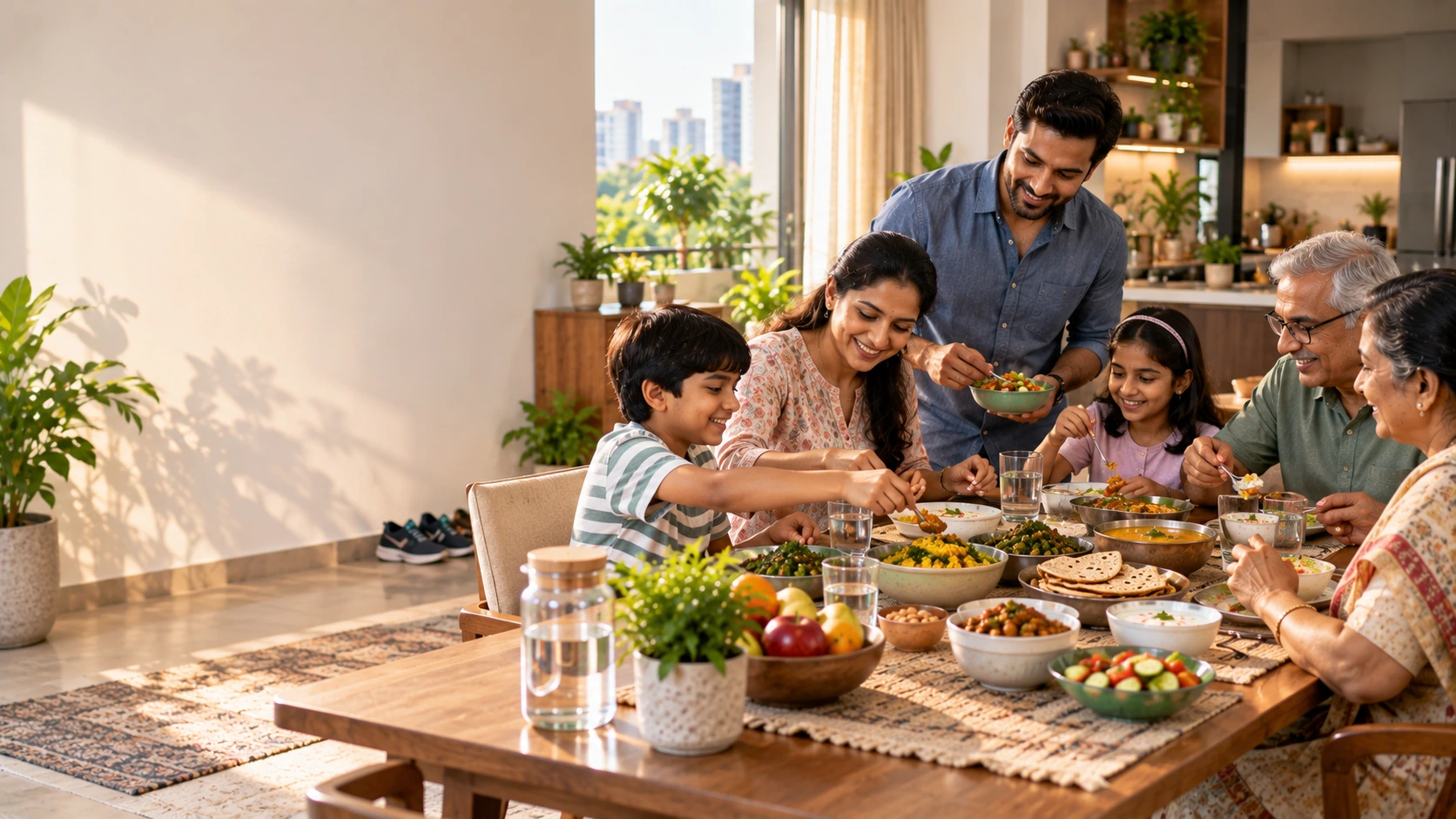
Building family health in an Indian household does not require a complicated diet chart, expensive equipment, or a perfectly planned schedule. For working parents, school-age children, and older family members, the more practical goal is to create a few sustainable health habits that continue even when work, school, travel, or family commitments become unpredictable.
A healthy family routine works when it fits real life. Regular meals, simple movement, adequate sleep, and small moments of connection can create a healthy lifestyle without turning health into another responsibility to manage.
The goal is not perfection. It is creating a routine that the family can repeat.
Why Indian Families Struggle to Build Consistent Health Routines
Indian families often manage several schedules at once. Parents may have office commitments, children have school and tuition, grandparents may have their own health needs, and meals often depend on everyone’s availability.
This makes consistency difficult. A family may eat a balanced home-cooked meal on Monday, order food late on Tuesday, skip breakfast on Wednesday, and try to compensate over the weekend.
The problem is usually not a lack of health awareness. It is a lack of simple systems.
Common challenges include:
- Irregular meal timings
- Long working hours
- School and tuition schedules
- Excessive screen time
- Frequent packaged snacks
- Limited physical activity during busy weekdays
- Different nutritional needs within the same household
- Family members following separate diet routines
A practical family health strategy therefore needs to reduce decisions rather than create more of them.
The World Health Organization recommends regular physical activity across age groups and emphasises that even everyday movement contributes to better health.
The Architecture of a Healthy Family Day in India
A successful family wellness routine is built around a few predictable anchors rather than dozens of rules.
For a household with working parents and school-age children, a realistic structure could look like this:
Morning: hydration, breakfast, and brief movement.
Afternoon: balanced lunch and sensible snacks.
Evening: family movement, dinner, reduced screen exposure, and preparation for sleep.
Night: consistent sleep timing, particularly for children.
The important principle is repetition. When a healthy behaviour happens at approximately the same time every day, it requires less conscious effort.
A useful family routine can include:
- One consistent breakfast window.
- One shared family meal whenever schedules allow.
- A short daily walk or other physical activity.
- A regular dinner time.
- A predictable bedtime.
- Simple meal tracking when awareness is needed.
This approach makes stress free living more realistic because health does not have to be reconsidered from scratch every day.
Morning Habits That Set the Nutritional Tone for the Day
The morning does not need to become a two-hour wellness routine.
A 20-minute family window can be enough to establish three basic behaviours:
- Drink water after waking.
- Eat a protein-containing breakfast.
- Add a short period of movement.
Breakfast could be eggs with roti, vegetable poha with curd, idli with sambar, paneer with roti, or another familiar home-prepared combination.
The Indian Council of Medical Research and National Institute of Nutrition dietary guidance emphasises variety across cereals and millets, pulses, vegetables, fruits, nuts and seeds, and milk or curd as part of a balanced Indian diet.
For families following healthy eating habits, the objective is not to make every breakfast nutritionally perfect. It is to make a reasonably balanced breakfast the default choice.
A simple rule works well: protein + familiar carbohydrate + fruit or vegetable where practical.
For example, instead of leaving children to choose biscuits because everyone is rushing, keep bananas, curd, boiled eggs, poha, or other simple options readily available.
How to Manage Family Lunch When Everyone Eats Differently
Family members do not need identical meals.
A parent working from home, a child at school, and another parent working from an office may all eat lunch at different times. The solution is to prepare common nutritional building blocks rather than separate diets.
A typical Indian lunch can be structured around:
- Dal, rajma, chana, eggs, paneer, curd, fish, or another protein source
- Roti or rice
- One or more vegetable preparations
- A fruit or other simple addition when appropriate
This keeps Indian food and health connected to familiar meals instead of treating traditional food as the problem.
Portion needs can differ between family members. A growing child, an active adult, and an older parent may have different requirements, so the same meal does not need to mean the same portion.
For families trying to understand patterns over time, a family health tracking app can make routine awareness easier. Nutrimate, for example, uses simple daily logging to help families see whether meals and health habits are being maintained without requiring everyone to follow a complicated programme.
Evening Routines That Improve Sleep and Reduce Stress
Evenings are often where an otherwise healthy family routine breaks down.
Parents finish work, children finish homework, dinner gets delayed, and everyone ends up spending more time on phones or television.
A better evening structure can be simple:
Dinner at a reasonably consistent time → short family walk → reduced screen exposure → predictable bedtime.
The post-dinner walk does not have to be an intense workout. It can be a 15 to 20-minute family walk around the neighbourhood, a light activity at home, or another form of movement everyone can participate in.
WHO guidance supports regular physical activity for adults and children, while also highlighting the health implications of prolonged sedentary behaviour.
For children, consistency is particularly important. A predictable bedtime routine can make the transition from an active evening to sleep easier.
The bigger objective is to make the evening less stimulating and more predictable.
Weekend Health Habits That Reset the Week
Weekends should not become a complete break from healthy habits.
At the same time, expecting a family to follow the weekday schedule perfectly during festivals, family gatherings, shopping trips, or social events is unrealistic.
Instead, identify two or three anchors.
For example:
- Morning family walk
- One home-cooked family meal
- Outdoor activity for children
- Regular sleep timing
- Simple meal awareness
These anchors create continuity without making the weekend restrictive.
This is especially useful during Indian festivals, when sweets, snacks, restaurant meals, and late nights naturally become more common.
The aim is not to eliminate celebration. It is to prevent a few unusual days from becoming a complete abandonment of routine.
Making the Family Health Routine Stick: The Behaviour Change Layer
The biggest mistake families make is trying to change everything simultaneously.
A new diet, daily gym sessions, strict screen limits, extensive meal tracking, early mornings, and a completely new sleep schedule can feel motivating for a few days but difficult to sustain.
A better approach is to build one habit at a time.
Start with one family anchor
Choose one behaviour that everyone can participate in, such as a shared dinner or evening walk.
Make the healthy choice convenient
Keep fruit visible. Keep simple protein options available. Prepare common meal components ahead of time.
Reduce decisions
A family should not have to ask every evening, “What should we eat?” Establish a few default meals for busy days.
Track awareness, not perfection
Simple meal tracking can reveal patterns without turning food into a constant calculation exercise.
For families that find detailed tracking difficult, quick logging can reduce friction. Nutrimate is designed around this principle, using Indian-first meal understanding and simple WhatsApp-based logging to make health awareness easier to maintain during busy periods.
Its positioning is straightforward: India’s #1 whatsapp meal logging feature and Unique Caregiver feature for making everyday health awareness more accessible to individuals and families.
Protect the routine during disruption
If someone travels, exams begin, work becomes intense, or a festival changes the schedule, keep at least one anchor active.
That could be the morning walk, family dinner, or regular bedtime.
The purpose of a routine is not to prevent disruption. It is to make returning to healthy behaviour easier after disruption.
Resources:
WHO Guidelines on Physical Activity and Sedentary Behaviour
ICMR-NIN Dietary Guidelines for Indians
FAQs
A family dinner together at a consistent time that includes adequate protein, home-cooked vegetables, and limited screen distraction is the single most impactful family health habit combining nutrition, routine, and connection.
A 20-minute window including a protein-rich breakfast, hydration, and brief physical activity sets up each family member nutrition and energy for the day. Simplicity and consistency matter more than optimisation.
A regular dinner time, limiting screen time before bed, a short post-dinner walk, and consistent sleep timing for children are the evening habits with the strongest evidence for improving family health outcomes.
Plan specific healthy anchors like the morning walk or the family dinner into festival periods rather than attempting to maintain the full routine. Anchors preserve enough structure to return to full routine easily afterward.