 Pradnya Ganorkar
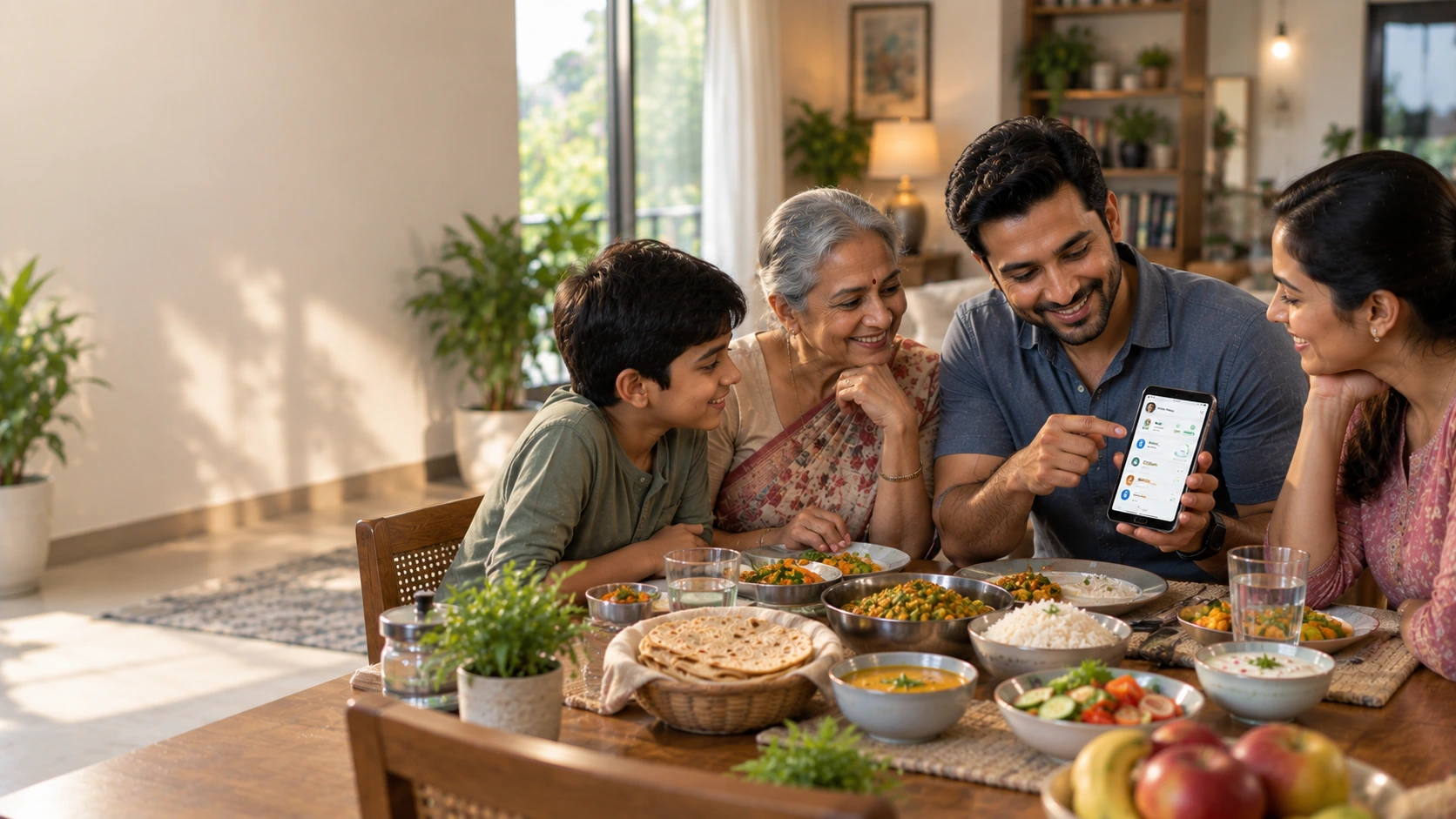
Indian families are often very good at responding when someone becomes unwell. What is less common is having a simple system for noticing everyday health patterns before they become problems. A family health tracking app can help bridge that gap by making nutrition, activity and other daily behaviours easier to observe and discuss.
This matters because family health is rarely an individual issue. A parent’s eating habits can influence children, a busy professional may skip meals because of work, and a caregiver may spend so much time looking after others that their own health gets ignored.
The goal of family tracking is not to turn the household into a clinic. It is to create awareness, encourage shared responsibility and make small improvements easier to sustain.
How Indian Families Think About Health and Why It Does Not Work
For many Indian households, health is still treated as something that needs attention when a problem becomes visible.
A doctor visit happens after symptoms appear. A diet changes after a blood report raises concern. Exercise starts after weight increases. Food restrictions become serious only after a health condition is diagnosed.
This reactive approach creates a simple problem: families often have information, but not continuity.
A family may know that vegetables matter, that protein is important and that physical activity is beneficial. Yet knowing these things does not automatically translate into consistent behaviour.
The challenge becomes even greater with busy lifestyles in india. Parents may manage school schedules, office responsibilities, household work and caregiving simultaneously. Working adults may spend most of the day outside home. Children may have different eating schedules from their parents.
A healthier approach is to move from occasional health decisions to health habits that are visible in everyday life.
For example, instead of asking only:
“Is everyone healthy?”
families can ask:
- Are meals becoming more balanced?
- Are children regularly eating protein-rich foods?
- Are parents skipping meals?
- Is packaged snacking becoming frequent?
- Is physical activity happening consistently?
- Is everyone getting adequate sleep?
This does not require tracking everything. It requires tracking the behaviours that matter most.
WHO notes that healthy diets vary according to individual needs, cultural context and dietary customs, while the fundamental principles include adequacy, balance, moderation and diversity.
That makes an Indian family approach particularly important. Health habits need to fit the household’s actual food, schedule and culture.
The Problem With Tracking Only When Someone Gets Sick
Reactive health management creates another problem: the person who needs the most attention may not be the only person affected.
Consider a typical household.
A father develops a metabolic health concern. His meals change. The family becomes more conscious of sugar and portions. But the mother continues managing everyone’s meals without monitoring her own eating. Children may continue consuming the same snacks and beverages as before.
The family has responded to one health issue, but the underlying household behaviour has not necessarily changed.
This is where preventive family health becomes useful.
Preventive tracking is not about diagnosing disease through an app. It is about identifying patterns that deserve attention.
Reactive vs proactive family health
| Reactive approach | Proactive approach |
| Acts after symptoms appear | Watches everyday patterns |
| Individual-focused | Household-aware |
| Occasional health decisions | Repeated small habits |
| Often triggered by concern | Built into routine |
| Difficult to see long-term patterns | Easier to identify behavioural trends |
The difference is especially important for parents health.
Parents often postpone their own exercise, nutrition or sleep because family responsibilities take priority. Over time, this can make caregiving one-directional: they monitor everyone else while neglecting themselves.
Family tracking can create a healthier model where everyone participates.
What Family Health Tracking Actually Looks Like in Practice
A family health tracking app does not need to become a complicated dashboard filled with medical numbers.
At the household level, tracking can begin with four simple areas:
- Nutrition
- Physical activity
- Hydration
- Sleep
Nutrition is often the easiest starting point because food happens several times every day.
For example, a family could begin by recording meals on three days each week.
Monday:
- Breakfast: poha and curd
- Lunch: roti, dal and sabzi
- Snack: packaged namkeen
- Dinner: rice, vegetables and paneer
Wednesday and Friday can be tracked in the same way.
After two or three weeks, the family may notice patterns that were previously invisible. Perhaps breakfast is consistent but protein is low. Perhaps packaged snacks appear every afternoon. Perhaps one parent regularly skips lunch.
The objective is not to label every meal as “good” or “bad.”
The objective is awareness.
This is also where easy way to track meals and simple meal tracking for Indian food can make a difference. A system that fits normal Indian meals is more likely to be used than one that requires users to translate every homemade dish into unfamiliar terminology.
For families already managing multiple responsibilities, reducing friction matters more than adding another complicated health task.
Why Parents Who Track Their Health Set Better Habits for Their Children
Children learn health behaviour partly through observation.
A parent who regularly talks about vegetables but rarely eats them sends a different message from a parent who includes vegetables naturally in family meals.
Similarly, children can learn that health is not a temporary diet or punishment for eating certain foods. It is part of normal family life.
WHO highlights that dietary behaviours and preferences established during childhood and adolescence can extend into adulthood.
That makes family habits more important than isolated nutritional instructions.
A practical family routine might look like this:
Breakfast: Include a protein source where practical.
Lunch: Build meals around familiar staples such as roti or rice alongside dal, vegetables, curd, paneer, eggs or other appropriate protein sources.
Snacking: Notice frequency and portions rather than banning every packaged food.
Dinner: Keep the meal balanced and appropriate to the family’s schedule.
Activity: Encourage movement that the household can realistically maintain.
The principle is simple: children should experience healthy behaviour as normal behaviour.
This is particularly relevant when families search for healthy Indian eating habits. The answer does not need to be a completely new diet. Often, it is about improving the structure and consistency of the food already being eaten.
The Caregiver Burden: Why Parents Neglect Their Own Health
Caregiving creates a hidden health challenge.
A parent may remember a child’s school schedule, a spouse’s medication, a parent’s doctor appointment and the household grocery list. Yet they may forget their own meal, exercise session or sleep routine.
This is not necessarily a lack of knowledge. It is a lack of bandwidth.
That is why caregiver health tools india should reduce effort rather than add another administrative responsibility.
For example, if one interface allows a parent to record meals for multiple family members, the process becomes easier to integrate into normal household routines.
The same principle applies to health tracking for parents.
The purpose should not be surveillance. It should be supportive visibility.
A family member should be able to notice that a parent has been eating irregularly or that a child is repeatedly skipping an important meal without turning every observation into criticism.
The best systems support conversations.
They do not replace them.
How Technology Makes Family Health Tracking Simple Enough to Sustain
Technology is useful when it removes friction.
A complicated health platform may provide extensive data but still fail if people stop using it after a week.
For Indian households, convenience can be particularly important because food is diverse, homemade and frequently shared.
An Indian-first approach to meal tracking should accommodate meals such as dal, roti, rice, idli, dosa, poha, upma, sabzi, paneer and regional foods without requiring users to redesign their diet around the technology.
This is where Nutrimate’s approach is relevant. Its WhatsApp-first model allows everyday food information to be captured through a familiar communication interface rather than requiring users to maintain a separate, complicated routine.
The larger principle is more important than the technology itself:
The easier a health behaviour is to repeat, the more useful the tracking becomes.
For a family, this can mean:
- One place for meal information
- Multiple family members
- Less manual entry
- Indian food recognition
- Simple visibility into patterns
- More consistent conversations about health
Nutrimate’s family tracking approach is designed around this idea, including India’s #1 whatsapp meal logging feature and Unique Caregiver feature, while keeping the emphasis on everyday awareness rather than medical diagnosis.
Technology should support family involvement, not replace professional medical advice or personal relationships.
Starting Family Health Tracking: What to Begin With
The biggest mistake is trying to track everything from day one.
Families already have enough responsibilities. A sustainable system should start small.
Step 1: Choose one behaviour
Start with food.
Do not immediately attempt to track calories, workouts, sleep, hydration and every health metric.
Step 2: Track two to three days per week
This creates awareness without making the habit feel burdensome.
The goal is consistency, not perfection.
Step 3: Include the household
Where appropriate, track meals for parents, children and other family members.
This turns individual health into a shared household conversation.
Step 4: Look for patterns
After several weeks, ask:
- Which meals are regularly skipped?
- Which foods appear most frequently?
- Are protein sources present consistently?
- Are packaged snacks becoming routine?
- Is the family eating enough variety?
- Are schedules making healthy choices difficult?
Step 5: Change one thing at a time
If evening snacking is frequent, address that first.
If breakfast lacks protein, improve breakfast.
If a parent is consistently skipping lunch, solve that scheduling problem.
Small changes are easier to maintain than a complete lifestyle overhaul.
A simple family framework
| Area | Track | Improve |
| Food | Meals and snacks | Balance and portions |
| Activity | Movement | Consistency |
| Hydration | Daily intake | Regularity |
| Sleep | Routine | Better consistency |
| Family | Shared patterns | Accountability |
This is the practical role of family health tracking. It transforms health from something discussed only during illness into something the family can gradually improve together.
For households dealing with indian diet for busy professionals, the same principle applies. A sustainable routine must work around meetings, commuting, school runs and family responsibilities.
The objective is not to create a perfect household.
It is to create a household where health is visible, discussed and acted upon regularly.
References
- World Health Organization: Healthy Diet
- World Health Organization: Self-care for health and well-being
FAQs
Family health tracking involves monitoring the key daily health behaviours of all family members including nutrition, activity, hydration, and sleep, creating awareness of patterns that influence long-term health outcomes.
Family-level tracking creates shared accountability, allows parents to monitor children nutrition alongside their own, and builds health awareness as a family culture rather than an individual effort.
Begin with meal logging for two to three days per week for all family members using a simple platform. Build gradually to daily tracking as the habit establishes itself.
Consistent tracking of nutrition and lifestyle data reveals patterns associated with increased health risk, enabling families to make adjustments before symptoms appear.