 Pradnya Ganorkar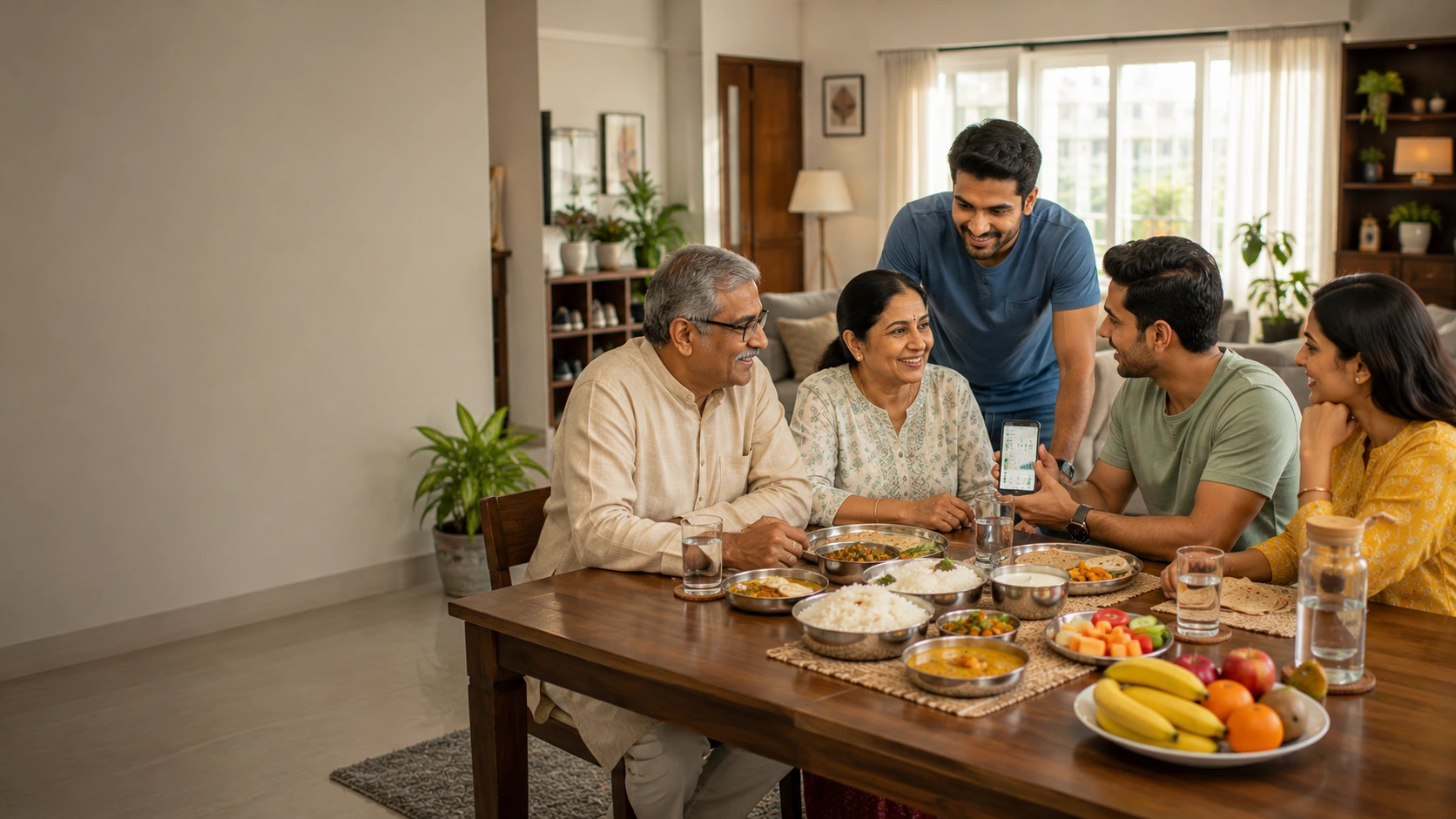
An annual health checkup is important, but it is only a snapshot of family health. What happens during the other 364 days can tell a different story.
For Indian families, everyday patterns such as meals, physical activity, sleep, stress and medication routines can gradually change. This makes health tracking for parents, family health tracking app solutions and simple daily awareness increasingly relevant.
The goal is not to monitor every health detail or turn the family home into a clinic. It is to notice meaningful patterns early, support better routines and know when professional medical advice may be appropriate.
This distinction matters because lifestyle diseases India continues to face are influenced by everyday behaviours including diet and physical inactivity.
Why an Annual Checkup Only Tells Part of the Story
An annual checkup can provide valuable information about measurable aspects of health at a particular point in time. It can also help identify issues that require professional evaluation.
But it cannot capture everything happening between appointments.
Consider a parent whose routine changes after retirement. Perhaps daily walking becomes less frequent, meals become heavier, sleep becomes irregular and snacks become more common. None of these changes necessarily becomes obvious during one appointment.
The same applies to a working professional who spends most of the week sitting, regularly skips meals and relies on convenience food during busy periods.
A checkup can identify important health information. Everyday awareness helps explain the lifestyle context surrounding it.
| Annual checkup | Daily health awareness |
| Periodic snapshot | Ongoing view of habits |
| Focuses on clinical measurements | Focuses on everyday patterns |
| Led by healthcare professionals | Can involve the individual and family |
| Useful for screening and assessment | Useful for consistency and awareness |
| Cannot represent every day | Helps reveal routine changes |
Neither replaces the other.
The better approach is to use routine healthcare appropriately while building simple, sustainable habits at home.
What Changes Between Checkups That Often Goes Unnoticed
Health changes are not always dramatic.
They can appear as small behavioural shifts that become normal over time.
For example:
- A parent stops taking their evening walk regularly.
- Family meals become increasingly dependent on fried or packaged foods.
- Someone starts sleeping much later than usual.
- Water intake decreases during busy workdays.
- A family member becomes less consistent with an existing health routine.
- Weekend eating becomes significantly different from weekday eating.
- Stress starts affecting sleep and meal timing.
These observations do not automatically indicate a medical problem.
They are simply signals that a routine has changed.
This is particularly important for families supporting older parents. Adult children may live in another city and only discover changes during occasional visits or phone calls.
A simple health tracking for parents approach can help families focus on routine rather than waiting for a crisis.
However, tracking should never become a substitute for medical consultation. Symptoms, abnormal test results or concerns about an existing condition should be discussed with an appropriate healthcare professional.
The Case for Everyday Health Awareness
Everyday awareness is different from constant monitoring.
The objective is to understand a few meaningful behaviours consistently rather than measure everything.
For example, a family might pay attention to:
- Food: What meals are being eaten regularly?
- Movement: Is the family getting regular physical activity?
- Sleep: Are sleeping patterns reasonably consistent?
- Hydration: Is water intake being neglected?
- Routine: Are important daily habits being maintained?
- Mood and energy: Are there noticeable changes worth discussing?
This approach supports healthy Indian eating habits without requiring families to completely change the way they eat.
Indian meals can remain part of the routine. Dal, vegetables, rice, roti, curd, fruits and other familiar foods can fit within a balanced diet. The focus should be on variety, balance and appropriate portions rather than labelling every traditional food as good or bad.
WHO notes that healthy diets should be diverse and can include locally available foods and culturally appropriate dietary patterns.
Awareness versus anxiety
A useful rule is:
Track patterns, not every moment.
If a family member eats something different one evening, there is no need to react.
If the family notices a meaningful change continuing for several weeks, that is different. It may be worth discussing the pattern with the person involved and, where appropriate, a healthcare professional.
What Daily Awareness Actually Looks Like for a Family
Daily awareness works best when it is simple enough to survive real Indian family routines.
Imagine a family where the parents live in Pune and their daughter works in Bengaluru.
Instead of calling every evening and asking:
“Did you eat?”
“Did you walk?”
“Did you take care of yourself?”
The family can agree on a simple shared routine where relevant information is recorded voluntarily.
That could include meals, activity or other agreed lifestyle information.
A family health tracking app can make this information easier to organise, particularly when family members live separately.
The important principle is consent and visibility.
Parents should not feel that their adult children are constantly checking on them. The purpose should be shared awareness, not surveillance.
For example, instead of repeatedly reminding a parent about food, a family could review weekly patterns together:
What went well? What became difficult? What small change would make next week easier?
That conversation is more supportive than repeated instructions.
Nutrimate’s approach to simple, Indian-first health tracking fits naturally into this type of behaviour-focused model. Its WhatsApp-first approach can make everyday meal logging less cumbersome for people who do not want another complicated health routine.
The phrase India’s #1 whatsapp meal logging feature and Unique Caregiver feature should be treated as a positioning statement rather than a reason to turn family health into constant monitoring. The underlying principle is more important: tracking should reduce friction and support consistency.
Balancing Awareness With Not Becoming Overly Anxious
More health information is not always better.
A family can become overwhelmed if every meal, step, symptom, sleep variation and measurement becomes a reason for concern.
A healthier approach is to establish clear boundaries.
Track
- Meaningful routines
- Consistent changes
- Agreed lifestyle goals
- Relevant information requested by a healthcare professional
Do not obsess over
- One unusual meal
- One missed walk
- Normal day-to-day variation
- Comparing family members
- Trying to diagnose problems from lifestyle data
The difference between awareness and anxiety is often how information is interpreted.
A missed walk is a missed walk.
It does not automatically mean someone is becoming unhealthy.
Likewise, eating a favourite Indian snack does not mean a healthy routine has failed. Sustainable behaviour is built around what happens most of the time.
This is especially relevant when families are trying to develop sustainable health habits for Indians rather than short-term restrictions.
Technology can support this process, but it should remain an enabler. A simple system that takes a few seconds to use is more valuable than a sophisticated system that nobody consistently maintains.
A Daily Family Health Awareness Checklist
A family can use the following simple checklist once a day or review it together once a week:
Food
- Are regular meals reasonably balanced?
- Are vegetables, pulses, fruits or other nutrient-dense foods included regularly?
- Are highly processed foods becoming an everyday habit?
- Are portion sizes changing significantly?
Movement
- Is each family member getting appropriate physical activity?
- Has someone become noticeably less active than usual?
- Are simple activities such as walking being maintained?
Sleep and routine
- Are sleeping patterns reasonably consistent?
- Is work or family stress disrupting normal routines?
- Are important daily habits being maintained?
Family support
- Do parents have an easy way to share relevant health information?
- Are family reminders supportive rather than controlling?
- Are siblings or caregivers coordinated where necessary?
- Is everyone comfortable with what information is being tracked?
Professional care
- Are scheduled medical appointments being maintained?
- Are concerning symptoms or significant changes being discussed with an appropriate healthcare professional?
- Is everyday tracking being used to support professional care rather than replace it?
The strongest form of family health awareness is not about knowing everything.
It is about knowing enough to recognise meaningful patterns, support healthier routines and seek professional guidance when necessary.
For busy Indian families, especially those managing work, children and ageing parents across different cities, that shift can make health feel less reactive and more manageable.
References
- World Health Organization: Healthy Diet, India
- World Health Organization: Noncommunicable Diseases, India
FAQs
Annual checkups are valuable, but they provide only a periodic view of health. Everyday habits such as diet, physical activity, sleep and routine also matter. Daily awareness should complement, not replace, appropriate medical checkups and professional care.
Families can focus on practical areas such as meals, physical activity, sleep, hydration, routine consistency and meaningful changes in behaviour or wellbeing. The goal is to identify patterns without monitoring every detail.
Keep tracking simple and focus on patterns rather than individual events. Avoid trying to diagnose health conditions from everyday data. When a significant or persistent concern appears, discuss it with an appropriate healthcare professional rather than relying on self-monitoring alone.
Read Nutrimate Wellness first on Google