 Pradnya Ganorkar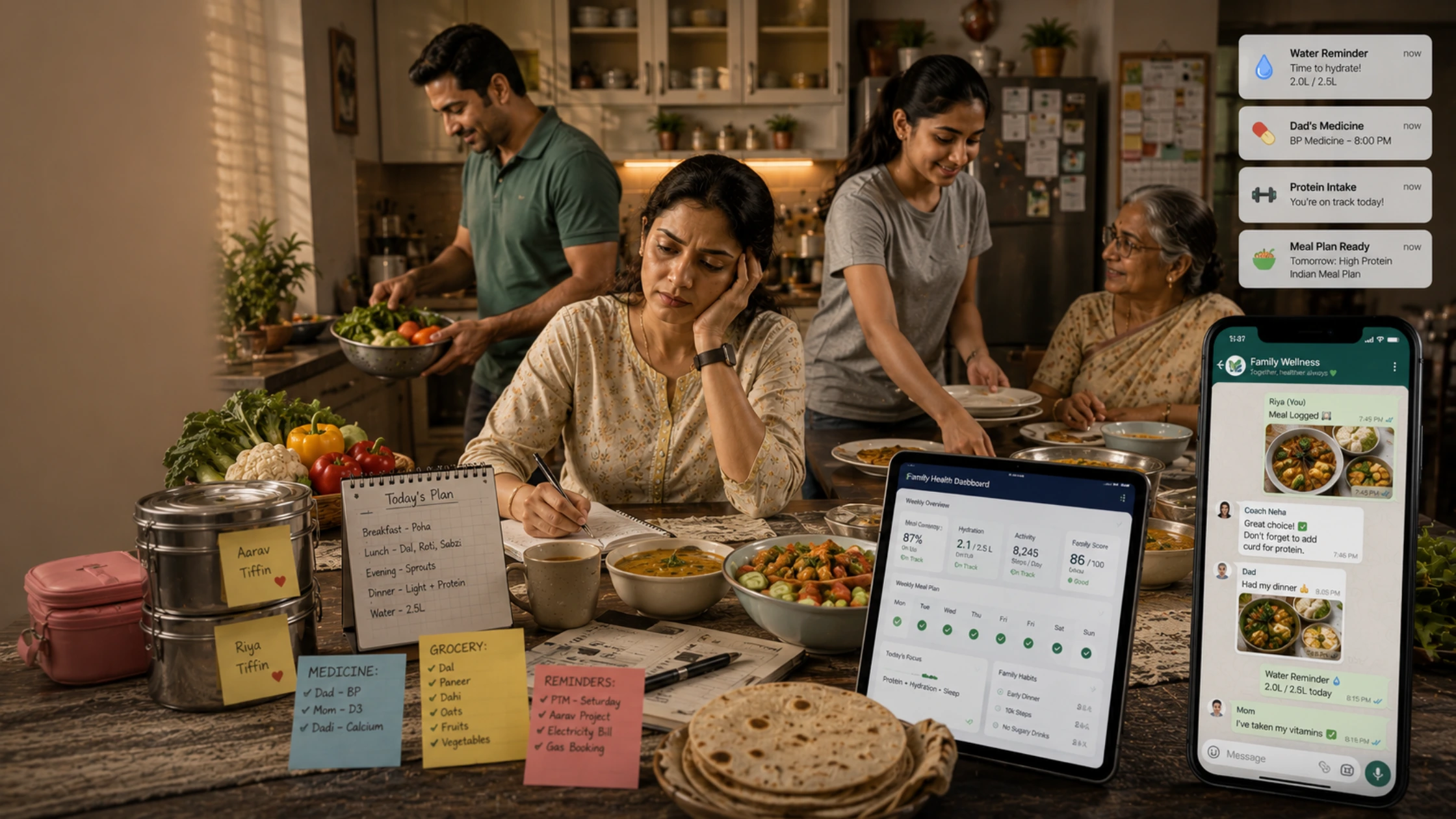
In many Indian households, one person silently becomes responsible for everyone’s food, routines, doctor reminders, grocery planning, and daily health decisions. Usually, it is the mother, daughter, or primary caregiver managing the entire system mentally without any formal structure.
That is why family nutrition planning India is becoming less about recipes and more about sustainable systems. Most families are not struggling because they lack information. They struggle because health management depends too heavily on one exhausted individual.
This creates burnout, inconsistency, emotional stress, and reactive eating habits. Over time, even families trying to follow a healthy lifestyle fall into chaotic routines.
The bigger issue is that most Indian homes still rely on memory-based health management instead of shared visibility and structured routines. As modern schedules become busier, proper family health management India requires collaborative systems, not heroic effort from one person.
According to the National Family Health Survey (NFHS-5), India continues to face rising nutrition imbalance, obesity, diabetes risk, and lifestyle-related health concerns across both urban and semi-urban families.
Similarly, the World Health Organization highlights how poor dietary routines, stress, and inactivity significantly increase noncommunicable disease risk globally.
The solution is not stricter dieting. The solution is reducing friction around everyday decisions.
Why Family Nutrition Often Becomes One Person’s Job
In many Indian homes, food represents care, love, duty, and emotional responsibility.
One person usually handles:
- Grocery planning
- Breakfast timing
- Tiffin preparation
- Parent dietary restrictions
- Child nutrition concerns
- Festival meals
- Medicine coordination
- Protein intake reminders
- Diabetes-friendly adjustments
Over time, this becomes invisible labor.
The problem is not effort alone. The problem is decision fatigue.
A person managing daily nutrition for 4 to 6 family members makes hundreds of micro-decisions every week. Eventually, this affects emotional wellbeing, consistency, and even their own health.
This is one reason caregiver burnout India is increasing quietly inside households.
Many caregivers skip their own meals while ensuring everyone else eats properly. Others eat leftovers late at night after feeding the family.
Ironically, the person managing the family’s health often struggles the most with their own healthy eating habits.
This is especially visible among working women balancing careers and caregiving simultaneously.
Examples include:
- A mother preparing separate meals for diabetic parents and growing children
- A working daughter coordinating doctor appointments while handling office deadlines
- A father trying to manage gym nutrition alongside household preferences
- Families with elderly parents needing regular dietary monitoring
Without structured systems, every day becomes reactive.
That is why modern family preventive health India discussions are increasingly focusing on routine simplification instead of restrictive diets.
The Problem with Reactive Meal Decisions
Most Indian households do not actually “plan” meals.
They react to:
- Hunger
- Time pressure
- Cravings
- Guest visits
- Work stress
- Last-minute ordering
- Emotional fatigue
This reactive approach creates nutritional inconsistency.
For example:
- Breakfast skipped due to school rush
- Evening chai paired with fried snacks
- Ordering biryani after a stressful office day
- Children eating packaged snacks between meals
- Late-night sweets during family gatherings
Individually, these seem harmless.
Collectively, they shape long-term household health habits India.
One major challenge with reactive eating is that nobody has visibility into patterns.
Families often believe:
- “We mostly eat homemade food.”
- “Our diet is balanced.”
- “We don’t eat unhealthy regularly.”
But reality often looks different when routines are tracked consistently.
This is why many people asking “why staying healthy is hard” are actually dealing with invisible behavioral patterns, not lack of motivation.
Another common issue is inconsistent nutrition quality across family members.
For example:
- One person gets enough protein
- Another barely eats vegetables
- Elderly parents miss hydration
- Teenagers overconsume packaged snacks
- Working adults eat irregular meals
Without visibility, these patterns stay unnoticed for years.
This also explains why many families fail at aggressive diets. The environment itself remains unchanged.
That is why sustainable systems matter more than temporary discipline.
What a Household Nutrition System Looks Like
A proper household nutrition system is not a strict timetable.
It is a low-friction structure that reduces decision fatigue.
The best systems are:
- Flexible
- Simple
- Repeatable
- Visible
- Shared
A realistic family meal planning India system usually includes five core components:
1. Weekly Meal Anchors
Instead of planning every meal perfectly, define meal categories.
Example:
- Monday: Dal + sabzi
- Tuesday: High-protein dinner
- Wednesday: Simple one-pot meal
- Thursday: Traditional family meal
- Friday: Flexible outside food day
This reduces mental overload dramatically.
2. Shared Grocery Visibility
Most families buy food reactively.
Instead:
- Maintain a visible grocery list
- Assign responsibility rotation
- Track recurring essentials
This prevents unhealthy backup ordering.
3. Flexible Portion Awareness
A good system avoids extreme restriction.
Families should focus on:
- Balanced plates
- Protein consistency
- Vegetable frequency
- Snack awareness
- Hydration habits
Not obsessive calorie counting.
This approach supports healthy Indian eating habits better than rigid dieting.
4. Shared Responsibility
One person should not carry the entire mental burden.
Children can:
- Track water intake
- Help with vegetables
- Participate in planning
Adults can:
- Alternate meal prep
- Monitor parent nutrition
- Handle groceries
- Track household goals
This reduces emotional exhaustion significantly.
5. Simple Tracking Systems
Tracking creates awareness.
But most people abandon complicated apps.
This is why simpler systems work better in India.
Many families now prefer:
- WhatsApp logging
- Shared dashboards
- Photo-based food tracking
- Minimal manual entry
Platforms like Nutrimate are built around this exact challenge by simplifying meal tracking India through AI-powered WhatsApp-first logging designed specifically for Indian meals and family routines.
The goal is not perfection.
The goal is consistency visibility.
Shared Visibility + Simple Tracking
One of the biggest problems in Indian households is invisible health behavior.
Nobody knows:
- How often outside food happens
- Who skips meals
- Protein intake consistency
- Parent nutrition gaps
- Child snack frequency
- Emotional eating triggers
When routines stay invisible, improvement becomes difficult.
This is where shared visibility changes outcomes.
For example:
- A family noticing repeated late-night ordering
- Elderly parents consistently missing fruits
- Children consuming excessive packaged foods
- Office-going adults skipping breakfast daily
These patterns become visible only when tracking exists.
Importantly, tracking should not feel punitive.
The best systems reduce friction.
This is why many users now prefer:
- Photo-based meal logs
- Simple WhatsApp meal sharing
- Weekly pattern summaries
- Non-judgmental reminders
Instead of forcing strict diets, these systems support gradual lifestyle change India.
This is especially important because Indian families are emotionally connected to food traditions.
A sustainable system should allow:
- Roti
- Rice
- Dal
- Poha
- Idli
- Paratha
- Khichdi
- Festival meals
The goal is smarter balance, not elimination.
This also helps solve confusion around:
- “is Indian food healthy”
- “roti rice weight gain myth”
- “Indian diet without dieting”
In reality, most traditional Indian meals can support a sustainable Indian diet when portions, frequency, and balance improve.
The bigger problem is inconsistency and overeating under stress.
Weekly Family Planning Framework
Families often fail because health planning feels overwhelming.
A simple framework works better.
Here is a realistic weekly structure for Indian homes.
Step 1: Define Family Priorities
Ask:
- Who needs special nutrition support?
- Who skips meals most?
- Who eats outside frequently?
- Who needs protein improvement?
- Who has diabetes or BP concerns?
This creates focused action.
Step 2: Create Repeatable Breakfasts
Breakfast complexity causes burnout.
Choose 3 to 4 rotating options:
- Poha + peanuts
- Idli + sambar
- Eggs + toast
- Daliya
- Upma
- Paneer sandwich
Consistency beats variety overload.
Step 3: Simplify Lunches
Most office-going Indians struggle with lunch consistency.
Simple meals work better:
- Dal + rice + sabzi
- Roti + paneer
- Curd rice
- Rajma chawal
- Khichdi
The goal is sustainability.
This supports healthy lifestyle for busy Indians better than unrealistic diet charts.
Step 4: Build Smarter Snack Systems
Indian families often underestimate snacks.
Replace automatic fried snacking with:
- Roasted chana
- Fruit bowls
- Makhana
- Curd
- Peanut chaat
- Coconut pieces
Not because snacks are “bad,” but because unconscious eating adds up.
Step 5: Create Flexible Outside Food Rules
Completely banning restaurant food usually fails.
Instead:
- Limit ordering frequency
- Add vegetables alongside ordering
- Share desserts
- Balance heavy meals with lighter next meals
This supports long-term consistency.
Step 6: Weekly Visibility Review
Spend 10 minutes weekly reviewing:
- Outside food frequency
- Protein intake
- Parent nutrition consistency
- Meal skipping
- Water intake
- Emotional eating triggers
This creates awareness without pressure.
Many modern families now use family health tracking app systems to simplify this visibility process without turning health into a stressful task.
Nutrimate’s approach focuses on practical tracking for Indian families using AI-powered WhatsApp logging and India’s #1 whatsapp meal logging feature and Unique Caregiver feature, making health visibility easier for households managing multiple routines together.
Common Mistakes
Families often fail not because they lack care, but because their systems are unrealistic.
Here are the most common mistakes.
1. Depending on One Person
This creates exhaustion quickly.
Health systems must be shared.
2. Making Food Too Restrictive
Extreme diets usually collapse.
A flexible Indian diet works better long term.
3. Ignoring Snacks
Snacking patterns often impact health more than meals.
4. Treating Health as Temporary
Most people act only after weight gain, diabetes diagnosis, or fatigue.
Preventive routines matter earlier.
5. Using Complex Tracking Systems
If logging takes too much effort, people quit.
This is why many families now prefer food tracking without calorie counting and simpler visibility-based systems.
6. Confusing Awareness with Obsession
The goal is not guilt.
The goal is informed decisions.
7. Ignoring Emotional Eating
Stress, celebration, boredom, and social pressure all influence eating.
Families must discuss these patterns openly.
8. Prioritizing Variety Over Consistency
Daily balanced routines matter more than perfect meals occasionally.
Content Direction
Pain:
“One person deciding meals daily = exhaustion”
Many Indian households unknowingly build systems that depend entirely on one individual. Eventually, that person becomes overwhelmed physically, emotionally, and mentally.
A sustainable health system reduces decision pressure through shared responsibility, simple routines, and realistic visibility.
Product Integration
“Shared meal visibility can reduce pressure…”
Modern Indian families are increasingly moving toward simple visibility-driven systems instead of memory-based caregiving. Shared meal awareness, WhatsApp-based food logging, and practical tracking reduce cognitive overload while improving long-term consistency.
Instead of asking one person to remember everything, structured systems allow the entire household to participate more actively in family health and nutrition decisions.
Genuine Citations / References
FAQs
Start with simple weekly meal structures, repeatable breakfasts, balanced lunch options, smarter snack planning, and shared family responsibility. Avoid overcomplicated diets and focus on consistency, visibility, and realistic routines that fit Indian lifestyles.
Families can divide meal planning, grocery tracking, hydration reminders, parent nutrition monitoring, and food preparation tasks across members. Simple shared tracking systems and visible routines reduce dependency on one caregiver and improve long-term health consistency.
Read Nutrimate Wellness first on Google