 Pradnya Ganorkar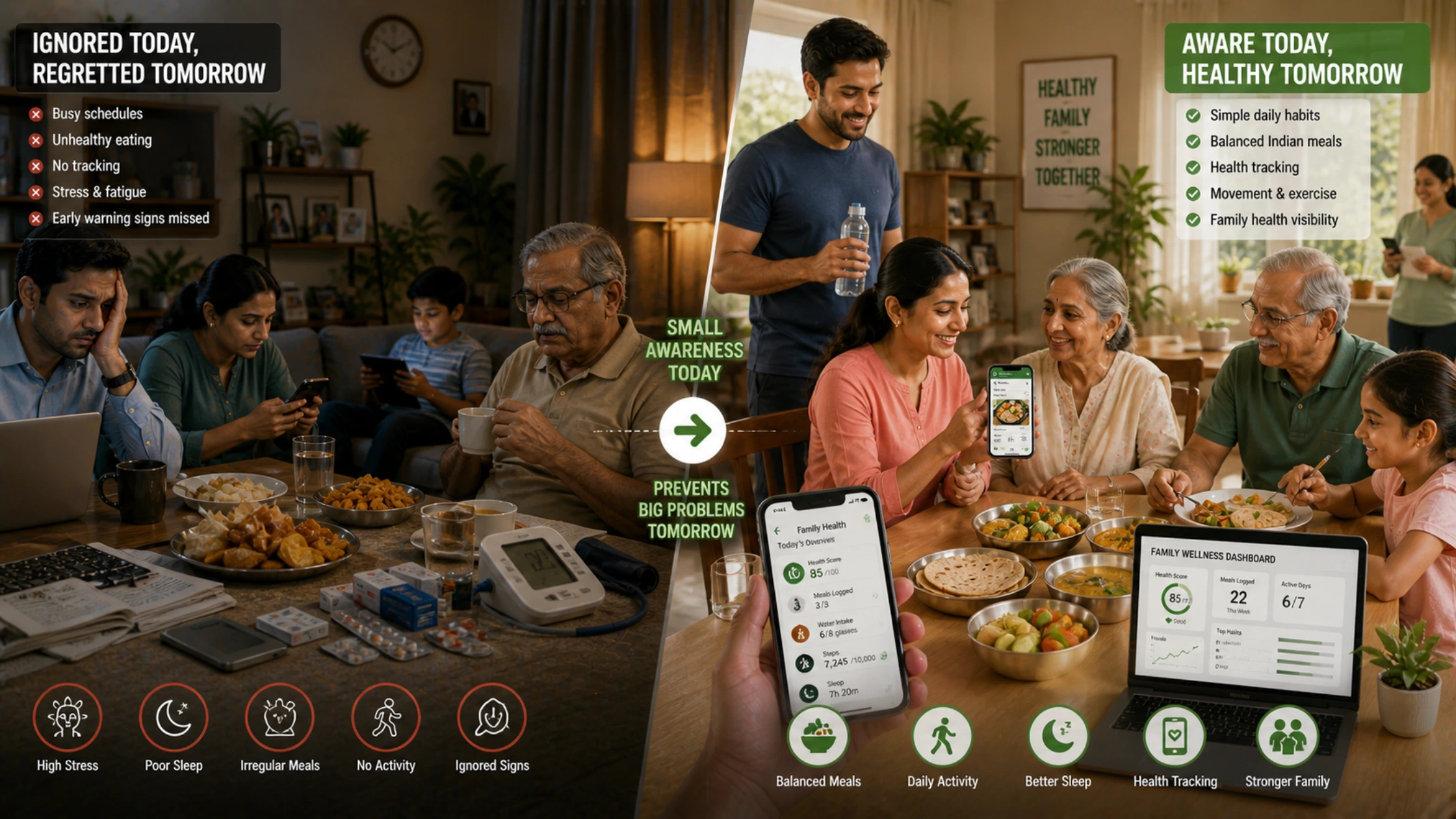
For many households, family health India often becomes urgent only after something goes wrong.
A blood sugar spike.
Unexpected fatigue.
Weight gain.
High BP.
A parent’s diagnosis.
Until then, health is often treated like something to “manage later.”
This is one of the biggest hidden problems in modern family wellness India.
Families are usually not careless.
They are busy.
Work, school, caregiving, finances, meals, and routines often push daily health awareness into the background.
This creates a dangerous pattern:
Health becomes reactive, not preventive.
The challenge is not usually lack of love.
It is lack of visible systems.
This is why preventive health family practices are becoming increasingly important, especially in Indian households where multiple generations often share food habits, routines, and long-term health risks.
When families only act after illness, they often miss the smaller patterns that build bigger problems.
The real opportunity is earlier awareness.
Not fear.
Not obsession.
Just better visibility.
The “We’ll Fix It Later” Mindset
One of the most common health mindsets in Indian homes is:
“We’ll handle it when needed.”
This sounds harmless.
But over time, it creates delayed action.
Common Examples:
- “Weight has increased, but we’ll start walking next month.”
- “Papa’s sugar is borderline, but let’s monitor later.”
- “Kids are eating too much junk, but exams are going on.”
- “Sleep is bad, but work is hectic right now.”
Why This Happens:
Families often prioritize immediate demands over invisible risks.
Practical Reality:
Daily life feels louder than preventive care.
Indian Household Context:
Many homes juggle:
- School schedules
- Office pressure
- Elder care
- Shared meals
- Cultural eating habits
- Social obligations
So health awareness gets postponed.
The Hidden Risk:
Lifestyle issues rarely appear overnight.
They build quietly through:
- Irregular food
- Low movement
- Poor sleep
- Stress
- Family eating patterns
This is why health awareness families need systems that work before crisis.
Why Daily Health Gets Ignored
Most families do not intentionally ignore health.
They simply underestimate daily patterns.
Why?
Because small habits rarely feel urgent.
For example:
- Extra sugar in tea
- Less sleep
- Weekend overeating
- Missed breakfasts
- Parent inactivity
- Child screen time
None of these feel like emergencies.
But repeated over years, they shape outcomes.
Core Problem:
Families notice symptoms more than systems.
Symptom:
High BP
System:
Years of:
- Food habits
- Stress
- Sedentary routine
Family Frustration:
“We didn’t realize it got this bad.”
This is exactly where family health tracking app ecosystems and caregiver health tools can become valuable, not for control, but for visibility.
Daily Health Often Gets Ignored Because:
- No one owns responsibility
- Everyone assumes things are “fine”
- Small shifts go unnoticed
- Health feels complex
Strategic Truth:
Awareness is often easier than recovery.
The Problem with Reactive Healthcare
Reactive healthcare means acting only after symptoms become visible.
This is extremely common in family health India.
Reactive Pattern:
- Diagnosis
- Panic
- Strict short-term action
- Temporary motivation
- Return to old habits
Why This Fails:
It treats outcomes, not patterns.
Practical Examples:
Parent:
Starts walking after diabetes diagnosis
Family:
Changes oil only after cholesterol issue
Individual:
Begins diet after visible weight gain
Core Issue:
Action starts after damage, not during warning signs.
Why Preventive Health Matters:
Preventive health family systems focus on:
- Earlier awareness
- Pattern recognition
- Small interventions
- Sustainability
Myth vs Reality
Myth:
Healthcare = doctor visit
Reality:
Health often depends more on daily behavior than occasional intervention
Family-Level Opportunity:
Simple observation of:
- Eating patterns
- Sleep
- Energy
- Weight trends
- Activity
Can often reveal more than waiting for crisis.
Small Signs Families Miss
Many families miss health decline because changes are gradual.
Common Overlooked Signs:
- Parent fatigue
- Mood shifts
- Appetite changes
- Reduced movement
- Sleep irregularity
- Rising waistline
- Frequent acidity
- Low hydration
These signs often feel “normal.”
But patterns matter.
Example:
A parent skipping walks for months may not feel urgent.
But over time, this may signal:
- Joint issues
- Motivation decline
- Metabolic slowdown
Indian Family Nutrition Context:
Because many homes share meals, unhealthy patterns often become collective:
- More fried food
- Late dinners
- High sugar tea
- Less protein
- Festival excess becoming default
This is why family nutrition habits India matter deeply.
The Problem:
Families often track appointments.
But not habits.
How to Build Awareness Daily
The goal is not turning families into constant health monitors.
It is creating simple awareness.
Step 1: Shift From Emergency Thinking to Pattern Thinking
Ask:
“How are we doing regularly?”
Not:
“Is something wrong?”
Step 2: Observe Shared Habits
Focus on:
- Meal quality
- Movement
- Sleep
- Parent wellness
- Child routines
Step 3: Make Awareness Easy
This is where:
- easy way to track meals
- food tracking without calorie counting
- health tracking for parents
Become useful.
Step 4: Keep It Supportive
Avoid:
- Nagging
- Fear
- Control
Use:
- Visibility
- Encouragement
- Routine awareness
Step 5: Use Low-Friction Systems
Daily tracking helps families notice small changes early.
Some families now use simple tools like Nutrimate’s Indian-first, AI-powered, WhatsApp-first structure because reducing effort often improves consistency.
Key Insight:
Complex systems fail.
Simple systems repeat.
Example Scenario
Family A:
Parents in their 50s. Working children. Shared meals.
Current Pattern:
- Daily tea + sugar
- Low protein
- Minimal movement
- Irregular check-ins
- Assumption that “everything is okay”
After Building Awareness:
- Meal visibility
- Parent food pattern awareness
- Earlier routine shifts
- Family discussion without pressure
Result:
Not perfection.
Just earlier correction.
Why This Matters:
Family wellness India improves when health becomes:
- Shared
- Visible
- Practical
Not:
- Reactive
- Fear-based
- Overwhelming
Common Mistakes Indian Families Make
1. Waiting for Diagnosis
Health becomes serious only after medical confirmation.
2. Assuming Normal = Healthy
Routine does not always equal wellness.
3. Ignoring Parent Patterns
Especially around food and movement.
4. Overcomplicating Prevention
Families often think health requires dramatic change.
Better Approach:
- Simple health habits
- Shared awareness
- Sustainable routines
- Gradual lifestyle change
Strategic Family Health Shift
The future of stronger family health India is not:
“Fix problems faster”
It is:
“Notice patterns earlier”
This is a powerful difference.
Because prevention often feels invisible.
Until it matters.
Frequently Asked Questions
Families often ignore health because daily responsibilities feel more urgent than preventive care. Health issues usually build gradually, so without visible symptoms, awareness gets delayed until problems become harder to ignore.
Prevent lifestyle diseases at home by focusing on consistent daily habits like balanced eating, movement, sleep, parent health awareness, and simple tracking of long-term patterns before symptoms become serious.
Nutrimate simplifies Indian health tracking with WhatsApp-first meal logging and a unique Caregiver Connection feature that keeps individuals and families consistently supported.
Read Nutrimate Wellness first on Google