 Pradnya Ganorkar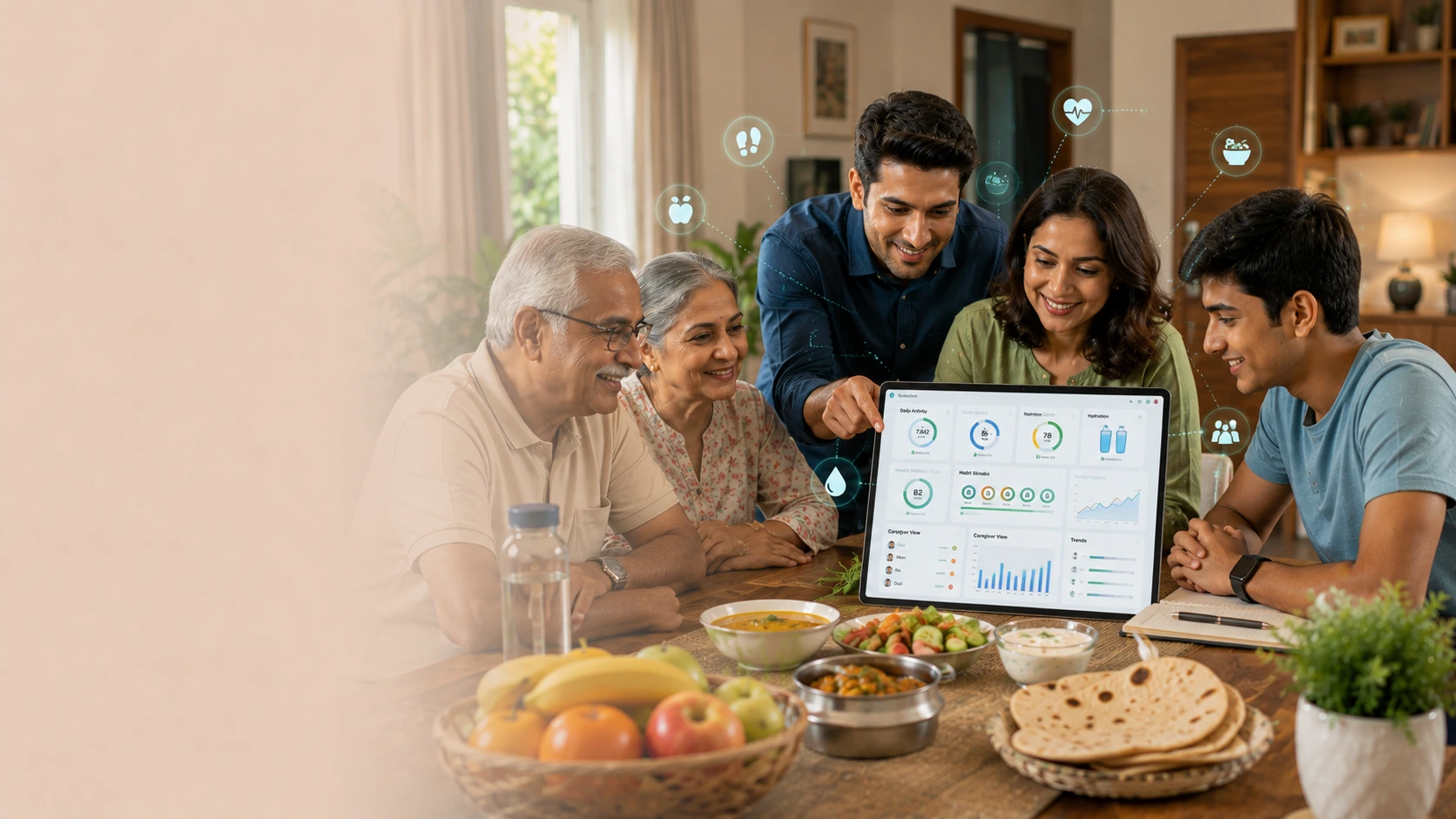
Most Indian families do not notice health problems when they begin.
They notice them when blood sugar is already elevated, when weight has increased significantly, when cholesterol appears in a report, or when parents begin facing lifestyle-related complications.
The reality is that most health challenges develop quietly over months and years.
This is why a family health dashboard is becoming increasingly relevant for modern households. Rather than waiting for symptoms, families can build visibility into everyday behaviors that influence long-term wellbeing.
Many households today are trying to improve family nutrition planning India strategies, encourage healthier routines, and create better awareness around daily choices. Yet they often lack a simple system that shows what is actually happening.
The goal is not medical monitoring.
The goal is awareness.
When families gain visibility into food habits, activity levels, sleep patterns, and wellness routines, they are better positioned to support long-term family preventive health India outcomes.
Why Families Need More Visibility
Most families assume they know how healthy they are.
However, assumptions are often very different from reality.
Consider a typical urban Indian household.
Parents may believe they are eating balanced meals.
Children may appear active.
Grandparents may seem healthy.
Yet nobody is tracking:
- Daily movement
- Sleep consistency
- Protein intake
- Processed food consumption
- Meal quality
- Stress levels
Over time, these small blind spots accumulate.
The Visibility Gap
Many health issues do not begin with disease.
They begin with habits.
Examples include:
- Regular late-night eating
- Sedentary work routines
- Frequent packaged snacks
- Low protein intake
- Poor hydration
- Inconsistent sleep
These behaviors often go unnoticed because families rarely have a structured way to observe them.
A family health dashboard helps close this gap.
Why Awareness Matters More Than Perfection
One of the biggest reasons why diets fail long term is that people attempt dramatic changes without understanding their existing habits.
Sustainable improvement begins with awareness.
Before changing behavior, families must understand:
- What they eat
- How often they move
- Whether routines are consistent
- Where health risks may be developing
This is the foundation of long-term family wellness India.
What Most Households Don’t Track
Most Indian families focus only on weight.
Weight matters.
But it is far from the only indicator.
Protein Intake
Many households underestimate the importance of protein.
Research consistently shows that Indians often consume less protein than recommended.
Understanding the protein in average indian meal is important because many traditional meals may be rich in carbohydrates but relatively low in protein.
This is particularly relevant for protein for indian vegetarians, who may need greater awareness of sources such as:
- Dal
- Paneer
- Soya
- Curd
- Chana
- Rajma
- Sprouts
Snacking Habits
Many people monitor meals but ignore snacks.
For example, few families know the actual calories in namkeen they consume daily.
Questions such as:
- What are the 100 gm namkeen calories?
- How many 100 gram namkeen calories are consumed weekly?
- What are the calories in 100 gm namkeen?
- How many 1 katori namkeen calories are being added daily?
These seemingly small additions can significantly affect overall nutrition.
Parent Health Monitoring
Many households actively track children while neglecting older family members.
This is why parents health tracking is becoming increasingly important.
Monitoring:
- Activity
- Sleep
- Weight trends
- Nutrition patterns
can help identify concerns earlier.
Habit Consistency
Consistency often matters more than intensity.
Tracking daily behaviors provides valuable insight into overall wellbeing.
Key Health Indicators for Families
A modern family health dashboard should focus on practical lifestyle indicators rather than complicated medical data.
1. Meal Quality
Families should monitor:
- Fruit intake
- Vegetable intake
- Protein consumption
- Processed food frequency
This supports better healthy eating habits for families.
2. Activity Levels
Many Indians have become increasingly sedentary.
Simple tracking of:
- Daily walking
- Exercise sessions
- Active minutes
can significantly improve awareness.
3. Sleep Patterns
Sleep is often ignored despite its impact on:
- Energy
- Mood
- Weight management
- Productivity
4. Family Nutrition Awareness
A strong nutrition awareness family culture encourages informed decisions rather than restrictive dieting.
5. Stress and Wellbeing
Modern lifestyles create increasing stress.
Monitoring general wellbeing helps identify patterns before they become larger concerns.
6. Routine Consistency
Long-term success often depends on sustainable routines rather than extreme interventions.
This aligns with the concept of sustainable health habits for Indians.
Nutrition, Activity and Habit Tracking
The most effective family dashboards focus on behaviors that families can actually influence.
Nutrition Tracking
Many people assume tracking means calorie counting.
Not necessarily.
In fact, food tracking without calorie counting is often more sustainable for families.
Instead of focusing on numbers, households can track:
- Meal consistency
- Protein intake
- Vegetable intake
- Snack frequency
- Hydration
This approach supports healthy Indian eating habits while reducing stress.
Activity Tracking
Movement is one of the strongest predictors of long-term health.
Tracking can include:
- Walking
- Cycling
- Sports
- Gym attendance
- Home workouts
Habit Tracking
Families often struggle because they focus only on outcomes.
Instead, tracking habits creates more reliable progress.
Examples include:
- Sleep before 11 PM
- Daily walks
- Home-cooked meals
- Water intake
These are examples of simple health habits for working professionals and families alike.
Tracking Without Complexity
The best systems reduce effort.
This is why many users prefer an easy way to track meals rather than manually entering every ingredient.
Modern platforms increasingly focus on simplicity rather than data overload.
Building a Simple Family Dashboard
A useful dashboard should answer one question:
“How is our family doing this week?”
It should not require advanced technical knowledge.
Step 1: Track Food Awareness
Begin with visibility into meals.
Questions include:
- Are we eating enough protein?
- Are snacks increasing?
- Are vegetables appearing regularly?
This supports better family meal planning India practices.
Step 2: Monitor Activity
Track:
- Daily movement
- Exercise frequency
- Sedentary time
Step 3: Include Parents
A strong dashboard includes health tracking for parents rather than focusing only on younger family members.
Step 4: Track Trends
The goal is not perfection.
The goal is noticing changes.
Patterns often reveal risks before symptoms appear.
Step 5: Keep It Simple
Complex systems fail.
Simple systems survive.
This principle explains why staying healthy is hard for many people.
Too much complexity creates friction.
The Role of Modern Health Platforms
This is where technology can support awareness without becoming overwhelming.
Nutrimate approaches this challenge through AI-powered, Indian-first health tracking designed around real Indian lifestyles.
Its focus on simple meal visibility, Indian food intelligence, and WhatsApp-based interactions helps reduce the friction that often causes people to stop tracking.
Importantly, it includes India’s #1 whatsapp meal logging feature and Unique Caregiver feature, making it easier for families to support both their own health and the wellbeing of parents or dependents.
Rather than focusing exclusively on calories, the emphasis remains on awareness, consistency, and sustainable habits.
Common Mistakes to Avoid
Mistake 1: Tracking Everything
More data does not always create better decisions.
Focus on the indicators that matter most.
Mistake 2: Only Looking at Weight
Weight is one metric.
Health is broader.
Nutrition, sleep, movement, and consistency matter too.
Mistake 3: Ignoring Parents
Many families actively support children while overlooking older adults.
This is why caregiver nutrition support and healthy eating for parents are increasingly important topics.
Mistake 4: Chasing Perfection
One of the main reasons why diets fail long term is unrealistic expectations.
Consistency beats perfection.
Mistake 5: Making Tracking Difficult
If tracking requires too much effort, people stop.
This explains why many users abandon apps despite good intentions.
The most successful systems focus on simple meal tracking for Indian food and habit awareness rather than overwhelming users with data.
Mistake 6: Treating Health as an Individual Responsibility
Health is often influenced by the household environment.
Shared awareness creates shared accountability.
Strong Indian household health habits develop when families work together rather than independently.
Mistake 7: Waiting for Symptoms
The biggest mistake is waiting until something goes wrong.
A modern family health dashboard helps identify patterns before they become problems.
By combining awareness, consistency, and visibility, families can create a stronger foundation for long-term wellbeing without turning health into a full-time project.
Reference
- Indian Council of Medical Research (ICMR) Dietary Guidelines for Indians
https://www.nin.res.in/downloads/DietaryGuidelinesforNINwebsite.pdf - World Health Organization (WHO) Healthy Diet Factsheet
https://www.who.int/news-room/fact-sheets/detail/healthy-diet
FAQs
Families should track meal quality, protein intake, activity levels, sleep patterns, hydration, and routine consistency. These indicators provide practical insight into long-term health trends.
A simple family health dashboard can help monitor daily habits, nutrition patterns, activity levels, and wellbeing trends. The goal is awareness rather than medical diagnosis.
Most families benefit from greater visibility into everyday habits. A dashboard creates awareness, supports accountability, and helps identify potential issues before they become larger health concerns.
Read Nutrimate Wellness first on Google