 Pradnya Ganorkar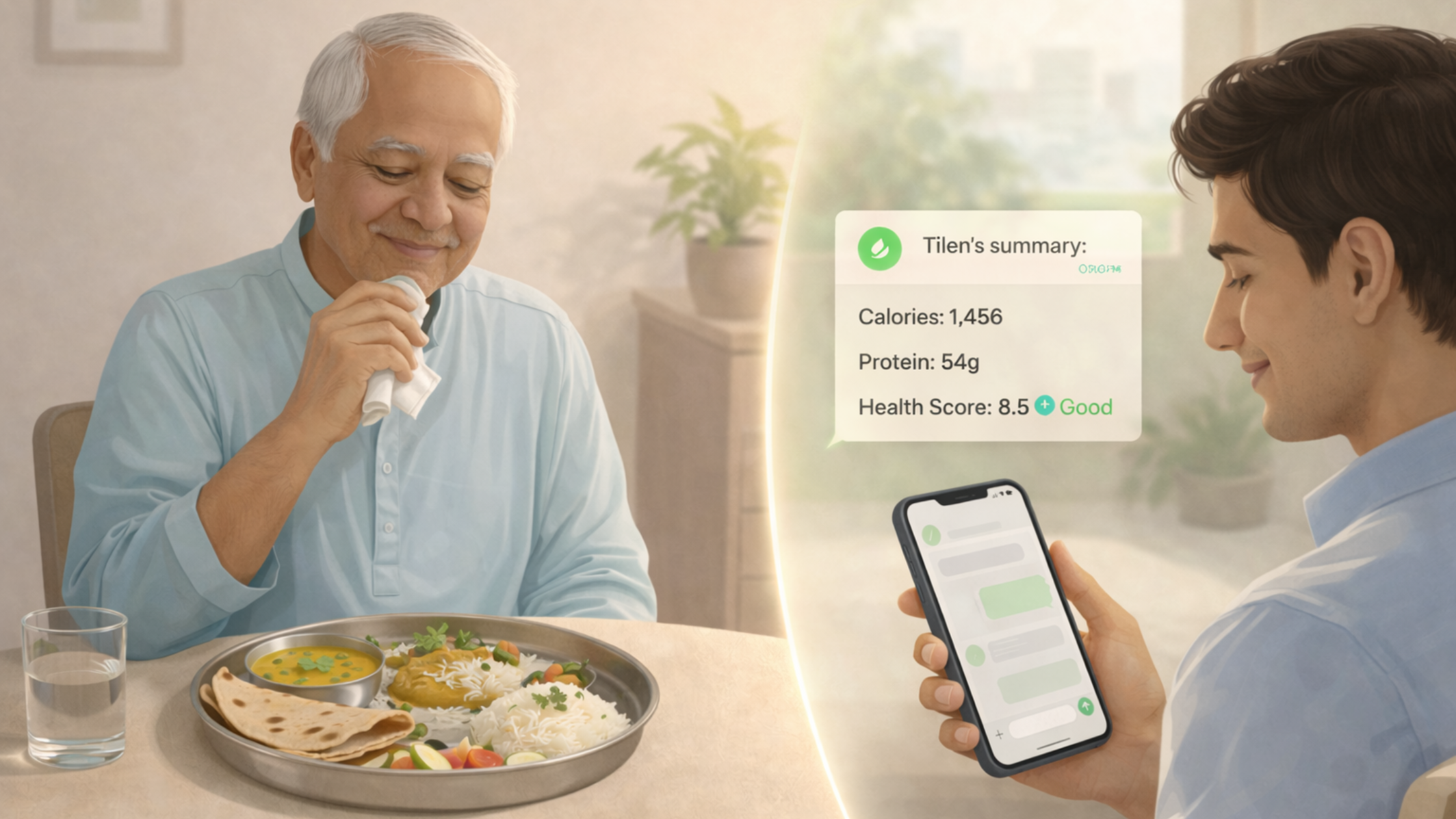
Caregiver Connection is a feature that allows a family member — a parent, spouse, adult child, or other caregiver — to view a Nutrimate user’s daily nutrition dashboard in real time on their own phone. The feature is designed for the reality of Indian health management, where dietary decisions, chronic disease monitoring, and health accountability are frequently family-level rather than individual-level activities. A daughter in Pune can monitor that her diabetic father in Aurangabad ate a low-carbohydrate lunch. A husband can check that his wife managing PCOS hit her protein target. A parent can see that their child studying away from home is eating adequately. Access is granted by the user and can be revoked at any time. The caregiver sees nutrition data — calories, protein, carbs, fat, water, and Health Score — but cannot edit the user’s profile, targets, or logs. Nutrimate has filed a patent for this feature.
Why India Needs a Caregiver Feature That No Other App Has Built
Western health apps are designed around individual autonomy — the assumption that one person makes their own health decisions in isolation. This model fundamentally misunderstands how health is managed in Indian households.
In India, when a family member is diagnosed with diabetes, the entire household changes its cooking. When a parent is recovering from surgery, the adult children collectively manage their care. When a young person moves to a new city for work or study, their parents worry about whether they are eating properly. These are not edge cases in India — they are the norm.
Who Benefits From Caregiver Connection
Elderly parents with chronic conditions — diabetes, hypertension, heart disease — who live alone or at a distance from their adult children. Their children can monitor daily nutrition without calling every day and asking intrusive questions.
Young adults studying or working in a new city, whose parents want reassurance that they are eating adequately without daily phone calls. Patients recovering from illness or surgery who are under dietary restrictions and whose family members want to support compliance. Spouses managing different health conditions who want to support each other’s nutrition goals without constant discussion.
How to Set Up Caregiver Connection: Step by Step
The user goes to their Nutrimate profile, taps Caregiver Access, and selects Add New Caregiver. They enter the caregiver’s name, relationship, and phone number. An OTP is sent to the caregiver’s phone for verification. Once the caregiver confirms the OTP, they are linked to the user’s account and can immediately see the nutrition dashboard.
The caregiver does not need to create their own Nutrimate account. They access the shared dashboard through a secure link or through a lightweight caregiver view in the app. The user can add up to a maximum number of caregivers and can remove access for any caregiver at any time from their profile.
What the Caregiver Sees And What They Cannot See
The caregiver sees the same health dashboard the user sees — current day’s calories, protein, carbs, fat, water intake, step count, and Health Score. They can see the food log — what the user has eaten today. They can see the historical trend — Health Score over the past 30 days.
The caregiver cannot edit any data, cannot change targets or goals, cannot see personal profile information beyond what the user has chosen to share, and cannot send messages through the app. This boundary is intentional — the feature provides visibility and support without giving the caregiver control over the user’s health data.
The Right Way to Use Caregiver Connection: Family Without Friction
Caregiver Connection works best when it is a support tool rather than a surveillance tool. The most effective use is when the family member checks the dashboard periodically — not obsessively — and uses what they see to have more informed, supportive conversations rather than critical ones.
A parent who sees that their child has only eaten 900 calories by 8 PM can text a gentle reminder to eat dinner — rather than calling to interrogate. A spouse who sees that their partner’s Health Score dropped for three consecutive days can proactively cook a protein-rich meal rather than waiting to be told something is wrong. This is the version of family health care that Caregiver Connection is designed to enable.
Read Nutrimate Wellness first on Google