 Pradnya Ganorkar
Written by Pradnya Ganorkar · Updated 12 November 2026
Calories in Poha
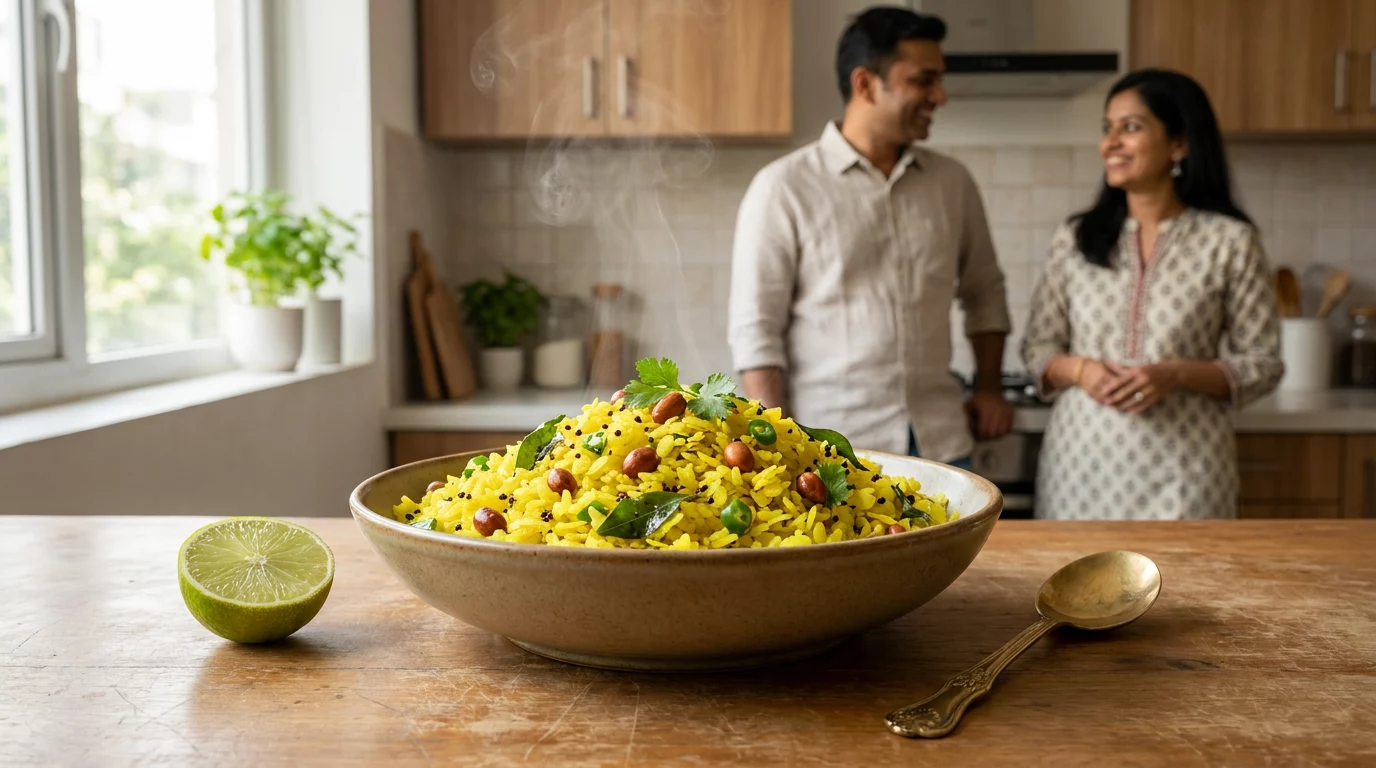
Poha has 354 kcal (1480 kJ) per 100 g of the edible portion, according to the Indian Food Composition Tables 2017. A cooked plate comes to roughly 250 to 350 kcal, depending on how it is made.
Poha is also called Pohe, Chira, Aval and Atukulu.
One nutrition reference describes a plate of cooked poha as about 200 to 250 g, made from 75 g of dry poha. It gives these approximate figures per plate:
- Plain poha: about 250 kcal
- Kanda (onion) poha: around 270 to 300 kcal, the most common home version
- Indori poha: about 320 to 350 kcal
The full breakdown
Source of the values: Values from the Indian Food Composition Tables 2017 (ICMR-National Institute of Nutrition, Hyderabad), food code A011: Rice flakes, mean of samples from 6 regions of India, per 100 g edible portion. You can read the original tables at nin.res.in.
| Nutrient | Per 100 g |
|---|---|
| Energy | 354 kcal (1480 kJ) |
| Protein | 7.44 g |
| Carbohydrate (available) | 76.75 g |
| Total fat | 1.14 g |
| Dietary fibre | 3.46 g |
| Total sugars | 0.34 g |
| Calcium | 9.19 mg |
| Iron | 4.46 mg |
| Potassium | 148 mg |
| Sodium | 2.58 mg |
| Magnesium | 77.92 mg |
| Zinc | 1.49 mg |
| Folate | 8.46 µg |
| Thiamine (B1) | 0.12 mg |
Most of the energy in poha comes from carbohydrate, and the fat content is low.
How Poha compares
Here are similar rows from the same tables, all per 100 g of the edible portion.
| Food | Energy | Protein | Carbohydrate (available) | Total fat | Dietary fibre | Total sugars |
|---|---|---|---|---|---|---|
| Poha | 354 kcal (1480 kJ) | 7.44 g | 76.75 g | 1.14 g | 3.46 g | 0.34 g |
| Amaranth seed | 356 kcal (1490 kJ) | 14.59 g | 59.98 g | 5.74 g | 7.02 g | 0.88 g |
| Atta | 320 kcal (1340 kJ) | 10.57 g | 64.17 g | 1.53 g | 11.36 g | 1.80 g |
| Bajra | 348 kcal (1456 kJ) | 10.96 g | 61.78 g | 5.43 g | 11.49 g | 0.81 g |
In this table, poha has the most carbohydrate of the four and less protein and fibre than atta or bajra. Its fat is the lowest of the four. If you track protein in your rotis, see our page on protein in atta.
These are values for the ingredient as listed in the tables, not for a cooked dish.
Good to know
- Raw and cooked are different measures. The 354 kcal figure is for 100 g of poha as listed in the tables. A cooked plate is a different weight and includes whatever else goes into the dish, so do not compare the two directly.
- Thick or thin. One reference reports that thin (paper) poha and thick poha have identical calories per 100 g of dry weight. Treat this as a general guide and check your pack label.
- Weight loss. One food site describes poha as low in calories and a good choice for weight loss, and says adding vegetables for extra fibre helps. A dietitian can tell you how it fits your own plan.
- Iron. The tables show 4.46 mg of iron per 100 g. A food reference says iron-fortified poha can contain up to 20 mg per 100 g, so check the label if iron matters to you.
Questions people ask
How many calories are in a plate of cooked poha?
A plate of cooked poha is roughly 250 to 350 calories, depending on the preparation. Plain poha is about 250 kcal, kanda poha is around 270 to 300 kcal, and Indori poha is about 320 to 350 kcal.
How many calories are in two plates of poha?
Two plates mean twice the figure for one plate. Start from the range for your type of poha above, and remember that your own recipe and portion will move the number.
Does thick or thin poha have different calories?
One reference reports identical calories for thin and thick poha per 100 g of dry weight. The way you cook it will usually make more difference than the thickness.
Is poha good for weight loss?
One food site calls poha low in calories and a good choice for weight loss, especially when vegetables are added for fibre. This is general information. Your own needs are best discussed with a registered dietitian.
What are the health benefits of poha?
The ICMR table lists dietary fibre of 3.46 g, magnesium of 77.92 mg, potassium of 148 mg and thiamine (B1) of 0.12 mg per 100 g. Iron-fortified poha can contain more iron than regular poha, so read the label.
With Nutrimate Wellness
Nutrimate AI Nutrition and Fitness Tracking offers Indian food nutrition information, calorie and protein tracking, and WhatsApp-based food logging. That makes it simpler to record your own plate of poha instead of guessing. You can also try our calorie calculator or read how to calculate daily calories in India. To ask about Nutrimate, use our contact page.
Sources
Values are per 100 g of the edible part of the food, from the Indian Food Composition Tables 2017 (ICMR-National Institute of Nutrition). Actual values vary with variety, season, cooking and portion size.
This article is general information, not medical advice. Speak to a doctor or registered dietitian about your own needs.
Read Nutrimate Wellness first on Google