 Team Deylaxy
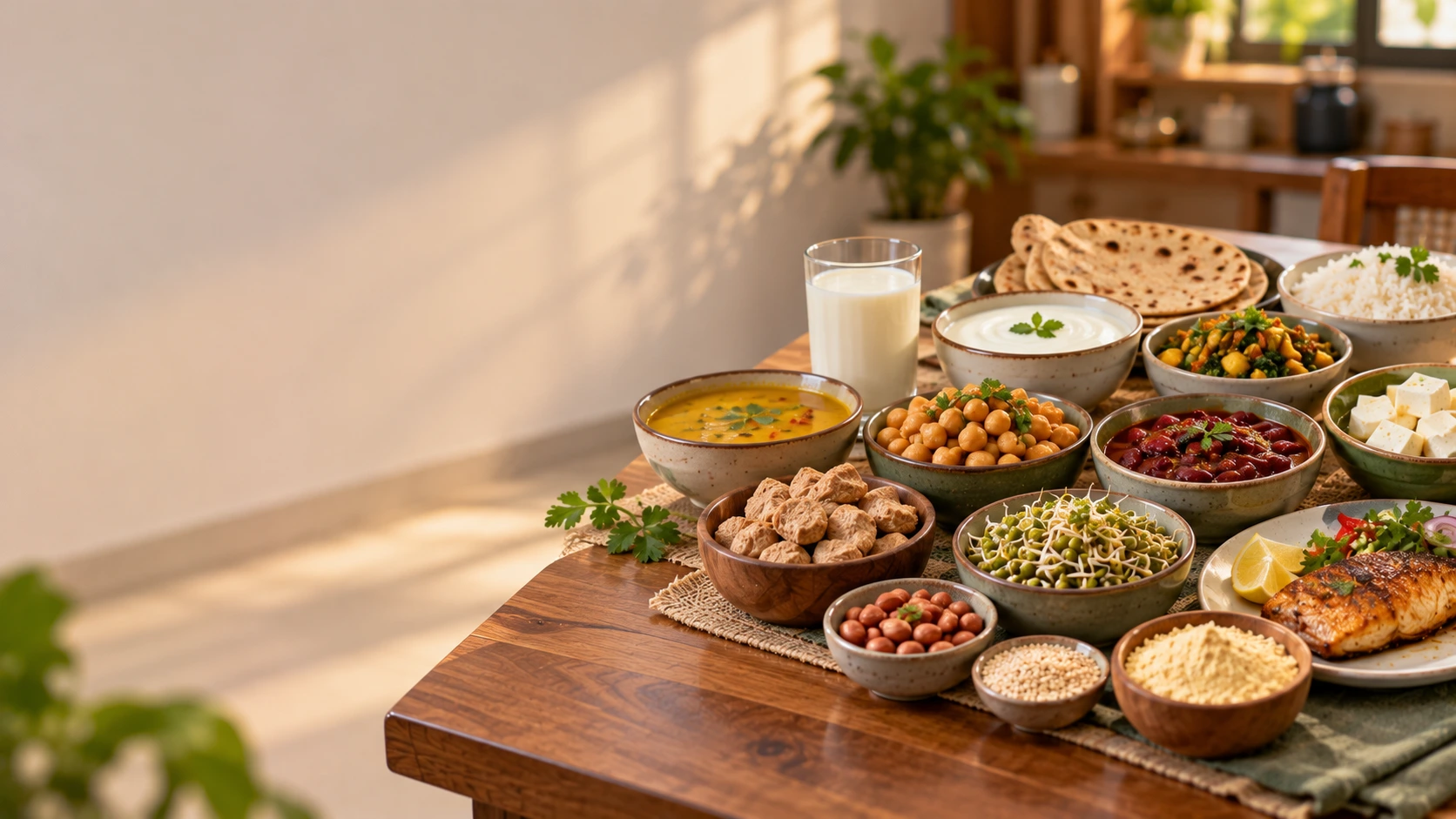
Things rich in protein: everyday Indian foods and how much you need
Published by Pradnya, Nutrimate
Many everyday Indian foods are rich in protein, including dal, chana, rajma, soya, paneer, dahi, milk, besan, sprouts, peanuts and til. As reported from ICMR-NIN, healthy adults need about 0.83 g of protein per kg of body weight a day. The figures below come from commercial health sources that repeat ICMR-NIN data, so treat them as a guide, not a prescription.
This guide covers the foods, the daily amount, how dal works with roti or rice, and how to track protein in home-cooked meals.
What are the things richest in protein in everyday Indian food?
Protein-rich vegetarian foods that Indians already eat daily include dal, chana, rajma, soya, paneer, dahi, milk, besan, sprouts, peanuts and til.
A few figures from the sources we reviewed:
- Soya chunks provide about 52 g of protein per 100 g of dry weight, according to a single commercial source.
- Groundnuts, cashews and almonds are listed at around 23 g of protein per 100 g for the group.
- Fish is listed in ICMR-NIN reference materials at roughly 20 g of protein per 100 g, though actual values vary by species and preparation.
We have not given gram figures for other foods, because the sources we checked did not support them.
How much protein do you need in a day?
ICMR-NIN sets the adult protein RDA (recommended daily amount) at 0.83 g per kg of body weight a day. The same figure applies to healthy men and women.
As a worked example, a 60 kg adult needs about 50 g of protein a day.
One source reports that ICMR-NIN's 2024 guidelines say intakes above about 1.6 g per kg a day add no extra muscle. Your own needs depend on your health, age and activity, so a doctor or registered dietitian can assess them for you.
Which vegetarian Indian foods are high in protein?
These are the staples that appear most often in the sources:
- Dal, chana and rajma: everyday pulses and legumes that sit on the list of protein-rich vegetarian foods.
- Soya: soya chunks are the highest figure we found, at about 52 g of protein per 100 g dry weight from one commercial source.
- Paneer: paneer is protein-rich but also high in fat, so a serving is about 50 g.
- Dahi, milk and besan: all appear on the same list of daily vegetarian protein foods.
- Sprouts, peanuts and til: also on the list, and nuts and oilseeds as a group are listed at around 23 g of protein per 100 g.
Mixing several of these through the week is a simple way to cover your protein without changing how you cook.
Are fish and other non-vegetarian foods rich in protein?
Fish is a protein-rich non-vegetarian option, at roughly 20 g per 100 g in ICMR-NIN reference materials, as reported. Values differ by species and by how the fish is cooked.
Most vegetarian foods have 70–85% protein digestibility according to ICMR-NIN, while animal proteins are absorbed more easily. That is a reason to eat a variety of protein foods through the day. It is not a reason to avoid vegetarian meals.
How do dal, rice and roti work together for protein?
Pulses are rich in lysine but lower in methionine, while cereals are the opposite. Because of this, the two complement each other in one meal.
Eating cereals and pulses together, about 3:1, improves protein quality. A plate of dal with roti or rice already does this.
How can you track protein in home-cooked Indian food?
Cooking changes the weight of food, not its protein content. Adding water to a dal makes it larger, not richer in protein.
For example, dal made from 30 g of raw toor dal holds about 6.5 g of protein, however much water is added.
Sources disagree on whether to weigh dal raw or cooked, so pick one method and use it consistently.
If you would rather not do this by hand, Nutrimate AI Nutrition and Fitness Tracking, from Nutrimate Wellness, offers AI-assisted food logging, Indian food nutrition information, calorie and protein tracking, health insights and WhatsApp-based food logging. You can read more on the Nutrimate app page, try the calorie calculator, or read why Indian food isn't unhealthy, we just track it wrong.
Do you need protein powder, and who should be careful?
ICMR-NIN calls protein powders unnecessary for healthy people. Regular meals built around the foods above are the starting point.
High-protein diets need care in anyone with kidney disease, and such readers should talk to a doctor first.
This article is general information, not medical advice. Speak to a doctor or registered dietitian about your own needs.
Sources
- instacuppastore.com — high protein indian diet how to hit 100g on indian food 2026
- disha.health — high protein vegetarian foods
- rebalance.kitchen — icmr protein requirements indians daily guide
- rozmac.com — protein content indian foods chart
- peacefulhealth.in — best protein foods in india
- prolicious.com — 30 non meat high protein foods the complete guide for indian vegetaria
Related on our website
More on this subject from us: