 Pradnya Ganorkar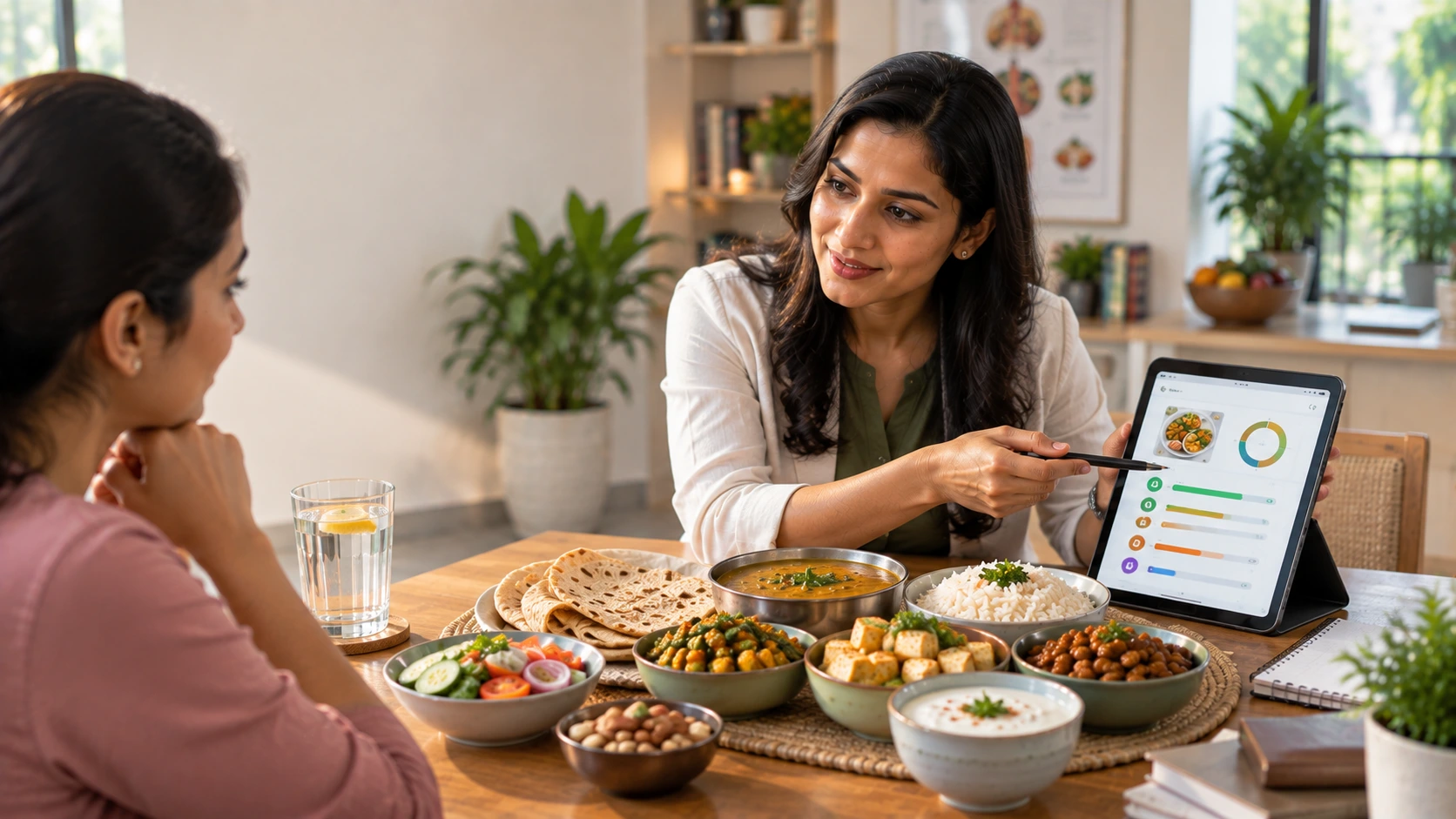
For nutrition professionals, understanding protein in average indian meal patterns is more useful than simply telling patients to “eat more protein.” A typical Indian meal may contain dal, roti, rice and vegetables, yet the actual protein contribution can still be lower than a patient assumes.
This makes protein awareness an important part of clinical nutrition, particularly when working with vegetarian households, gym members, older adults and people trying to improve body composition. Accurate Indian food data, including indian food database resources and IFCT 2017, can help professionals move from generic advice to measurable dietary changes.
Why Protein Is the Most Misunderstood Nutrient in Indian Diets
Protein is often misunderstood because Indian diets can appear protein-rich without necessarily providing enough protein across the entire day.
Dal is a familiar example. Because it is eaten regularly, patients may assume that one bowl of dal automatically satisfies their protein requirement. In practice, the quantity of dal, its preparation, the amount of liquid used and the rest of the meal all affect the final protein contribution.
The same issue appears with meals built around roti or rice. These foods contribute some protein, but they are primarily carbohydrate sources. Vegetables contribute important micronutrients and fibre, but usually do not provide enough protein to serve as the main protein component of a meal.
The question nutritionists should therefore ask is not:
“Does this meal contain protein?”
It is:
“How much protein does this meal actually provide, and how does that contribute to the person’s daily requirement?”
WHO notes that protein provides structural and functional building blocks for the body and that protein can come from both animal and plant sources. For adults, protein generally contributes around 10 to 15% of total energy intake, although needs can differ with age, activity and other individual factors.
For clinical practice, protein targets should therefore be individualised rather than applied as a single number to every patient.
Protein Content in Common Indian Meals: The Real Numbers
A practical way to teach patients is to examine familiar meals rather than abstract nutrient targets.
A standard lunch containing:
- 2 rotis
- 1 katori dal
- 1 katori sabzi
- 100g cooked rice
may provide approximately 18 to 22 grams of protein depending on ingredients, preparation and portion size.
That is meaningful, but it may still represent only part of the day’s requirement.
For example, a 65 kg woman with a daily protein requirement of around 52g would need additional protein through breakfast, snacks and dinner. The precise requirement should be determined according to the individual’s age, body composition, activity, health status and clinical goals.
Think in terms of meal contribution
| Meal component | Primary nutritional role | Protein awareness |
| Roti | Carbohydrate and some protein | Useful contribution, but usually not the primary protein source |
| Rice | Mainly carbohydrate | Moderate contribution depending on quantity |
| Dal | Protein, carbohydrate and fibre | Important plant protein source |
| Sabzi | Micronutrients and fibre | Usually not a major protein source |
| Curd | Protein and other nutrients | Practical addition to meals |
| Paneer | Protein and fat | Useful protein-dense option |
| Eggs | High-quality protein | Convenient option for non-vegetarians |
The key lesson is that a balanced plate does not automatically mean a high-protein plate.
For people focused on fitness, protein for muscle gain india requires particular attention because simply increasing gym sessions without adequate protein and overall dietary support may limit progress.
The Vegetarian Protein Gap and How to Address It
The Indian vegetarian diet can support adequate protein intake, but it requires deliberate food selection and sufficient portions.
This is where vegetarian protein india becomes an important practical topic for nutritionists.
Instead of asking patients to replace their entire diet, professionals can strengthen existing meals.
For example:
Dal + paneer
Adding paneer to a dal and vegetable meal increases the protein density without requiring a completely different cuisine.
Rajma + curd
Rajma provides plant protein and fibre, while curd adds another convenient protein source.
Roti + eggs
For people who consume eggs, adding eggs to a familiar roti-based meal can increase protein without removing the staple.
Sattu drink
Sattu can provide a practical option for breakfast or a snack, particularly for people who need convenient food options.
Soy chunks + vegetables
Soy-based foods can be useful when patients are comfortable incorporating them into their regular meals.
The objective is not to make every meal extremely high in protein.
It is to distribute meaningful protein sources throughout the day.
This approach also makes nutrition advice more sustainable. Patients are more likely to follow a plan based on foods they already understand and eat than one requiring unfamiliar products or complicated recipes.
IFCT 2017: Why Indian Food Data Matters for Clinical Practice
Indian nutrition advice becomes less reliable when Indian foods are represented using generic international databases.
The IFCT 2017 was developed by the National Institute of Nutrition under ICMR and contains nutrient composition information for 528 key foods across 20 food groups. The database was created from Indian food sampling and analysis, making it particularly relevant to Indian dietary assessment.
This matters because food composition is not simply a universal lookup exercise.
Regional varieties, preparation methods, raw versus cooked weights and food composition can affect the values used in dietary calculations.
For a nutritionist, an indian food database therefore has two major advantages:
- It makes dietary assessment more relevant to the foods patients actually consume.
- It reduces dependence on assumptions derived from non-Indian food datasets.
For example, a patient may log dal, poha, idli, dosa, chapati, rajma or regional foods. A clinically useful system should recognise these foods in an Indian context rather than forcing the patient to select an approximate Western equivalent.
The National Institute of Nutrition identifies IFCT 2017 as a major source of Indian food composition data and makes the resource available through its official website.
This is particularly important when nutritional data is being used to guide patient behaviour.
High-Protein Indian Meal Combinations That Work in Practice
Nutritionists can make protein recommendations easier to follow by converting targets into familiar meal combinations.
Consider a simple framework:
| Existing meal | Practical protein improvement |
| Poha | Add peanuts, curd or another appropriate protein source |
| Roti + sabzi | Add dal, curd, paneer or eggs |
| Rice + vegetables | Add dal, rajma, chana, curd or paneer |
| Idli | Pair with sambar and an additional protein source where appropriate |
| Paratha | Pair with curd and a protein-rich side rather than relying only on the paratha |
| Snack | Consider sattu, curd, milk, chana or nuts depending on individual needs |
The advantage of this approach is behavioural simplicity.
Patients do not have to remember a completely new diet. They only need to understand what is missing from their existing meal.
Protein awareness also requires portion awareness
“Eat dal” is incomplete advice.
A better conversation is:
- How much dal are you eating?
- How frequently?
- Is it thick or heavily diluted?
- What other protein sources are present?
- What does the rest of your day look like?
This is particularly relevant to the common question of why people can eat dal every day and still have inadequate total protein intake.
The issue is often not the absence of protein foods. It is insufficient quantity and inconsistent distribution.
How Tracking Tools Help Patients Understand Protein Intake
Nutrition education becomes more powerful when patients can see their own data.
A nutrition tracking app can turn a general recommendation such as “increase protein” into something measurable.
Instead of simply telling a patient to eat more protein, a nutrition professional can review several days of actual meal records and identify patterns.
For example:
Day 1: Breakfast contains little protein, lunch contains dal, dinner contains vegetables and rice.
Day 2: Breakfast contains poha, lunch contains rajma, dinner contains roti and sabzi.
Day 3: Breakfast is skipped, lunch is mostly rice, dinner includes paneer.
The pattern becomes easier to understand when meals are viewed collectively rather than individually.
This is where patient nutrition tracking can complement professional consultation.
The patient sees what they actually eat. The nutritionist sees the pattern. The next intervention becomes more specific.
Nutrimate applies this principle through Indian-first food intelligence and WhatsApp-based meal logging. Its approach is designed to make everyday food tracking easier without requiring users to manually enter every nutritional detail.
For professionals working with fitness businesses, FitVia extends this ecosystem into trainer and dietitian workflows through client meal tracking, trainer dashboards and Indian food data. It can therefore complement the consultation process when the goal is ongoing accountability rather than one-time dietary advice.
The technology remains an enabler. The nutrition professional remains responsible for interpretation, context and appropriate guidance.
Building Protein Awareness Into Your Clinical Consultations
Protein education does not need to become a 30-minute lecture.
A simple consultation framework can make it part of routine practice.
Step 1: Establish the individual’s target
Consider:
- Age
- Body weight and composition
- Activity level
- Fitness objective
- Medical conditions
- Dietary pattern
- Clinical requirements
Step 2: Review actual meals
Ask patients to record meals over several days.
Avoid relying entirely on what they remember during the consultation. Food recall can miss snacks, beverages, portions and irregular meals.
Step 3: Identify the weakest meal
Rather than changing the entire diet, identify the meal with the largest protein gap.
For one person, that may be breakfast.
For another, it may be dinner.
For a busy professional, it may be the afternoon period when meals are replaced with tea and packaged snacks.
Step 4: Add before you remove
If a patient already eats roti and sabzi, consider adding dal, curd, paneer or another appropriate protein source before removing familiar foods.
This can make the recommendation easier to maintain.
Step 5: Track and review
Use patient nutrition tracking to determine whether the change is actually happening.
The cycle becomes:
Assess → Educate → Modify → Track → Review
This is more actionable than giving patients a generic high-protein diet chart and expecting perfect adherence.
What nutrition professionals should communicate
Patients do not necessarily need to become experts in nutrition science.
They need to understand three things:
- Protein needs are individual.
- Familiar Indian foods can contribute substantially to protein intake.
- Actual portions matter as much as food names.
That shift from food awareness to quantity awareness can make nutrition counselling considerably more practical.
It also helps separate evidence-based protein planning from the common misconception that a single food, supplement or meal can solve an overall dietary gap.
References
- ICMR National Institute of Nutrition: Indian Food Composition Tables 2017
- World Health Organization: Healthy Diet
FAQs
A typical Indian lunch with dal, roti, sabzi, and rice contains approximately 18 to 22 grams of protein, significantly below the daily recommended intake for most adults.
Dal, paneer, curd, rajma, chana, soy chunks, eggs, sattu, and nuts are the most practical vegetarian protein sources in Indian cuisine when consumed in adequate quantities.
Portion sizes are often small, dal is diluted in preparation, and the overall meal pattern does not provide enough total protein. Awareness of actual gram quantities is the first intervention.
The IFCT 2017, published by the National Institute of Nutrition, is the gold standard for Indian food composition data used in clinical nutrition practice.