 Pradnya Ganorkar
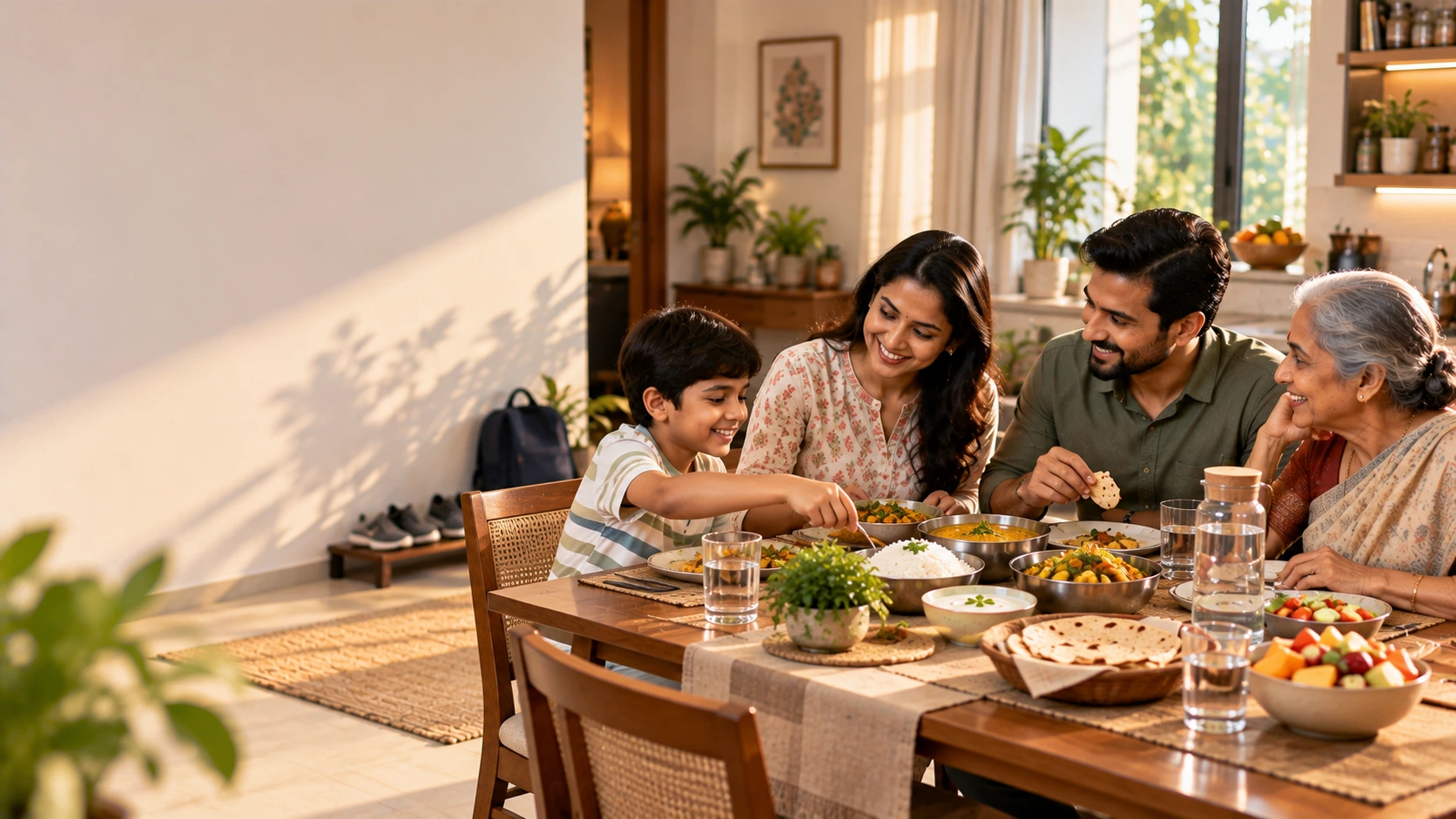
Building a healthy family is not about following a perfect diet, buying expensive supplements, or exercising every day without fail. It is about creating everyday routines that help children grow well, adults manage busy schedules, and parents maintain their wellbeing as they age. A practical family health system makes healthy choices easier to repeat, even when work, school, household responsibilities, and family commitments compete for attention.
For Indian households, this means working with familiar meals such as dal, roti, rice, sabzi, idli, poha, and curd, rather than replacing traditional food with complicated diet plans. A sustainable healthy indian family guide focuses on four foundations: nutrition, movement, sleep, and preventive health awareness.
Why Indian Families That Invest in Health Together Thrive Together
In many Indian households, one person manages everyone’s meals, another spends long hours at work, children follow school schedules, and older parents may have different health needs. Even when the family wants to become healthier, coordinating these routines can feel difficult.
The solution is to make health a shared responsibility instead of an individual struggle.
For example, a working professional trying to improve their diet may find it difficult to prepare separate meals. A family that plans balanced meals together can make nutritious choices more convenient for everyone. Similarly, a regular evening walk gives parents and children an opportunity to be active and spend time together.
Shared routines can help families:
- Reduce dependence on last-minute food choices.
- Make physical activity easier to maintain.
- Notice changes in eating, sleeping, and activity patterns.
- Support older parents without making health management overwhelming.
- Build positive habits that children can carry into adulthood.
The aim of indian family wellness is not to make every family member follow an identical routine. It is to establish a supportive environment where individual needs are respected and healthier choices become easier.
The Four Pillars of a Healthy Indian Family
A practical family health system india can be built around four connected pillars.
1. Nutrition awareness
Understand what the family eats, how meals are balanced, and where small improvements are possible. This does not require eliminating rice, roti, or favourite snacks. It requires variety, appropriate portions, and regular inclusion of nutritious foods.
2. Regular physical activity
Build movement into everyday life through walking, cycling, active play, household activities, or planned exercise. The right activity depends on each person’s age, ability, and health needs.
3. Consistent sleep and stress management
Late-night screen use, irregular work schedules, school pressure, and caregiving responsibilities can affect sleep and energy. Predictable routines can help the family protect time for rest.
4. Preventive health monitoring
Keep track of appropriate health check-ups, prescribed medication routines, relevant health measurements, and changes that may need professional attention. Tracking supports awareness, but it does not replace medical advice.
These pillars reinforce one another. Better sleep may make it easier to stay active, while regular activity can support sleep and wellbeing. A balanced approach is more sustainable than trying to change every habit at once.
Nutrition: Building a Family Food Culture That Lasts
A common mistake is assuming that healthy eating requires expensive ingredients or separate meals for every family member. In reality, many familiar Indian foods can contribute to a balanced diet when prepared and combined thoughtfully.
A practical family nutrition guide india begins with the meals the household already eats.
For example:
- Breakfast: Poha with peas, idli with sambar, or eggs with whole-grain toast, depending on family preferences.
- Lunch: Roti or rice with dal, vegetables, curd, and another suitable protein source.
- Evening snack: Fruit, roasted chana, curd, or a portion of a preferred snack.
- Dinner: A familiar home-cooked meal with vegetables and an appropriate protein source.
For vegetarian families, dal, beans, chickpeas, soy foods, dairy, nuts, and seeds can contribute to protein intake. The best combination depends on individual needs, portions, and the overall diet.
The World Health Organization’s healthy diet guidance emphasises dietary variety, balance, moderation, and adequacy. These principles are useful for Indian families because they encourage nutritional balance without demanding one rigid meal plan.
Three practical habits can make a difference:
- Plan a few meals before the week begins to reduce dependence on last-minute ordering.
- Include a suitable protein source and vegetables in regular meals where possible.
- Notice patterns in snacks, sugary drinks, and portion sizes without labelling foods as universally good or bad.
Families can also use simple meal tracking to build awareness. Recording meals occasionally or consistently, depending on their needs, may help reveal whether vegetables, protein sources, and other food groups are regularly included.
The goal is not to turn family meals into a daily examination. It is to make informed improvements while keeping food enjoyable and culturally familiar.
Movement: Making Activity a Natural Part of Family Life
Many families associate fitness with gym memberships, expensive equipment, or dedicated workout hours. These can be useful, but they are not the only ways to become more active.
For healthy lifestyle habits to last, movement needs to fit into everyday life.
Try these practical approaches:
- Walk together for 15 to 20 minutes after dinner, adjusting duration to individual ability.
- Encourage children to play outdoors or participate in a sport they enjoy.
- Break up long periods of sitting with short movement breaks.
- Help older family members find safe, suitable activities based on their mobility and medical advice.
- Schedule exercise in advance instead of waiting for a free hour to appear.
The WHO’s physical activity guidance explains that movement includes walking, cycling, recreation, sports, and other everyday activities, not just structured exercise. Adults should generally aim for 150 to 300 minutes of moderate-intensity aerobic activity per week, with appropriate muscle-strengthening activity as well.
These are general recommendations, not a requirement for everyone to begin at the same level. Children, older adults, pregnant people, and people with medical conditions may need age-appropriate or individually tailored guidance.
The most important first step is to choose an activity the family can repeat. A short daily walk that becomes routine is often more useful than an ambitious plan abandoned after a week.
Sleep and Stress: The Overlooked Foundations of Family Wellbeing
Nutrition and exercise receive considerable attention, but sleep and stress can influence how consistently a family follows both.
A professional who finishes work late may skip exercise and order dinner at the last minute. Parents managing childcare may have irregular sleep. Older adults may need additional support with routines or health-related concerns. These are practical barriers, not simply failures of motivation.
A few small changes can make daily routines more manageable:
- Establish reasonably consistent bedtimes and wake-up times.
- Reduce stimulating screen use close to bedtime.
- Prepare school essentials, work bags, and some meal ingredients in advance.
- Share household and caregiving responsibilities instead of expecting one person to manage everything.
- Make time for conversation and relaxation without requiring every family activity to be productive.
Stress free living does not mean eliminating stress from family life. It means building routines that reduce avoidable pressure and make recovery easier.
Families should also recognise when ongoing sleep difficulties, persistent stress, or changes in mood require professional support. Healthy routines are valuable, but they are not substitutes for appropriate care.
Awareness and Tracking: How Visibility Creates Better Family Health Decisions
Families often remember major health events but overlook everyday patterns. They may not notice how frequently vegetables appear at meals, whether an older parent is maintaining their usual routine, or how often everyone spends the evening sitting.
Simple tracking can turn vague concerns into practical questions.
A family health tracking app can help households record meals, review habits, and organise relevant information for different family members. Similarly, health tracking for parents can help caregivers maintain awareness of routines and appointments, with appropriate consent and respect for privacy.
Useful information to track may include:
- Meals and broad dietary patterns.
- Daily walking or other physical activity.
- Sleep routines and changes in energy.
- Scheduled health check-ups and relevant measurements.
- Follow-up actions recommended by healthcare professionals.
The aim is to notice patterns, not to diagnose conditions from app scores or isolated measurements.
Nutrimate is designed around practical, Indian-first health tracking, including WhatsApp-based meal logging that reduces the effort of recording everyday food. Its family-oriented approach includes India’s #1 whatsapp meal logging feature and Unique Caregiver feature, supporting simpler health awareness for individuals and families.
Technology works best when it reduces effort. If tracking becomes another source of stress, simplify the process. A few useful records maintained consistently are more valuable than a detailed system that nobody uses.
Your Family Health Roadmap: A 12-Month Action Plan
A complete change in family routines can feel overwhelming. A phased approach allows habits to develop gradually without disrupting familiar food, work, school, or caregiving arrangements.
Months 1-2: Establish one shared habit
Choose a morning walk, a balanced breakfast, or a screen-free family dinner. Focus on making the habit repeatable before introducing additional goals.
Months 3-4: Improve everyday nutrition
Review regular meals and identify one or two practical improvements, such as including more vegetables, adding suitable protein sources, or planning snacks in advance.
Months 5-6: Build a movement routine
Agree on realistic activity schedules for different family members. Adapt activities to age, mobility, interests, and medical needs.
Months 7-8: Strengthen sleep and stress routines
Introduce consistent sleep schedules where possible, reduce unnecessary late-night screen time, and distribute household responsibilities more fairly.
Months 9-10: Improve preventive health awareness
Review upcoming check-ups, relevant health records, and recommended follow-ups. Consult qualified healthcare professionals when concerns arise rather than relying on tracking tools alone.
Months 11-12: Review progress and simplify
Discuss which habits have become natural, which remain difficult, and what needs adjustment. Keep successful routines, remove unnecessary tracking, and choose the next year’s priorities.
The roadmap should be flexible. Families experiencing illness, changing work schedules, financial pressure, or caregiving demands may need to slow down or modify their plans.
A lasting family health system is not built through a single challenge or a perfect month. It grows when nutrition awareness, movement, sleep, and preventive monitoring become part of normal family life. Start with one shared habit, make it easy to repeat, and build from there.
FAQs
Nutrition awareness through simple daily tracking, regular physical activity embedded in family routine, consistent sleep habits, and proactive health monitoring together form the foundation of long-term family health.
Begin with one shared daily habit for the whole family. A morning walk, a protein-rich breakfast, or a screen-free family dinner provides the anchor around which other healthy habits build over time.
Yes. The families that succeed long-term build systems rather than relying on motivation, choose approaches compatible with Indian food culture and social life, and use simple tracking tools that maintain awareness without creating burden.
A family health tracking app with multi-member profiles, an Indian food database, WhatsApp-based logging, and family-level nutrition insights creates the awareness infrastructure that sustainable family health requires.