 Pradnya Ganorkar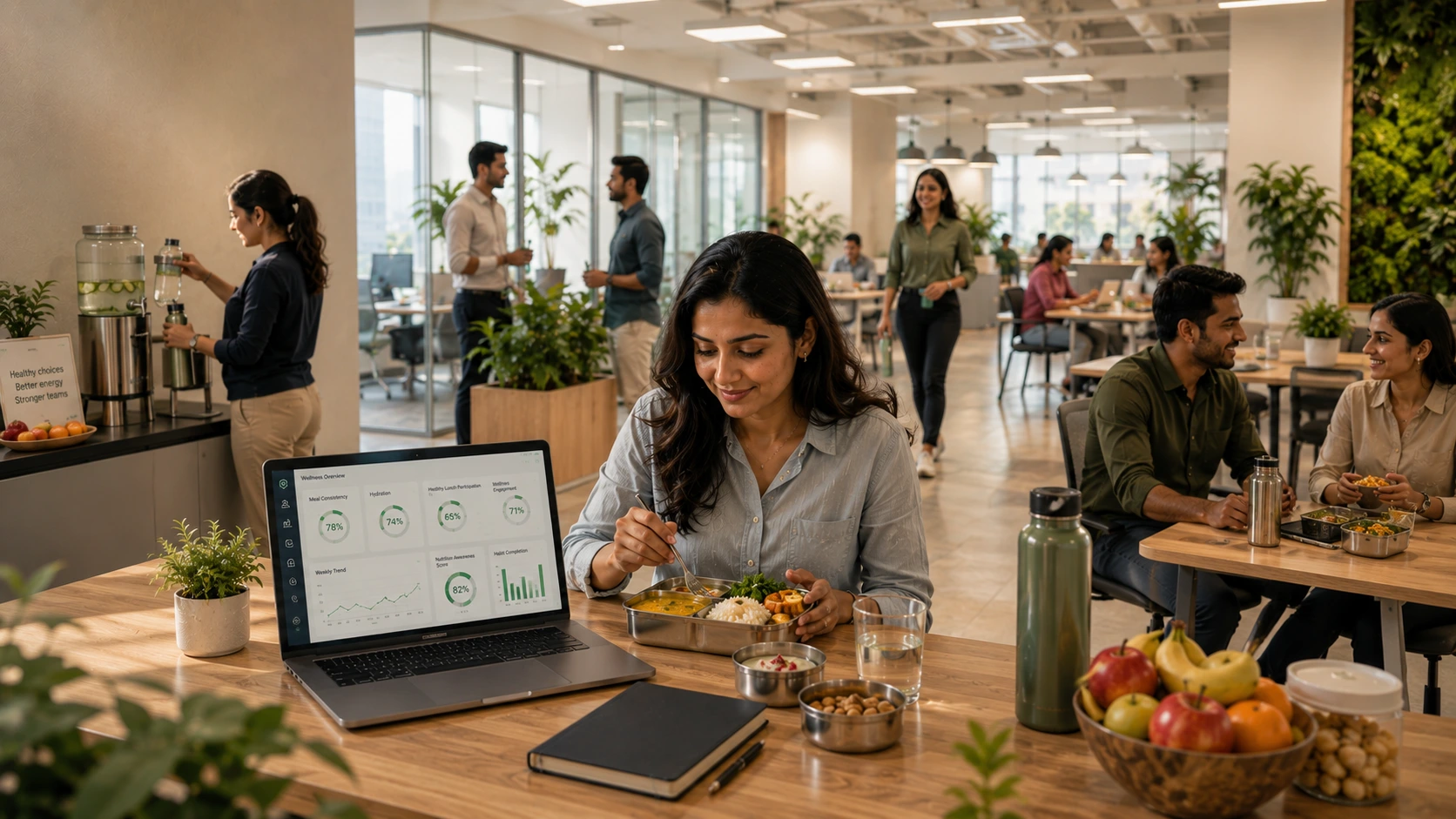
Most organizations invest in fitness challenges, annual health check-ups, yoga sessions, and mental wellbeing initiatives. While these programs offer value, one important factor often receives very little attention: everyday eating habits.
The reality is that nutrition tracking for employees is becoming an important part of modern corporate wellness because food choices directly influence energy, concentration, productivity, and long-term health. For Indian workplaces where employees frequently skip breakfast, order convenience meals, or work through lunch, improving employee nutrition can have a measurable impact without introducing restrictive diet programs.
Instead of encouraging employees to follow complicated meal plans, organizations should focus on building nutrition awareness, healthier routines, and sustainable behaviour. Small improvements in daily eating habits often deliver better long-term results than short-term wellness campaigns.
Why Most Workplace Wellness Programs Ignore Nutrition
Many workplace wellness initiatives focus primarily on physical activity.
Organizations organize step-count competitions, subsidize gym memberships, or celebrate International Yoga Day. While these activities encourage movement, they often overlook what employees eat during the remaining hours of the day.
Consider a typical office routine in India.
An employee skips breakfast because of traffic, drinks multiple cups of tea throughout the morning, eats a heavy restaurant lunch, relies on packaged snacks during meetings, and finishes the day with a late dinner after a long commute.
Even if that employee attends a weekly yoga session, inconsistent eating habits may continue to affect overall employee wellbeing.
This is why workplace nutrition deserves greater attention within every employee wellness program India.
Ignoring nutrition creates several common challenges:
- Reduced afternoon energy.
- Frequent unhealthy snacking.
- Poor concentration during meetings.
- Lower engagement during long workdays.
- Increased risk of lifestyle-related health concerns over time.
Rather than promoting restrictive diets, companies should encourage employees to become more aware of their everyday food choices. This approach aligns with modern preventive healthcare India, where early lifestyle improvements reduce long-term health risks before medical intervention becomes necessary.
Businesses that include nutrition within their corporate health strategy also demonstrate that employee wellbeing extends beyond occasional wellness events.
How Food Choices Affect Workplace Performance
The connection between food and work performance is often underestimated.
Employees do not need perfect diets to perform well. However, consistent eating patterns and balanced meals help support physical and mental performance throughout the workday.
Energy
Meals that contain a balance of protein, whole grains, vegetables, and healthy fats generally provide more sustained energy than highly processed snacks or sugary beverages.
For example, replacing fried snacks with fruit, roasted chana, sprouts, or curd can help employees avoid the sharp energy crashes that often occur during the afternoon.
Focus
Skipping meals or relying on convenience foods can make it harder to concentrate, especially during long meetings or demanding projects.
Encouraging regular meal breaks and balanced lunches supports better focus while contributing to healthier healthy eating habits.
Mood
Food choices also influence mood and motivation. Employees who regularly skip meals or eat inconsistently are more likely to experience irritability, fatigue, and reduced enthusiasm during the workday.
Creating a healthy workplace means recognising that wellbeing is influenced by everyday routines, not only annual wellness campaigns.
Productivity
Healthier eating habits contribute to improved decision-making, sustained energy, and better participation throughout the day.
Organizations that promote healthy eating at work often see broader benefits, including stronger employee engagement, reduced presenteeism, and greater participation in workplace wellness initiatives.
Instead of asking employees to count every calorie, businesses can encourage simple awareness of meals and routines. Nutrimate supports this approach through AI-powered, Indian-first health tracking that helps employees understand everyday eating patterns. With India’s #1 whatsapp meal logging feature and Unique Caregiver feature, individuals can build healthier routines without the complexity of restrictive diet plans or manual calorie counting.
Simple Nutrition Habits Companies Can Encourage
Improving employee nutrition does not require companies to introduce strict diet plans or monitor every meal. The goal is to create an environment where healthier choices become easier and more accessible.
Here are a few practical initiatives that work well in Indian workplaces:
Healthy Cafeteria Options
Offer balanced meals alongside regular menu choices. Including salads, fruits, sprouts, whole grains, and protein-rich dishes gives employees healthier alternatives without restricting personal preferences.
Water Reminders
Many employees spend long hours at their desks and forget to stay hydrated. Simple hydration campaigns, accessible water stations, or periodic reminders can encourage better daily habits and support overall employee wellbeing.
Lunch Awareness
Encourage employees to take proper lunch breaks instead of eating during meetings or while working. Eating mindfully can improve nutrition awareness, digestion, and focus throughout the afternoon.
Healthy Snack Choices
Replace or complement vending machine snacks with healthier options such as roasted makhana, roasted chana, nuts, fresh fruit, or yoghurt. These simple changes encourage healthy eating at work without forcing employees to follow restrictive diets.
The objective is not to control food choices but to make healthy decisions more convenient. Small, repeatable improvements often create lasting behaviour change and strengthen long-term workplace wellbeing.
Nutrition Awareness vs Diet Programs
Many corporate wellness initiatives still focus on temporary diet challenges. However, awareness-based approaches generally encourage better long-term participation because they fit naturally into employees’ everyday lives.
| Nutrition Awareness | Diet Programs |
| Encourages informed food choices | Often focuses on restrictions |
| Fits different cultural and dietary preferences | Can be difficult to sustain |
| Promotes gradual healthy eating habits | May rely on short-term motivation |
| Supports long-term preventive health | Frequently ends after the challenge |
| Builds sustainable routines | Higher risk of participants dropping out |
Instead of asking employees to follow complicated meal plans, organisations can encourage simple meal tracking, hydration awareness, and balanced eating. These habits are easier to maintain and support a stronger corporate wellness culture.
Building a Nutrition-Friendly Workplace Culture
A successful wellness culture is created through everyday habits rather than occasional events.
Leadership plays an important role by encouraging regular meal breaks, respecting lunch hours, and supporting realistic wellbeing initiatives instead of promoting unrealistic expectations.
Technology can also simplify this process when it focuses on awareness rather than restriction. Nutrimate helps employees understand their eating habits through simple, Indian-first meal tracking without requiring complex calorie counting. Using India’s #1 whatsapp meal logging feature and Unique Caregiver feature, employees can gradually build healthier routines while maintaining flexibility in their daily lives.
For organisations working with fitness trainers, wellness consultants, or corporate gyms, FitVia complements this ecosystem by providing trainer dashboards, Health Score, meal planning, progress reports, and engagement tools. This allows employers and wellness partners to encourage healthier habits through structured guidance instead of constant follow-ups, making workplace wellness programs more sustainable over time.
Creating a nutrition-friendly workplace is ultimately about making healthy choices simple, visible, and easy to maintain.
Nutrition Checklist for HR Teams
Use this checklist to strengthen your corporate health programs:
✔ Include nutrition education as part of every wellness initiative.
✔ Provide healthier food options in cafeterias and office events.
✔ Encourage employees to take uninterrupted lunch breaks.
✔ Promote hydration throughout the workday.
✔ Share simple nutrition tips instead of restrictive diet advice.
✔ Track participation and long-term wellness trends rather than one-time campaign results.
✔ Support digital health monitoring tools that encourage sustainable behaviour change.
✔ Build a culture where healthy routines become part of everyday work instead of occasional wellness activities.
These practical steps improve employee engagement, strengthen wellness initiatives, and help organisations build a healthier workforce through consistent, achievable actions rather than temporary programs.
References
- World Health Organization (WHO). Healthy diet.
https://www.who.int/news-room/fact-sheets/detail/healthy-diet - Centers for Disease Control and Prevention (CDC). Workplace Health Promotion.
https://www.cdc.gov/workplace-health-promotion/
FAQs
Nutrition tracking for employees helps organizations improve employee wellbeing by encouraging healthier daily eating habits. Balanced nutrition supports sustained energy, better concentration, improved mood, and contributes to long-term preventive health, making workplace wellness programs more effective.
Food directly influences energy levels, focus, and decision-making. Employees who eat balanced meals and maintain regular eating patterns are more likely to remain productive throughout the day, while skipping meals or relying on highly processed foods can lead to fatigue and reduced workplace performance.
Yes. Nutrition is one of the most practical ways to strengthen corporate wellness initiatives because it influences employees every day. Rather than promoting restrictive diets, organizations should focus on nutrition awareness, healthier food choices, and sustainable habits that employees can maintain over time.
HR teams can encourage healthier eating by offering nutritious cafeteria options, promoting hydration, protecting lunch breaks, sharing practical nutrition education, and using simple health tracking tools that help employees become more aware of their daily habits without adding unnecessary complexity.
Read Nutrimate Wellness first on Google