 Pradnya Ganorkar
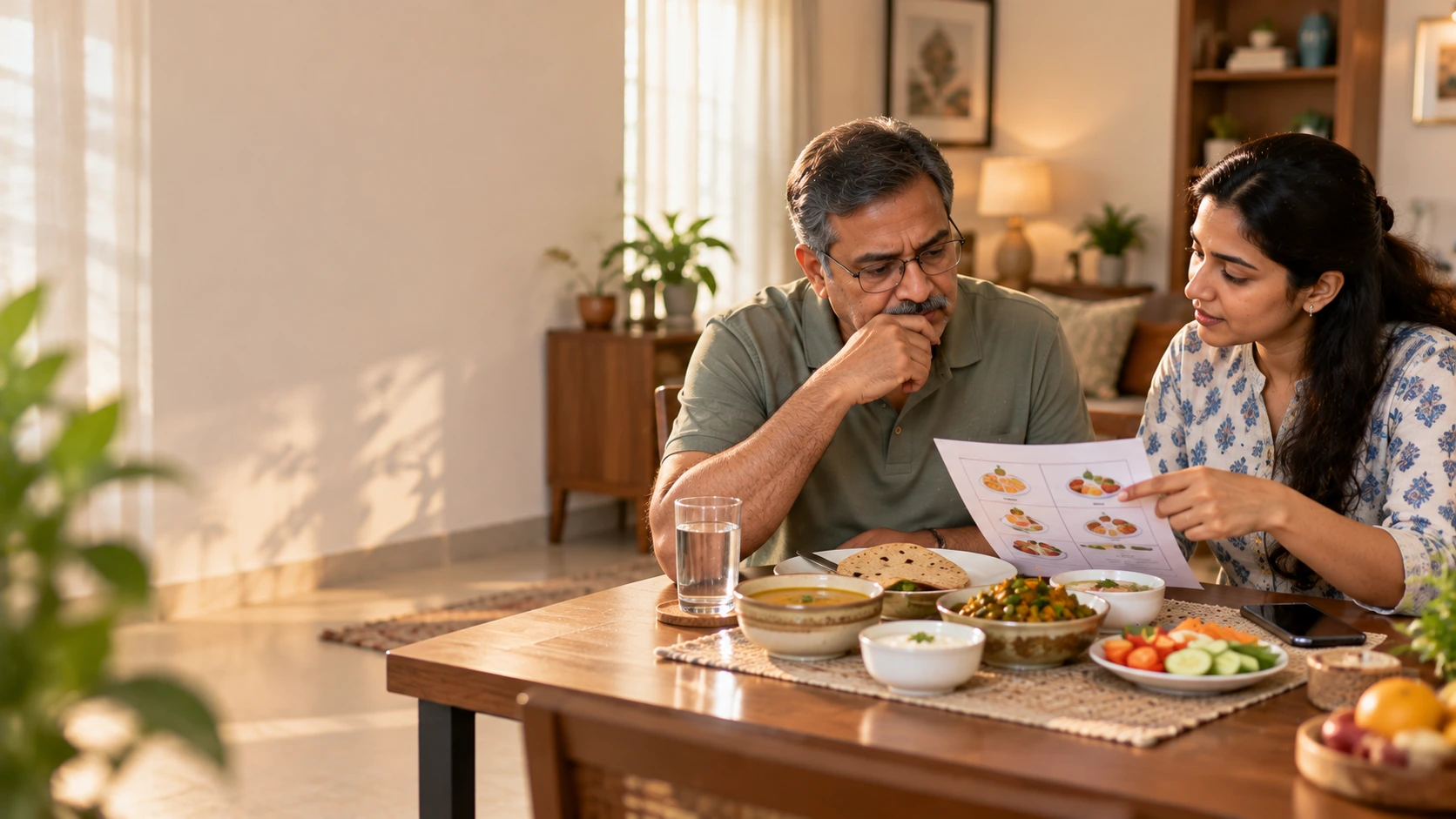
A patient leaves an Indian hospital with a printed diet chart, instructions from the dietitian, and a follow-up appointment scheduled for a few weeks later. At home, the family returns to its usual cooking routine. The patient may struggle to understand portions, manage meals around work, or explain the instructions to the person preparing the food.
When the patient finally returns, the dietitian has limited information about what happened in between.
This is the central challenge of post discharge diet follow up india: advice is provided in a clinical setting, but everyday eating happens at home, where routines, family responsibilities, food preferences, and practical constraints influence what is possible.
The gap should not automatically be treated as poor patient compliance. Often, patients and caregivers need clearer instructions, opportunities to ask questions, and a practical way to share their experiences between appointments.
The Gap Between the Discharge Diet Chart and the Home Kitchen
A discharge diet chart can communicate important nutrition instructions, but following it may be more complicated than reading it.
Consider three common situations in Indian hospitals:
- Cardiac recovery: A patient returns home to a family that prepares shared meals. The caregiver may understand that dietary changes are needed but remain unsure how to adapt familiar dishes.
- Post-surgery recovery: A patient may have changes in appetite, meal tolerance, or daily routine. The family may be uncertain about how to follow the instructions while managing household responsibilities.
- Diabetes care: A patient may receive dietary guidance in hospital but return to a work schedule with irregular meal times, office lunches, and limited control over food preparation.
These examples illustrate workflow challenges, not specific dietary recommendations. Individual nutrition instructions must come from the treating clinical team.
The World Health Organization’s guidance on continuity and coordination of care emphasises the importance of coordinating support as people move between healthcare settings. Nutrition follow-up can be considered within this wider continuity-of-care approach.
For hospital dietetics teams, the practical question is not simply whether a patient received a chart. It is whether the patient and caregiver understood the instructions, could apply them at home, and knew how to ask for clarification.
A more useful discharge process can include a brief explanation in the patient’s preferred language, an opportunity for the caregiver to ask questions, and clear instructions about when and how to seek follow-up.
Why Patients and Families Struggle to Follow Printed Diet Plans
Printed plans are useful reference documents, but they cannot anticipate every challenge that arises at home.
Instructions may be difficult to translate into everyday meals. A family may understand a recommendation in principle but be unsure how it applies to its usual dal, roti, rice, sabzi, or regional dishes.
The person preparing the food may not attend the consultation. In many households, a spouse, parent, adult child, or other caregiver makes daily food decisions. If they do not understand the plan, implementation becomes harder.
Daily routines can change after discharge. Travel to follow-up appointments, work commitments, household duties, and financial constraints may affect meal preparation and communication with the care team.
Patients may hesitate to report difficulties. Some people worry that admitting they could not follow a plan will lead to criticism. Others may not realise that they should ask for clarification when instructions are confusing.
A supportive follow-up process should therefore ask practical questions rather than assume non-adherence.
For example:
- Which parts of the plan have been easiest to follow?
- Which instructions are difficult to apply at home?
- Who usually prepares the patient’s meals?
- Are there any concerns the patient or caregiver would like the dietitian to review?
These questions help the team understand the context behind the patient’s experience. They also make follow-up conversations more specific and constructive.
What Hospital Dietitians Cannot See After Discharge
Once a patient leaves the hospital, the dietitian may have little visibility into the meals and routines that shape day-to-day implementation.
The next consultation might provide a verbal summary, but people do not always remember meal details from several weeks earlier. Caregivers may also have different recollections of what was prepared or eaten.
A patient diet tracking tool can help fill part of this information gap by allowing patients or caregivers to record meals and share relevant observations with the dietetics team, where an appropriate workflow exists.
For example, a patient could share a three-day meal photo log before the first follow-up appointment. The dietitian could review the submitted information, identify questions to discuss, and clarify whether the reported routine appears consistent with the prescribed plan.
The purpose is not to infer a diagnosis from photographs or judge a patient’s behaviour. A meal image may not reveal exact ingredients, quantities, cooking methods, or nutritional composition. It should be treated as contextual information rather than a precise measurement.
A structured patient diet tracking tool may be useful for documenting:
- Meals the patient chooses to record.
- Questions about specific foods or instructions.
- Practical barriers to following the discharge plan.
- Caregiver observations shared with the patient’s permission.
- Follow-up questions that need professional review.
The information can help prepare for a more focused consultation, but it cannot establish whether a patient is clinically stable or determine treatment needs on its own.
Light-Touch Follow-Up Models That Fit Busy Dietetics Teams
Hospital dietetics departments often work with limited time and competing clinical priorities. A follow-up model needs to be useful without creating an unmanageable stream of messages and records.
The following approaches can be adapted to a hospital’s staffing, patient population, and existing clinical processes.
1. A short meal photo log before the first follow-up
Invite selected patients to share meal photographs over a defined period, such as three days, if this is appropriate for their care plan. The dietitian can review the information before the appointment and prepare relevant questions.
This is an optional documentation approach, not a substitute for required clinical monitoring.
2. A brief post-discharge check-in
A designated team member can contact patients according to the hospital’s follow-up protocol to confirm that they understand the instructions and know when their next appointment is due.
Questions should remain within the staff member’s role. Clinical concerns should be directed to the appropriate professional.
3. Caregiver-inclusive communication
With patient consent, include the person who prepares meals or supports daily care in relevant explanations. This can reduce misunderstandings and help families apply instructions more confidently.
4. A structured review at the next appointment
Instead of asking only whether the patient followed the plan, review the practical challenges they encountered. Use this conversation to clarify instructions or revise the plan when the qualified clinician considers it appropriate.
These workflows support continuous care india by creating a clearer connection between discharge instructions and subsequent professional review.
Technology can make the process easier to organise. Nutrimate offers a WhatsApp-based way for patients and families to share meal information with a dietetics team. Nutrimate supports review by a professional and does not diagnose or treat.
FitVia, part of the wider Nutrimate Wellness ecosystem, also serves dietitians and fitness professionals through coaching and tracking tools. Any use in a clinical setting would need to be evaluated against the hospital’s requirements for clinical workflows, privacy, security, and professional oversight.
The right system is the one that fits the care team’s process and makes relevant information easier to review, rather than adding another disconnected platform.
Privacy, Consent and Clinical Boundaries
Nutrition information can reveal details about a person’s health, daily routines, and household circumstances. Hospitals should treat it accordingly.
Before introducing digital meal sharing, establish a clear process for explaining what information is collected, why it is needed, who can access it, and how it will be used. Patients should provide appropriate consent, and caregiver participation should be handled with the patient’s permission wherever applicable.
A practical approach includes:
- Purpose limitation: Collect information relevant to the agreed follow-up process rather than gathering unnecessary personal details.
- Controlled access: Ensure only authorised personnel can access patient submissions.
- Clear expectations: Explain whether messages are reviewed immediately, during working hours, or only before a scheduled consultation.
- Clinical escalation: Define how staff should direct urgent concerns or clinical questions to the appropriate healthcare professional.
- Professional judgement: Treat meal logs as supporting information, not as a replacement for clinical assessment or the prescribed care plan.
A WhatsApp message should never imply that a clinical professional is continuously monitoring the patient unless such a service genuinely exists.
Similarly, an app-generated summary or estimated nutrient value should not override the treating team’s instructions. The hospital dietetics department remains responsible for its professional decisions within its scope of practice.
Digital tools should strengthen the relationship between the patient and the care team while preserving appropriate clinical boundaries.
A Post-Discharge Nutrition Follow-Up Checklist
Hospitals can use the following checklist to review whether their process supports patients beyond the discharge date.
Before discharge
- Explain the nutrition plan in language the patient and caregiver understand.
- Clarify who is responsible for meal preparation and daily support.
- Explain how to contact the care team with questions.
- Confirm the planned follow-up arrangements and any instructions specific to the patient.
- Discuss whether optional meal logging would be useful and appropriate.
Between discharge and the first follow-up
- Provide the agreed channel for questions and information sharing.
- Invite meal photographs or observations only where suitable and with consent.
- Make the response time and availability of the care team clear.
- Direct clinical concerns through the hospital’s established escalation process.
At the first follow-up
- Ask what was easy or difficult to implement.
- Review the information the patient or caregiver chose to share.
- Clarify misunderstandings and discuss practical barriers.
- Make any required changes through the qualified professional.
- Record relevant decisions in the appropriate clinical record.
For ongoing improvement
- Review whether patients understand the discharge instructions.
- Gather feedback on the clarity and usefulness of follow-up communication.
- Assess whether the workflow is manageable for the dietetics team.
- Review privacy, consent, access controls, and escalation arrangements regularly.
A consistent process can help a hospital understand where its discharge communication needs improvement without assuming that every patient requires the same level of follow-up.
The central opportunity is to make nutrition guidance more usable after the patient returns home. A discharge chart remains important, but it works best when patients and caregivers understand it, can raise questions, and have a clear route back to professional support.
FAQs
Patients may find the instructions difficult to translate into familiar meals, may not have the support of the person preparing their food, or may struggle with work schedules and household responsibilities. Some may also hesitate to ask questions. Understanding these barriers is more useful than assuming that patients are simply unwilling to follow advice.
Hospitals can use scheduled check-ins, caregiver-inclusive education with consent, optional meal photo logs, and structured reviews during follow-up appointments. The workflow should match the patient’s needs and the team’s capacity, with clinical decisions remaining under qualified professional oversight.
WhatsApp can provide a convenient channel for patients or caregivers to share meal photographs and questions when the hospital has an appropriate, consent-based process. Hospitals must clarify who reviews messages, expected response times, privacy safeguards, and how urgent concerns should be handled. It should support professional review, not replace clinical assessment.