 Pradnya Ganorkar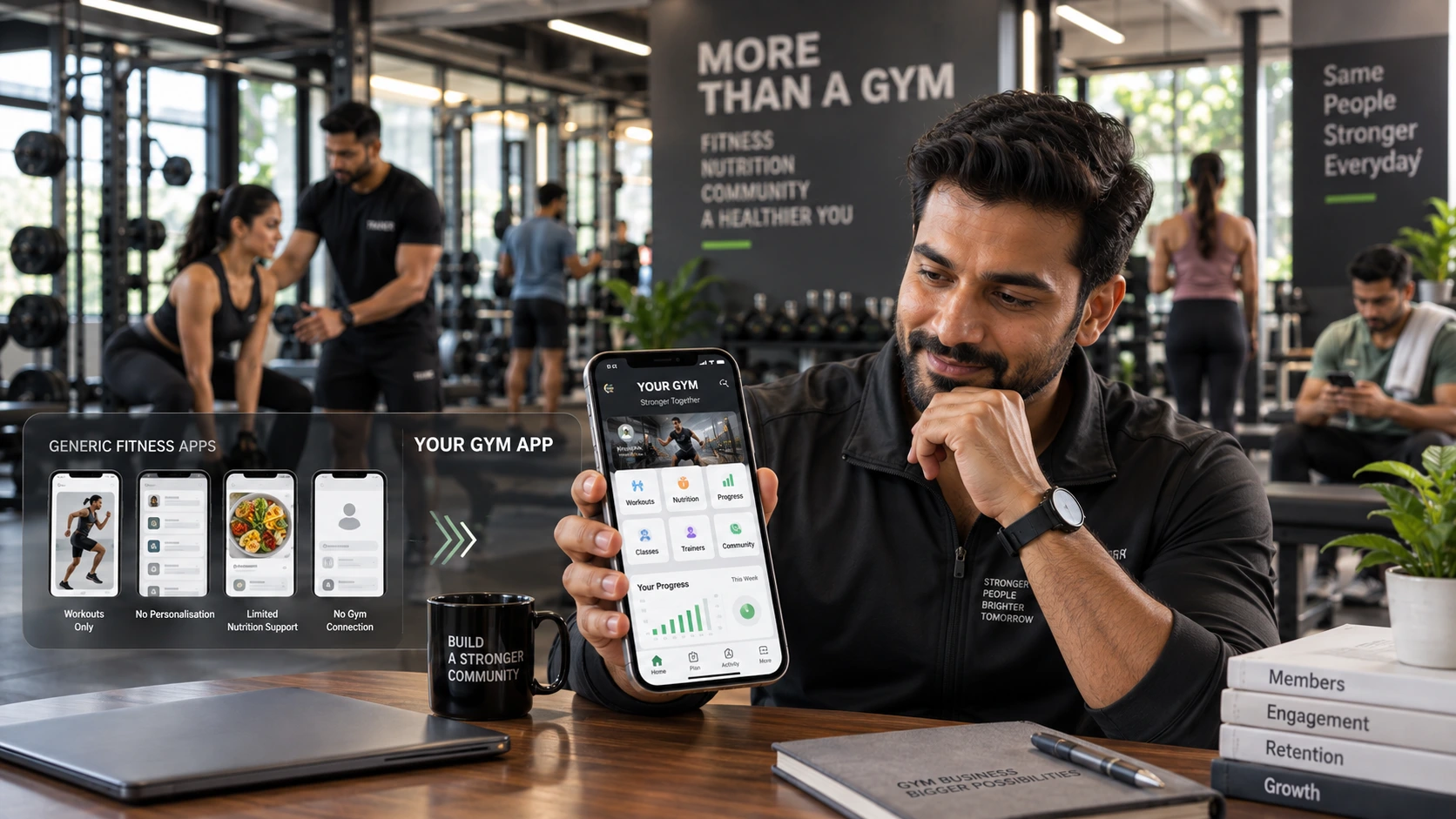
The Indian fitness industry is becoming increasingly digital, but the next competitive advantage may not simply be having an app. It may be having my own branded fitness app that keeps the gym, trainer and member connected through one consistent experience.
For gym owners, this is more than putting a logo on a mobile application. It is about strengthening member experience, building brand loyalty and creating a digital relationship that continues after a member leaves the gym.
As fitness businesses adopt gym software india, mobile applications, nutrition tracking and engagement tools, the distinction between a generic fitness platform and a gym-owned digital experience is becoming increasingly important.
People searching for my own branded fitness app are often trying to understand whether a branded digital experience is genuinely useful for a gym.
Gym owners may be asking:
- Do members actually need a branded app?
- Is a white label fitness app affordable?
- Can a branded app improve retention?
- Should I choose an app for gym membership or a complete member platform?
- What does modern gym management software india need to include?
- Can one platform connect workouts, nutrition and member engagement?
The underlying question is not simply about software.
It is about whether technology can help a gym become more memorable, more convenient and more connected to its members.
The trend is already visible across the wider fitness industry. ACSM’s 2025 fitness trends placed mobile exercise applications among the leading global fitness trends and also highlighted data-driven training technology, showing how digital tools are becoming part of the modern fitness experience.
Why Members Increasingly Expect a Branded Experience
Members interact with brands through digital experiences every day.
They order food, manage banking, book travel and communicate with businesses through mobile applications. Fitness is increasingly becoming part of the same behaviour.
A member who joins a gym may now expect more than an access card and a printed workout plan.
They may want:
- Their workout programme on their phone
- Easy communication with trainers
- Progress visibility
- Nutrition support
- Membership information
- Reminders
- Digital access to gym services
This is where a branded experience becomes valuable.
A generic fitness app may help someone exercise. A gym’s own digital experience can help that person remain connected to their gym.
That difference matters for retention.
Brand loyalty happens through repeated interactions
A member may visit the gym three or four times a week, but the relationship does not have to disappear between visits.
A branded app can provide useful touchpoints through:
- Workout plans
- Progress reports
- Nutrition tracking
- Trainer communication
- Membership information
- Challenges
- Reminders
The goal is not to send more notifications.
It is to make the gym more useful in the member’s everyday routine.
India’s fitness market is also expanding rapidly. Deloitte and the Health & Fitness Association project the market to grow from approximately INR 16,200 crore in 2024 to INR 37,700 crore by 2030, with technology integration and personalised fitness experiences among the forces shaping the sector.
As competition increases, member experience becomes a more important differentiator.
The Limits of Generic Fitness Apps for Gym Owners
Generic apps solve a broad consumer problem.
A gym owner has a different problem.
They need to manage a business while maintaining relationships with members.
A generic platform may provide workouts, but it may not reinforce the gym’s identity or give the owner sufficient control over the member journey.
The brand relationship becomes diluted
If a member spends more time interacting with a third-party application than with the gym’s own brand, the digital relationship belongs partly to the platform provider.
That does not automatically make generic software bad.
It simply creates a strategic limitation for businesses that want to build a stronger direct relationship with members.
Member data may remain disconnected
A gym may use one system for billing, another for workouts, WhatsApp for nutrition and spreadsheets for progress.
The member experiences these as separate interactions.
A stronger fitness engagement platform can connect those touchpoints into a more coherent experience.
Limited differentiation
If hundreds of gyms use essentially the same generic member experience, software itself provides little competitive differentiation.
The gym then competes primarily on location, price, equipment and trainers.
A branded digital layer creates another opportunity to communicate the gym’s identity and service quality.
How White-Label Technology Is Making Branded Apps Affordable
Historically, building a custom application required significant investment.
A gym needed developers, designers, infrastructure, ongoing maintenance and technical expertise.
That model is changing.
A white label fitness app allows a fitness business to use an existing technology foundation while presenting the experience under its own brand.
This makes branded technology more accessible to small and mid-sized businesses.
The distinction is important:
Custom development: Build the technology from scratch.
White-label technology: Use an established technology platform and adapt the branded experience.
For many Indian gyms, the second model is more practical.
The business can focus on its actual strengths, including coaching, community and member relationships, rather than trying to become a software company.
The best approach is also not to purchase technology simply because it is branded.
The platform still needs to solve real problems.
For example, a gym management software india solution should ideally connect relevant operational and member-facing functions rather than simply provide a branded login screen.
What a useful branded platform can connect
Depending on the business, this may include:
- Membership management
- Workout programmes
- Trainer dashboards
- Progress reports
- whatsapp nutrition
- Meal planning
- Member communication
- Engagement tracking
- health score
- Analytics
This is where FitVia fits naturally into the broader shift.
FitVia, a B2B platform from Nutrimate Wellness, uses a white-label member app alongside trainer dashboards, WhatsApp nutrition tracking, Health Score, workout resources, meal planning, progress reports and analytics.
For a gym owner, the value is not simply having a branded application. It is having a connected digital layer that can support member engagement and coaching while keeping the gym’s identity visible.
What This Shift Means for Small and Mid-Sized Gyms
Branded apps are particularly interesting for smaller gyms because they can help close the experience gap between independent businesses and larger fitness chains.
A local gym may not have a large technology team.
But its members still expect convenience.
The opportunity is not to copy large chains
A smaller gym does not need a complicated digital ecosystem.
It needs technology that addresses its specific problems.
For example:
Problem: Members forget workout instructions.
Solution: Keep their programme accessible through the app.
Problem: Trainers spend too much time collecting meal information.
Solution: Introduce simple whatsapp nutrition and nutrition tracking for gym members.
Problem: Owners cannot easily identify disengaged members.
Solution: Use relevant gym member retention tools and engagement information.
Problem: Members feel disconnected outside gym visits.
Solution: Maintain a useful digital relationship between sessions.
The objective is simplicity.
Technology should make the gym feel more organised, not more complicated.
Branded does not mean expensive
This is one of the most important changes in the market.
White-label platforms allow smaller businesses to access capabilities that previously required substantial development budgets.
That makes the question less about whether a gym can afford to build an application from scratch and more about whether the right platform can produce enough business value.
Preparing Your Gym for This Transition
Gym owners considering a branded app should begin with the member journey rather than the technology.
Map what happens from the moment someone joins.
Before joining
- How does the prospect communicate with the gym?
- Is information easy to access?
- Is the brand experience consistent?
During onboarding
- How are workouts delivered?
- How does the member understand their programme?
- How does the trainer establish expectations?
During membership
- How are progress and attendance tracked?
- How does the gym support nutrition?
- How does the member communicate with trainers?
- How does the gym maintain engagement?
Before renewal
- Does the owner know whether the member is engaged?
- Has progress been communicated?
- Is the member receiving enough value to want to continue?
A digital platform should strengthen these stages rather than add another disconnected layer.
This is also why comparing the best SAAS for gyms india should involve more than feature counts.
Look at:
- Ease of use
- Member adoption
- Branding flexibility
- Trainer workflow
- Nutrition functionality
- Reporting
- Engagement
- Scalability
- Data access
- Overall business value
A Readiness Checklist
Before investing in my own branded fitness app, a gym owner can ask:
Member experience
- Will members use the app regularly?
- Does it make everyday gym interactions easier?
- Can members access workouts and relevant information quickly?
Branding
- Does the experience reinforce the gym’s identity?
- Is the branding consistent across member touchpoints?
- Does the platform help build brand loyalty?
Trainer workflow
- Can trainers manage clients efficiently?
- Can they monitor relevant progress?
- Is there a useful trainer nutrition tracking dashboard?
Nutrition
- Can members track meals conveniently?
- Does the platform work with Indian food?
- Can trainers support nutrition without creating excessive administrative work?
Retention
- Can the gym identify declining engagement?
- Are there practical gym member retention tools?
- Can owners understand whether members are actively using the service?
Business value
- Does the platform reduce manual work?
- Can it support more consistent member engagement?
- Does it help create additional value around the existing membership?
Simplicity
- Can trainers learn it quickly?
- Can members understand it without extensive training?
- Does it reduce complexity rather than create another task?
The future of branded fitness technology is unlikely to be about putting a gym logo on every possible screen.
The stronger opportunity is creating a digital experience that makes the gym more useful between visits.
Generic fitness apps will continue to have a role. They can be excellent tools for individual consumers.
But for gym businesses, ownership of the member relationship is becoming increasingly important.
A branded app can bring workouts, communication, nutrition, progress and engagement closer to the gym’s own ecosystem.
That is why my own branded fitness app is becoming less of a branding luxury and more of a strategic consideration for fitness businesses looking to build stronger, longer-term member relationships.
FAQs
Branded gym apps are becoming more common because members increasingly expect convenient digital experiences alongside physical fitness services. They can help gyms strengthen member experience, maintain communication outside the gym, support workouts and nutrition, and build stronger brand loyalty.
White-label apps can be more accessible than building custom software from scratch because the underlying technology is already developed. For small gyms, the key consideration is whether the platform solves meaningful problems such as member engagement, trainer efficiency and retention.
A generic fitness app is designed for a broad consumer audience and is usually controlled by the technology provider. A branded fitness app is presented as part of the gym’s own digital experience, helping the business maintain stronger brand visibility and a more direct relationship with members.
Read Nutrimate Wellness first on Google