 Pradnya Ganorkar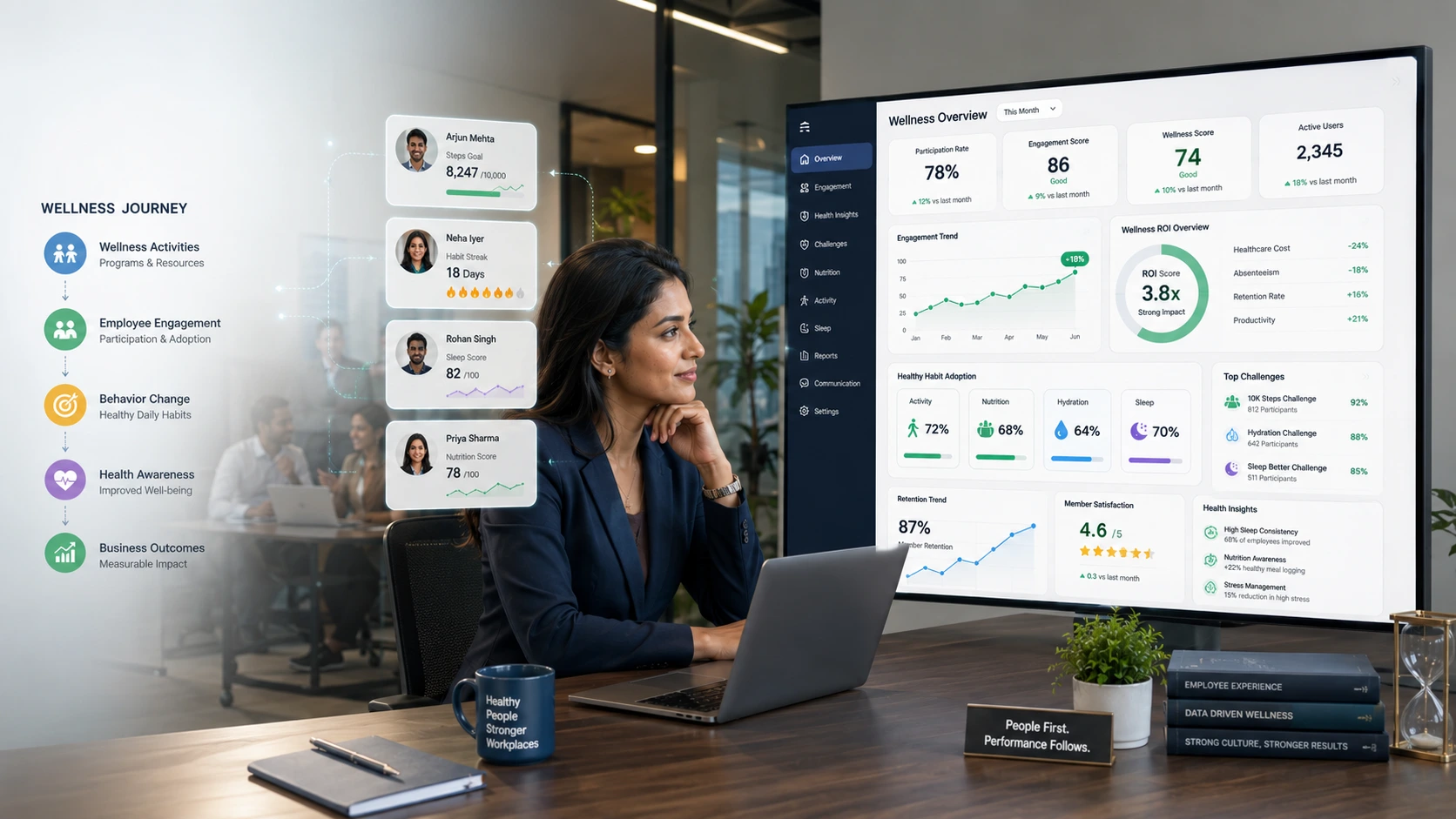
Corporate wellness has become a strategic priority for many organizations across India.
Companies are investing in wellness initiatives to improve employee wellbeing, reduce burnout, strengthen engagement, and support long-term productivity. Yet despite increasing investment, many HR leaders still struggle to answer a simple question:
“What value are we actually getting from our wellness program?”
This challenge sits at the center of measuring wellness ROI.
Most organizations can report how much they spent on wellness activities. Far fewer can confidently explain how those initiatives affected employee behavior, participation, health outcomes, or organizational performance.
The problem is not a lack of wellness programs.
The problem is a lack of visibility.
Without proper measurement systems, wellness becomes difficult to justify, difficult to improve, and difficult to scale.
Modern organizations are increasingly adopting corporate wellness software, employee health tracking solutions, and workplace wellness engagement tools to create measurable wellness programs that focus on sustained participation rather than one-time events.
Why Wellness ROI Is Difficult to Measure
Many HR teams begin wellness initiatives with good intentions.
The challenge emerges when leadership requests measurable outcomes.
Wellness Outcomes Take Time
Unlike sales campaigns or recruitment initiatives, wellness programs rarely produce immediate results.
Improved health behaviors often develop gradually through:
- Better nutrition choices
- Increased activity levels
- Improved sleep habits
- Reduced stress
- Consistent participation
Because outcomes accumulate over time, measuring direct impact becomes more complex.
Organizations Often Measure Activities Instead of Behaviors
Many companies report:
- Number of webinars conducted
- Yoga sessions organized
- Wellness emails sent
- Event participation
While useful, these are activity metrics.
They do not necessarily demonstrate behavior change.
For example, 500 employees attending a webinar does not automatically indicate improved health habits.
Wellness Is Influenced by Multiple Factors
Employee wellbeing is affected by:
- Workload
- Sleep quality
- Family responsibilities
- Nutrition habits
- Physical activity
- Mental health
- Existing medical conditions
This makes direct attribution challenging.
The goal is not measuring every factor perfectly.
The goal is identifying meaningful indicators of progress.
Common Measurement Mistakes
Organizations often undermine wellness programs by tracking the wrong metrics.
Mistake #1: Focusing Only on Participation
Participation matters.
However, participation alone is not enough.
An employee who attends a wellness event once is different from an employee who consistently adopts healthier behaviors.
This distinction is critical when evaluating employee wellbeing programs.
Mistake #2: Measuring Too Late
Many companies wait until annual reviews to assess impact.
By then, valuable opportunities for course correction have been missed.
Continuous visibility creates better outcomes.
Mistake #3: Tracking Outcomes Without Engagement
Organizations often focus only on end results such as:
- Medical claims
- Absenteeism
- Productivity
These are important but are considered lagging indicators.
Leading indicators often provide earlier signals.
Mistake #4: Lack of Individual Awareness
Employees cannot improve what they cannot see.
This is why modern preventive health monitoring tools increasingly emphasize self-awareness and personal progress tracking.
Metrics HR Should Track
To measure wellness ROI, organizations need a balanced scorecard.
The most effective frameworks combine engagement metrics with health behavior indicators.
Participation Metrics
Measure:
- Active users
- Monthly engagement
- Program enrollment
- Challenge participation
- Completion rates
These metrics indicate whether employees are engaging with wellness initiatives.
Behavior Metrics
Measure:
- Meal logging frequency
- Activity tracking consistency
- Sleep tracking participation
- Wellness challenge completion
- Health habit adherence
Behavior metrics often provide stronger indicators of future outcomes than attendance alone.
Awareness Metrics
Track:
- Nutrition awareness
- Health education engagement
- Self-monitoring activity
- Wellness check-ins
Awareness often precedes behavior change.
Organizational Metrics
Measure:
- Absenteeism trends
- Employee satisfaction
- Wellness participation rates
- Retention indicators
- Productivity-related feedback
These metrics help connect wellness activities to broader business objectives.
Engagement vs Outcomes
One of the most important concepts in wellness measurement is understanding the relationship between engagement and outcomes.
Engagement Is the Leading Indicator
Employees rarely improve health outcomes without engagement.
Before improvements occur, organizations typically observe:
- Increased participation
- Better awareness
- Consistent tracking
- Higher accountability
This is where corporate health engagement becomes critical.
Without engagement, outcomes rarely improve.
Outcomes Are Lagging Indicators
Examples include:
- Weight reduction
- Improved energy levels
- Better biomarker results
- Reduced health risks
These metrics matter but usually require time.
Organizations should avoid abandoning wellness programs before sufficient data accumulates.
Why Visibility Matters
A modern digital wellness platform India solution provides visibility into:
- Participation trends
- Behavior patterns
- Progress indicators
- Risk factors
This allows HR teams to identify opportunities for improvement before engagement declines.
Building a Wellness ROI Framework
Effective wellness measurement requires structure.
A practical framework includes four stages.
Stage 1: Define Objectives
Start with clear goals.
Examples:
- Improve participation
- Increase activity levels
- Improve nutrition awareness
- Reduce health risks
- Strengthen employee engagement
Without objectives, measurement becomes subjective.
Stage 2: Track Leading Indicators
Monitor:
- Program engagement
- Health habit consistency
- Activity participation
- Nutrition awareness
Leading indicators help predict future success.
Stage 3: Monitor Behavioral Change
Look for:
- Increased activity frequency
- Better nutrition habits
- Consistent participation
- Improved self-monitoring
Behavior change represents meaningful progress.
Stage 4: Evaluate Business Outcomes
Finally measure:
- Retention
- Satisfaction
- Productivity indicators
- Absenteeism trends
This creates a complete wellness ROI framework.
Reporting Wellness Success
Data is only valuable when communicated effectively.
Create Executive-Friendly Dashboards
Leadership teams need simple visibility.
Effective dashboards should include:
- Participation rates
- Engagement trends
- Wellness challenges completed
- Program adoption
- Health behavior indicators
Modern employee health dashboard and corporate health dashboard solutions help simplify reporting.
Focus on Trends
Executives care about movement over time.
Instead of reporting isolated numbers, highlight:
- Month-over-month participation growth
- Increased engagement
- Improved wellness behaviors
- Sustained activity levels
Demonstrate Preventive Value
The most successful wellness programs focus on prevention.
Organizations increasingly view wellness as part of broader preventive healthcare India strategies rather than isolated employee benefits.
Visibility Creates Accountability
One emerging trend is integrating health awareness directly into everyday employee routines.
For example, Nutrimate’s AI-powered wellness ecosystem enables simple health visibility through India’s #1 whatsapp meal logging feature and Unique Caregiver feature, helping employees track daily habits without creating additional complexity.
The objective is not surveillance.
The objective is awareness.
Organizations that provide simple, low-friction wellness experiences generally see stronger engagement than those relying solely on periodic campaigns.
Interestingly, the same principle is visible in the fitness industry. FitVia, Nutrimate’s fitness business platform for gym owners, trainers, and dietitians, emphasizes member engagement, health scores, nutrition visibility, and retention analytics rather than focusing only on attendance. The lesson applies equally to corporate wellness programs: visibility drives accountability, and accountability drives behavior change.
FAQs
Wellness ROI is calculated by comparing wellness program investments against measurable outcomes such as participation, engagement, reduced absenteeism, improved retention, health behavior improvements, and productivity-related benefits. The most effective approach combines engagement metrics with long-term outcome tracking.
The most important metrics include participation rates, employee engagement, health habit consistency, activity tracking, nutrition awareness, wellbeing survey results, absenteeism trends, and overall behavioral change indicators. Leading indicators often provide earlier and more actionable insights than outcome metrics alone.
Reference
- World Health Organization Workplace Health Promotion Framework
- Harvard Business Review – What’s the Hard Return on Employee Wellness Programs?
https://hbr.org/2010/12/whats-the-hard-return-on-employee-wellness-programs
Read Nutrimate Wellness first on Google