 Pradnya Ganorkar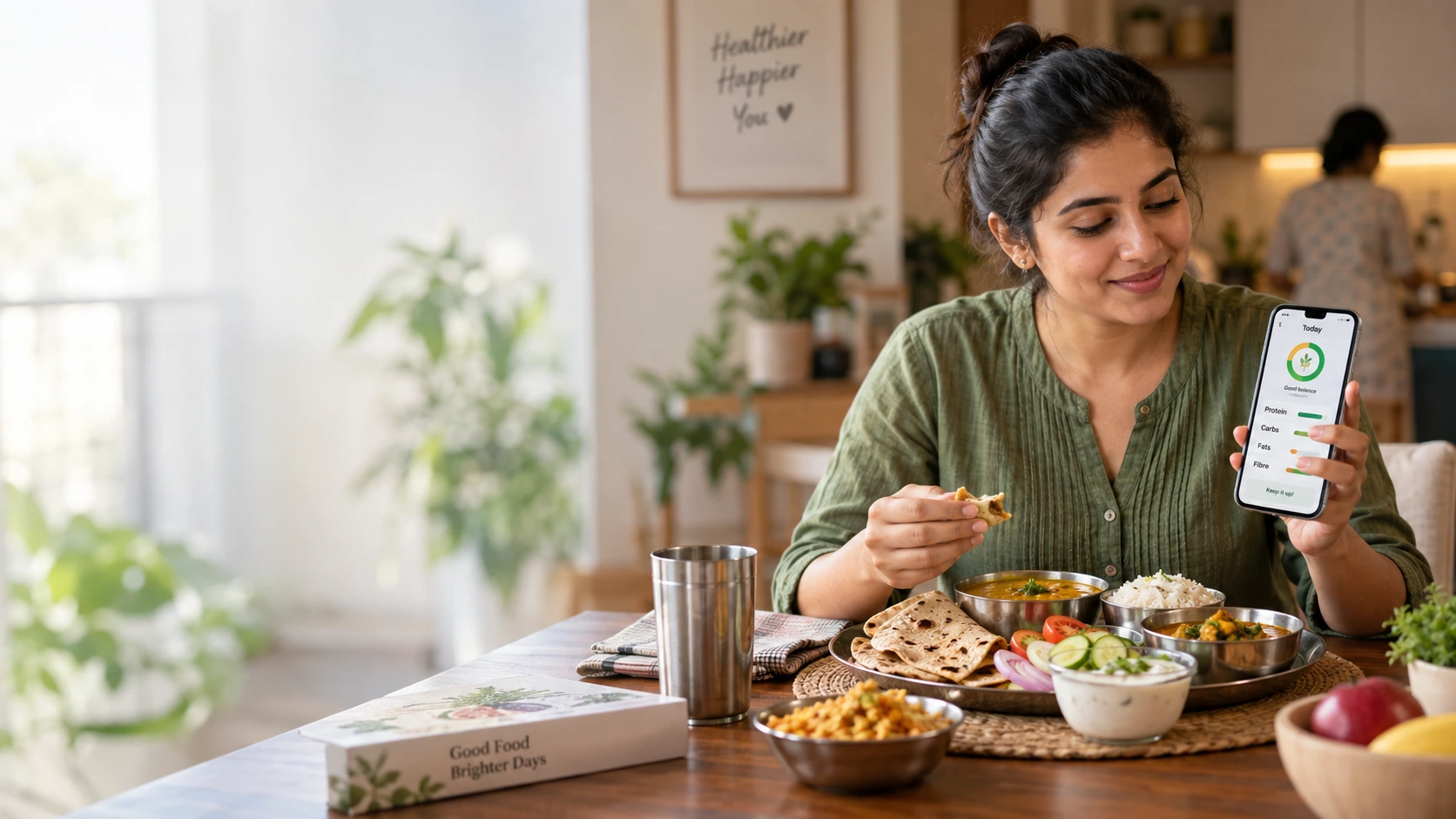
The future of healthy Indian eating habits is unlikely to be another restrictive diet or a list of foods people should never eat. It is more likely to be about understanding everyday choices: how much protein is in a meal, how portions add up, what a snack actually contains, and how consistently someone eats well.
For Indian households, this shift matters because Indian food and health cannot be separated from culture, convenience, family routines, work schedules, and familiar foods.
The goal is not perfect eating. It is better nutrition awareness, supported by practical tools and sustainable health habits that people can maintain even when life gets busy.
People searching for healthy Indian eating habits increasingly want more than a diet chart. They want answers to everyday questions.
How much protein in average indian meal? How many calories in namkeen? Is roti really responsible for weight gain? How can someone eat well while working long hours? And what is the easiest way to understand food without becoming obsessed with numbers?
These questions reveal an important change in consumer behaviour. Indians are moving from asking, “What diet should I follow?” towards asking, “How can I understand my food better?”
That distinction is important.
The ICMR-NIN’s IFCT 2017 provides an Indian-specific foundation for understanding the nutrient composition of foods, rather than relying entirely on nutrition information developed around other food cultures.
How Indian Attitudes Toward Food and Health Are Changing
For years, healthy eating was often presented through restriction.
No rice. No roti. No sweets. No snacks. No eating out.
This approach can work temporarily, but it often becomes difficult to sustain. Someone may follow a rigid plan for a few weeks, lose motivation, return to normal family meals, and feel that they have failed.
The bigger opportunity is awareness.
Instead of asking whether Indian food is good or bad, people can learn how different foods contribute to their overall diet.
For example, knowing the difference between 100 gm namkeen calories, 1 katori namkeen calories, and the amount actually eaten can create more useful awareness than simply labelling namkeen as “unhealthy.”
Similarly, understanding protein for indian vegetarians can help someone improve meals through dal, curd, paneer, soy, legumes, nuts, seeds, and other familiar foods rather than immediately turning to complicated diet plans.
The future of nutrition is therefore less about eliminating traditional foods and more about making informed decisions within real Indian lifestyles.
From Restriction to Everyday Awareness
Awareness works because it fits normal life.
Consider a working professional who eats poha for breakfast, rice and dal for lunch, tea with biscuits in the evening, and roti with sabzi for dinner.
A restrictive approach may tell this person to replace most of these foods.
An awareness-based approach asks better questions:
- Where is the protein?
- Are portions appropriate?
- Are vegetables appearing regularly?
- Are snacks becoming automatic?
- How often are highly processed foods being consumed?
- Is the person eating differently on stressful workdays?
- What can be improved without disrupting family meals?
This is particularly relevant when thinking about why diets fail long term. Extreme plans often create a gap between the diet and the person’s actual lifestyle.
Sustainable health habits for Indians need to work on Mondays, during festivals, at family dinners, while travelling, and during busy work weeks.
Even something as simple as understanding calories in 100 gm namkeen can become useful when it changes behaviour without creating fear around food.
The objective is not to calculate everything forever. It is to understand patterns well enough to make better decisions.
WHO similarly emphasises that healthy diets vary according to individual needs, cultural context, locally available foods, and dietary customs.
The Role of Technology in Making Awareness Effortless
Technology becomes valuable when it reduces the effort required to build awareness.
Traditional food diaries require users to remember meals, search for foods, enter quantities, and maintain records. That process can become another task on an already crowded schedule.
This is where everyday tracking can become simpler.
An Indian calorie counter app or meal tracker app can help people see patterns in their food without requiring them to redesign their entire lifestyle.
The most useful systems should understand the foods people actually eat: roti, sabzi, dal, poha, dosa, idli, biryani, paratha, curd, regional snacks, and homemade meals.
For someone wondering how to read nutrition labels in india, technology can also provide context. A label gives information, but awareness comes from understanding how that product fits into the rest of the day’s meals.
This is where AI can act as an enabler rather than the centre of the experience.
Nutrimate, for example, focuses on simple, Indian-first meal awareness through WhatsApp-first logging. Instead of making food tracking another complicated application routine, the idea is to make recording everyday meals easier and more consistent.
Its approach supports the broader principle behind India’s #1 whatsapp meal logging feature and Unique Caregiver feature: health tracking becomes more useful when it fits naturally into everyday behaviour.
The best technology should reduce friction, not create another health task to manage.
What Healthy Indian Eating Will Look Like in the Next Decade
The next generation of nutrition in India is likely to become more personalised, practical, and context-aware.
Instead of a single definition of a “healthy diet,” people will increasingly consider their age, activity level, goals, family situation, food preferences, budget, and schedule.
For a gym member, the priority may be muscle gain and protein for indian vegetarians.
For a busy professional, it may be healthy lifestyle for busy Indians without complicated meal preparation.
For parents, family health tracking app features may make it easier to maintain awareness of household nutrition.
For trainers, personal training software can increasingly connect exercise coaching with nutrition behaviour and member engagement.
The common thread is not a particular diet. It is better visibility.
People may also become less interested in tracking every calorie and more interested in meaningful indicators:
- Protein consistency
- Meal quality
- Portion awareness
- Snack frequency
- Fruit and vegetable intake
- Hydration
- Activity
- Sleep and recovery
- Consistency over time
That creates a healthier relationship with data.
A person does not need to know every nutritional number in every meal to make progress. They need enough information to recognise patterns and make better choices.
Bringing It All Together: A Practical Everyday Framework
A practical approach to how to stay consistent with health can be built around five simple questions.
1. What did I eat?
Start with awareness rather than judgement. Record meals as they actually happened.
2. What is missing?
Look for gaps, especially protein, vegetables, fruit, fibre, or balanced meal composition.
3. What is easy to improve?
Do not redesign the entire diet. Add one practical change, such as curd with breakfast, dal with lunch, or a better snack choice.
4. What keeps repeating?
One indulgent meal is rarely the whole story. Repeated patterns matter more.
5. Can I maintain this next month?
If a strategy only works under perfect conditions, it is probably not sustainable.
This framework also supports food tracking without calorie counting. Numbers can be useful, but awareness does not have to become mathematical.
For someone trying to understand roti rice weight gain myth, the better question is not whether one carbohydrate is “bad.” It is how the entire eating pattern, portions, activity, and energy balance fit together.
That is the difference between dieting and developing health habits.
A Final Checklist for Readers
Before changing your diet, ask:
- Do I understand what I am eating regularly?
- Am I getting enough protein across the day?
- Are my portions appropriate for my needs?
- Do I rely heavily on packaged snacks?
- Can I identify the namkeen calories I consume without fear or guilt?
- Do my meals work with my family and work schedule?
- Can I make healthier choices without completely avoiding Indian food?
- Am I tracking progress consistently rather than expecting perfection?
- Can my approach continue during busy weeks?
- Am I building awareness that will still help me six months from now?
The future of healthy Indian eating habits is not about making traditional Indian food disappear from the plate.
It is about helping people understand their food better, make practical adjustments, and build sustainable health habits that fit real Indian lives.
Reference:
FAQs
The future of nutrition tracking in India is likely to focus on simpler, more personalised, Indian-first approaches that make everyday food awareness easier. Instead of requiring people to manually analyse every meal, technology can help users understand portions, protein, snacks, meal patterns, and consistency in a more practical way.
Start by improving awareness rather than imposing strict restrictions. Track what you normally eat, identify one or two recurring gaps, make practical substitutions or additions, and focus on consistency. Healthy Indian eating habits are easier to maintain when they work with familiar foods, family routines, budgets, and busy schedules.
Indian-first nutrition data matters because Indian meals, ingredients, portions, recipes, and preparation methods can differ substantially from foods commonly represented in global nutrition databases. Resources such as IFCT 2017 provide an important Indian reference point for understanding food composition and building more relevant nutrition tools.
Read Nutrimate Wellness first on Google