 Pradnya Ganorkar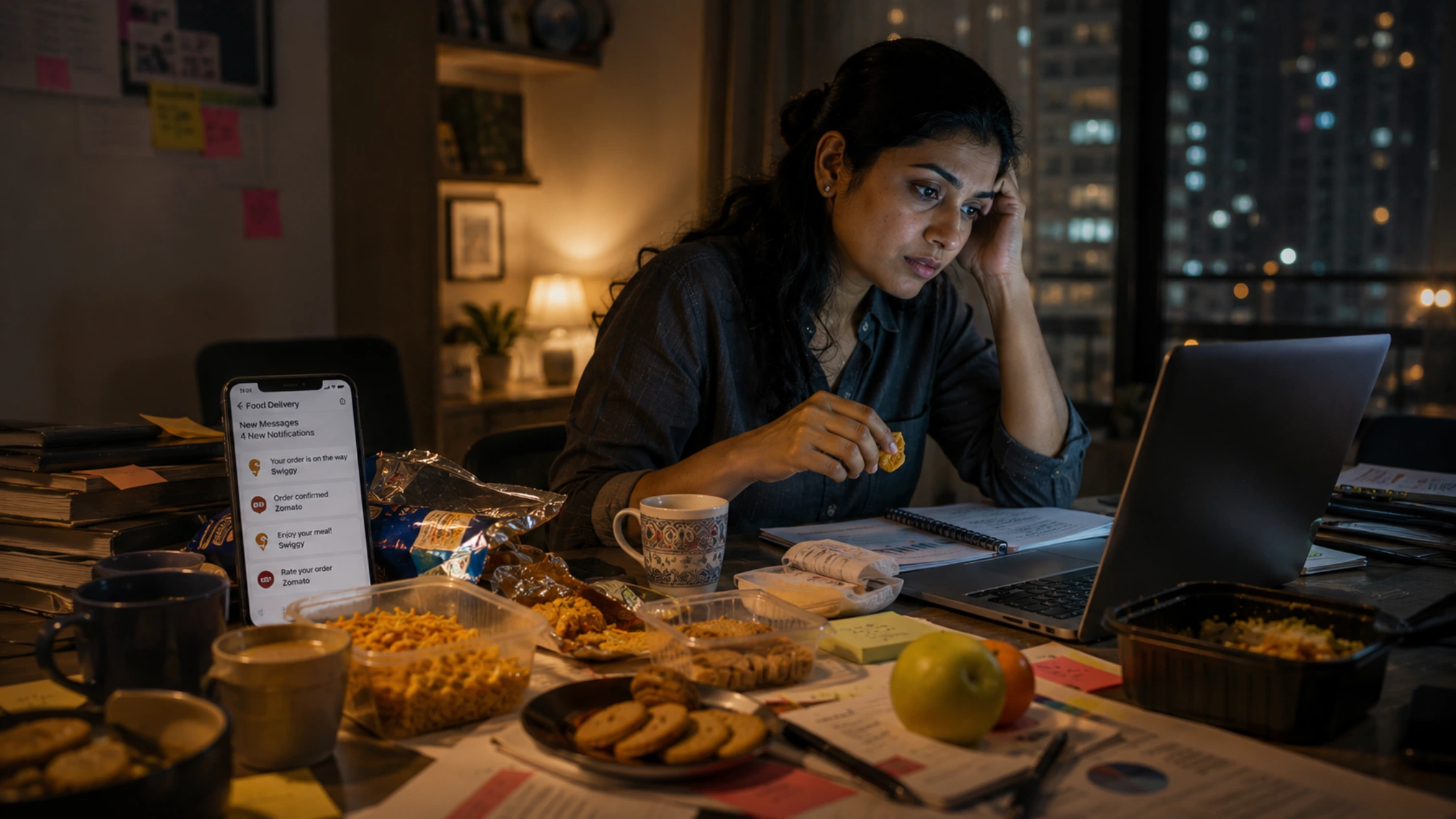
For many Indians, unhealthy eating does not begin with hunger.
It begins with stress.
A long office meeting. Traffic after work. Family pressure. Financial anxiety. Sleep deprivation. Exam stress. Parenting exhaustion. Gym frustration. Relationship problems.
Then suddenly:
- One extra chai
- A packet of biscuits
- Late-night food delivery
- Sweet cravings after dinner
- Emotional binge eating on weekends
Most people assume they lack discipline.
But in reality, stress eating India is often a biological and emotional response, not simply poor willpower.
This is one reason many people struggle with:
- healthy lifestyle consistency
- how to stay consistent with health
- why diets fail long term
- healthy habits for office workers
Stress changes the brain’s reward system.
It alters hunger hormones, cravings, sleep quality, energy levels, and decision-making patterns. Over time, emotional eating becomes automatic.
This is especially common among:
- Corporate professionals
- Gym members
- Working parents
- College students
- Shift workers
- Entrepreneurs
- Caregivers
The challenge is that many Indians do not recognize stress-triggered eating because it feels normal.
Daily chai breaks, office snacks, stress sweets, emotional ordering from food delivery apps, and late-night binge eating have become culturally normalized behaviors.
Understanding how stress eating works is the first step toward building a more sustainable and realistic relationship with food.
Why Stress Changes Food Choices
Stress affects food decisions far more than most people realize.
When the body experiences stress, cortisol levels rise.
Cortisol is a stress hormone linked to:
- Increased cravings
- Emotional eating
- Sugar preference
- Higher appetite
- Fat storage
- Reduced impulse control
This is why people under stress rarely crave plain dal, cucumber, or fruit.
Instead, they usually crave:
- Sugar
- Fried food
- Fast food
- Salty snacks
- Chocolate
- Bakery items
- Processed comfort foods
The body looks for quick emotional relief.
In India, stress eating often becomes hidden inside routine behaviors.
Examples include:
- Multiple sugary chai breaks
- Evening samosas during office stress
- Stress snacking while working late
- Ordering biryani after difficult workdays
- Eating sweets after emotional exhaustion
- Weekend binge eating after strict weekdays
This creates confusion because many people genuinely believe:
- “I barely eat.”
- “I don’t understand why I gain weight.”
- “My diet is healthy most of the time.”
But hidden emotional eating patterns accumulate slowly.
This is especially common among people following restrictive diets.
Extreme restriction during weekdays increases emotional rebound eating later.
That is why a sustainable Indian diet works better than aggressive dieting cycles.
A realistic system supports emotional flexibility instead of constant restriction.
Chai, Sugar, and Instant Relief
One of the most overlooked forms of emotional eating India is stress chai culture.
In many Indian workplaces, chai functions as:
- Stress relief
- Social bonding
- Energy compensation
- Emotional reset
The issue is not chai itself.
The issue is frequency and associated eating behavior.
For example:
- 4 to 6 sugary chais daily
- Biscuits with every tea break
- Namkeen snacking
- Bakery items during meetings
- Sugary coffee late evenings
These patterns quietly increase daily intake.
Many people underestimate how quickly “small” snacks accumulate.
For example:
- Tea + biscuits
- Tea + khari
- Tea + chips
- Tea + rusk
- Tea + chocolate
Repeated several times daily, this becomes a major source of excess calories.
Another challenge is energy crashes.
Stress reduces sleep quality and increases fatigue.
People then depend on:
- Sugar
- Caffeine
- Processed snacks
- Delivery apps
This creates a continuous cycle:
Stress → sugar → temporary relief → crash → craving → repeat
Many professionals trying to build a healthy lifestyle for busy Indians unknowingly remain trapped in this loop.
The goal is not eliminating enjoyment completely.
The goal is awareness.
This is why food tracking without calorie counting is becoming increasingly valuable for modern Indian lifestyles.
Simple visibility often reveals patterns people never noticed before.
The Stress–Snack Loop
The stress-snack loop is one of the most common reasons people struggle with:
- Weight gain
- Energy instability
- Cravings
- Low motivation
- Poor health habits
The loop usually looks like this:
Step 1: Stress Builds
Examples:
- Office pressure
- Family conflict
- Lack of sleep
- Financial anxiety
- Deadlines
- Emotional exhaustion
Step 2: Emotional Discomfort Appears
Symptoms include:
- Restlessness
- Irritability
- Brain fog
- Low energy
- Anxiety
- Mental fatigue
Step 3: Quick Relief Seeking Begins
The brain looks for:
- Sugar
- Fat
- Salt
- Dopamine stimulation
- Comfort food
Step 4: Temporary Emotional Relief Happens
Food temporarily improves mood.
But only briefly.
Step 5: Guilt or Energy Crash Appears
People then feel:
- Regret
- Sluggishness
- Bloating
- Shame
- Frustration
Step 6: Restriction Starts Again
This often leads to:
- Skipping meals
- Extreme dieting
- Overcontrol
- Emotional exhaustion
Then stress returns and the cycle repeats.
This is one reason why staying healthy is hard for many people despite good intentions.
The issue is often emotional regulation, not knowledge.
Emotional vs Physical Hunger
One of the most powerful skills for building healthy Indian eating habits is learning the difference between emotional hunger and physical hunger.
Emotional Hunger
Usually:
- Appears suddenly
- Feels urgent
- Craves specific comfort foods
- Happens during stress or boredom
- Continues even after fullness
Examples:
- “I need something sweet right now.”
- “I deserve junk food after today.”
- “I just want comfort food.”
Physical Hunger
Usually:
- Builds gradually
- Feels calmer
- Accepts multiple food options
- Improves after balanced meals
Examples:
- Hunger after long gaps between meals
- Appetite after workouts
- Natural mealtime hunger
Many Indians confuse emotional fatigue with hunger.
This is especially common among:
- Night workers
- IT professionals
- Parents
- Students
- Entrepreneurs
Sleep deprivation worsens this dramatically.
Poor sleep increases:
- Hunger hormones
- Sugar cravings
- Appetite dysregulation
- Emotional impulsivity
This is why long-term healthy eating India cannot focus only on calories.
Stress, sleep, emotions, movement, and routine matter equally.
Realistic Indian Coping Alternatives
Most people cannot eliminate stress completely.
But they can reduce stress-triggered eating patterns.
The goal is realistic coping systems.
Not perfection.
1. Build Structured Eating Timing
Irregular eating increases emotional snacking.
Balanced meal timing helps stabilize:
- Energy
- Mood
- Cravings
Simple examples:
- Protein-rich breakfast
- Predictable lunch timing
- Evening fruit instead of random snacking
2. Reduce Liquid Sugar Dependence
Instead of:
- 5 sugary chais daily
Try:
- Reduced sugar gradually
- Fewer biscuit pairings
- More hydration
- Herbal alternatives occasionally
3. Avoid Extreme Restriction
Strict dieting often increases rebound eating.
Flexible consistency works better than punishment.
This supports:
- Indian diet without dieting
- sustainable health habits for Indians
- Better emotional stability
4. Improve Sleep First
Sleep affects:
- Cravings
- Emotional control
- Appetite
- Motivation
Poor sleep often drives stress eating more than hunger itself.
5. Create Pause Awareness
Before stress eating, ask:
- Am I hungry?
- Or emotionally overwhelmed?
Even a 5-minute pause reduces impulsive behavior significantly.
6. Use Simple Tracking Systems
Many people never notice patterns until they track them.
This is where awareness becomes powerful.
Nutrimate uses AI-powered, Indian-first, WhatsApp-first meal visibility to help users recognize real-life eating patterns without complicated calorie obsession.
Users often discover:
- Stress snacking spikes during work pressure
- Weekend cravings follow sleep deprivation
- Sugary chai intake is higher than expected
- Emotional eating increases during late nights
Small awareness shifts often create meaningful lifestyle change over time.
Do vs Don’t
| Do | Don’t |
| Build flexible routines | Follow extreme restriction |
| Recognize emotional triggers | Ignore stress patterns |
| Improve sleep quality | Depend only on caffeine |
| Eat balanced meals | Skip meals to “save calories” |
| Use awareness systems | Emotionally punish yourself |
| Reduce sugar gradually | Attempt overnight perfection |
| Maintain realistic consistency | Follow all-or-nothing dieting |
Content Direction
Pain:
“People think they’re hungry — they’re often stressed”
Many Indians blame themselves for poor eating habits when the real issue is chronic emotional overload.
Stress changes cravings, decision-making, and eating behavior biologically.
Without understanding this connection, people remain trapped in cycles of:
- Restriction
- Stress eating
- Guilt
- Restarting
Long-term health improves when systems become sustainable, emotionally realistic, and easier to follow consistently.
Product Integration
“Daily food awareness can reveal stress-triggered eating…”
Many users discover emotional eating patterns only after observing daily food behavior consistently.
Simple visibility tools can reveal:
- Work stress snacking
- Late-night binge patterns
- Excess chai + sugar intake
- Sleep-related cravings
- Emotional ordering habits
Nutrimate’s India’s #1 whatsapp meal logging feature and Unique Caregiver feature help simplify this awareness process through Indian-food-focused tracking built around real Indian routines instead of unrealistic diet culture.
References
FAQs
Stress increases cortisol and emotional discomfort, which can trigger cravings for sugary, salty, or high-calorie foods. Many people eat for emotional relief rather than physical hunger during stressful periods.
Focus on awareness before restriction. Improve sleep, reduce stress triggers, maintain balanced meals, recognize emotional hunger patterns, and avoid extreme dieting. Small sustainable habits work better than strict control.
Read Nutrimate Wellness first on Google