 Pradnya Ganorkar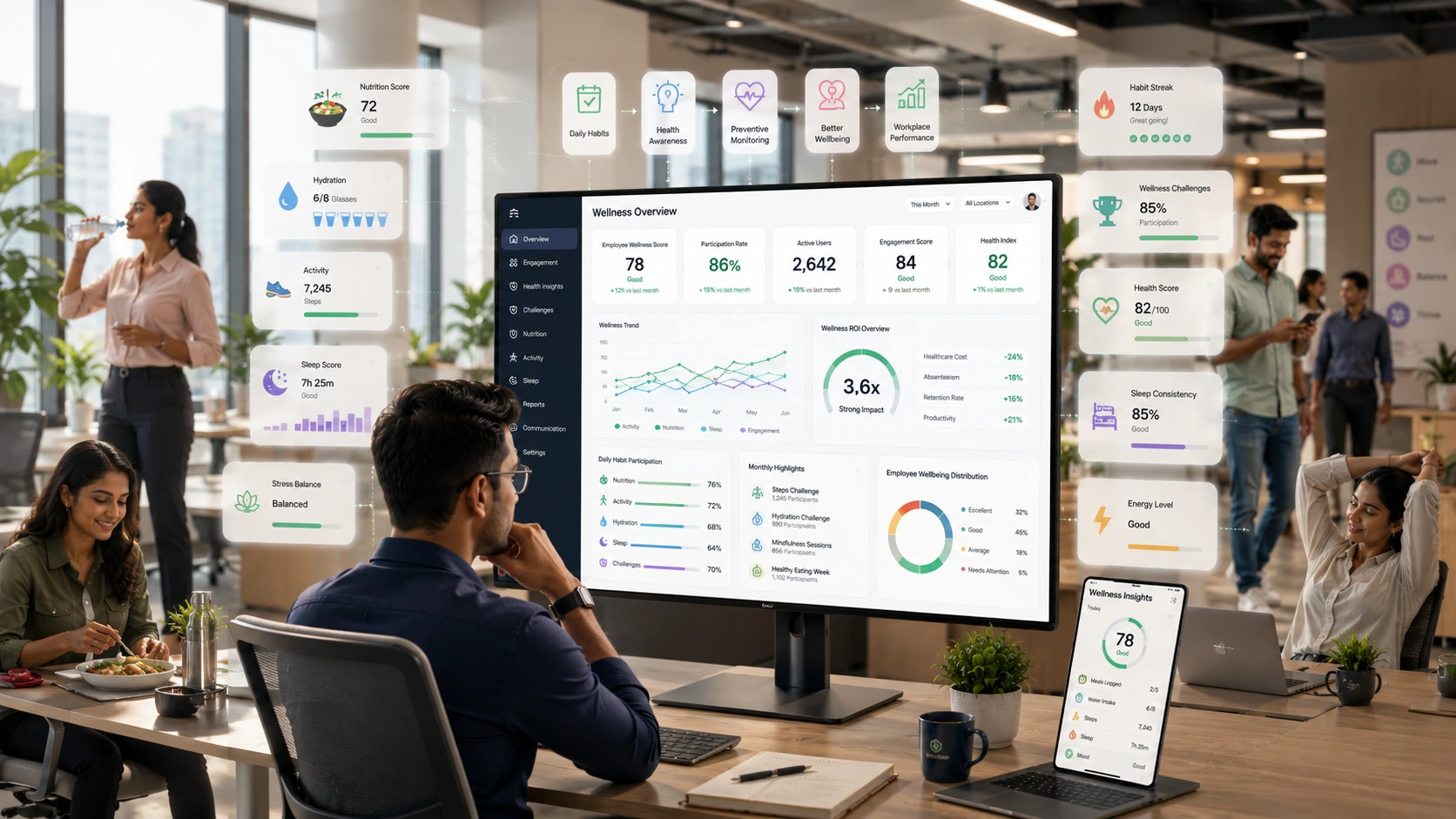
Employee health has become one of the most important business priorities for modern organisations. Rising healthcare costs, lifestyle diseases, stress, and sedentary work environments are affecting productivity across industries. Instead of reacting after health problems appear, many organisations are now investing in preventive health monitoring tools that help identify risks earlier and encourage healthier daily habits.
This shift is transforming preventive healthcare India, where employers are increasingly recognising that healthier employees contribute to higher productivity, lower absenteeism, and stronger workplace engagement. Rather than organising occasional health camps, organisations are adopting corporate wellness software, employee health tracking solutions, and digital wellness platform India technologies to create continuous wellness experiences.
The future of workplace wellness is not about collecting more health data. It is about providing employees with practical support that encourages healthier choices before medical intervention becomes necessary.
Why Healthcare Is Moving Toward Prevention
Traditional healthcare systems often begin after symptoms develop.
An employee experiences fatigue.
Blood sugar increases.
Blood pressure remains uncontrolled.
Weight gradually rises.
Only then does medical treatment usually begin.
Preventive healthcare follows a different approach.
Instead of waiting for illness, it focuses on identifying behavioural patterns that increase health risks over time.
This proactive model supports better long-term outcomes for both individuals and organisations.
Lifestyle Diseases Are Increasing Across India
India is witnessing a steady increase in lifestyle-related conditions such as diabetes, hypertension, obesity, and cardiovascular disease.
Many of these conditions develop gradually over several years and are strongly influenced by daily habits including:
- Poor nutrition
- Physical inactivity
- Chronic stress
- Inadequate sleep
- Sedentary work
- Irregular meal timings
Because these risk factors often develop silently, organisations have an opportunity to encourage healthier routines before medical complications arise.
This is one reason preventive healthcare India has become an important discussion across HR teams, healthcare providers, and corporate leaders.
Prevention Benefits Both Employees and Employers
Preventive wellness is not only about reducing healthcare expenses.
It also improves overall organisational performance.
Healthy employees are more likely to:
- Maintain higher energy levels
- Experience fewer sick days
- Stay engaged at work
- Participate actively in wellness initiatives
- Maintain consistent productivity
From an employer’s perspective, investing in employee wellbeing programs and corporate health management creates long-term value rather than short-term interventions.
Instead of responding to health crises, organisations build environments that support healthier everyday behaviours.
Continuous Wellness Works Better Than Annual Check-ups
Annual health check-ups remain valuable, but they only provide a snapshot of health at one point in time.
Daily habits determine what happens between those check-ups.
For example:
An employee may receive normal blood test results today.
However, if they consistently skip breakfast, remain inactive for long working hours, experience poor sleep, and rely heavily on processed foods, their health risk gradually increases.
This is where preventive health monitoring tools become valuable.
They encourage ongoing awareness instead of once-a-year assessments.
Rather than replacing medical care, they complement it by helping employees recognise behavioural trends that influence long-term wellbeing.
Early Risk Detection in Organizations
One of the greatest advantages of workplace wellness technology is its ability to identify patterns before they become significant health concerns.
The objective is not medical diagnosis.
The objective is improving awareness.
Small Behaviour Changes Often Appear First
Health risks usually begin with small behavioural changes.
Examples include:
- Reduced physical activity
- Poor sleep routines
- Frequent meal skipping
- Increased stress
- Declining exercise consistency
- Low hydration
- Reduced participation in wellness activities
Individually, these behaviours may seem minor.
Together, they can gradually contribute to larger health challenges.
By supporting employee health tracking, organisations gain better visibility into wellness participation while encouraging employees to take ownership of their own health.
Data Should Encourage Action
Collecting health information has little value unless it leads to meaningful action.
Effective workplace health analytics should help organisations answer questions such as:
- Which wellness programmes receive the highest participation?
- Which departments show lower engagement?
- Are employees maintaining healthy habits over time?
- Which initiatives encourage consistent participation?
The goal is to improve corporate health engagement, not simply generate reports.
Insights should help HR teams refine wellness initiatives based on actual participation rather than assumptions.
Building a Culture of Awareness
Successful organisations understand that prevention begins with culture.
Employees are more likely to adopt healthier habits when wellness becomes part of everyday work rather than an occasional campaign.
Examples include:
- Walking meetings
- Healthy cafeteria choices
- Hydration reminders
- Mental wellbeing sessions
- Step challenges
- Flexible fitness initiatives
- Nutrition awareness programmes
Combined with workplace wellness engagement tools, these initiatives create an environment where healthy choices become easier to maintain.
Over time, this supports stronger wellness ROI by improving participation, reducing disengagement, and encouraging long-term behaviour change instead of short-lived wellness campaigns.
Health Signals Companies Can Monitor
Effective workplace wellness is not about monitoring medical conditions. It is about understanding everyday behaviours that influence long-term health.
The most successful organisations use preventive health monitoring tools to improve awareness, encourage participation, and identify opportunities for healthier routines while respecting employee privacy.
Instead of focusing on illness, they focus on positive health behaviours.
Nutrition Habits
Nutrition plays an important role in employee wellbeing.
Busy schedules, long commutes, irregular meetings, and food delivery culture often lead employees to skip meals or rely on highly processed foods.
Rather than asking employees to follow restrictive diets, organisations can encourage simple habits such as:
- Eating balanced meals
- Increasing protein intake
- Staying hydrated
- Reducing sugary beverages
- Choosing healthier snacks
Supporting nutrition tracking helps employees become more aware of their eating habits without creating unnecessary pressure.
Modern nutrition tracking app solutions are making this process much easier by recognising everyday Indian meals instead of requiring complicated calorie calculations.
Physical Activity
Many office employees spend eight to ten hours sitting each day.
Encouraging movement throughout the workday can significantly improve overall wellbeing.
Useful metrics include:
- Daily step count
- Exercise frequency
- Walking breaks
- Stretching habits
- Active commuting
Tracking participation rather than performance creates a more inclusive wellness programme where employees of different fitness levels can participate comfortably.
Lifestyle and Recovery
Physical activity alone cannot compensate for poor recovery.
Organisations should also encourage awareness around:
- Sleep quality
- Stress management
- Hydration
- Recovery days
- Screen time
Together, these behaviours provide a broader picture of preventive health than isolated medical reports.
Engagement With Wellness Initiatives
Participation is one of the strongest indicators of programme success.
Instead of measuring only attendance, organisations should evaluate:
- Challenge participation
- Habit completion
- Nutrition logging consistency
- Learning session attendance
- Community engagement
These insights contribute to stronger employee health dashboard reporting and more meaningful corporate health report discussions for HR and leadership teams.
Health Scores That Encourage Awareness
Many modern wellness platforms combine multiple lifestyle indicators into a simplified health score.
Rather than diagnosing disease, a health score helps employees understand whether their daily habits are moving in a healthier direction.
This approach encourages gradual improvement instead of creating anxiety around isolated numbers.
When used responsibly, simplified dashboards also improve workplace health tracking by making progress easier to understand.
Building a Preventive Health Strategy
Technology alone cannot build a healthy workplace.
Successful organisations combine digital tools with supportive leadership, practical education, and realistic employee expectations.
Start With Everyday Habits
The most effective wellness strategies begin with simple behaviours rather than ambitious transformation programmes.
Examples include:
- Encouraging daily walking
- Promoting balanced meals
- Supporting hydration
- Improving sleep awareness
- Reducing prolonged sitting
Small improvements repeated consistently often deliver greater long-term impact than short-term campaigns.
Use Technology to Simplify Participation
Employees are far more likely to participate when wellness activities fit naturally into their daily routine.
This is why many organisations now look for employee health tracking solutions and workplace wellness engagement tools that reduce friction rather than add complexity.
Simple meal logging, activity tracking, reminders, and progress dashboards encourage participation without overwhelming employees.
For organisations looking to improve everyday nutrition awareness, Nutrimate supports AI-powered, Indian-first health tracking with India’s #1 whatsapp meal logging feature and Unique Caregiver feature, helping employees and families develop healthier routines through familiar, easy-to-use experiences.
The focus is not on perfect nutrition but on building consistency over time.
Build Wellness Beyond Corporate Offices
Preventive health is equally valuable for gyms, fitness businesses, wellness clinics, and nutrition practices.
For example, a gym owner may want to improve member engagement.
A fitness influencer may need better client accountability.
A dietitian may require structured nutrition monitoring across multiple clients.
Instead of using separate systems for each activity, integrated platforms can simplify operations.
One example is FitVia, which brings together:
- A My own branded Fitness app
- Trainer dashboards
- A database of more than one lakh Indian foods validated using IFCT 2017
- A library of over 600 workout demonstrations
- Member challenges and leaderboards
- WhatsApp-based client check-ins
- Progress tracking and reporting
For gym owners, FitVia also supports broader gym management by combining member engagement, workout planning, nutrition support, and operational tools into a single platform.
Fitness trainers and coaches can benefit from features commonly expected in fitness coach client management software, trainer nutrition tracking dashboard, and diet tracking tool for fitness coaches, while dietitians can efficiently manage multiple clients through one dashboard.
This integrated approach reduces administrative workload while creating a more connected coaching experience.
Measure Outcomes, Not Activities
Many organisations measure how many wellness sessions they conduct.
A better question is whether employees actually become healthier.
Useful outcome indicators include:
- Improved participation
- Better nutrition awareness
- Increased physical activity
- Higher engagement
- Better programme retention
- Reduced absenteeism over time
These insights help demonstrate stronger wellness ROI and improve long-term corporate health engagement.
The objective is not simply launching another wellness initiative but building an organisational culture where healthier behaviours become part of everyday work.
Common Challenges
Although organisations increasingly recognise the value of preventive healthcare India, implementing a successful wellness programme is not always straightforward. Many initiatives lose momentum because they focus on technology instead of employee behaviour.
Understanding these common challenges helps organisations build programmes that deliver lasting value.
Low Employee Participation
Even well-designed wellness initiatives struggle if employees do not actively participate.
Common reasons include:
- Busy work schedules
- Lack of awareness
- Complicated tracking processes
- One-size-fits-all programmes
- Low motivation
Participation improves when wellness activities are simple, relevant, and easy to access. Short daily actions often achieve better long-term engagement than intensive monthly campaigns.
Privacy and Trust
Employees need confidence that personal health information will be handled responsibly.
Organisations should clearly communicate:
- What information is collected
- Why it is collected
- How it will be used
- Who can access it
Transparency helps build trust while encouraging greater participation in employee wellbeing programs.
Measuring Meaningful Outcomes
Many companies focus only on participation numbers.
However, the real success of a wellness initiative should be measured through outcomes such as:
- Better workplace health analytics
- Improved employee engagement
- Higher programme retention
- Greater awareness of healthy habits
- Increased participation in preventive activities
This creates a stronger understanding of wellness ROI while helping HR teams continuously improve their wellness strategy.
Avoiding Complexity
One of the biggest reasons wellness programmes fail is unnecessary complexity.
Employees should not need multiple apps, lengthy forms, or detailed manual data entry to participate.
The most effective health tracking tools reduce effort and encourage consistency through simple daily interactions.
Future Trends
Workplace wellness is evolving beyond annual health check-ups and fitness challenges.
Future programmes will increasingly focus on continuous health awareness, personalised guidance, and behavioural change.
AI Will Support Better Health Decisions
Artificial intelligence is making wellness more personalised by helping people recognise patterns in their daily habits.
Instead of replacing healthcare professionals, AI can support better decisions by identifying opportunities to improve:
- Nutrition habits
- Physical activity
- Sleep consistency
- Daily routines
- Wellness participation
This makes preventive health monitoring tools more proactive while keeping employees engaged through small, achievable improvements.
Integrated Wellness Ecosystems
Rather than using separate systems for fitness, nutrition, communication, and reporting, organisations are increasingly adopting integrated wellness platform solutions.
These platforms can bring together:
- Nutrition tracking
- Activity monitoring
- Employee health dashboard
- Corporate health dashboard
- Wellness challenges
- Progress reports
- Educational resources
A connected ecosystem provides better visibility for organisations while creating a simpler experience for employees.
Personalisation Will Drive Engagement
Employees have different health goals.
Some want to improve fitness.
Others want better nutrition, weight management, stress reduction, or support for chronic conditions.
Future corporate wellness tools India will increasingly provide personalised recommendations rather than generic wellness campaigns.
This improves relevance and encourages higher participation across diverse employee groups.
Prevention Will Extend Beyond Workplaces
Preventive health is becoming relevant across multiple industries, including gyms, nutrition practices, healthcare clinics, and fitness coaching businesses.
Platforms that combine fitness engagement platform, nutrition tracking, client engagement, and preventive health capabilities help professionals deliver more personalised support while reducing administrative work.
Similarly, integrated solutions such as FitVia support gym owners, fitness trainers, influencers, and dietitians with branded member experiences, Indian nutrition intelligence, workout libraries, progress tracking, and engagement tools. By connecting coaching, nutrition, and member management in one platform, businesses can spend more time supporting clients and less time managing disconnected systems.
As organisations continue investing in employee wellbeing, prevention will shift from being an optional initiative to becoming a core part of long-term business strategy.
FAQs
Preventive health monitoring is the continuous observation of everyday health indicators and lifestyle behaviours that influence long-term wellbeing. Rather than waiting for illness to develop, it focuses on identifying potential risks early through habits such as nutrition tracking, physical activity, sleep, stress management, and overall employee health tracking.
The goal is to encourage healthier daily decisions, improve awareness, and reduce the likelihood of preventable health conditions over time.
Prevention matters because healthier employees are generally more productive, engaged, and resilient.
By investing in preventive health monitoring tools, corporate wellness software, and employee health tracking solutions, organisations can encourage healthier habits, improve participation in wellness programmes, strengthen employee engagement, and support long-term business performance.
A preventive approach also helps create a workplace culture where wellbeing becomes part of everyday life instead of being addressed only after health problems arise.
References
- World Health Organization (WHO). Healthy Workplace Framework and Model
https://www.who.int/publications/i/item/healthy-workplaces-a-model-for-action - Indian Council of Medical Research (ICMR). Dietary Guidelines for Indians, 2024
Read Nutrimate Wellness first on Google