 Pradnya Ganorkar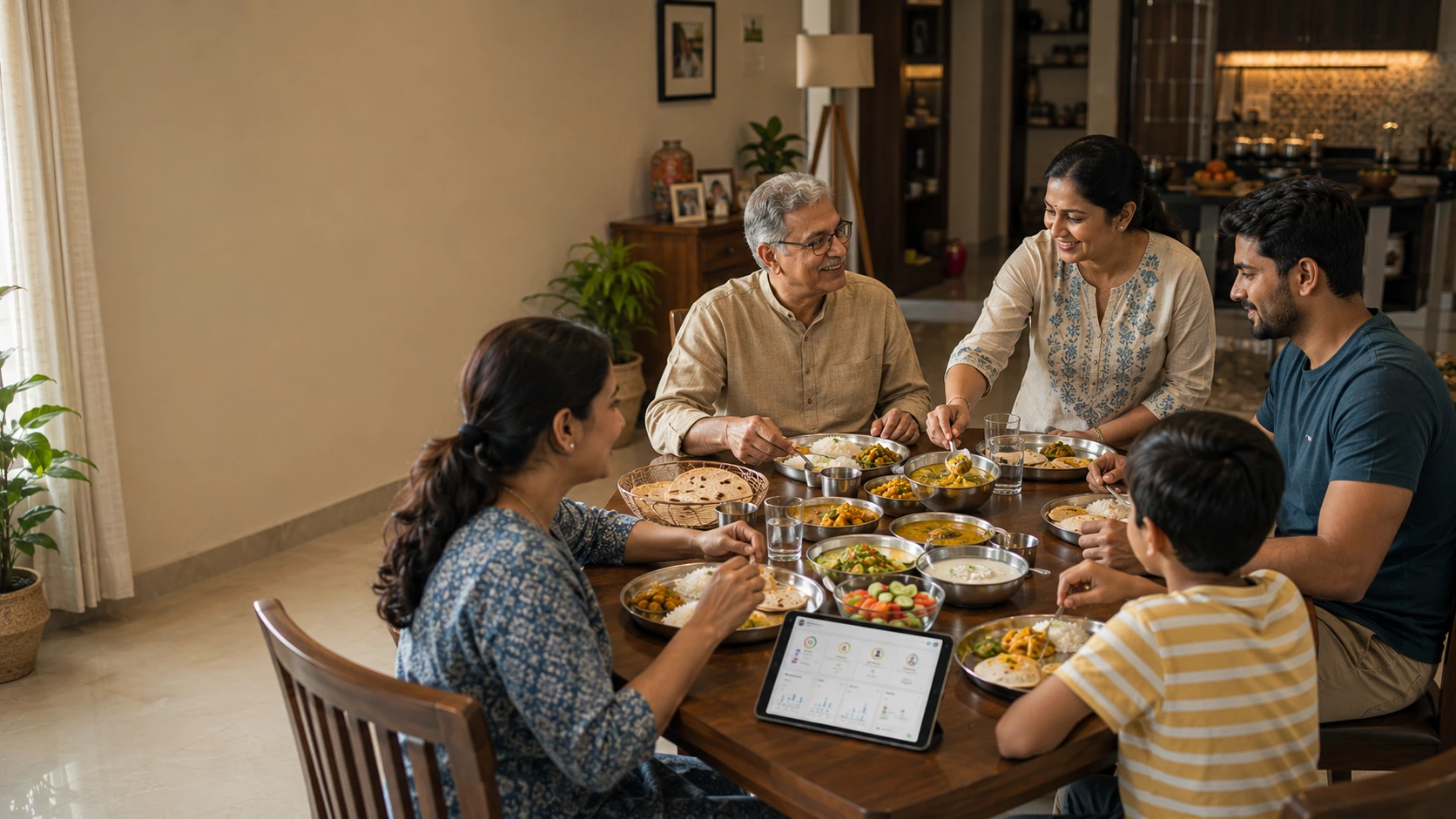
In many Indian homes, one kitchen serves three generations. A diabetic parent may need more careful meal choices, growing children need adequate nutrition, and a weight-conscious spouse may want better portions. Trying to create completely different meals for everyone can quickly become exhausting.
The practical answer is not one rigid diet. It is a flexible family health approach where the basic meal remains shared, while portions, additions and individual choices change according to each person’s needs.
This reflects a broader principle of healthy eating: diets should account for individual needs, cultural context, preferences and locally available foods rather than forcing everyone into the same pattern.
Why One Family, One Diet Rarely Works
The idea that everyone in a household should eat exactly the same way sounds convenient, but health requirements are rarely identical.
A 65-year-old parent, a 12-year-old child and a 35-year-old professional may have very different energy requirements, activity levels and medical considerations.
Even within the same household, goals can differ:
- A diabetic parent may need to follow an individually advised eating plan.
- Growing children need sufficient energy and nutrients for growth.
- A weight-conscious spouse may be working on portions and overall energy intake.
- Another family member may be training for muscle gain or fitness.
That does not mean four separate kitchens.
A better model is a shared foundation with individual adjustments.
For example, a family lunch could include dal, vegetables, roti, curd and rice. One person’s portion of rice may differ from another’s. One person may add more vegetables or protein based on their needs. A child may require a different overall portion.
The food can remain familiar while the quantities and combinations vary.
The Common Household Mix: A Diabetic Parent, Growing Kids, a Weight-Conscious Spouse
This is where Indian family cooking becomes particularly interesting.
The same dal, sabzi and roti can potentially form part of different eating patterns, but the overall meal needs to be considered in context.
For a parent managing diabetes, the family should follow the eating guidance provided by their healthcare professional rather than assuming that a generic “diabetic diet” is appropriate.
For children, restricting food simply because an adult is trying to lose weight can be counterproductive. Children have different nutritional needs and should not automatically follow an adult weight-loss approach.
For a spouse focused on weight management, the most practical change may be portion awareness, meal structure and reducing unnecessary high-calorie extras rather than eliminating traditional foods.
This is why healthy Indian eating habits are more useful than a single “perfect family diet.”
A healthy dietary pattern is built around balance, adequacy, moderation and variety.
Why Cooking Separate Meals for Everyone Isn’t Realistic
Separate meals sound ideal on paper.
In practice, they create more shopping, preparation, cleaning and decision-making. For a working family, that burden can make healthy eating harder to sustain.
It can also create a psychological problem.
If one person is constantly eating “special food” while everyone else eats the normal family meal, the plan may start feeling restrictive.
A better approach is to modify the Indian food already being prepared.
For example:
Shared base:
Dal + mixed vegetable sabzi + roti + curd
Possible adjustments:
- Different portions based on individual needs
- More vegetables where appropriate
- Protein additions where needed
- Fewer discretionary fried or sugary extras
- Individual meal timing where required
The exact adjustments should depend on the person’s health status and professional advice.
The goal is not to make every plate identical. It is to make the kitchen flexible.
A Framework for a Flexible Family Kitchen
A useful family framework is:
1. Keep the core meal common
Start with foods the household already eats.
Dal, vegetables, roti, rice, curd, beans, sprouts and seasonal produce can form the foundation of many Indian meals.
2. Adjust portions, not the entire menu
One family member may need a larger portion because of age or activity. Another may need a smaller portion for their personal goal.
This is much easier than preparing separate dishes.
3. Add individual components
A person who needs more protein may add paneer, curd, dal, legumes or another suitable source.
A child may need additional nutrient-dense foods rather than simply eating less.
4. Separate medical requirements from general wellness
If someone has diabetes or another medical condition, their food choices should follow their clinician’s or registered dietitian’s advice.
General family wellness advice should never replace individual medical guidance.
5. Track patterns, not perfection
The objective is to understand what actually happens during a normal week.
This is especially useful for busy Indian households where meals can change because of office schedules, school, travel, guests or weekends.
Simple Ways to Adapt One Meal for Different Needs
Consider a typical dinner:
Dal + rice + vegetable sabzi + curd
Instead of creating three different dinners, the family can start with the same meal and make sensible individual adjustments.
A weight-conscious adult might focus on an appropriate portion and increase vegetables.
A physically active family member may require more food depending on their energy needs.
A child may have a different portion and additional foods appropriate for their growth stage.
A parent managing diabetes should follow their personalised medical nutrition advice.
The important point is that “same meal” does not mean “same plate.”
This approach also makes meal tracking more useful. Each person can record what they actually ate rather than assuming that everyone consumed the same quantities.
A family health tracking app can support this by keeping individual information separate while allowing the household to maintain a shared view of everyday routines.
For example, a family might notice that:
- One parent regularly skips breakfast.
- A child rarely eats vegetables.
- One adult snacks heavily between meals.
- Weekend eating is substantially different from weekday eating.
That information can create better conversations than simply asking, “Are we eating healthy?”
Nutrimate’s approach to simple, Indian-first health tracking is built around making everyday food information easier to capture. For families, the useful principle is individual visibility without turning the home into a monitoring exercise.
A Family Meal-Planning Checklist
Before planning the week’s meals, ask:
- What meals can everyone share?
- Which family members have specific medical or nutritional requirements?
- Are individual portions being adjusted appropriately?
- Is there a reliable protein source in regular meals?
- Are vegetables and other minimally processed foods appearing regularly?
- Are snacks and sugary drinks becoming routine?
- Are children being given age-appropriate nutrition rather than an adult diet?
- Is anyone following a medical diet without professional guidance?
- Can the family make one small improvement rather than attempting a complete dietary overhaul?
- Can each person’s meals be tracked separately when useful?
For families managing diabetes, nutrition should be considered alongside physical activity, medication when prescribed and regular medical care. WHO notes that diabetes management involves a combination of diet, physical activity and, when necessary, medication, with appropriate monitoring and screening.
The bigger opportunity is to make family health simpler.
A household does not need four kitchens to support four different needs. It needs a flexible meal structure, realistic portions, clear communication and enough awareness to understand what each person is actually doing.
Simple shared tracking can reduce guesswork without turning caregiving into surveillance.
FAQs
Use a shared meal as the starting point and adjust portions or individual components where necessary. Keep medical requirements separate from general wellness advice, and follow personalised guidance from a qualified healthcare professional when a family member has a medical condition.
A shared meal can sometimes work for both, but the portions, combinations and overall eating pattern may need to differ. A person with diabetes should follow their healthcare professional’s personalised recommendations rather than assuming that one generic meal plan is suitable.
Build meals around flexible staples such as vegetables, pulses, grains and suitable protein sources, then adapt portions and additions for each person. Individual health tracking for parents or other family members can also help identify patterns without requiring completely separate meals.