 Pradnya Ganorkar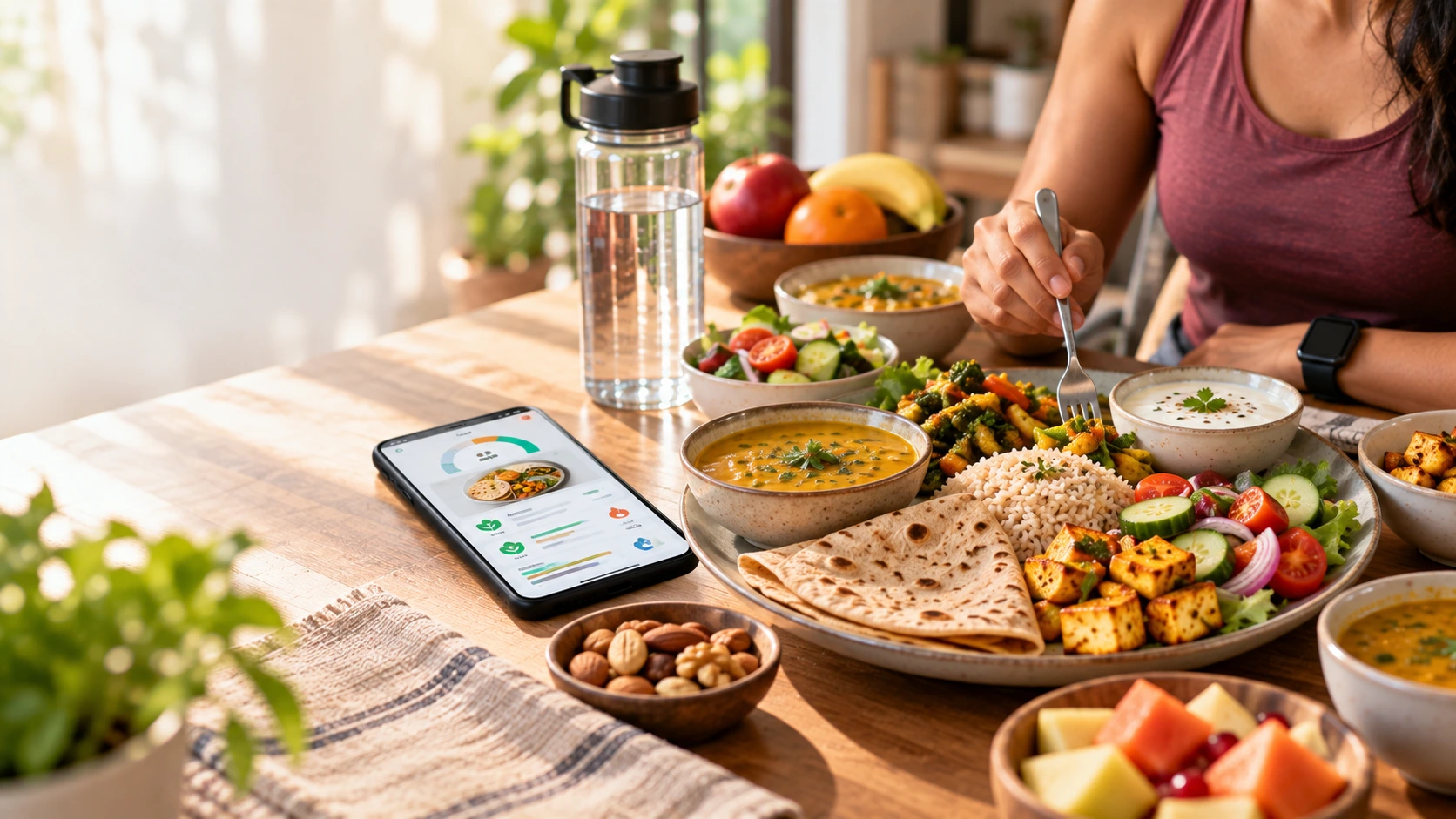
Fat loss for Indians does not require abandoning roti, rice, dal, curd, paneer, or traditional meals. The bigger challenge is creating an eating pattern that produces a manageable calorie deficit while remaining practical enough to follow through busy workdays, family meals, travel, and social events.
A sustainable approach to fat loss combines adequate protein, sensible portions, nutrient-dense foods, and consistency. It is less about finding one magical Indian diet and more about building eating habits that you can repeat without feeling that every meal has become a calculation.
For many Indians, the problem is not a lack of nutrition information. It is the gap between knowing what to eat and consistently applying it to real meals.
Why Generic Fat Loss Diets Fail Indian People
Many conventional diet plans assume meals that are easy to separate into individually measurable ingredients. Indian meals are often the opposite.
A homemade lunch may contain rice or roti, dal, sabzi, curd, salad, pickle and a preparation cooked with an amount of oil that varies from household to household. A weekend meal may then include biryani, sweets or restaurant food.
This is why fat loss for indians needs to account for food culture rather than treating Indian meals as a problem.
The common mistakes are predictable:
- Cutting out carbohydrates completely instead of controlling portions.
- Treating rice and roti as inherently responsible for weight gain.
- Eating too little during the day and overeating at night.
- Ignoring cooking oil, sauces, beverages and small snacks.
- Following an aggressive plan for a few weeks and then returning to previous habits.
- Focusing entirely on the weighing scale.
WHO guidance similarly emphasises that healthy diets need to reflect individual needs, cultural context, locally available foods and dietary customs. Its guidance includes vegetables, fruits, legumes, whole grains and a varied diet while limiting excessive free sugars, unhealthy fats and salt.
The practical lesson is simple: your diet should fit your life.
The Three Principles of Fat Loss Nutrition That Apply to Everyone
There are three foundations that make a fat-loss approach easier to understand.
1. Create a moderate calorie deficit
Weight loss requires energy intake to be lower than energy expenditure over time. That does not mean eating as little as possible.
A moderate deficit is generally easier to maintain than extreme restriction because it leaves room for normal meals, social occasions and adequate nutrition.
2. Prioritise protein
Protein helps make meals more filling and is particularly important when you are trying to preserve lean mass during fat loss.
For people who exercise regularly, including a meaningful protein source in meals can make the diet easier to follow. Examples include dal, curd, paneer, eggs, fish, chicken, soy and other legumes.
For personalised protein requirements, particularly during significant weight loss or intensive training, individual factors should be considered rather than applying one number to everyone.
3. Build a diet you can repeat
The most effective diet on paper is not useful if it becomes impossible to maintain.
This is where sustainable health habits matter. A person who can consistently follow a sensible eating pattern for months is in a very different position from someone who follows a highly restrictive plan for ten days.
A useful rule is:
Make the ordinary day healthier before trying to make the perfect day possible.
This approach also helps address why diets fail long term. The problem is often not that the person lacks discipline. The plan itself may demand too many changes at once.
How to Structure Indian Meals for Fat Loss
A practical Indian plate can be built around four elements:
- Protein
- Vegetables
- A controlled carbohydrate portion
- A sensible amount of dietary fat
For example, lunch could contain dal or another protein source, two rotis, a generous serving of sabzi and curd.
Another meal could combine rice with rajma, vegetables and curd.
For non-vegetarians, eggs, chicken or fish can form the protein component alongside vegetables and a suitable portion of rice or roti.
The goal is not to eliminate staple foods. It is to make the overall meal more balanced.
What about the roti and rice weight gain myth?
The roti rice weight gain myth usually comes from looking at one food in isolation.
Roti and rice provide carbohydrates and can absolutely fit into a fat-loss diet. What matters is the total dietary pattern, portion size, preparation, accompanying foods and overall energy intake.
Removing rice while continuing to consume large quantities of fried snacks, sweets, sugary beverages or calorie-dense foods does not automatically create a better diet.
Instead, ask:
- How much protein is in the meal?
- How many vegetables are included?
- What is the portion of rice or roti?
- How much oil or ghee was used?
- Is the meal satisfying enough to prevent unnecessary snacking later?
That is a more useful framework for Indian food and health than labelling individual foods as good or bad.
Foods That Help Indians Lose Fat Without Extreme Restriction
There is no single category of fat burning indian food that directly causes body fat to disappear. Fat loss comes primarily from sustained energy balance.
However, some foods make that process easier because they can provide protein, fibre, volume and nutrients without requiring extreme portions.
Useful choices include:
- Dal and other legumes
- Sabzi and leafy vegetables
- Salads
- Eggs
- Curd
- Paneer in appropriate portions
- Sprouts
- Grilled or roasted preparations
- Fruits
- Whole grains and traditional grain options
WHO recommends a varied diet containing vegetables, fruits, legumes, nuts and whole grains, with at least 400 g of fruits and vegetables per day for adults and children over 10.
For an Indian household, this does not require a completely different cuisine.
A normal meal of dal, sabzi, roti and curd can be structured sensibly. The same principle can be applied to a South Indian meal of sambar, vegetables and rice, or to a meal built around rajma, rice and salad.
Protein deserves special attention
Protein intake is often overlooked when people focus only on cutting calories.
A vegetarian Indian meal can contain protein, but some meals may be relatively low in protein if they are dominated by rice, roti or other carbohydrate sources.
A practical approach is to ask:
Where is the protein in this meal?
If breakfast is poha, consider adding curd, eggs or another suitable protein source.
If lunch is roti and sabzi, add dal, curd, paneer or another protein-rich food.
If dinner is primarily rice and vegetables, consider adding dal, rajma, chole, eggs, fish, chicken or another appropriate protein source.
This is more practical than trying to redesign your entire Indian diet overnight.
What to Do About Traditional Indian Foods That Are Calorie Dense
Traditional food does not need to be eliminated during fat loss.
The important distinction is between frequency, portion size and preparation method.
Foods such as ghee-heavy dals, fried snacks, sweets and rich preparations can contain substantial amounts of energy. That does not make them forbidden. It means they need to fit into the overall dietary pattern.
For example, instead of removing a favourite food permanently:
- Reduce the portion.
- Eat it less frequently.
- Pair it with protein and vegetables.
- Avoid combining several calorie-dense foods in the same meal.
- Return to your normal routine at the next meal.
This approach supports healthy eating without turning food into a constant list of restrictions.
Be careful with the small extras
A major challenge with Indian meal tracking is that some calories are easy to overlook.
Consider a typical working day:
Breakfast: poha and chai
Lunch: two rotis, dal and sabzi
Evening: chai and namkeen
Dinner: rice, dal and vegetables
The main meals may look reasonable. But repeated additions of oil, sugar in tea, namkeen, biscuits, juices or other snacks can materially change the day’s intake.
This is one reason meal tracking can be useful even when you do not want to follow a rigid diet.
The objective is not to obsess over every calorie. It is to identify patterns that are otherwise difficult to see.
For someone following food tracking without calorie counting, simply recording meals consistently can reveal how frequently snacks, restaurant meals or sugary drinks appear during the week.
How to Eat at Indian Weddings and Social Events Without Derailing Progress
Indian social eating presents a different challenge because food is part of the occasion.
A wedding can involve breakfast, snacks, starters, a large buffet, desserts and late-night eating. Trying to maintain a perfect diet in this environment can create unnecessary stress.
A more realistic strategy is to manage the event rather than avoid it.
Before the event
Do not arrive extremely hungry.
A protein-rich meal earlier in the day can make it easier to make deliberate choices at the event.
At the buffet
Prioritise:
- Protein-rich dishes
- Vegetables
- Dal or other legumes
- Grilled or roasted options where available
- Reasonable portions of rice or breads
Be more selective with fried starters and highly calorie-dense preparations.
For dessert
Instead of sampling every dessert because it is available, choose one serving that you genuinely want.
The important point is what happens after the event.
One wedding meal does not determine your progress. Returning to normal healthy Indian eating habits at the next meal is more valuable than compensating through extreme fasting or excessive exercise.
This is also relevant to busy lifestyles in india, where social meals, work dinners, travel and family occasions are unavoidable parts of life.
A sustainable plan must leave room for them.
Tracking Fat Loss Progress: What Numbers Actually Matter
The weighing scale is useful, but it is not the only measurement that matters.
A better tracking system looks at several indicators.
1. Body weight trend
Daily weight can fluctuate because of water, food volume, sodium intake, carbohydrate intake and other factors.
Instead of reacting to one measurement, look at the broader trend.
2. Waist measurement
For many people, waist circumference can provide useful context alongside body weight.
3. Progress photographs
Consistent photographs under similar conditions can help identify changes that may not be obvious from the scale.
4. Training performance
If you strength train, monitor whether your performance is broadly stable or improving.
5. Meal consistency
Ask whether you are actually following the eating pattern you intended.
This is where an easy way to track meals can be valuable.
Nutrimate approaches tracking around Indian eating patterns, using Indian meal intelligence and WhatsApp-first logging to reduce the friction of recording everyday food. The purpose is not to make nutrition more complicated. It is to make the actual pattern of eating more visible.
For people who prefer an Indian calorie counter app or a best food tracking app, the important criterion should not simply be the number of foods in a database. The system should make ordinary Indian meals practical to record consistently.
A simple weekly review
At the end of each week, ask:
| Question | What to look for |
| Did I follow my meal structure? | Consistency rather than perfection |
| Was protein included regularly? | Protein across meals |
| How often did I eat outside? | Frequency and portions |
| Were snacks planned or impulsive? | Repeating triggers |
| Did I drink calories? | Chai, juices, sweetened beverages |
| Did my weight trend change? | Weekly direction, not one day’s number |
| Is my routine sustainable? | Whether you can repeat it next week |
This turns lifestyle change into a process of observation and adjustment rather than a cycle of restriction and failure.
The real goal is not a perfect diet
For many people, why staying healthy is hard becomes clearer once everyday constraints are considered.
You may have an early commute, long meetings, family responsibilities, gym sessions, travel and social commitments. A nutrition plan that assumes every meal will be freshly measured and perfectly prepared is unlikely to survive those conditions.
The better objective is to create a system where the default choice is reasonably healthy.
That might mean keeping curd available at home, preparing dal in advance, having fruit available for snacks, planning protein around workouts, and recording meals consistently.
For people who want to how to stay consistent with health, the answer is usually not more rules. It is fewer decisions.
A simple routine repeated consistently can outperform a highly detailed plan that becomes exhausting.
Nutrimate’s role in this process is deliberately practical: help make everyday Indian meals easier to record, so users can see their habits and make informed adjustments without turning every meal into a manual nutrition exercise.
Reference
FAQs
There is no single best diet. The most effective fat loss for indians approach combines adequate protein (1.6g+ per kg), a moderate calorie deficit, and food choices that are culturally sustainable long-term.
Dal, sabzi, salads, eggs, curd, sprouts, grilled or roasted preparations, and foods with high water and fibre content support fat loss by being filling with relatively fewer calories.
Prioritise protein-rich options in the buffet, eat a protein-rich meal before the event to reduce hunger, limit fried starters, and have one serving of dessert rather than sampling everything.
Fat loss is gradual, typically 0.5 to 1kg per week maximum. Initial rapid weight loss in the first one to two weeks of a new diet is predominantly water weight from glycogen depletion.