 Pradnya Ganorkar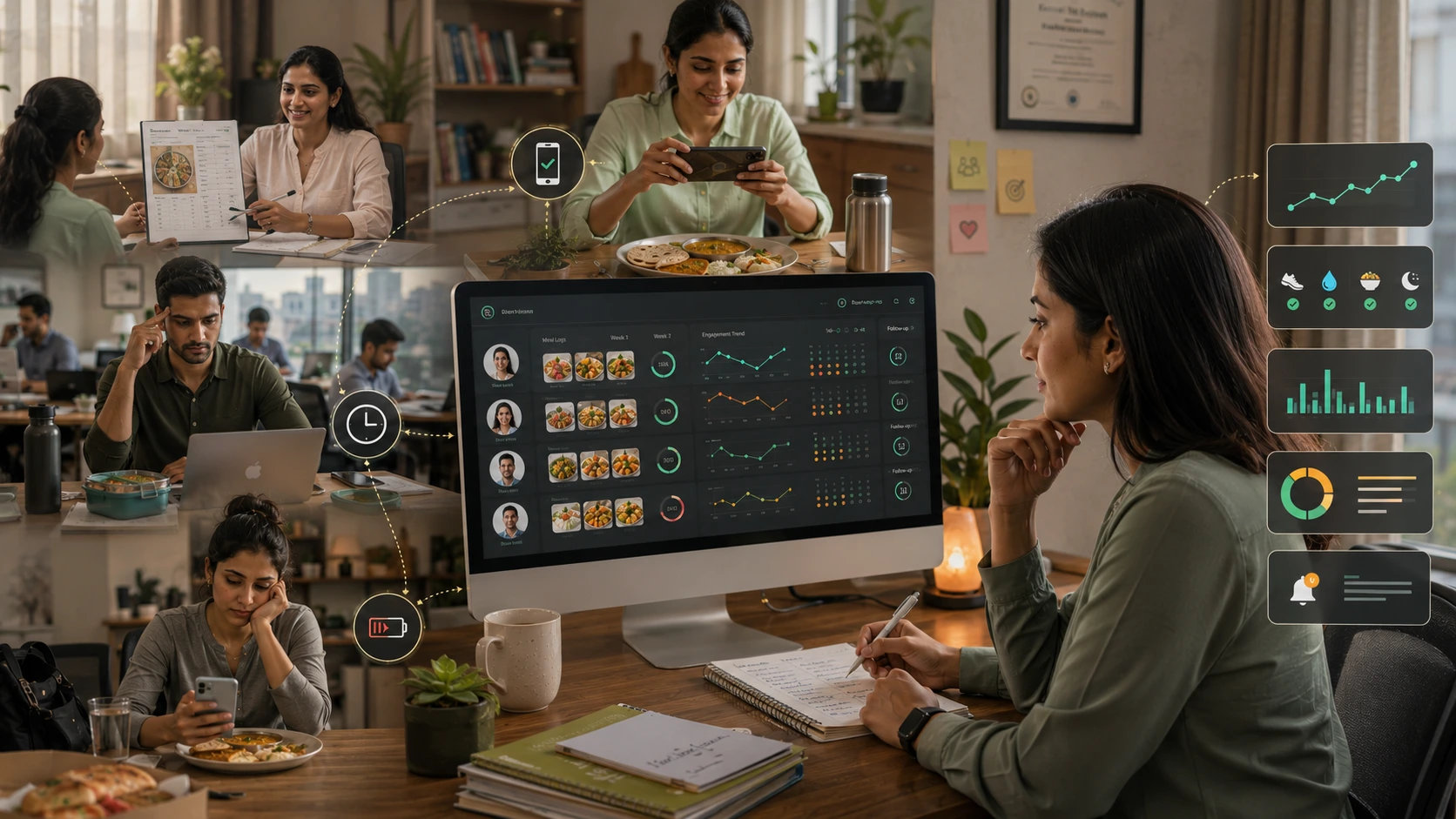
A client may leave a consultation feeling motivated, follow the plan for several days, and then gradually return to old habits. This is one of the biggest operational challenges in nutritionist client management.
Effective nutrition client engagement is not about sending more reminders. It is about creating a structured coaching experience that helps nutrition professionals understand what clients are doing between appointments, identify problems early, and provide useful support without increasing the workload of both the client and the practitioner.
For Indian dietitians managing office workers, gym members, families, clients with changing schedules, and people seeking long-term behavior change, the quality of the system between consultations can be just as important as the consultation itself.
Why Client Engagement Doesn’t End After The Consultation
A consultation provides direction. The client receives recommendations, understands the goals, and leaves with a plan.
The real challenge begins the next morning.
An office employee has an unexpected meeting and skips breakfast. A working parent cannot prepare the planned evening meal. A gym beginner attends a family function and struggles to return to the routine afterward.
These situations happen outside the consultation room.
Without visibility into everyday behaviour, a nutritionist may discover the problem only during the next appointment.
Effective nutrition coaching therefore requires more than delivering meal plans. It requires an ongoing process of awareness, observation, feedback, and adjustment.
This is particularly important in online nutrition coaching, where professionals may manage clients across different cities and rarely meet them in person.
Better nutritionist client management gives practitioners enough visibility to understand:
- Whether clients are following agreed habits.
- Where adherence is declining.
- Which recommendations are difficult to implement.
- Whether clients are recording meals consistently.
- What questions repeatedly create confusion.
- When additional support may be necessary.
The objective is not constant surveillance.
The objective is making progress visible enough for meaningful coaching.
The Biggest Communication Mistakes Nutritionists Make
One common mistake is assuming that more communication automatically creates better nutrition client engagement.
It does not.
Too many messages can create pressure for clients and additional administrative work for nutritionists.
Another mistake is waiting until the next consultation to discuss problems.
If a client stops recording meals during the second week of a programme, waiting another month to identify the issue makes timely intervention difficult.
Other common communication problems include:
Sending generic reminders
“Follow your diet” provides little practical value. Communication should help clients solve real problems.
Using the same communication frequency for everyone
A new client may require more frequent support than someone who has followed sustainable habits for six months.
Depending on memory instead of systems
When professionals manage 30, 50, or 100 clients, remembering every conversation, follow-up, and behavioural pattern becomes unrealistic.
Structured nutrition practice management reduces dependence on memory.
Focusing only on weight
Progress can also include improved meal regularity, better protein intake, more daily movement, consistent sleep routines, and stronger habit tracking.
Responding only when clients ask questions
Some clients disappear when they struggle. A lack of questions does not always indicate successful adherence.
The better approach is to build a predictable communication system around the client’s stage, needs, and progress.
How Often Should Nutritionists Check In?
There is no universal follow-up schedule that works for every client.
Communication frequency should depend on the client’s experience, goals, adherence challenges, health requirements, and level of support.
Weekly
Weekly communication can work well for new clients, gym beginners, people struggling with consistency, or clients making significant changes to their daily routines.
The interaction does not need to become another full consultation.
A short weekly review can examine:
- Meal consistency.
- Habit completion.
- Common challenges.
- Questions or confusion.
- One priority for the following week.
Weekly reviews can strengthen client adherence nutrition by preventing small problems from becoming long-term disengagement.
Biweekly
Biweekly communication may suit clients who have established routines but still benefit from structured accountability.
This schedule gives clients enough independence to practise healthy behaviours while maintaining regular professional support.
For many professionals providing virtual nutrition consultation, biweekly reviews can balance coaching quality with manageable workloads.
Monthly
Monthly reviews may work for experienced clients who have developed strong habits and require less frequent intervention.
However, a monthly consultation should not mean complete silence between appointments.
Simple meal tracking, progress records, or structured check-ins can provide enough visibility to identify meaningful changes.
Practical rule: Increase support when clients are building new behaviours or struggling with adherence. Reduce communication frequency gradually as independence and consistency improve.
Creating A Client Journey Between Appointments
Strong nutrition practice systems turn disconnected appointments into a continuous coaching process.
Consultation
Understand the client’s routine, food preferences, work schedule, family responsibilities, goals, and major barriers.
Avoid creating recommendations that look perfect on paper but are unrealistic in daily life.
↓
Tracking
Ask clients to record only information that improves coaching decisions.
This could include meals, habits, activity, hydration, sleep, or agreed health behaviours.
The goal of nutrition tracking is visibility, not administrative burden.
↓
Weekly Review
Review patterns rather than isolated mistakes.
Did breakfast disappear during office days?
Does restaurant eating increase every weekend?
Is the client consistently missing protein sources?
Good client progress tracking helps professionals identify recurring problems.
↓
Adjustments
Modify recommendations based on the client’s actual behaviour.
For example, replacing an unrealistic cooked breakfast with curd, eggs, fruit, roasted chana, or another practical option may improve consistency.
↓
Long-term Coaching
Gradually shift from frequent instruction toward stronger self-management.
Successful personalized nutrition should help clients understand their own patterns and make better decisions independently.
This is where simple technology can improve visibility.
Nutrimate’s Indian-first ecosystem supports everyday awareness through WhatsApp-based meal logging and practical tracking of Indian eating habits. Its India’s #1 whatsapp meal logging feature and Unique Caregiver feature reflect the broader principle that health support should fit naturally into daily routines rather than create another complicated process.
For dietitians, trainers, and fitness professionals managing larger client bases, FitVia complements this consumer experience by bringing WhatsApp nutrition tracking, trainer dashboards, member engagement tools, progress reports, meal planning, and analytics into a structured B2B coaching environment.
The strategic value is not sending clients more messages.
It is helping professionals see enough of the client journey to provide better support.
Communication Channels That Actually Work
Different channels solve different problems.
| Channel | Best Use | Main Limitation |
| Reports, educational resources, detailed instructions | Easy for clients to ignore during busy weeks | |
| Quick questions, practical updates, convenient communication | Can become overwhelming without boundaries | |
| Apps | Structured tracking, progress visibility, reports, ongoing coaching | Adoption declines when the experience requires too much effort |
| Phone Calls | Sensitive discussions, complex problems, deeper conversations | Difficult to scale across large client bases |
Email is useful when professionals need to send structured information or detailed resources. It is less effective for frequent engagement when clients rarely check personal email.
WhatsApp fits naturally into the communication behaviour of many Indian clients. However, effective whatsapp nutrition support requires structure. Unlimited messaging can create unrealistic expectations and increase practitioner workload.
Apps and digital systems can support nutrition analytics, progress visibility, and scalable coaching when clients can use them consistently.
Phone calls remain valuable when problems require deeper conversations or cannot be understood through written communication.
The best nutrition coaching workflow usually combines channels instead of depending entirely on one.
For example:
WhatsApp for convenient communication.
A structured system for meal tracking and progress visibility.
Scheduled calls for important adjustments.
Reports for longer-term progress reviews.
This reduces unnecessary communication while preserving meaningful client engagement.
Client Engagement Checklist
☐ Define the client’s communication expectations during onboarding.
☐ Match follow-up frequency to the client’s stage and support needs.
☐ Create a repeatable nutrition workflow for every client.
☐ Track only information that improves coaching decisions.
☐ Review patterns rather than reacting to isolated mistakes.
☐ Use nutrition consultation software or structured systems when manual follow-ups become difficult to manage.
☐ Maintain clear boundaries around WhatsApp availability.
☐ Use nutrition reporting software when longer-term progress needs to be communicated clearly.
☐ Adjust recommendations according to real Indian routines, work schedules, family responsibilities, and food preferences.
☐ Use nutrition automation for routine administrative work, not for conversations requiring professional judgement.
☐ Monitor declining engagement before clients completely disappear.
☐ Help clients develop independence instead of creating permanent dependence on the coach.
☐ Build a digital nutrition practice around continuous coaching rather than disconnected appointments.
☐ Measure client retention, adherence patterns, engagement, and coaching workload to improve the practice over time.
FAQs
Communication frequency depends on the client’s needs, experience, goals, and adherence challenges. New clients or people struggling with consistency may benefit from weekly communication, while established clients may require biweekly or monthly reviews. Effective nutritionist client management should provide enough support to maintain progress without creating unnecessary communication.
A useful approach is to begin with more frequent reviews during the early stages of coaching and gradually reduce the frequency as clients develop stronger habits. Weekly reviews, biweekly adjustments, and periodic longer-term consultations can create a practical structure for continuous nutrition coaching.
Professionals providing online nutrition coaching can combine WhatsApp communication, structured meal tracking, progress dashboards, scheduled consultations, and digital reports. The objective is to maintain visibility into client progress without requiring constant messaging from the nutritionist.
Reference:
- Research published in Frontiers in Psychology explains how behavior change techniques such as goal setting, self-monitoring, feedback, and social support are widely used in digital interventions designed to support health-related behavior change.
- A systematic review published in the Journal of Medical Internet Research examined digital behavior change interventions and the role of engagement in intervention effectiveness, providing useful evidence for professionals designing continuous digital health support systems.
Read Nutrimate Wellness first on Google