 Pradnya Ganorkar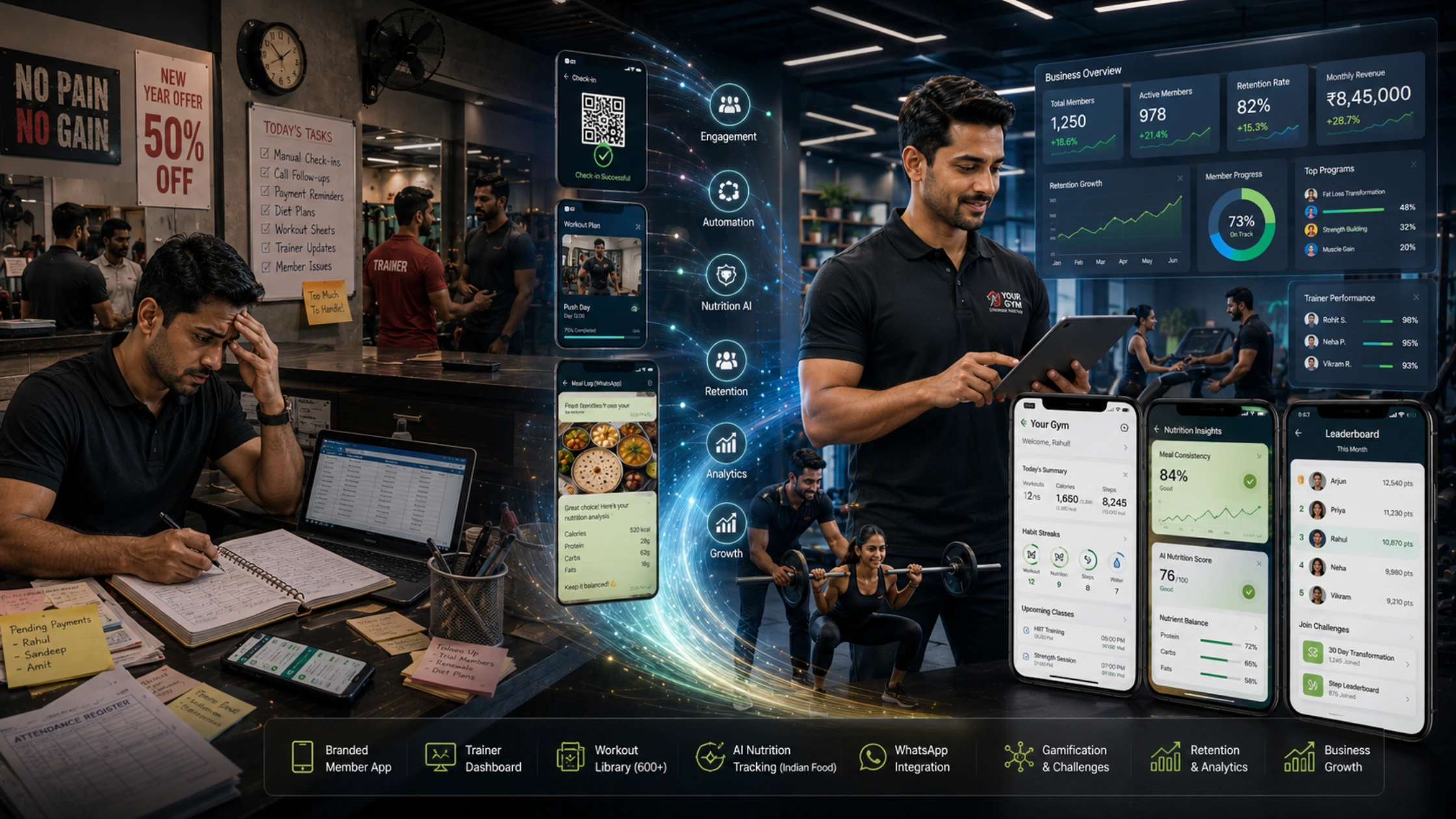
The Indian fitness industry is changing rapidly.
Today’s gym members expect more than:
- equipment
- trainer access
- monthly membership plans
They now expect:
- digital workout tracking
- nutrition support
- progress visibility
- WhatsApp communication
- mobile engagement
- personalized experiences
This is one of the biggest reasons why demand for a branded gym app India ecosystem is growing quickly across:
- local gyms
- fitness studios
- trainers
- influencers
- nutrition coaches
- wellness businesses
But many gym owners still believe mobile apps are:
- too expensive
- only for large fitness chains
- technically difficult
- impossible without developers
That assumption is no longer true.
Modern white label fitness app India platforms now allow gyms to launch branded member apps without building technology from scratch.
This shift is changing how Indian gyms approach:
- retention
- engagement
- member experience
- workout tracking
- nutrition tracking
- business growth
Today, smaller gyms in cities like Pune, Nashik, Aurangabad, Indore, and Nagpur are using digital systems once available only to large fitness brands.
The reason is simple:
fitness businesses are no longer competing only on equipment.
They are competing on:
- experience
- consistency
- personalization
- accountability
- digital engagement
This is especially important in India, where many gym members struggle with:
- inconsistent attendance
- poor diet adherence
- lack of accountability
- motivation drop-offs
- short-term fitness behavior
That is why platforms focused on:
- gym member retention tools
- fitness client engagement platform systems
- AI-driven tracking
- WhatsApp-based communication
- Indian meal intelligence
are becoming increasingly valuable.
Solutions like FitVia, developed by Nutrimate Wellness, reflect this trend by helping gyms launch branded fitness ecosystems with:
- white-label member apps
- trainer dashboards
- India’s largest Indian food database
- 600+ workout library
- member leaderboards
- engagement systems
- smart operational tools
without requiring expensive in-house development.
The future of fitness businesses in India may belong less to the biggest gyms and more to the gyms that build consistent member engagement.
Why Every Gym Doesn’t Need to Build From Scratch
A few years ago, building a gym app meant:
- hiring developers
- creating backend systems
- designing UX
- maintaining servers
- fixing bugs
- updating features constantly
For most Indian gyms, that was unrealistic.
Today, things have changed dramatically.
The Shift Toward Plug-and-Play Fitness Infrastructure
Modern fitness software India platforms now offer pre-built infrastructure that gyms can customize under their own brand.
This means gyms can launch:
- branded apps
- workout systems
- nutrition tracking
- trainer dashboards
- member engagement tools
without building technology internally.
Why This Matters for Indian Gym Owners
Most Indian gyms operate with:
- limited tech resources
- lean teams
- operational pressure
- competitive local markets
Spending lakhs on custom app development often creates unnecessary risk.
Instead, many gyms now prioritize:
- faster launches
- lower costs
- member retention
- operational simplicity
Technology Is No Longer the Competitive Advantage
The real advantage comes from:
- execution
- engagement
- consistency
- member experience
Not from building code from scratch.
The White-Label Fitness Model
A branded fitness app allows gyms to:
- use their own logo
- customize member experience
- create digital communities
- offer workout plans
- manage trainer communication
while using an existing backend platform.
This significantly reduces:
- development cost
- launch timelines
- technical maintenance
Quick Summary
Most gyms no longer need custom-built apps. Pre-built infrastructure allows faster, more affordable digital transformation.
The Real Cost of Traditional App Development
Many gym owners underestimate the actual cost of app development.
The expense is not only about building the app.
The bigger cost is maintaining it.
What Traditional Development Usually Requires
A custom app often involves:
- UI/UX designers
- frontend developers
- backend engineers
- QA testing
- cloud hosting
- maintenance teams
- ongoing updates
This can cost:
- ₹10 lakh to ₹50 lakh+ initially
- plus recurring operational expenses
For most mid-size Indian gyms, that investment is difficult to justify.
The Hidden Problems After Launch
Even after development, gyms still face:
- app crashes
- low adoption
- poor usability
- member drop-offs
- expensive updates
Many gym owners eventually realize:
they built software instead of improving member results.
Why Simplicity Wins
Indian gym businesses usually benefit more from:
- member engagement
- retention systems
- easy onboarding
- WhatsApp integration
- nutrition visibility
- trainer accountability
than overly complex technology.
The Operational Reality
Most gyms do not need:
- complex AI coding teams
- enterprise infrastructure
- Silicon Valley-style development
They need systems that:
- members actually use
- trainers can manage easily
- improve retention
- support business growth
Strategic Insight
The goal is not owning technology infrastructure. The goal is improving member outcomes and retention.
Faster Alternatives That Work
The biggest change in the Indian fitness ecosystem is accessibility.
Smaller businesses now have access to tools previously available only to large chains.
White-Label Platforms
Modern AI fitness app India platforms allow gyms to launch branded apps quickly.
These systems already include:
- backend infrastructure
- tracking systems
- dashboards
- workout libraries
- nutrition systems
- engagement features
This dramatically reduces launch time.
Why Gym Owners Are Choosing This Model
Benefits include:
- faster deployment
- lower operational complexity
- easier onboarding
- scalability
- predictable costs
FitVia as an Example of This Shift
FitVia is an example of how Indian fitness businesses are moving toward integrated digital ecosystems instead of fragmented tools.
Rather than building separate systems for:
- attendance
- workouts
- nutrition
- trainer communication
- member engagement
FitVia combines them into one platform.
Its infrastructure supports:
- gyms
- trainers
- fitness influencers
- dietitians
through branded member apps and centralized dashboards.
Built Specifically for Indian Fitness Reality
One reason many Western platforms struggle in India is lack of local relevance.
Indian users need:
- Indian food tracking
- local diet compatibility
- WhatsApp communication
- Hindi-friendly usability
- practical workflows
FitVia’s database includes:
- 1 lakh+ Indian foods
- IFCT 2017 validated nutrition values
- Indian meal tracking support
which makes it more practical for Indian fitness coaching.
Faster Go-Live Timelines
Many gyms can now launch digital systems within days instead of months.
This changes the accessibility equation completely.
Quick Summary
Modern fitness infrastructure helps Indian gyms launch digital systems faster, cheaper, and more effectively than traditional development.
What Features Matter First
Many gym owners focus on flashy features.
But successful apps usually focus on practical engagement systems first.
1. Member Retention Features
The most important feature is not attendance.
It is consistency.
Good gym member retention tools help gyms monitor:
- engagement
- workouts
- nutrition adherence
- participation
- inactivity trends
2. Nutrition Tracking
Most gym results depend heavily on food habits.
Yet many gyms still separate:
- workouts
- nutrition
- accountability
This creates inconsistency.
Platforms offering:
- Indian meal logging
- WhatsApp check-ins
- food tracking without complexity
improve member adherence significantly.
3. Workout Libraries
Trainers need systems that reduce manual effort.
A large workout database with:
- video demonstrations
- categorized exercises
- structured plans
helps trainers coach more efficiently.
FitVia’s 600+ workout library is one example of how gyms can simplify trainer workflows while improving client experience.
4. Trainer Dashboards
A strong fitness coach client management software system should allow trainers to:
- track member progress
- monitor consistency
- manage plans
- review health scores
- engage clients regularly
5. Member Engagement Systems
Long-term retention improves when gyms create:
- leaderboards
- challenges
- progress visibility
- community interaction
because members stay longer when they feel connected.
6. WhatsApp Integration
In India, WhatsApp remains one of the most practical engagement channels.
Systems with WhatsApp-based:
- meal logging
- reminders
- check-ins
- notifications
usually reduce friction significantly.
This aligns closely with Nutrimate’s focus on low-effort health tracking and India’s #1 whatsapp meal logging feature and Unique Caregiver feature.
Strategic Insight
The best gym apps solve consistency problems, not just attendance management.
Step-by-Step Launch Plan
Launching a gym app no longer requires massive infrastructure.
A practical rollout approach works better.
Step 1: Define the Core Goal
Most gyms should first identify:
- retention problem
- engagement gap
- trainer efficiency issue
- nutrition compliance issue
before choosing technology.
Step 2: Start With Essential Features
Focus first on:
- member app
- workout tracking
- nutrition logging
- trainer dashboard
- communication systems
Avoid overbuilding early.
Step 3: Choose White-Label Infrastructure
A white label fitness app India platform allows faster deployment with lower technical risk.
This is especially useful for:
- local gyms
- fitness studios
- independent trainers
Step 4: Onboard Trainers Properly
Technology adoption depends heavily on trainers.
Train them on:
- member tracking
- progress monitoring
- habit coaching
- dashboard usage
Step 5: Introduce Members Gradually
Avoid overwhelming users.
Start with:
- attendance
- workouts
- meal visibility
- simple tracking
before expanding features.
Step 6: Use Engagement Loops
Successful gyms continuously encourage:
- check-ins
- leaderboard participation
- habit tracking
- progress reviews
Consistency creates retention.
Step 7: Monitor Business Metrics
Track:
- renewals
- member engagement
- app usage
- nutrition compliance
- trainer activity
not just downloads.
Quick Summary
Simple rollout systems improve adoption faster than feature-heavy launches.
Real Example: Mid-Size Indian Gym
Consider a mid-size gym in Aurangabad with:
- 450 members
- 6 trainers
- inconsistent renewals
- limited nutrition follow-up
Initially, the gym relied mainly on:
- attendance tracking
- WhatsApp groups
- manual coaching
Member drop-offs remained high after 3 months.
The Operational Shift
Instead of building custom technology, the gym adopted a branded fitness ecosystem with:
- trainer dashboards
- nutrition logging
- member challenges
- workout library
- app-based engagement
What Changed
Trainers gained:
- structured workout systems
- progress visibility
- easier client management
Members gained:
- habit visibility
- meal awareness
- engagement consistency
- easier communication
Results Beyond Attendance
The biggest improvement was not app usage.
It was:
- improved accountability
- higher retention
- increased engagement
- stronger transformation consistency
This is why many Indian gyms are now investing more in engagement infrastructure than traditional marketing alone.
FitVia’s Relevance in This Space
Platforms like FitVia are helping gyms access:
- branded apps
- member dashboards
- Indian nutrition tracking
- WhatsApp check-ins
- workout libraries
- engagement systems
without building internal tech teams.
This makes digital transformation accessible even for mid-size and regional gyms across India.
Content Direction
Gym owners think apps are only for large brands.
That mindset is changing quickly.
Modern fitness businesses are increasingly realizing that:
- retention matters more than signups
- engagement matters more than attendance
- systems matter more than motivation
The future of gym business growth India may depend on how effectively gyms:
- track member consistency
- simplify nutrition support
- create accountability
- maintain engagement beyond workouts
The gyms winning today are not always the biggest.
They are the gyms building:
- stronger member systems
- digital visibility
- habit consistency
- long-term engagement
Technology is becoming more accessible.
But the real opportunity lies in using it practically.
FAQs
Yes. Modern gym app India platforms now allow small and mid-size gyms to launch branded fitness apps without building technology internally. White-label systems significantly reduce development cost and setup complexity.
Traditional custom app development can cost several lakhs or more depending on features and maintenance requirements. However, modern white-label fitness infrastructure allows gyms to launch branded apps at significantly lower operational cost with faster deployment timelines.
Read Nutrimate Wellness first on Google