 Pradnya Ganorkar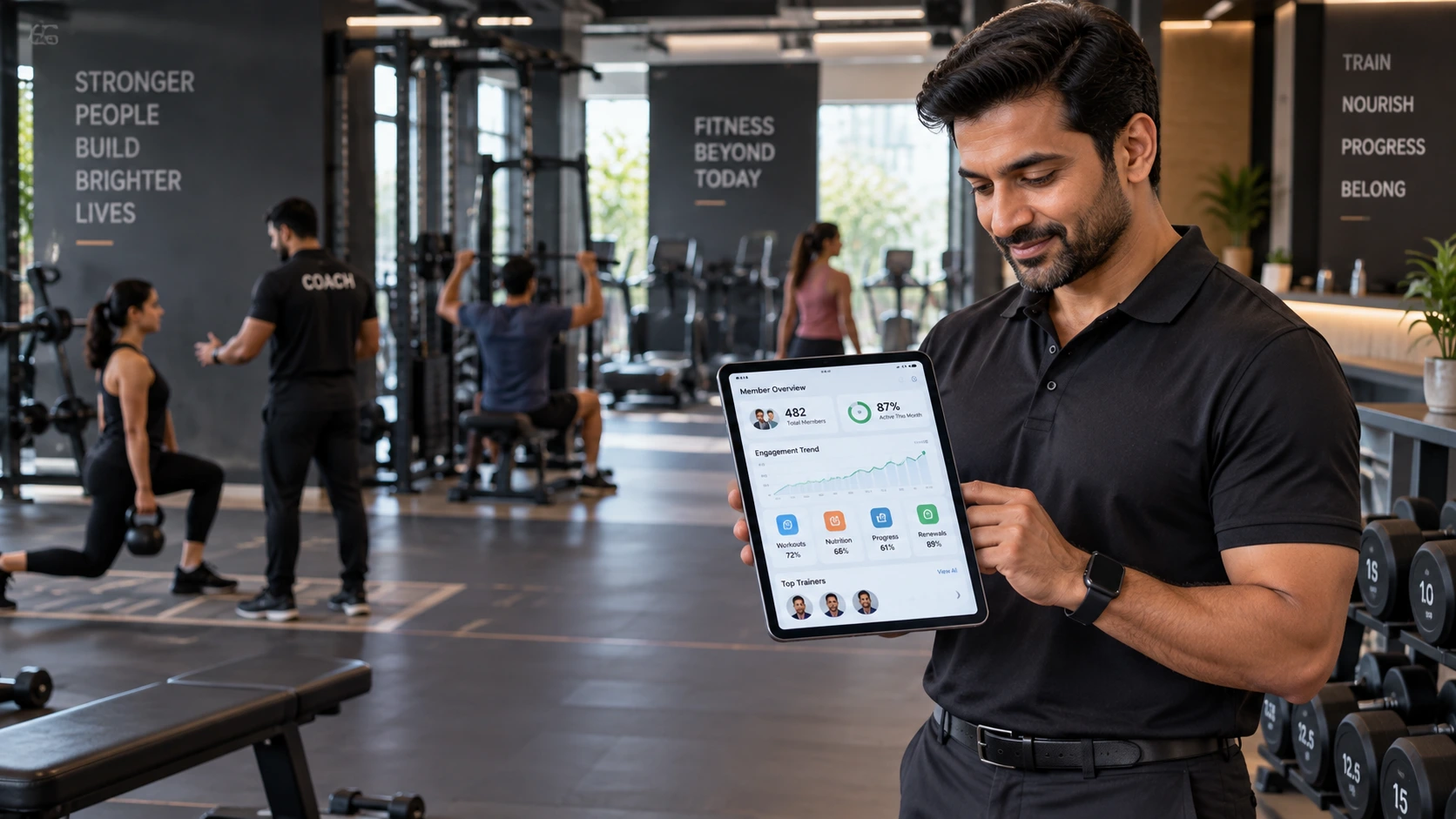
The Indian fitness business is changing.
A gym is no longer competing only on equipment, location, membership price or the number of trainers on the floor. Members increasingly expect convenience, personalisation, progress visibility and an experience that continues beyond the physical gym.
This is changing what gym management software india needs to accomplish.
Earlier, software primarily helped owners manage memberships, payments and attendance. Today, the opportunity is much broader: build stronger member relationships, improve retention, support trainers and create a consistent brand experience.
Deloitte’s India fitness market report projects significant growth in the country’s fitness industry through 2030 and highlights technology, personalised experiences and evolving consumer behaviour as important forces shaping the market.
The strategic shift is simple:
A gym manages members. A fitness brand manages an experience.
How Indian Gyms Have Changed Over the Last Decade
The traditional Indian gym model was relatively straightforward.
A customer purchased a membership, attended the facility, worked with a trainer if required and renewed when the membership expired.
The relationship was primarily physical.
That model still works, but member expectations have changed.
People now use smartphones for food, payments, entertainment, education and health. They expect information to be available quickly and services to feel convenient.
Fitness is no exception.
A member may want:
- A convenient way to check workouts
- Progress visibility
- Trainer communication
- Nutrition support
- Reminders
- Personalised guidance
- A consistent experience outside the gym
This does not mean every gym needs to become a technology company.
It means technology can remove friction from the member journey.
For owners evaluating best gym management software in india, the question should therefore move beyond, “Can this system manage memberships?”
A better question is:
“Can this system help me build a better member experience?”
From Single-Location Gyms to Fitness Brands
A gym becomes a fitness brand when people recognise what it stands for beyond its physical location.
Consider two gyms.
Gym A is known mainly as a place with equipment and trainers.
Gym B has a recognisable coaching philosophy, consistent communication, a distinct visual identity, a structured member journey and digital touchpoints that extend beyond the facility.
Gym B has begun behaving like a brand.
This is where gym branding and member experience intersect.
A strong brand does not require expensive advertising.
It can emerge from consistent experiences:
Discovery → joining → onboarding → training → progress → engagement → renewal → advocacy
Every stage influences how members perceive the business.
This is also why an app for gym membership can become more than an administrative tool when it is connected to the broader member experience.
A branded digital environment can help a gym maintain continuity between physical visits.
The long-term opportunity is not simply to have my own branded fitness app.
It is to give members a reason to keep interacting with the brand after they leave the gym.
The Systems That Separate Growing Gyms From Stagnant Ones
Growth creates operational complexity.
A gym with 50 members can manage many activities manually.
A gym with 500 members cannot depend on the owner’s memory.
As the business grows, systems become important across four areas.
Operations
Memberships, attendance, payments and staff workflows need structure.
This is the traditional role of gym software india.
Engagement
Owners need to understand whether members are actually using the service.
Attendance can help, but it is only one signal.
Communication, progress activity, workout completion and nutrition engagement can provide a broader view.
This is where gym member retention tools become strategically valuable.
Coaching
Trainers need a practical way to manage multiple clients without spending excessive time on administration.
A fitness client engagement platform can help bring coaching activity, progress and relevant member information into a more organised workflow.
Decision-making
Owners need information they can act on.
A health score can provide a simple signal of engagement when designed appropriately. Reports can help identify declining activity, upcoming renewals or members who may need additional attention.
The objective is not to create a data-heavy business.
It is to create a business where important changes are visible early enough to act on them.
Technology’s Role in Building a Recognisable Fitness Brand
Digital transformation is often misunderstood as buying more software.
That is not the point.
Technology becomes strategically useful when it strengthens the relationship between a gym and its members.
For example, gym whatsapp communication can make routine interactions more convenient. whatsapp nutrition can make nutrition support easier for members already comfortable using WhatsApp.
Similarly, nutrition tracking for gym members can extend the coaching relationship beyond workouts.
The key is integration.
If members use one system for membership, another for workouts, another for nutrition and a separate WhatsApp group for communication, the experience can become fragmented.
A stronger system connects relevant parts of the journey.
This is particularly important for Indian users because convenience often determines whether a digital health or fitness habit survives beyond the first few weeks.
A platform should therefore reduce friction rather than add another task.
FitVia, Nutrimate Wellness’s B2B fitness platform, supports this transition for gym owners, fitness trainers, influencers and dietitians through a white-label member app, trainer dashboards, WhatsApp nutrition tracking, Health Score, progress reports, analytics and smart gym management features.
The strategic value is that these capabilities can help a gym move from managing transactions to managing an ongoing member relationship.
What the Most Successful Gyms Are Doing Differently
The strongest fitness businesses are not necessarily the ones with the most technology.
They are the ones using technology with a clear purpose.
They think beyond membership sales
Getting a new member is only the beginning.
Retention depends on whether that member continues to see value.
They make progress visible
Members are more likely to stay engaged when they can understand how their effort is progressing.
They give trainers better visibility
Trainers are often the most important human touchpoint in the member experience.
Giving them useful information can improve coaching quality and consistency.
They create continuity outside the gym
A member should not feel that the relationship disappears when they walk out of the facility.
Simple digital touchpoints can support this continuity.
They build a recognisable identity
A consistent brand experience across the gym, communications and digital products can make the business easier to remember and recommend.
They use data to improve decisions
The most useful fitness software does not simply produce reports.
It helps answer questions such as:
- Which members are becoming less engaged?
- Which services are being used?
- Where are members dropping out?
- Which trainers have strong client engagement?
- Which members are approaching renewal?
- What part of the experience needs improvement?
This is where fitness business growth becomes connected to operational discipline.
Building Your Own Growth Roadmap
Not every gym needs to transform everything at once.
A practical roadmap can happen in stages.
Stage 1: Build operational discipline
Start with reliable membership, attendance and payment management.
The objective is visibility.
Stage 2: Strengthen member engagement
Introduce structured communication, progress tracking and appropriate gym member retention tools.
The objective is consistency.
Stage 3: Extend the coaching experience
Add relevant workout, nutrition and progress capabilities.
For gyms providing nutrition support, nutrition tracking can help connect what happens inside the gym with everyday behaviour outside it.
The objective is better coaching.
Stage 4: Build a recognisable digital identity
Consider a branded member experience rather than relying entirely on generic platforms.
The objective is stronger gym branding and member recall.
Stage 5: Use insights to make decisions
Once enough activity is being captured, owners can identify patterns in attendance, engagement, renewals and progress.
The objective is data-informed decisions.
This staged approach is more realistic than trying to purchase every available feature at once.
For owners comparing best SAAS for gyms india, best fitness software india or best fitness software for gyms india, the decision should ultimately come back to the business model.
Ask:
What problem are we solving?
If the answer is only membership administration, basic gym management may be enough.
If the goal is to build a differentiated fitness brand with stronger coaching, retention and recurring engagement, the technology requirement becomes broader.
The evolution from gym owner to fitness brand is therefore not primarily a technology story.
It is a business maturity story.
The first stage is managing a facility.
The next is managing members.
Then comes managing experiences, relationships and outcomes.
Technology can support every stage, but the strategy has to come first.
The Indian fitness businesses that build lasting brands will not necessarily be those that adopt the most tools.
They will be the ones that use the right tools to make their service easier to experience, easier to continue and easier to remember.
FAQs
Indian gyms become recognisable brands by creating a consistent experience across their physical facility, trainers, communication, coaching approach and digital touchpoints. Strong gym branding, personalised member experiences and consistent engagement can help a gym become more than a location where people exercise.
Growing gyms typically develop systems that allow them to manage more members without depending entirely on manual processes or the owner’s memory. They focus on member experience, retention, coaching quality, engagement and useful reporting alongside membership acquisition.
Modern gyms should invest in technology based on their biggest operational and growth challenges. This may include gym management software india, member apps, trainer tools, engagement systems, progress reporting and relevant nutrition capabilities. The priority should be technology that improves the member experience and gives owners and trainers information they can act on.
Read Nutrimate Wellness first on Google