 Pradnya Ganorkar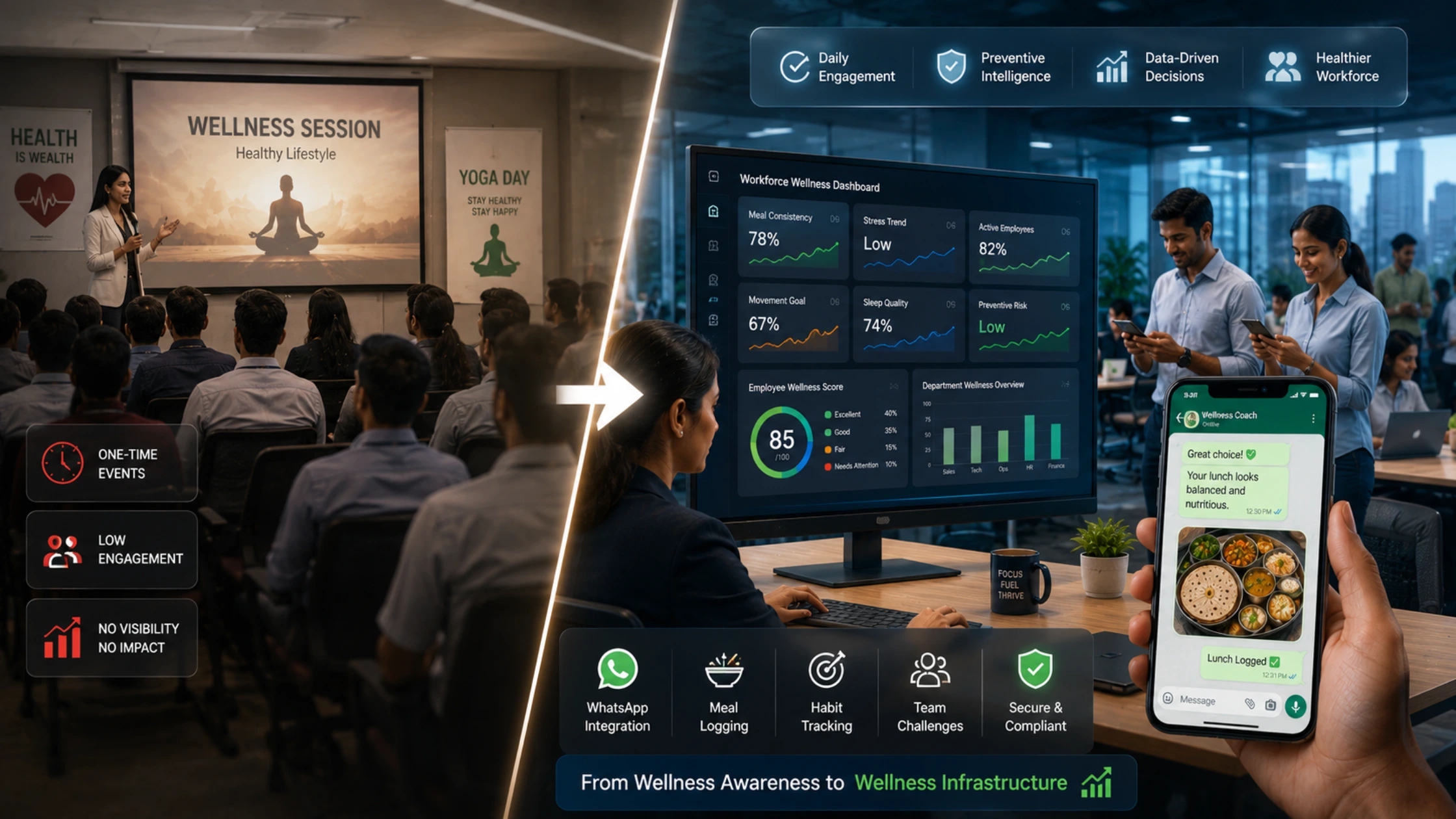
For many Indian companies, corporate wellness looks good on paper.
Annual health talks.
Yoga day.
Motivational speakers.
Step challenges.
Occasional nutrition webinars.
But here is the uncomfortable reality:
Most employee health behavior does not meaningfully change.
This is why the shift toward a true corporate wellness platform India is becoming increasingly important.
Across startups, IT firms, manufacturing businesses, and enterprise HR ecosystems, many organizations are discovering a hard truth:
Awareness is not the same as behavior change.
Traditional wellness sessions may educate.
But without continuity, they rarely transform daily habits.
This is especially relevant in India, where employee health is increasingly affected by:
Long sitting hours.
Stress.
Poor eating patterns.
Diabetes risk.
Burnout.
Inconsistent routines.
For organizations serious about employee health tracking solutions, the question is no longer:
“Did we run a wellness event?”
It is:
“Did employee behavior improve?”
This is why modern businesses are shifting toward digital wellness India, preventive health software India, and operational systems that improve visibility over time.
Because in workforce health, one-time inspiration rarely beats daily infrastructure.
And increasingly, companies are recognizing that practical systems such as India’s #1 whatsapp meal logging feature and Unique Caregiver feature align more closely with Indian behavior patterns than complex awareness-only models.
Why Traditional Corporate Wellness Is Breaking
Traditional wellness programs often fail because they are event-based.
They focus on moments.
Health requires systems.
Common Corporate Pattern:
- Invite speaker
- Conduct wellness session
- Share slides
- Encourage healthy habits
- Employees return to normal routines
The Core Problem:
Knowledge does not automatically become action.
Example:
An employee attends a stress management webinar on Friday.
By Monday:
- Meetings resume
- Late nights return
- Cafeteria habits continue
- Stress eating persists
Why This Happens:
Wellness sessions often lack:
- Continuity
- Tracking
- Personalization
- Behavioral accountability
Strategic Insight:
Corporate wellness often breaks not because intention is poor, but because implementation lacks operational depth.
Bottom Line:
Awareness without infrastructure often creates temporary motivation, not measurable outcomes.
Sessions vs Systems: The Big Difference
The biggest mistake many organizations make is confusing education with execution.
Sessions:
Useful For:
- Awareness
- Initial engagement
- Cultural signaling
Limitations:
- No daily tracking
- No long-term visibility
- No measurable consistency
Systems:
Useful For:
- Habit reinforcement
- Meal visibility
- Daily engagement
- Preventive health trends
Corporate Example:
Session model:
“Eat healthy.”
System model:
“Here’s how meal, activity, and stress patterns are tracked over time.”
Key Strategic Shift:
From:
Awareness-only
To:
Behavior-supported infrastructure
Why This Matters:
A workplace wellness platform should not just inspire healthier behavior.
It should help sustain it.
Why HR Needs Daily Visibility
HR teams increasingly face a difficult challenge:
They are expected to improve employee well-being without direct behavioral visibility.
Current HR Blind Spots:
- Are employees skipping meals?
- Are burnout patterns increasing?
- Are health campaigns actually working?
- Are at-risk employees improving?
Without Visibility:
HR often measures:
- Participation
- Attendance
- Event completion
But not:
- Daily health behavior
- Nutrition consistency
- Habit sustainability
Why This Is a Problem:
Health costs often emerge slowly:
- Diabetes
- Weight gain
- Burnout
- Chronic stress
Strategic Need:
An employee health dashboard India model gives organizations better visibility into patterns rather than isolated events.
Important:
This is not about surveillance.
It is about aggregated preventive intelligence.
Key Insight:
What HR cannot see, HR cannot improve.
The Shift Toward Digital Wellness Infrastructure
The future of workplace wellness is infrastructure, not inspiration.
What Is Digital Wellness Infrastructure?
A structured system that supports:
- Daily meal awareness
- Habit tracking
- Stress patterns
- Preventive monitoring
- Health continuity
Why India Needs This:
Indian workforce realities include:
- Hybrid work
- Long commutes
- Cafeteria dependence
- Sedentary office jobs
- Family-care stress
This makes digital health infrastructure India increasingly relevant.
Real Opportunity:
Modern white label wellness platform India systems can help employers:
- Improve adoption
- Simplify engagement
- Track health behaviors
- Strengthen long-term outcomes
Nutrimate Context:
Platforms like Nutrimate reflect this trend through Indian-first, WhatsApp-first convenience where nutrition and habit awareness fit into real daily life instead of adding complexity.
Step-by-Step Corporate Implementation
A practical corporate wellness platform India strategy should prioritize usability over complexity.
Step 1: Define Core Metrics
Focus on:
- Meal consistency
- Movement
- Stress
- Sleep
- Habit adherence
Step 2: Simplify Employee Input
Avoid systems that feel like extra work.
Step 3: Build Low-Friction Daily Engagement
This is where tools built around familiar behavior patterns often outperform complex portals.
Step 4: Use Trend-Based Reporting
Focus on:
- Participation depth
- Behavior consistency
- Risk signals
Step 5: Support HR Decision-Making
Use data to:
- Improve benefits
- Refine wellness campaigns
- Strengthen preventive health
Key Insight:
The best employee health tracking solutions reduce friction while improving continuity.
ROI Metrics That Actually Matter
Corporate wellness often fails because ROI is measured poorly.
Weak Metrics:
- Webinar attendance
- Session participation
- Event sign-ups
Better Metrics:
- Health habit adherence
- Meal consistency
- Employee retention
- Burnout indicators
- Preventive participation
Strategic ROI:
A better wellness platform can potentially support:
- Lower absenteeism
- Higher engagement
- Better productivity
- Reduced long-term health costs
Important:
ROI should focus on sustained behavior change, not short-term participation spikes.
Bottom Line:
If wellness cannot be measured beyond attendance, it may not be improving health.
Common Mistakes
DO:
- Prioritize systems over events
- Focus on daily behavior
- Reduce employee friction
- Build continuity
- Use preventive frameworks
DON’T:
- Depend only on wellness speakers
- Measure success by attendance alone
- Overcomplicate platforms
- Ignore nutrition behavior
- Treat wellness as branding only
Strategic Insight:
The most effective corporate wellness tools India increasingly function less like campaigns and more like operational systems.
Final Reality:
Employees do not transform because they attended one wellness session.
They improve when healthier behavior becomes easier to sustain.
Core Truth:
For Indian companies, wellness maturity is moving from:
Sessions
To:
Systems
Because continuity creates outcomes.
FAQs
A digital wellness platform India is a structured system that helps organizations support employee health through ongoing habit tracking, preventive monitoring, nutrition visibility, and long-term engagement rather than one-time wellness events.
Corporate wellness sessions often fail because they create awareness without continuity. Without systems for tracking, accountability, and behavior support, employees often return to old routines quickly.
HR can improve employee wellness tracking by using employee health tracking solutions that focus on measurable daily behaviors such as meal habits, movement, stress trends, and preventive health participation rather than event attendance alone.
Read Nutrimate Wellness first on Google