 Pradnya Ganorkar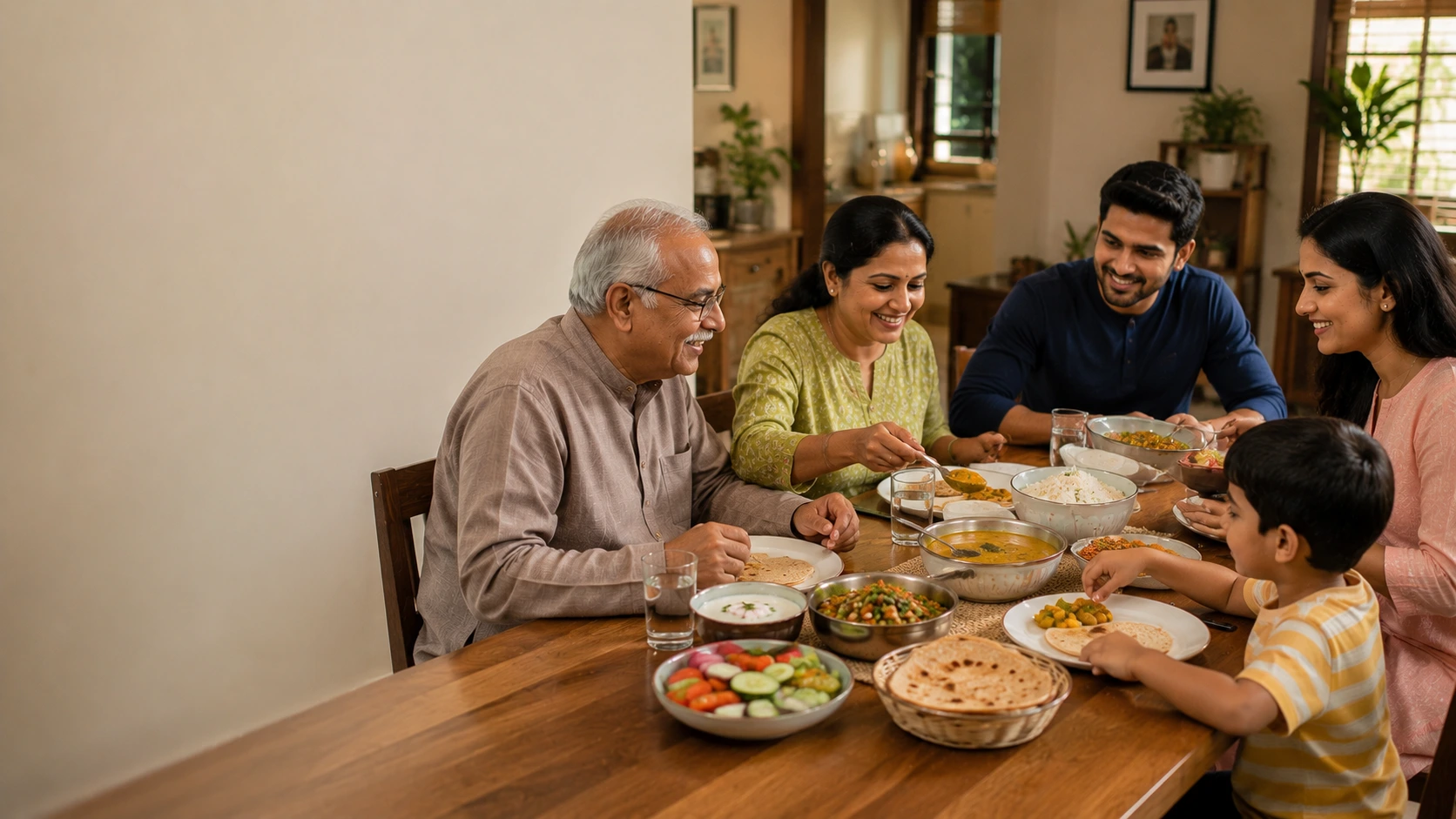
Building healthy Indian eating habits does not have to mean preparing a different meal for every person in the house. In many Indian families, one kitchen serves grandparents, parents, children and working adults, each with different routines and preferences.
The practical challenge is making one household meal work without turning dinner into a daily negotiation.
The answer is usually not separate cooking. It is flexibility.
A family can share the same basic meal while adjusting portions, accompaniments and serving choices according to individual needs. This approach makes family health easier to manage because healthy habits become something the household does together rather than something imposed on one person.
Why Separate Meals Aren’t a Sustainable Solution
Cooking separate meals sounds reasonable on paper.
One person wants weight management, another wants more protein, a child needs nutrient-dense food, while an older family member may need to follow dietary advice from a doctor. In practice, preparing four different meals every day quickly becomes exhausting.
For working Indian households, this can create:
- More cooking and cleaning
- More grocery planning
- More decision-making
- More dependence on packaged convenience foods
- Less consistency
- Frustration for the person preparing meals
It can also create an unintended psychological problem.
If one family member is always told, “This is your special food,” healthy eating can begin to feel like punishment.
A better model is shared food with individual flexibility.
The World Health Organization notes that healthy diets vary according to individual needs, lifestyle, cultural context and locally available foods, while the underlying principles of variety, balance and moderation remain consistent.
That fits naturally with the way Indian families already cook.
The Idea of a ‘Flexible Base Meal’ for the Whole Family
A flexible base meal means preparing common foods that everyone can eat, then making small adjustments at serving time.
For example:
Base meal:
- Dal
- Vegetable sabzi
- Roti
- Curd
- Salad
The same meal can work differently for different people.
| Family member | Possible adjustment |
| Working adult | Portion based on hunger and activity |
| Growing child | Adequate portions and variety |
| Older adult | Adjust according to personal dietary guidance |
| Person focused on weight management | More vegetables and appropriate portions |
| Active gym member | Add a suitable protein-rich accompaniment |
The important point is that these are examples, not medical diets. Anyone managing diabetes, kidney disease or another medical condition should follow advice from their doctor or qualified dietitian.
The flexible base meal also makes family meal planning much easier.
Instead of asking, “What should I cook for each person?” ask:
“What nutritious meal can everyone share, and what small adjustments might each person need?”
That shift reduces complexity without ignoring individual needs.
Small Adjustments That Work for Everyone at the Table
Healthy changes do not need to transform traditional Indian food.
A regular dal, roti, rice, sabzi or curd-based meal can remain familiar while the household gradually improves how it is prepared and served.
Make vegetables easier to include
Add one vegetable preparation to lunch or dinner instead of trying to completely redesign the plate.
For example:
Roti + dal + seasonal sabzi + curd
is already a more practical starting point than creating an elaborate “diet meal.”
Make portions visible
Rather than banning rice or roti, pay attention to portions and the overall combination of foods.
The common roti rice weight gain myth often comes from treating one food as the entire explanation for weight change. Overall dietary intake, activity, individual needs and eating patterns matter much more than declaring one staple food universally responsible.
Keep protein visible
Dal, legumes, curd, paneer, eggs where appropriate, soy and other protein-rich foods can be incorporated into familiar family meals.
This can be particularly useful when building protein for indian vegetarians without relying on separate cooking.
Reduce automatic extras
Small changes such as serving namkeen in a bowl instead of eating directly from a packet or reducing routine sugary drinks can improve awareness without creating strict household rules.
The WHO recommends a varied diet built around foods such as whole grains, legumes, vegetables and fruit, while limiting excess free sugars, salt and unhealthy fats.
Building Shared Habits Beyond Just Food (Walks, Sleep, Water)
Family wellness is bigger than what appears on the dinner table.
If only one person is expected to change, consistency becomes harder.
Instead, introduce habits that everyone can participate in.
Evening walks
A 15 to 30-minute family walk can become a shared routine rather than a “weight-loss activity” assigned to one person.
For children, adults and older family members, the activity can be adjusted according to ability and medical advice.
Water habits
Keep water easily accessible at home and make regular hydration part of the household routine.
The goal is not to create a rigid target for everyone. Individual hydration needs vary.
Sleep routines
Late-night screen use, irregular schedules and work-related stress can affect household routines.
Families can create simple rules such as reducing unnecessary late-night activity or keeping more consistent sleeping and waking times.
Shared progress
Visible progress can be motivating.
For example, a family could track:
- Number of home-cooked meals each week
- Family walks completed
- New vegetables tried
- Sugary drinks reduced
- Consistent breakfast days
A family health tracking app can make individual patterns easier to see while keeping the overall focus on shared progress.
Nutrimate takes a similar approach to everyday health tracking by making Indian meals easier to record and understand. Rather than expecting every family member to follow an identical routine, tracking can help each person see their own habits within the same household.
The broader goal is sustainable health habits, not a perfect week.
Getting Buy-In From Family Members Who Resist Change
Resistance is normal.
A parent may say:
“I have been eating this way for 30 years.”
A teenager may say:
“Why can’t I eat what my friends eat?”
A spouse may feel that healthier cooking means losing favourite foods.
Trying to win these arguments usually does not work.
Instead, make the change smaller.
Start with one change
Do not attempt to change breakfast, lunch, dinner and snacks simultaneously.
Choose one household habit.
For example:
“Let’s have fruit available every evening this week.”
Once that becomes normal, introduce another change.
Avoid labelling foods as good or bad
A family can enjoy traditional foods while still improving overall eating patterns.
The objective is not perfection.
Let people participate
Ask children which vegetable they want to try.
Ask parents which traditional meal they would like to keep.
Ask working adults which meal is hardest to manage.
This gives family members ownership rather than making them feel controlled.
Focus on the household environment
If healthier options are easy to access and routine foods are prepared thoughtfully, individuals need less willpower.
This is especially relevant to busy lifestyles in India, where convenience often determines what gets eaten.
A Whole-Family Habit-Building Checklist
Use this checklist to keep family changes realistic:
- One common base meal is prepared wherever practical.
- Individual portions can be adjusted without separate cooking.
- Dal, legumes or another suitable protein source appears regularly.
- Vegetables are included in everyday meals.
- Fruit is easily available at home.
- Packaged snacks are portioned rather than eaten directly from packets.
- Sugary drinks are not treated as the default household beverage.
- Family members participate in at least one shared activity.
- Children are included in food decisions appropriately.
- Older family members’ medical dietary requirements are respected.
- Nobody is shamed for eating a favourite food.
- Changes are introduced gradually.
- Progress is measured through habits, not just body weight.
- Meal patterns can be reviewed when consistency becomes difficult.
The key is to make the healthy choice easier for the entire household.
Families do not need a perfect meal plan to make progress. They need a system that fits the way they actually live.
A shared meal, flexible portions, regular movement and small repeatable habits can create a much more sustainable approach than cooking separate “healthy” meals for every person.
References
FAQs
Start with small habits that everyone can participate in, such as eating more home-prepared meals, including vegetables regularly, taking family walks and making healthier foods easier to access. Shared routines are generally easier to maintain than asking one person to change everything alone.
Yes, in many households a flexible base meal can work well. The same dal, vegetables, roti, rice or other family foods can be served with different portions or suitable additions. However, people with medical conditions or specific dietary requirements should follow personalised advice from their doctor or dietitian.
Avoid forcing major changes at once. Start with one practical habit, involve family members in decisions and avoid labelling foods as “good” or “bad.” Giving people some ownership over the change can make healthy routines feel less restrictive.
Read Nutrimate Wellness first on Google