 Pradnya Ganorkar
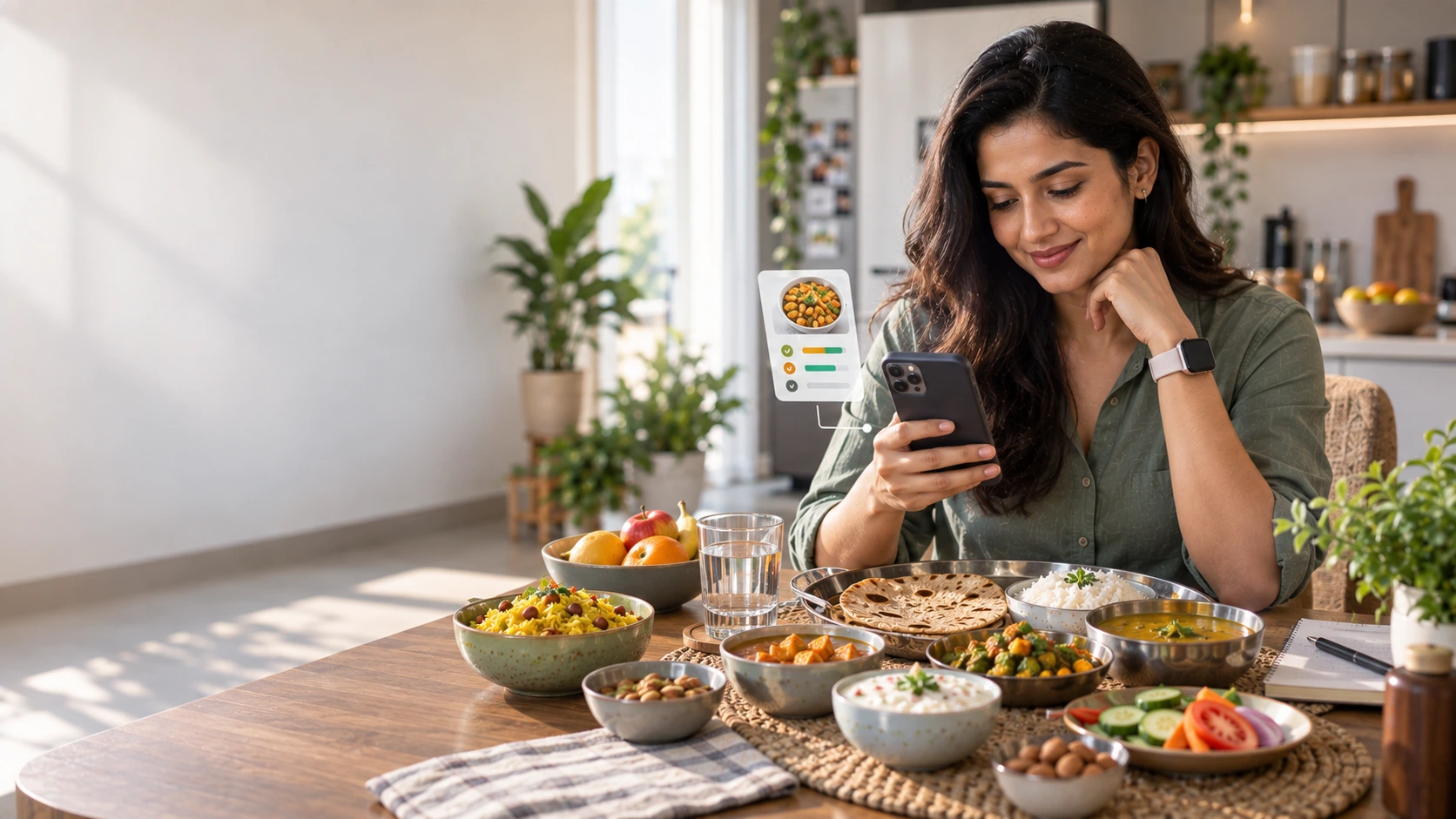
Choosing a meal tracker app for weight loss sounds simple until you try to log a normal Indian day. Poha for breakfast, dal and roti for lunch, chai with a snack, and a homemade dinner can be difficult to represent accurately in apps designed around Western food databases.
For Indian users, the right tracking tool should make meal tracking easier, not turn every meal into a mathematics exercise. It should recognise Indian dishes, reduce the effort required to record food, and help users understand patterns that support fat loss and sustainable weight loss.
Research supports the value of dietary self-monitoring, although adherence is critical. A systematic review found a consistent association between dietary self-monitoring and weight loss, while noting limitations in the evidence base.
Why Most Weight Loss Apps Get Abandoned in the First Week
The biggest problem is often not motivation. It is friction.
Many people download an app with the intention of tracking every meal, but abandon it when logging breakfast takes longer than eating breakfast. Searching for individual ingredients, entering quantities, adjusting serving sizes, and finding regional dishes can quickly become tiring.
This matters particularly for busy lifestyles in india, where meals may be homemade, shared with family, prepared differently from one household to another, or purchased outside.
Common reasons for abandonment include:
- Too many steps to log one meal
- Missing Indian and regional foods
- Excessive focus on calories
- Difficulty estimating portions
- Repetitive manual entry
- Little useful feedback about eating patterns
A useful best weight loss app is therefore not necessarily the one with the largest number of features. It is the one people can realistically continue using.
Evidence from digital weight-management research supports this principle. A systematic review of digital self-monitoring interventions found that greater digital self-monitoring was associated with weight loss in most of the reported occurrences.
What Indians Need From a meal tracker app That Western Apps Do Not Provide
Indian food is highly diverse. A meal can vary significantly according to region, household recipe, preparation method, and portion.
A useful best food tracking app for Indian users should therefore have strong coverage of foods such as:
- Roti, paratha and different regional rotis
- Rice preparations
- Poha and upma
- Idli, dosa and sambar
- Dal and regional lentil preparations
- Paneer-based dishes
- Indian snacks and sweets
- Homemade meals
- Packaged Indian foods
The goal is not to declare one cuisine healthy and another unhealthy. It is to provide enough context to understand what a person is actually eating.
This is especially relevant for people following Indian diet patterns while trying to manage weight loss india goals. A person should not have to replace familiar foods simply because an app cannot recognise them.
Must-Have Features Before You Download
Before choosing a meal tracker app, evaluate the experience against five practical questions.
1. Does it understand Indian food?
Search for five meals you eat regularly. Try dishes from your own region rather than generic foods.
If you regularly eat dal khichdi, dosa, misal, rajma chawal or another regional meal, check whether the database represents the dish meaningfully.
2. Can you log meals quickly?
Look for an easy way to track meals rather than a system that requires detailed manual entry every time.
Photo, voice, search and familiar messaging workflows can reduce the effort involved in recording food.
3. Does it provide useful nutrition information?
Calories can be useful, but they should not be the only metric.
For people pursuing muscle gain or fat loss, protein intake, meal composition and overall eating patterns can be equally relevant.
For example, someone following a vegetarian diet may benefit from understanding whether their meals regularly include adequate protein sources such as dal, curd, paneer or other familiar foods.
4. Does it support consistency?
The best system is one you can use repeatedly.
If the app makes tracking feel like another daily chore, even an excellent nutritional database will have limited practical value.
5. Does it help you understand patterns?
A useful tool should help answer questions such as:
- Do I snack more in the evening?
- Are my portions larger on weekends?
- Am I getting enough protein?
- How frequently do I eat outside?
- Which meals are hardest to manage?
This moves tracking from simple data collection toward behavioural awareness.
How to Test Any meal tracker app for Indian Food Accuracy
Do not choose an app based only on its screenshots or feature list. Test it with your actual diet.
Use this simple five-meal test:
Step 1: Select five Indian meals you eat regularly.
Step 2: Include at least one regional or homemade preparation.
Step 3: Check whether the app identifies the food specifically.
Step 4: Compare the nutritional information across different portion sizes.
Step 5: See how much manual correction is required.
This is particularly useful for users looking for a calorie tracking app india or food diary india solution.
For example, searching for “rice” is very different from accurately recording a complete meal containing rice, dal, sabzi and curd. The second approach provides more useful context for understanding everyday eating.
The same principle applies to snacks. Someone searching for 100 gm namkeen calories or calories in namkeen needs to distinguish between different products and serving sizes rather than relying on one generic number.
The Simplicity Principle: Why the Easiest App Wins
Tracking only works when people keep doing it.
Research from a randomized behavioral weight-loss trial found higher self-monitoring adherence among participants using electronic tools compared with paper records. The researchers also found that adherence was important to the relationship between monitoring and weight change.
For Indian users, simplicity can mean:
- Logging a meal in seconds
- Recognising common Indian dishes
- Avoiding unnecessary calorie calculations
- Using familiar language and food names
- Reviewing patterns without overwhelming dashboards
This is why food tracking without calorie counting can be a useful approach for people who find detailed calorie logging exhausting.
The objective is not perfect data. It is enough useful information to make better decisions consistently.
WhatsApp-Based Tracking vs Dedicated Apps: Which Suits You?
A dedicated application can provide extensive functionality, but it also introduces another destination that users must remember to open.
WhatsApp-based tracking takes a different approach. Instead of asking users to build a new digital habit, it can place meal logging inside a platform many already use every day.
This can be particularly useful for Indian families, professionals and older users who may find a new nutrition application unnecessarily complicated.
Nutrimate uses a WhatsApp-first approach to simplify Indian meal logging. A user can share a meal through a familiar interaction rather than treating every food entry as a separate administrative task.
The important comparison is therefore not “WhatsApp versus apps” in absolute terms. It is which workflow makes consistent tracking easier for the individual user.
How to Build a Tracking Habit That Sticks
Start smaller than you think.
Instead of attempting perfect tracking from day one, establish a repeatable routine.
Week 1: Build awareness
Record your normal meals without trying to change everything immediately.
Weeks 2 to 4: Identify patterns
Look for recurring behaviours such as evening snacking, oversized portions or missed protein sources.
Weeks 5 to 8: Make targeted changes
Change one or two behaviours at a time. For example, improve breakfast protein or reduce unnecessary high-calorie snacks.
Weeks 9 to 12: Build independence
Use the information from your tracking history to make better choices without needing to analyse every meal in detail.
This approach supports sustainable health habits rather than short-term restriction.
For people pursuing weight loss, the objective should be a routine that fits real life. A working professional should be able to track meals during a busy day. A parent should be able to manage family meals without spending hours entering ingredients. A gym member should be able to connect nutrition with training goals.
The most useful meal tracker app is ultimately the one that reduces the gap between knowing what to do and actually doing it.