 Pradnya Ganorkar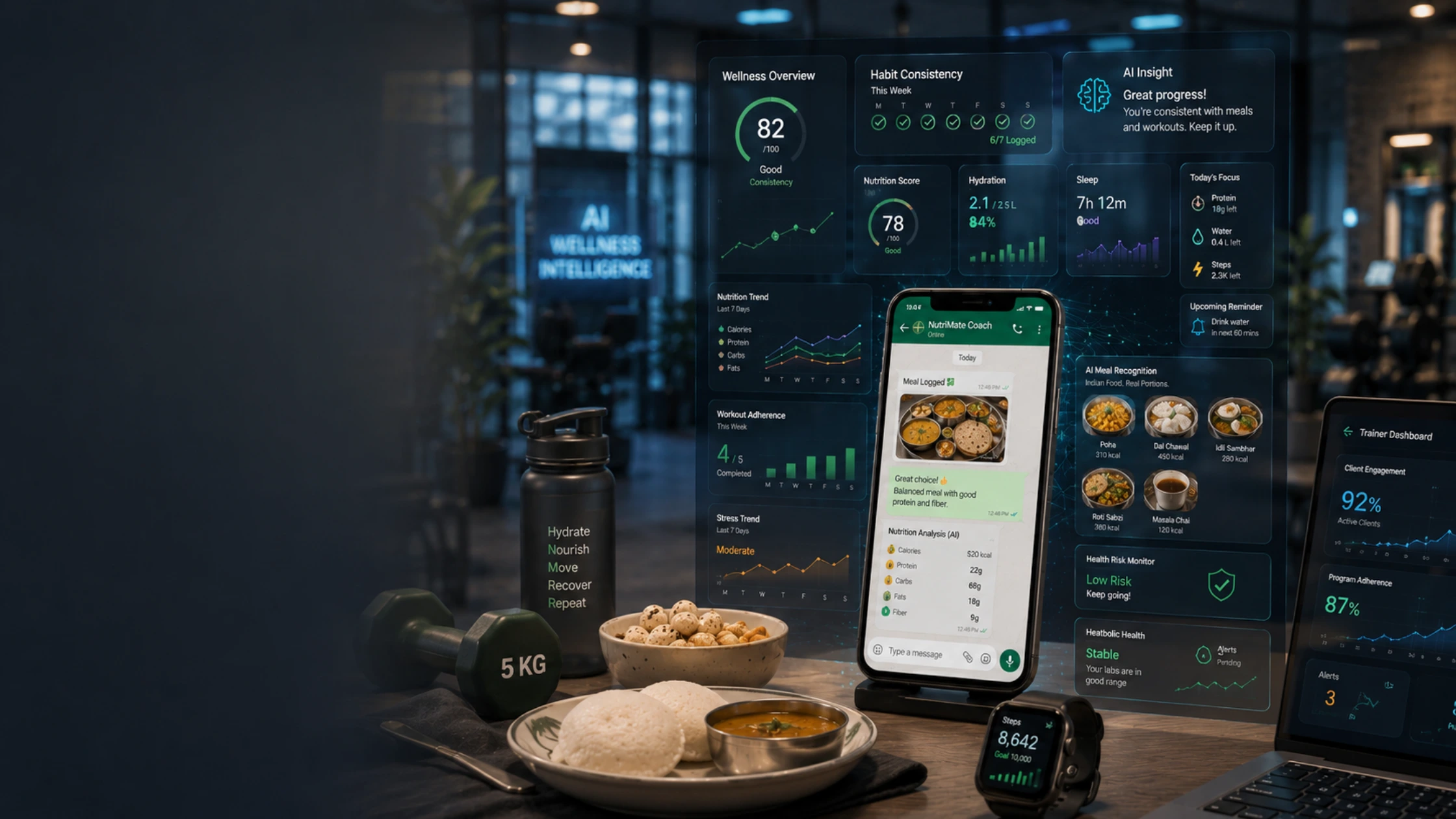
India’s wellness industry is undergoing a major shift.
For years, most people approached fitness through short-term motivation:
- New Year gym memberships
- Strict diet plans
- Generic calorie-counting apps
- Extreme transformation challenges
- Temporary fitness trends
But the reality remained the same.
Most Indians struggled with:
- Inconsistency
- Confusing nutrition advice
- Busy work schedules
- Unrealistic fitness plans
- Lack of personalized guidance
- Indian food tracking problems
- Low long-term adherence
This is where modern AI fitness app India platforms are beginning to change the conversation.
Instead of focusing only on workouts or calorie counting, the new generation of wellness systems combines:
- AI-powered food intelligence
- Habit tracking
- Behavior insights
- Preventive health monitoring
- Family wellness visibility
- Trainer engagement tools
- WhatsApp-based convenience
The biggest shift is not technology alone.
It is contextual intelligence.
Older wellness apps were largely built around Western eating patterns and Western fitness assumptions.
But Indian wellness realities are different.
A person in Pune eating poha for breakfast, dal-rice for lunch, chai twice daily, and homemade sabzi for dinner cannot effectively use systems designed around salads, protein bars, and packaged Western meals.
That mismatch created frustration for millions of users trying to maintain a healthy lifestyle.
Today, platforms focused on AI nutrition app India solutions are adapting to Indian food behavior, Indian routines, and Indian health risks.
This matters because India is simultaneously facing:
- Rising diabetes rates
- Increasing obesity
- PCOS prevalence
- Sedentary work lifestyles
- Stress-related eating
- Low nutrition awareness
- High burnout among professionals
According to the International Diabetes Federation, India remains one of the countries with the highest diabetes burden globally, making long-term nutrition adherence a critical preventive healthcare challenge.
At the same time, the World Health Organization continues to highlight lifestyle-driven noncommunicable diseases as one of India’s biggest public health risks.
The future of wellness in India will not depend only on gyms or diet plans.
It will depend on sustainable daily behavior systems.
That is exactly where AI-driven wellness platforms are becoming important.
Why AI Matters in Indian Fitness
The Indian fitness ecosystem is extremely fragmented.
Different people use different systems:
- Gym notebooks
- WhatsApp chats
- Manual Excel sheets
- Generic calorie apps
- YouTube workout videos
- Trainer PDFs
- Printed diet plans
Most of these systems fail for one reason:
They create too much friction.
People do not struggle because they lack information.
They struggle because:
- Tracking feels exhausting
- Routines become complicated
- Apps feel disconnected from real life
- Food logging becomes unrealistic
- Consistency breaks quickly
This is why AI is becoming valuable in Indian wellness.
Not because AI is trendy.
But because AI reduces effort.
Modern digital wellness India platforms can now:
- Recognize Indian meals
- Simplify food logging
- Identify behavioral patterns
- Automate reminders
- Personalize recommendations
- Improve adherence
This is especially important for:
- Busy professionals
- Working parents
- Gym beginners
- Diabetes patients
- Trainers handling multiple clients
- Dietitians managing large nutrition programs
The biggest advantage of AI is pattern recognition.
For example:
If a user consistently skips breakfast, overeats late at night, or consumes high-sugar snacks during stress periods, AI systems can detect those trends early.
That creates better preventive intervention.
Instead of reacting after weight gain or health issues appear.
This shift is strengthening the broader preventive health movement across India.
The Indian Food Problem Traditional Apps Miss
One of the biggest reasons fitness apps fail in India is simple:
They do not understand Indian food properly.
Traditional calorie-tracking systems were largely designed around:
- Sandwiches
- Salads
- Protein bowls
- Western restaurant chains
- Packaged international foods
But Indian meals are deeply diverse.
Examples:
- Dal khichdi
- Thepla
- Idli sambhar
- Sabudana khichdi
- Rajma chawal
- Poha
- Bajra roti
- Makhana
- Ragi dosa
- Homemade curries
Most apps either:
- Miscalculate nutrition
- Ignore regional foods
- Force manual entry
- Create confusing estimates
This causes users to abandon tracking.
People begin feeling:
- “Tracking is too much work.”
- “This app doesn’t understand Indian meals.”
- “I cannot measure homemade food accurately.”
That frustration destroys long-term adherence.
Modern AI nutrition app India systems are solving this through:
- Indian food databases
- AI meal recognition
- Regional food intelligence
- Simplified logging
- Local nutrition calibration
Platforms like Nutrimate focus heavily on Indian-first nutrition understanding rather than forcing users into Western diet frameworks.
This includes:
- WhatsApp-first meal logging
- Indian food recognition
- Simpler habit tracking
- Family-friendly wellness visibility
Its India’s #1 whatsapp meal logging feature and Unique Caregiver feature help reduce tracking fatigue while improving long-term consistency.
This is important because sustainable wellness depends more on adherence than perfection.
AI + Habit Tracking Shift
The biggest change happening in the wellness industry is this:
Fitness is moving from outcome obsession to behavior tracking.
Old approach:
- Weight loss focus
- Transformation photos
- Aggressive calorie targets
- Short-term dieting
New approach:
- Habit consistency
- Meal awareness
- Sleep routines
- Stress management
- Sustainable behavior
- Daily adherence
This is where AI becomes more meaningful.
AI systems can now track patterns such as:
- Meal timing irregularities
- Weekend overeating
- Stress eating
- Inconsistent hydration
- Workout drop-offs
- Sleep disruption
That creates a more complete understanding of wellness.
Especially for Indian users balancing:
- Office stress
- Family responsibilities
- Long commutes
- Social eating
- Festival-based eating patterns
- Irregular schedules
Modern meal tracking India platforms increasingly focus on:
- Simplicity
- Daily consistency
- Low-friction logging
- Passive awareness
Not extreme dieting.
This also supports more sustainable healthy habits for office workers who cannot realistically maintain rigid fitness routines.
Use Cases for Gyms, Trainers, Families
AI wellness systems are no longer limited to individual users.
They are becoming infrastructure tools for:
- Gyms
- Trainers
- Dietitians
- Clinics
- Families
- Corporate wellness programs
Gyms
Modern gyms increasingly need:
- Better member retention
- Engagement systems
- Workout tracking
- Nutrition accountability
- Habit consistency tools
This is why many gym owners now look for:
- Best SAAS for Gyms India
- Best Fitness Software for Gyms India
- white label fitness app India
- gym member retention tools
FitVia, powered by Nutrimate Wellness, is designed specifically around these Indian gym realities.
Instead of functioning as only a workout app, it combines:
- branded fitness app infrastructure
- 1 lakh+ Indian food database
- 600+ workout library
- Trainer dashboards
- Leaderboards
- WhatsApp-based client check-ins
- Nutrition tracking
- Engagement systems
This improves both:
- Member experience
- Business scalability
Trainers & Coaches
Many trainers in India still manually manage:
- Diet plans
- Check-ins
- Excel sheets
- WhatsApp messages
- Workout tracking
That becomes impossible to scale.
This is why demand for:
- personal trainer software India
- nutrition coach software India
- fitness coach client management software
- trainer nutrition tracking dashboard
is rapidly increasing.
AI-driven systems allow trainers to:
- Track multiple clients
- Automate follow-ups
- Monitor adherence
- Improve client engagement
- Deliver better personalization
This reduces burnout while improving coaching quality.
Families
Families are also becoming a major wellness category.
Shared tracking systems help with:
- Elderly nutrition awareness
- Diabetes monitoring
- Household meal visibility
- Habit consistency
- Preventive wellness
Especially in urban India, where working professionals struggle to monitor parents’ health remotely.
Corporate Wellness
Companies are moving beyond step-count challenges.
Modern corporate wellness platform India systems increasingly focus on:
- Daily routine consistency
- Stress indicators
- Nutrition adherence
- Behavioral engagement
- Preventive health monitoring
This creates more meaningful outcomes compared to vanity metrics.
Future of Preventive Wellness
The future of Indian wellness will likely become:
- More preventive
- More personalized
- More behavior-driven
- More AI-assisted
- More integrated into daily life
People do not want complicated health systems anymore.
They want:
- Simplicity
- Convenience
- Realistic tracking
- Indian relevance
- Faster logging
- Less mental effort
This is why WhatsApp-based systems are becoming powerful.
Most Indians already use WhatsApp daily.
Embedding wellness into existing behavior reduces friction dramatically.
That improves adherence.
The next wave of fitness software India will likely combine:
- AI meal recognition
- Habit scoring
- Preventive health analytics
- Family wellness systems
- Trainer dashboards
- Corporate health visibility
This also aligns with the growth of:
- employee health tracking solutions
- workplace wellness engagement tools
- digital wellness platform India
- preventive health monitoring tools
The focus is slowly shifting from “fitness transformation” to “lifestyle sustainability.”
That is a far healthier long-term direction for India.
Risks & Misconceptions
Despite the benefits, AI wellness systems also have limitations.
AI Is Not Magic
AI cannot replace:
- Doctors
- Dietitians
- Clinical judgement
- Human motivation
- Emotional support
It is a support system.
Not a replacement for healthcare professionals.
Data Accuracy Still Depends on Consistency
Even the best AI systems require:
- Regular usage
- Honest logging
- Consistent engagement
Poor inputs create poor insights.
More Features Do Not Always Mean Better Results
Many wellness apps fail because they overwhelm users.
Too many dashboards, metrics, and reminders increase dropout risk.
Simplicity matters more than complexity.
Indian Context Still Matters
Even advanced AI systems can fail if they ignore:
- Regional foods
- Cultural eating patterns
- Festival behavior
- Family meal structures
- Indian work lifestyles
This is why Indian-first wellness infrastructure is becoming increasingly important.
Content Direction
Pain:
“Most apps don’t understand Indian reality”
Indian users do not need more complicated health apps.
They need systems that:
- Understand Indian food
- Reduce effort
- Improve adherence
- Fit into daily life
- Support consistency
- Simplify wellness tracking
The biggest opportunity for AI in Indian wellness is not replacing humans.
It is reducing friction.
Product Integration
“AI systems that understand Indian meals and routines create better adherence…”
Nutrimate and FitVia are designed around real Indian wellness behavior.
Instead of forcing users into rigid Western fitness systems, the platforms focus on:
- Indian meal intelligence
- WhatsApp-first convenience
- Habit-based tracking
- Family-friendly wellness systems
- Trainer dashboards
- Gym engagement infrastructure
- Simpler consistency-driven health tracking
FitVia additionally supports gyms, trainers, and dietitians through:
- White-label branded fitness apps
- 1 lakh+ Indian foods database
- 600+ workout library
- Client engagement systems
- Nutrition coaching tools
- Retention-focused dashboards
This creates a more practical wellness ecosystem built specifically for Indian lifestyles and Indian health realities.
FAQs
AI fitness apps can be highly useful when built with accurate food databases, consistent user input, and Indian-specific nutrition intelligence. Their effectiveness improves when they focus on sustainable habits instead of only calorie counting.
AI is helping simplify wellness through Indian food recognition, habit tracking, preventive health monitoring, personalized recommendations, and lower-friction tracking systems that fit naturally into Indian lifestyles.
Read Nutrimate Wellness first on Google