 Pradnya Ganorkar
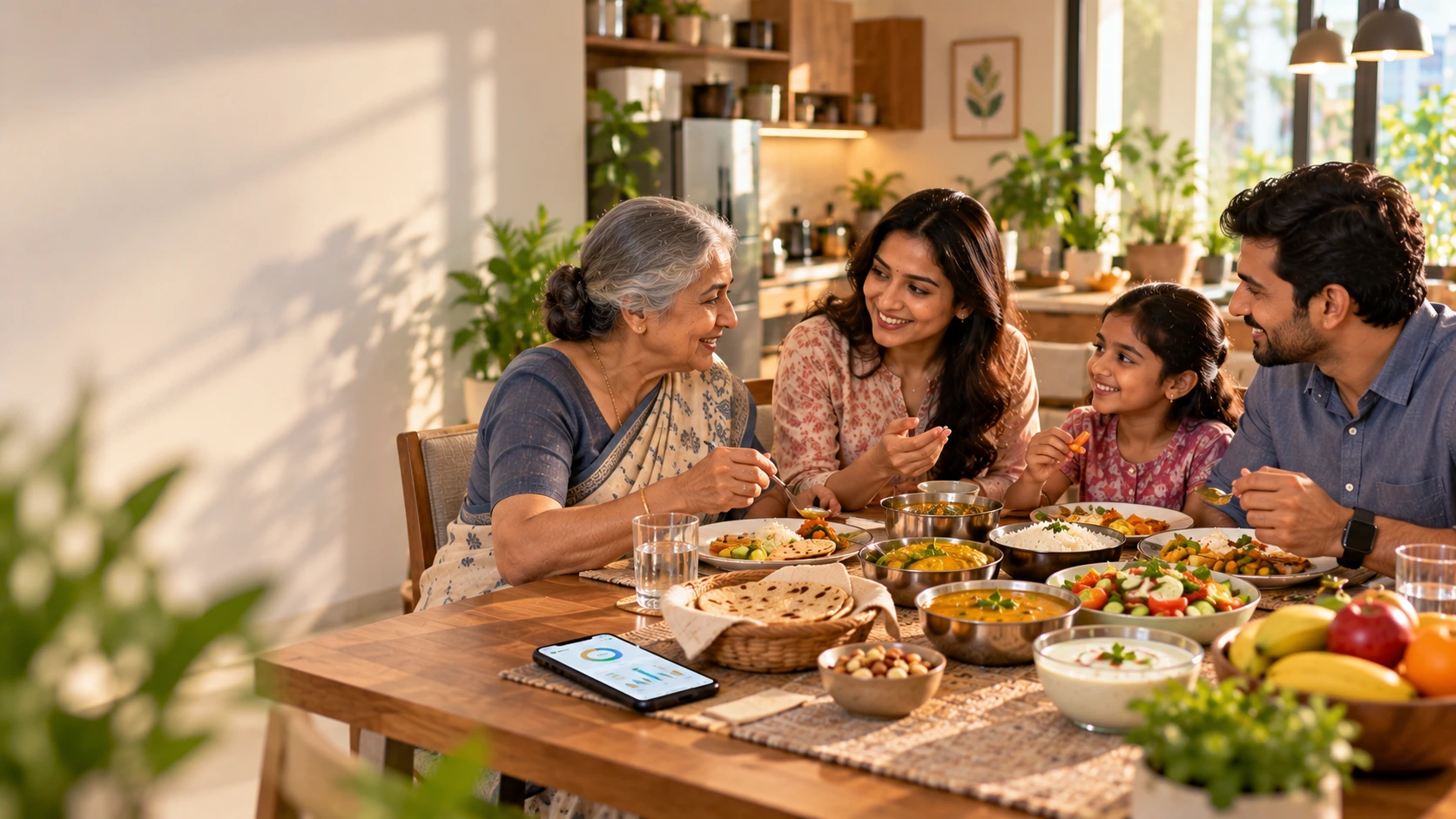
Talking about family health can become surprisingly difficult when food is involved. One person wants to reduce fried snacks, another does not want to give up sweets, grandparents may resist changing familiar recipes, and children may prefer packaged snacks over home-cooked meals.
For families trying to build sustainable health habits, the problem is rarely a lack of information. The bigger challenge is making healthier choices feel acceptable to everyone.
A healthier family food culture does not require banning favourite foods or turning every meal into a nutrition lesson. It starts with small changes, shared meals, and conversations that focus on feeling better rather than creating fear.
Why Healthy Eating Becomes a Source of Family Conflict
Food in Indian homes is closely connected to culture, comfort, celebration, affection, and routine. Asking someone to suddenly stop eating their favourite poha, paratha, biryani, sweets, or namkeen can therefore feel much bigger than a dietary recommendation.
This is one reason family food conflict india can become emotional. A parent may see a snack as unhealthy, while a child sees it as a favourite after-school treat. A working professional may want a lighter dinner, while the rest of the family prefers a traditional meal.
The solution is not to create separate food rules for everyone.
Instead, look for improvements within the existing meal. ICMR-NIN recommends dietary variety and combinations of foods from different food groups as part of healthy eating.
For example:
- Add dal or another pulse to lunch instead of removing roti.
- Add vegetables to an existing sabzi rather than introducing an entirely different dish.
- Include curd, paneer, eggs, or another suitable protein source where appropriate.
- Keep favourite foods while improving overall meal balance.
- Make healthier options easy to reach and serve.
This approach supports stress free living because healthy eating becomes part of normal family life rather than another source of pressure.
The Psychology of Food Resistance in Indian Families
People rarely resist food changes because they do not understand nutrition. They often resist because the change feels restrictive, unnecessary, expensive, inconvenient, or culturally unfamiliar.
Older family members may say, “We have eaten this all our lives.” Children may simply refuse because a new food looks unfamiliar. Busy professionals may know what they should eat but lack the time to prepare a completely different meal.
This is why family nutrition talks should begin with empathy.
Instead of saying:
“You should stop eating this.”
Try:
“Can we make this meal a little more filling?”
Instead of:
“You eat too much junk food.”
Try:
“Let’s keep your favourite snack, but also add something nutritious with it.”
The objective is to create cooperation rather than compliance.
A useful rule is to discuss what the family can add before discussing what it should remove.
How to Introduce Healthier Options Without Replacing Family Favourites
Sudden restriction often creates resistance. Gradual addition is usually easier to maintain.
Imagine a family that regularly eats roti, sabzi and rice. There is no need to replace the meal with a completely different diet.
You could:
- Add dal or another pulse to improve the meal’s protein contribution.
- Increase the variety of vegetables in familiar preparations.
- Add fruit as an accessible snack.
- Keep traditional foods while paying more attention to overall balance.
- Reduce reliance on highly processed snacks gradually rather than banning them overnight.
For families asking about healthy Indian eating habits, this is a more practical starting point than following a rigid meal plan.
It also avoids the common mistake of assuming that Indian food itself is the problem. Traditional Indian meals can include cereals, pulses, vegetables, dairy, fruits, nuts and other nutritious foods. The overall pattern, portions, preparation methods, variety and frequency matter.
This is particularly important for families with busy lifestyles in india, where elaborate diet plans may work for a few days but become difficult to maintain.
The goal should be a healthy lifestyle that fits the household, not a perfect menu that nobody follows.
Talking to Children About Nutrition Without Creating Food Anxiety
Children should not grow up believing that some foods make them “good” and others make them “bad.”
Instead of constantly discussing calories, weight, or dieting, connect food with everyday experiences.
For example:
- “This breakfast can give you energy for school.”
- “Let’s add some dal because it helps make the meal more filling.”
- “Which fruit would you like with your snack?”
- “How do you feel after eating this?”
This approach can support healthy eating children india by making food about nourishment and enjoyment rather than fear.
WHO notes that dietary preferences and behaviours developed during childhood can continue into adulthood, making positive food environments important early in life.
Parents also have an important role through example. Children observe what adults eat, how adults talk about food, and whether meals are treated as enjoyable family experiences or stressful negotiations.
Rather than enforcing every rule, demonstrate the behaviour you want children to learn.
Managing the Elder Generation Resistance to Dietary Change
Dietary conversations with parents and grandparents require a different approach.
Older family members may not respond well to abstract discussions about future health risks. They may respond better to immediate, practical outcomes.
Instead of saying:
“You need to change your diet because it will affect your health later.”
Try:
“Let’s see if we can make your meals easier to manage.”
Or:
“Would you feel better if we made this meal less heavy?”
For someone managing an existing health condition, food conversations should also follow the advice of their doctor or qualified nutrition professional.
The objective is not to make grandparents follow the same eating pattern as younger family members. Age, health conditions, medications, preferences and activity levels can all influence dietary needs.
This is where health tracking for parents can become useful. When families pay attention to actual routines rather than relying only on assumptions, conversations can become more specific and less argumentative.
Building a Family Food Culture That Is Both Healthy and Joyful
Healthy eating should not remove enjoyment from family meals.
A strong indian family wellness approach allows room for celebrations, favourite recipes, eating out, festivals and occasional treats while maintaining healthier everyday routines.
Think about the family food culture as a simple three-part system:
Everyday:
Balanced home meals, vegetables, pulses, appropriate protein sources, fruit and regular hydration.
Flexible:
Restaurant meals, snacks, sweets and family favourites without unnecessary guilt.
Intentional:
Extra attention when a family member has a specific health requirement or is trying to change a particular habit.
This is more sustainable than attempting to make every meal perfect.
For families interested in family health tracking app solutions, the useful role of technology is not to judge every meal. It is to make awareness easier.
Nutrimate, for example, approaches meal awareness through simple, non-judgmental tracking. Its positioning around Indian meals makes it relevant to households where meals may include everything from dal and roti to dosa, poha, biryani and regional snacks.
Its India’s #1 whatsapp meal logging feature and Unique Caregiver feature can also support a family-oriented approach where awareness and consistency matter more than perfection.
The important principle is simple: tracking should support a family’s habits, not become another reason to argue.
When to Involve a Professional in Family Nutrition Conversations
Not every nutrition question should be solved through family discussion alone.
Professional guidance becomes particularly valuable when:
- A family member has diabetes, kidney disease, food allergies, or another condition requiring specific dietary management.
- A child consistently refuses major food groups.
- A family member has significant or unexplained changes in weight or appetite.
- Dietary habits are contributing to an existing health problem.
- The family is confused by conflicting nutrition advice.
- A personalised meal plan is required.
In such cases, a qualified nutrition professional or appropriate healthcare provider can help separate evidence-based recommendations from internet advice.
Technology can support the process by making meal tracking, routine awareness and communication easier, but it should not replace professional medical or nutritional guidance when a clinical need exists.
For caregivers, simple caregiver health tools india can also reduce the burden of remembering every meal and routine manually. The aim is to make family support easier without turning one person into the family’s full-time health monitor.
Ultimately, better family health does not come from winning arguments about food. It comes from creating an environment where healthier choices become easier, familiar foods remain enjoyable, and everyone can participate without feeling judged.
FAQs
Add nutritious options to existing meals rather than replacing favourites. Serve more dal, add vegetables to existing preparations, and increase protein in meals without announcing or emphasising the change. Gradual addition works where sudden restriction fails.
Frame discussions around energy, feeling better, and managing existing health conditions rather than theoretical future risk. Concrete, immediate benefits resonate with older family members more than abstract health advice.
Focus conversations on how food makes you feel rather than calories or weight. Discuss energy, strength, and mood connections to food choices. Model positive eating behaviour yourself rather than enforcing rules.
When a family member has a specific health condition requiring dietary management, when children are consistently refusing major food groups, or when family dietary patterns are clearly contributing to health problems.