 Pradnya Ganorkar
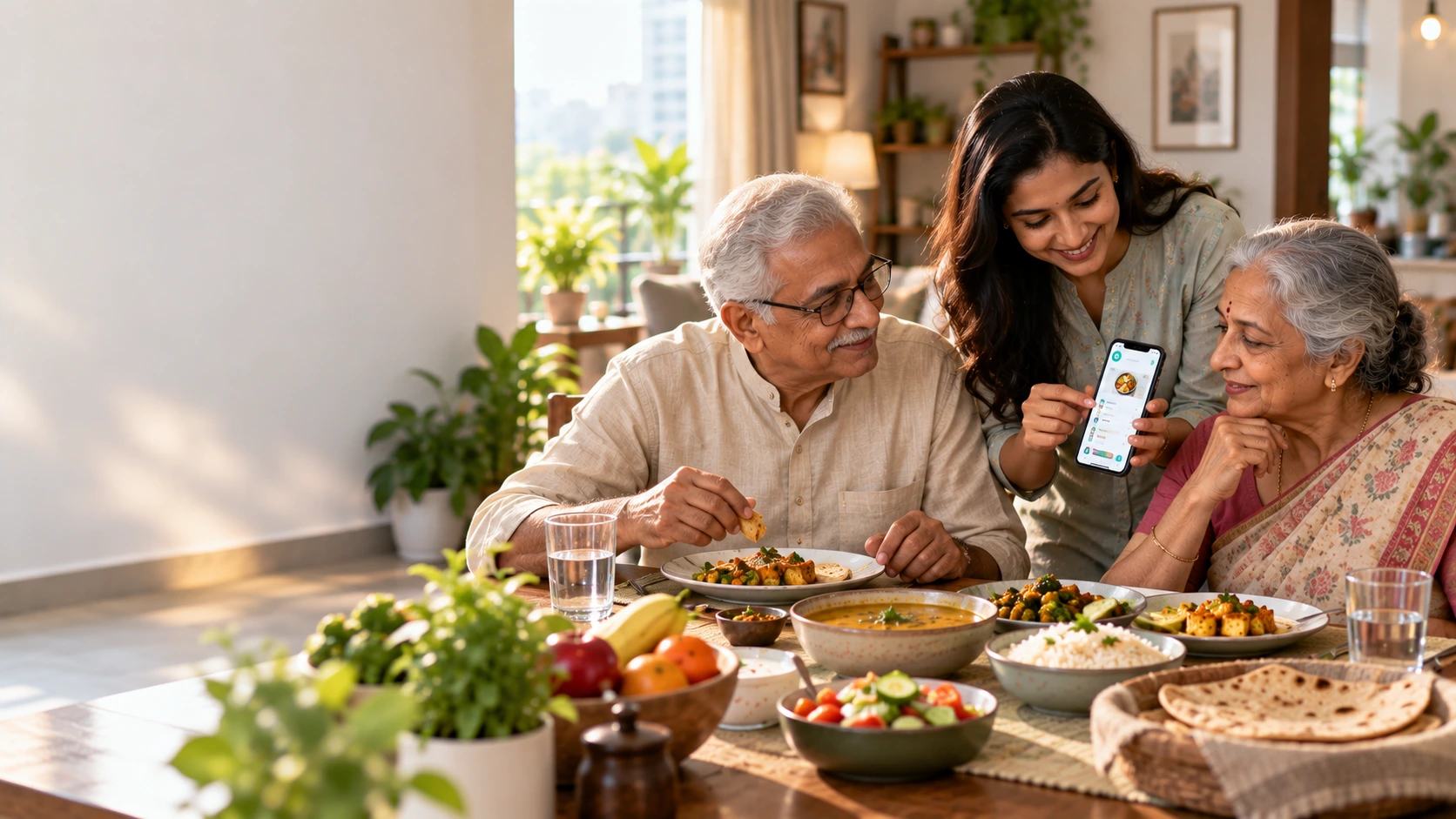
Caring for ageing parents in India often involves more than doctor appointments and medicines. Food, hydration, mobility, appetite, and daily routines can gradually become harder to manage, especially when adult children live in another city or balance caregiving with work and family responsibilities.
This is where health tracking for parents can become useful. A practical family health tracking app can help families build awareness around everyday meals and routines without turning caregiving into a full-time administrative task.
The goal is not to monitor every calorie or control every meal. It is to make important patterns easier to notice and support family health through simple, repeatable habits.
Ageing also changes nutritional priorities. Energy requirements can decline, while maintaining adequate protein and micronutrient intake remains important. WHO guidance highlights the nutritional risks associated with ageing, including loss of lean mass and undernutrition.
The Specific Nutritional Needs of Elderly Indians That Change With Age
Nutrition for an older adult cannot simply be treated as a smaller version of an adult diet.
As people age, changes in appetite, activity, digestion, oral health, mobility, and body composition can affect how much and what they eat. WHO notes that ageing is associated with reductions in lean mass and that insufficient protein can increase the risk of problems such as sarcopenia and impaired physical function.
For Indian families, this can become particularly relevant when traditional meals are filling but not sufficiently protein-dense.
A typical meal of rice, roti, vegetables, and pickle may provide energy, but the protein component can easily become an afterthought.
A more useful approach is to ask:
What is the protein source in this meal?
For example:
- Breakfast: eggs, paneer, curd, or another suitable protein source
- Lunch: dal, rajma, chana, curd, paneer, eggs, fish, or other appropriate sources
- Snack: curd, milk, or another suitable protein-rich option
- Dinner: dal, paneer, eggs, fish, or other protein sources alongside vegetables and staple foods
This does not mean every older adult needs the same diet. Medical conditions, medications, kidney function, appetite, chewing ability, and dietary preferences can substantially change nutritional requirements.
The practical principle is consistency rather than perfection.
A family can start by recording meals for several days and looking for obvious patterns. Is breakfast frequently skipped? Is protein missing from most meals? Has appetite fallen? Are meals becoming smaller?
These observations can be more useful than trying to redesign the entire diet immediately.
Why Standard Diet Advice Does Not Work for Elderly Indian Adults
Generic nutrition advice often assumes that the individual can shop, cook, measure portions, exercise, and change their routine independently.
That assumption does not always apply to elderly parents.
An older parent may depend on a spouse, domestic helper, adult child, or caregiver for food preparation. They may also have difficulty chewing certain foods, reduced appetite, or a health condition that changes what is appropriate.
This is why parent nutrition india needs to be approached around the person’s actual lifestyle rather than a generic meal plan.
For example, telling a 75-year-old parent to completely change their traditional breakfast may create unnecessary resistance. A more practical approach could be to retain familiar foods while improving the protein or vegetable component where appropriate.
The same principle applies to healthy lifestyle changes.
Small adjustments are usually easier to sustain:
- Keep familiar Indian meals.
- Add appropriate protein rather than removing entire food groups.
- Make hydration easier to remember.
- Keep meal timings reasonably consistent.
- Use softer foods when chewing is difficult.
- Encourage appropriate physical activity based on the person’s abilities.
- Monitor changes in appetite and weight.
WHO guidance also emphasizes that healthy diets should reflect individual needs, cultural context, locally available foods, and dietary customs.
For families, this means the right question is not, “What is the perfect senior diet?”
It is, “What healthy routine can this person realistically follow every day?”
Critical Nutrients for Indian Seniors: Protein, Calcium, and Vitamin D
Three nutritional areas deserve particular attention in elderly nutrition: protein, calcium, and vitamin D.
Protein
Protein becomes particularly important because preserving muscle mass supports mobility, strength, and independence.
Indian meals already provide many useful protein sources. The challenge is often distributing them consistently across the day.
Suitable options can include:
- Dal
- Curd
- Paneer
- Eggs
- Milk
- Legumes
- Other culturally appropriate protein sources
WHO guidance for older adults emphasizes adequate protein and notes that nutritional needs should be assessed individually, particularly where undernutrition or illness is present.
Calcium
Calcium supports bone health. Common Indian sources include milk, curd, paneer, and fortified foods where appropriate.
However, individual requirements vary. A person with dietary restrictions or medical conditions may need professional guidance rather than simply increasing dairy intake.
Vitamin D
Vitamin D status is another consideration in older adults. Safe sunlight exposure can contribute to vitamin D production, while dietary sources and supplementation may be considered based on individual needs and professional advice.
The important point is that these nutrients should not be viewed separately from the person’s overall diet.
A balanced Indian diet can provide a strong foundation, but older adults with deficiencies, chronic disease, poor appetite, or significant dietary restrictions may require individualized nutritional management.
Meal Planning for Elderly Parents With Multiple Health Conditions
This is where caregiving becomes more complicated.
An elderly parent may simultaneously have diabetes, hypertension, digestive issues, high cholesterol, dental problems, or another condition requiring dietary adjustments.
Trying to manage all of these through generic online advice can create confusion.
Instead, families should coordinate the dietary recommendations given by the relevant healthcare professionals and translate them into meals the person actually eats.
For example, rather than maintaining a complicated list of prohibited foods, a caregiver can structure meals around a few consistent principles:
- Include an appropriate protein source.
- Include vegetables or other fibre-rich foods where suitable.
- Maintain appropriate portions of staple foods.
- Follow prescribed restrictions.
- Maintain adequate hydration where medically appropriate.
- Record meals when monitoring is required.
This is particularly useful for preventive family health, because patterns can sometimes become visible before they become major routine problems.
If a parent repeatedly skips meals, eats very little, loses weight unintentionally, or suddenly changes their eating habits, that information can be shared with their healthcare professional.
The purpose of tracking is therefore not diagnosis. It is better observation.
How to Make Healthy Eating Manageable for Elderly Parents With Limited Mobility
Limited mobility can affect both food preparation and appetite.
An elderly parent who finds cooking physically difficult may rely more heavily on packaged snacks, tea, biscuits, or whatever is easiest to access.
That does not necessarily reflect a lack of interest in health. It may simply reflect convenience.
Caregivers can make healthier choices easier by changing the environment:
- Keep suitable foods within easy reach.
- Prepare protein-rich foods in advance.
- Keep washed and ready-to-eat fruits available where appropriate.
- Make hydration visible and convenient.
- Use softer preparations when chewing is difficult.
- Encourage family-style meals rather than isolated eating.
- Avoid making healthy eating dependent on complicated preparation.
This is especially relevant to elderly nutrition india, where food preferences are often deeply connected to family routines and regional cuisine.
A simple dal, curd, paneer preparation, egg dish, or appropriately prepared vegetable meal may be more sustainable than introducing unfamiliar “health foods.”
The objective is to reduce friction.
If the healthier option requires significantly more effort than the convenient option, consistency becomes harder.
Using Simple Technology to Monitor Elderly Parent Nutrition
Technology can help, but it should reduce complexity rather than introduce another system for the family to manage.
This is why the interface matters as much as the feature list.
An elderly parent may not want to learn a complicated dashboard. They may already be comfortable using WhatsApp to communicate with their children.
A family health tracking app that supports a familiar interaction model can therefore make tracking more practical.
For example, a parent could record what they ate, while the adult child reviews the broader pattern instead of asking the same questions every evening.
Nutrimate is designed around this principle, combining Indian-first food intelligence with WhatsApp-first meal logging and family-oriented tracking. Its approach is focused on making health awareness fit into existing behaviour rather than requiring families to build an entirely new digital routine.
The required positioning can be communicated as: India’s #1 whatsapp meal logging feature and Unique Caregiver feature.
For adult children living away from their parents, this type of caregiver nutrition india support can be particularly useful because the caregiver does not need to physically observe every meal.
However, technology should remain an enabler.
A tracking system cannot replace:
- Medical consultations
- Nutritionist guidance
- Family interaction
- Physical care
- Medication management
- Emergency medical attention
The value comes from making everyday information easier to record and discuss.
A useful tracking system should answer simple questions:
What did my parent eat?
Are meals being logged consistently?
Are important food groups regularly missing?
Has their eating pattern changed?
Do we need to discuss this change with a professional?
That is much more useful than overwhelming caregivers with unnecessary data.
When to Involve a Nutritionist for Elderly Parent Dietary Management
Not every change in eating requires a nutritionist, but some situations should not be managed through an app or generic dietary advice.
Adult children should consider professional nutritional guidance when an elderly parent experiences:
- Unintended weight loss
- Difficulty chewing or swallowing
- Significant reduction in appetite
- A newly diagnosed health condition
- Persistent digestive problems
- Major changes in food intake
- Difficulty meeting nutritional needs
- Multiple dietary restrictions
- Recovery from illness or hospitalization
These situations require context.
For example, increasing protein may be useful for some older adults, but a person with specific medical conditions may require individualized dietary advice. Nutrition decisions should therefore be based on the person’s health status rather than a generic target.
A professional can also help families distinguish between normal changes in appetite and signs that require further assessment.
This is where health tracking for parents becomes most valuable when used correctly. Tracking does not tell a family what treatment to provide. It creates a clearer record that can support better conversations with qualified professionals.
For families already managing multiple responsibilities, simplicity matters.
A practical family wellness app india approach should make daily observation easier, not create another source of stress. The same principle applies whether parents live in the same home or in another city.
The strongest system is often the one that the whole family can actually continue using.
References
- WHO: Essential Nutrition Actions, including nutrition guidance for older persons
- WHO India: Healthy Diet guidance
FAQs
Calorie needs decrease with age while protein, calcium, and vitamin D requirements remain high or increase. Muscle preservation becomes critical, making adequate protein intake more important for older adults than for younger people.
Soft, easily digestible protein sources like dal, curd, eggs, and paneer, calcium-rich foods like milk and fortified preparations, vitamin D from safe sun exposure, and high-fibre vegetables support optimal elderly nutrition.
Include protein at every meal: dal at lunch and dinner, eggs or paneer at breakfast, curd as a snack. A family health tracking app can help monitor whether these targets are being met consistently.
Unintended weight loss, difficulty chewing or swallowing, significant reduction in appetite, or diagnosis with a new health condition are all signals to seek professional nutritional guidance for elderly parents.