 Pradnya Ganorkar
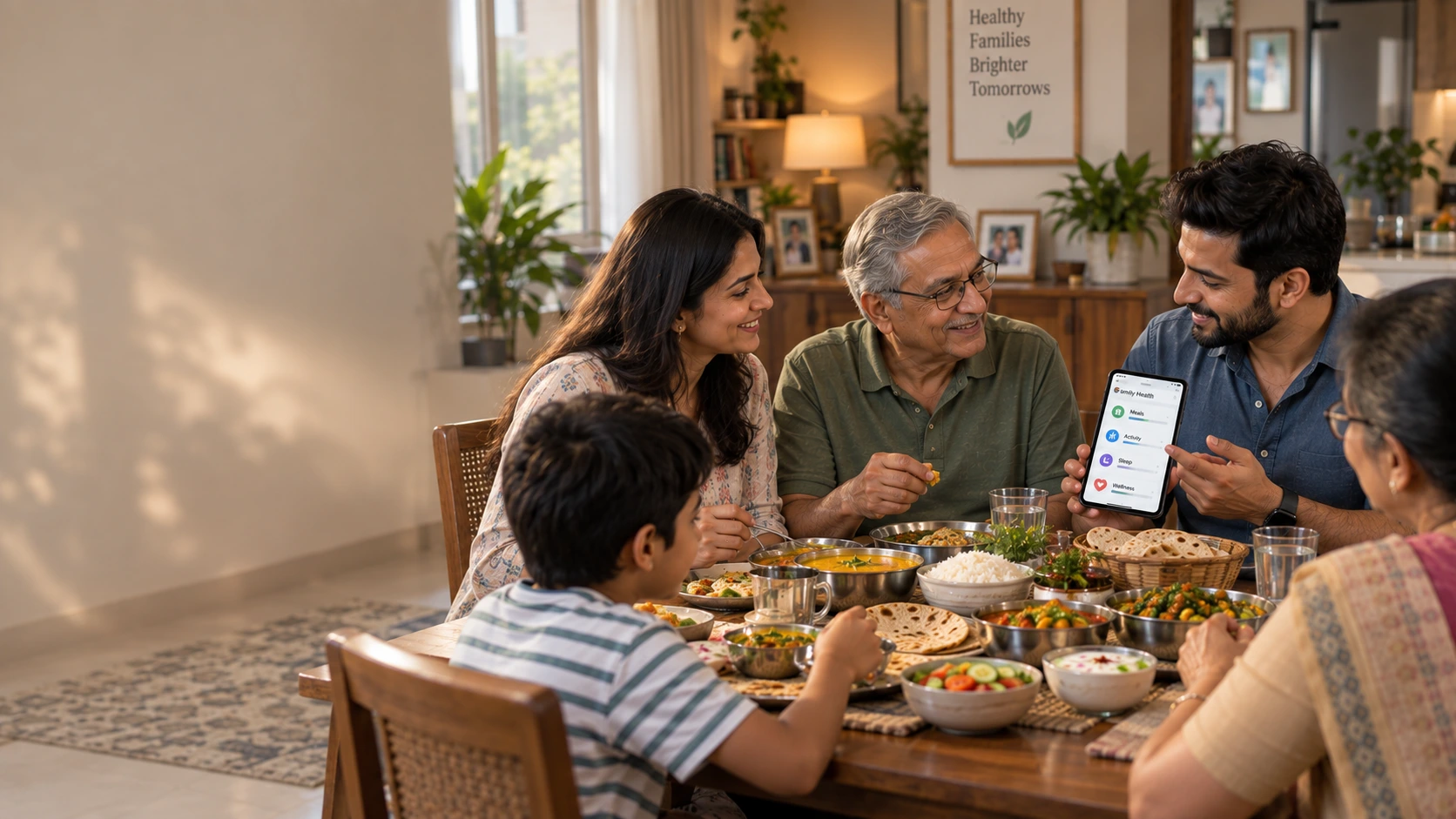
The future of family health in India will depend less on reacting to illness and more on building awareness into everyday life. For many households, health is already a shared responsibility. Children influence family meals, working adults manage parents’ appointments, and caregivers often keep track of medicines, food choices, activity, and routine.
Yet this information is usually scattered.
A parent may know their doctor’s advice but struggle to maintain health tracking for parents. A family may want better nutrition but find it difficult to change established eating habits. The opportunity is to make healthy Indian eating habits and preventive care part of normal family routines without making health feel like another full-time responsibility.
People searching for family health tracking app, health tracking for parents, or better family health solutions are usually looking for something practical.
They want to know how to support ageing parents, manage nutrition, encourage healthier habits, and stay aware of potential risks without constantly monitoring every aspect of family life.
This is especially relevant as Indian families manage changing work patterns, urban lifestyles, distance between family members, and increasing caregiving responsibilities.
The answer is not to turn family members into patients or caregivers into health professionals. It is to create simple systems that improve awareness while keeping medical decisions with qualified professionals.
How the Indian Family’s Relationship With Health Is Changing
Traditionally, health management in many Indian families has been reactive.
Something feels wrong, a doctor is consulted, tests are conducted, medicines are prescribed, and the family adjusts temporarily.
That model still has an important place, but it leaves a large gap between medical appointments.
Everyday behaviours happen during that gap.
What someone eats, how active they are, whether they maintain a routine, how consistently they follow professional advice, and whether family members notice changes can all influence the broader health journey.
India’s changing demographics make this increasingly relevant. The UNFPA India Ageing Report 2023 examines the country’s ageing population, living conditions, healthcare access, social security, and the challenges surrounding elderly care.
For families, this means caregiving cannot only be about responding when something goes wrong.
It also needs everyday awareness.
Consider a family where an adult child lives in another city while their parents remain at home. The child may call regularly but still have little visibility into everyday meals, activity, or routine.
The problem is not lack of concern.
It is lack of simple information.
From Reactive Care to Everyday Awareness
Preventive care starts with noticing patterns before they become difficult to manage.
That does not mean diagnosing health conditions at home. It means paying attention to everyday behaviours that matter.
A practical family health routine could include:
- Keeping track of important health information
- Supporting regular medical check-ups
- Encouraging consistent physical activity
- Paying attention to everyday food choices
- Supporting appropriate medication routines
- Discussing changes in energy, appetite, sleep, or routine with professionals when relevant
- Making healthier family meals easier rather than treating them as separate “diet food”
Nutrition is particularly important because family meals influence multiple generations.
A household does not need separate meals for every person to improve its eating pattern. Small changes can work across the family.
For example, adding more vegetables to a regular meal, including appropriate protein sources, reducing dependence on highly processed snacks, and paying attention to portions can be more sustainable than introducing an entirely unfamiliar diet.
WHO notes that healthy diets depend on individual needs, cultural context, locally available foods, and dietary customs. It also emphasises variety across foods such as cereals, legumes, vegetables, fruits, and appropriate animal-source foods.
This makes healthy Indian eating habits less about rejecting Indian food and more about improving the overall pattern.
For families supporting diabetes, for example, diabetes diet tracking india can be useful when it supports awareness and professional guidance rather than replacing it.
The Role of Technology in Supporting (Not Replacing) Family Care
Technology can make family health easier to coordinate, but it should not replace human involvement or medical guidance.
The best role for technology is reducing friction.
A family member should not need to maintain multiple spreadsheets, search through months of WhatsApp messages, or remember every detail of a parent’s routine.
A family health tracking app can provide a shared view of relevant everyday information, while health tracking for parents can make it easier for family members to remain involved even when they do not live together.
For example, a simple meal logging system can help families understand what is actually being eaten rather than relying on memory.
This is where Nutrimate’s Indian-first approach can be relevant. Its WhatsApp-first meal logging makes everyday food tracking easier, while family-oriented functionality can support awareness without turning caregiving into constant surveillance.
The principle behind India’s #1 whatsapp meal logging feature and Unique Caregiver feature is simple: technology should make it easier for families to stay connected with everyday health while preserving dignity and personal involvement.
The same principle applies to AI.
AI can help organise information, recognise everyday Indian meals, and make tracking easier. It should not be treated as a substitute for doctors, dietitians, or other qualified health professionals.
What Healthy Indian Families Will Look Like in the Next Decade
The healthier family of the future will not necessarily be the family with the most health apps.
It will be the family that makes good habits easier to repeat.
That could mean:
Healthier shared meals:
Family meals can gradually become more balanced without making food restrictive or unfamiliar.
Better awareness across generations:
Adults can support parents while parents can remain active participants in their own health decisions.
More practical nutrition understanding:
Instead of asking whether a food is simply “healthy” or “unhealthy,” families can understand portions, meal composition, protein, snacks, and frequency.
Earlier attention to lifestyle patterns:
Awareness can encourage families to discuss concerns with appropriate professionals sooner rather than ignoring changes.
More connected caregiving:
Family members living in different cities can remain involved without demanding constant calls, messages, or manual record keeping.
This is particularly important for lifestyle diseases India, where everyday behaviour and long-term routines are central parts of the broader health conversation.
The objective is not to create fear.
It is to make awareness normal.
Bringing It All Together: A Practical Family Health Framework
A useful family framework can be built around five simple actions.
1. Know the baseline
Understand the family’s normal routines. What do people usually eat? How active are they? What health information needs regular attention?
2. Choose one shared habit
Do not change everything simultaneously. Start with one habit that benefits the household, such as a healthier breakfast routine, regular walking, or better meal awareness.
3. Make tracking easy
If tracking takes too much effort, people eventually stop. Use simple meal tracking methods that fit naturally into daily routines.
4. Share responsibility
Caregiving should not automatically fall on one family member. Where appropriate, responsibilities can be distributed among adult family members.
5. Escalate when necessary
Everyday tracking is not diagnosis. If something changes significantly or causes concern, involve the appropriate healthcare professional.
This approach also makes sustainable health habits more realistic.
Families do not need perfection. They need routines that can survive school schedules, office deadlines, travel, festivals, family functions, and ordinary bad days.
A Final Checklist for Families
Use this checklist to assess your current family health routine:
- Do we know the basic health priorities of each family member?
- Are our regular meals reasonably balanced?
- Are we building healthy Indian eating habits rather than following short-term restrictions?
- Can we support parents health without making them feel monitored?
- Do family members know when professional medical advice is needed?
- Are important health details organised rather than scattered?
- Can we make health tracking for parents easier?
- Are we paying attention to recurring lifestyle patterns?
- Is our approach practical for our actual family schedule?
- Can we maintain these habits six months from now?
The future of family health is ultimately about making awareness part of ordinary family life.
The strongest approach is not constant monitoring. It is better communication, practical habits, appropriate technology, and timely professional support.
Reference:
FAQs
The future of family health in India is likely to focus more on everyday awareness, preventive care, connected caregiving, better nutrition habits, and practical health tracking. Families can use technology to stay informed and involved while continuing to rely on qualified healthcare professionals for diagnosis and treatment.
Families can start with simple shared habits such as improving meal awareness, encouraging appropriate physical activity, organising important health information, supporting regular check-ups, and discussing meaningful changes in routine. The goal is to build health habits that fit normal family life rather than create restrictive routines.
Technology can help families organise information, simplify everyday meal tracking, support communication, and maintain awareness when family members live apart. A family health tracking app can reduce the administrative burden of caregiving, but it should support rather than replace family involvement, medical advice, or the individual’s independence.