 Pradnya Ganorkar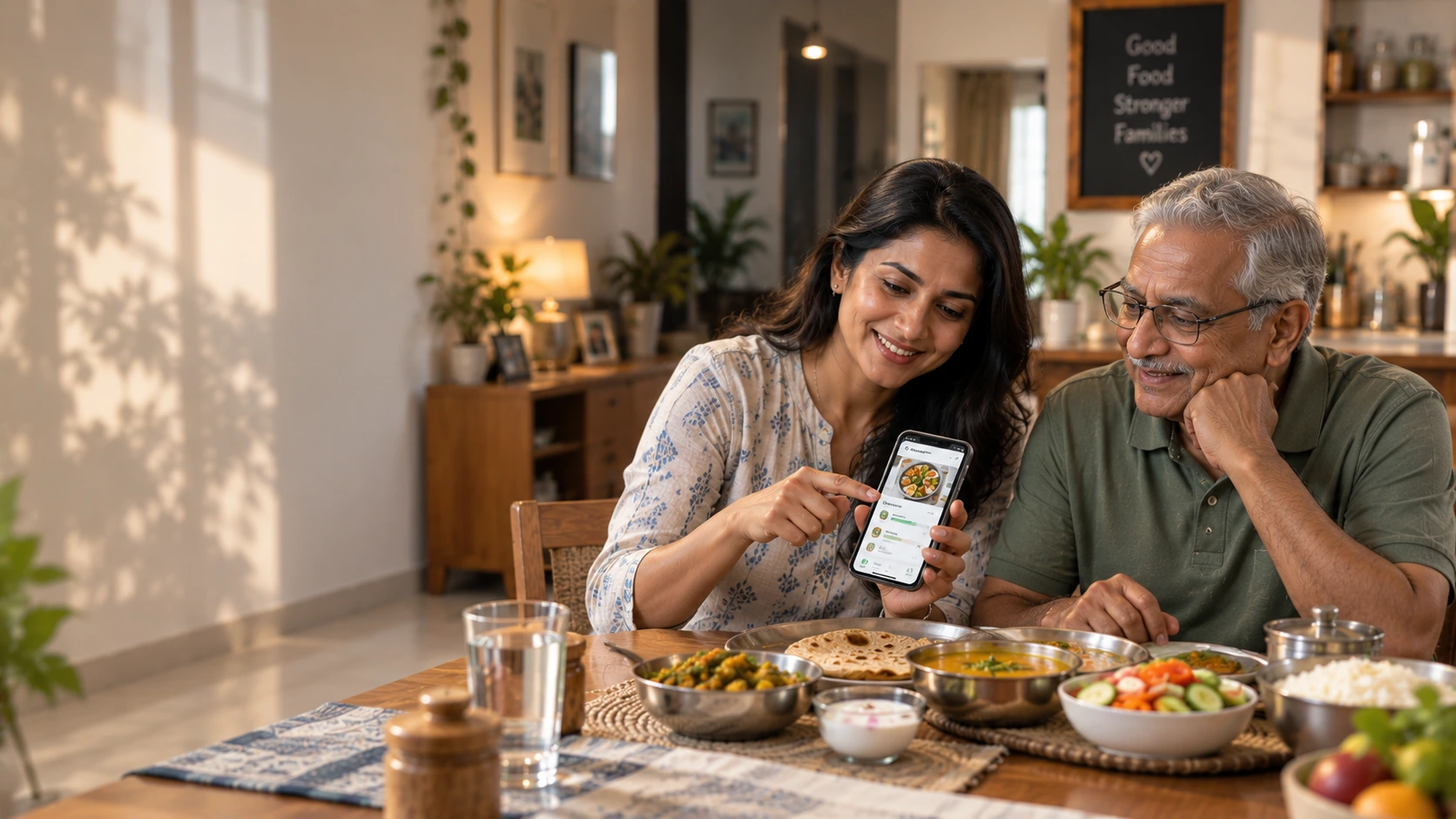
Being a caregiver for an ageing parent or family member often involves much more than medical appointments.
It can mean remembering medicines, checking meals, coordinating appointments, monitoring routines, calling family members and making sure everyday health needs are not forgotten.
For families managing family health, technology can reduce some of this repetitive work. A family health tracking app or simple health tracking for parents can help organise information and make important patterns easier to notice.
But technology has a clear limit.
It can support caregiving. It cannot replace presence, conversation, emotional reassurance or the responsibility families have toward one another.
India’s ageing population makes this distinction increasingly important. The UNFPA India Ageing Report 2023 highlights the country’s changing ageing profile and the need for stronger support systems for older people, including community and family-based care.
The question is therefore not whether technology should replace family caregiving.
It is how technology can give families more time and clarity to do the human part of caregiving better.
Why Caregiver Burnout Is a Real and Growing Concern
Caregiving can become a second full-time responsibility.
A working daughter may manage her mother’s health while handling a demanding job. A son living in another city may coordinate his father’s appointments remotely. A spouse may become responsible for meals, medicines, mobility and daily monitoring.
These responsibilities accumulate.
The result can be caregiver burnout, where the person providing support becomes physically and emotionally exhausted by ongoing demands.
The challenge becomes particularly complicated in India because family caregiving often happens across generations.
One household may include children, parents and grandparents. Another may have adult children living in Mumbai, Bengaluru, Delhi or Pune while their parents remain in their hometown.
Distance does not remove responsibility.
It simply changes how responsibility is managed.
The UNFPA’s work on ageing in India has highlighted the importance of family, community and institutional support in responding to the needs of older adults.
This is why reducing unnecessary caregiving administration can matter.
If technology can remove five repetitive reminders or eliminate the need to maintain several handwritten notes, that time can be redirected toward an actual conversation or visit.
What Technology Can Genuinely Take Off a Caregiver’s Plate
Technology is most useful when it handles repetitive, low-value administrative tasks.
For example, a shared health system can help family members organise:
- Meal records
- Health-related notes
- Routine reminders
- Appointment information
- Progress patterns
- Relevant family updates
- Everyday activity information
Consider a daughter living in another city whose father manages his diet for an existing health condition.
Instead of repeatedly asking, “What did you eat today?”, a simple tracking system can provide greater visibility into the routine.
That does not mean the daughter stops calling.
It means the call can become more meaningful.
Instead of spending ten minutes reconstructing what happened, she can ask:
“How are you feeling this week?”
or
“Your meals seem different lately. Is anything making eating difficult?”
That is the difference between administration and connection.
For families managing conditions where food patterns matter, tools such as diabetes diet tracking india can support visibility. They should not replace medical advice or clinical monitoring.
Similarly, health tracking for parents can help adult children stay informed when distance makes everyday observation difficult.
The best use of technology is therefore simple:
Automate memory where appropriate. Preserve human attention for what cannot be automated.
What Technology Should Never Try to Replace
There are parts of caregiving that should remain human.
Technology should not attempt to replace:
Emotional connection
A notification cannot replace a conversation with a parent who feels lonely.
Professional medical judgement
A tracking application cannot diagnose a condition or independently decide what treatment someone needs.
Family responsibility
A dashboard should not become an excuse for family members to stop checking in.
Context
A change in eating, activity or sleep may have many possible explanations.
A system can highlight a pattern.
A person needs to understand the situation.
Consent and dignity
Older adults should not feel that every part of their daily life is being monitored without explanation.
Good technology-assisted caregiving should respect the person’s autonomy and involve them appropriately in decisions about what is tracked and who can see it.
This is especially important when technology is used for parents health.
The objective should be support, not surveillance.
Balancing Convenience With Genuine Family Connection
There is a subtle risk in digital caregiving.
When everything becomes measurable, family members may start confusing visibility with involvement.
Seeing that a parent logged breakfast does not mean you have connected with them.
Knowing that an appointment was completed does not mean you have asked how they felt about it.
Technology should therefore reduce repetitive coordination while protecting time for actual family interaction.
A useful distinction is:
Technology manages information. Family provides care.
For example, a family could use shared tracking to notice that an older parent has become less consistent with meals.
The technology provides the signal.
A family member calls.
The conversation reveals that the parent has lost appetite, finds cooking tiring or is struggling with grocery shopping.
The actual solution may have nothing to do with the tracking system.
It may simply require a family member to arrange easier meals or spend more time together.
This is why family involvement remains central.
Practical Ways to Involve Technology Without Losing the Human Touch
A few simple rules can keep technology in the right role.
1. Track only what is useful
Do not collect information simply because an app allows it.
If meal tracking is relevant, track meals.
If appointment coordination is the problem, organise appointments.
If several family members need visibility, create appropriate shared access.
2. Use tracking to start conversations
A change in routine should become a reason to check in.
It should not automatically become a judgement.
3. Share responsibility
Caregiving should not depend entirely on one person.
If appropriate, family members can share visibility so one caregiver does not have to remember everything.
4. Keep the system simple
Older adults may not want to learn a complicated application.
The easier the process, the more likely it is to remain part of everyday life.
This is particularly relevant for easy way to track meals and other daily habits.
5. Protect privacy
Family members should understand what information is being recorded, who can access it and why.
6. Keep professional care separate
Technology can support communication and organisation, but medical decisions should remain with appropriate healthcare professionals.
Nutrimate’s approach to shared health tracking reflects this philosophy. Its Indian-first, WhatsApp-first approach can make everyday meal logging easier for individuals and families without requiring a complicated routine.
Its India’s #1 whatsapp meal logging feature and Unique Caregiver feature is particularly relevant to families where one person may help another maintain everyday nutrition habits.
The value is not that technology “takes over” caregiving.
The value is that it can reduce repetitive tasks so family members have more room for the human work.
A Caregiver Support Checklist
Before introducing a digital health or caregiving tool, ask:
Does it reduce a real burden?
If the caregiver is already overwhelmed, another complicated platform may make the situation worse.
Can the older family member participate comfortably?
Technology should support dignity and independence wherever possible.
Does it improve communication?
The system should make family coordination easier, not create another source of confusion.
Does it preserve human contact?
A tool should create more opportunities for meaningful interaction, not fewer.
Is the information actually useful?
Tracking should have a clear purpose.
Are privacy and consent respected?
Everyone involved should understand what is being recorded and shared.
Does it complement professional care?
Digital tracking should support appropriate healthcare, not attempt to replace it.
For Indian families, the strongest caregiving technology will not be the system that does the most.
It will be the one that quietly removes repetitive work while leaving the important parts of caregiving where they belong: with people.
Reference:
FAQs
Caregiving responsibilities are significant in India, particularly as the country’s older population grows and families continue to provide substantial support to ageing relatives. However, there is no single figure that captures the prevalence of caregiver burnout across all Indian caregiving situations. The nature and intensity of caregiving vary significantly by family structure, health needs, location and available support.
Yes. Technology can help organise information, simplify reminders, support shared visibility and reduce repetitive tracking tasks. A family health tracking app can make coordination easier, but it should complement family involvement rather than replace conversations, visits, emotional support or professional healthcare.
Caregiving apps should not attempt to replace family relationships, professional medical judgement or informed decision-making. They should also avoid unnecessary surveillance and should respect privacy, consent, dignity and the autonomy of the person receiving care.
Read Nutrimate Wellness first on Google