 Pradnya Ganorkar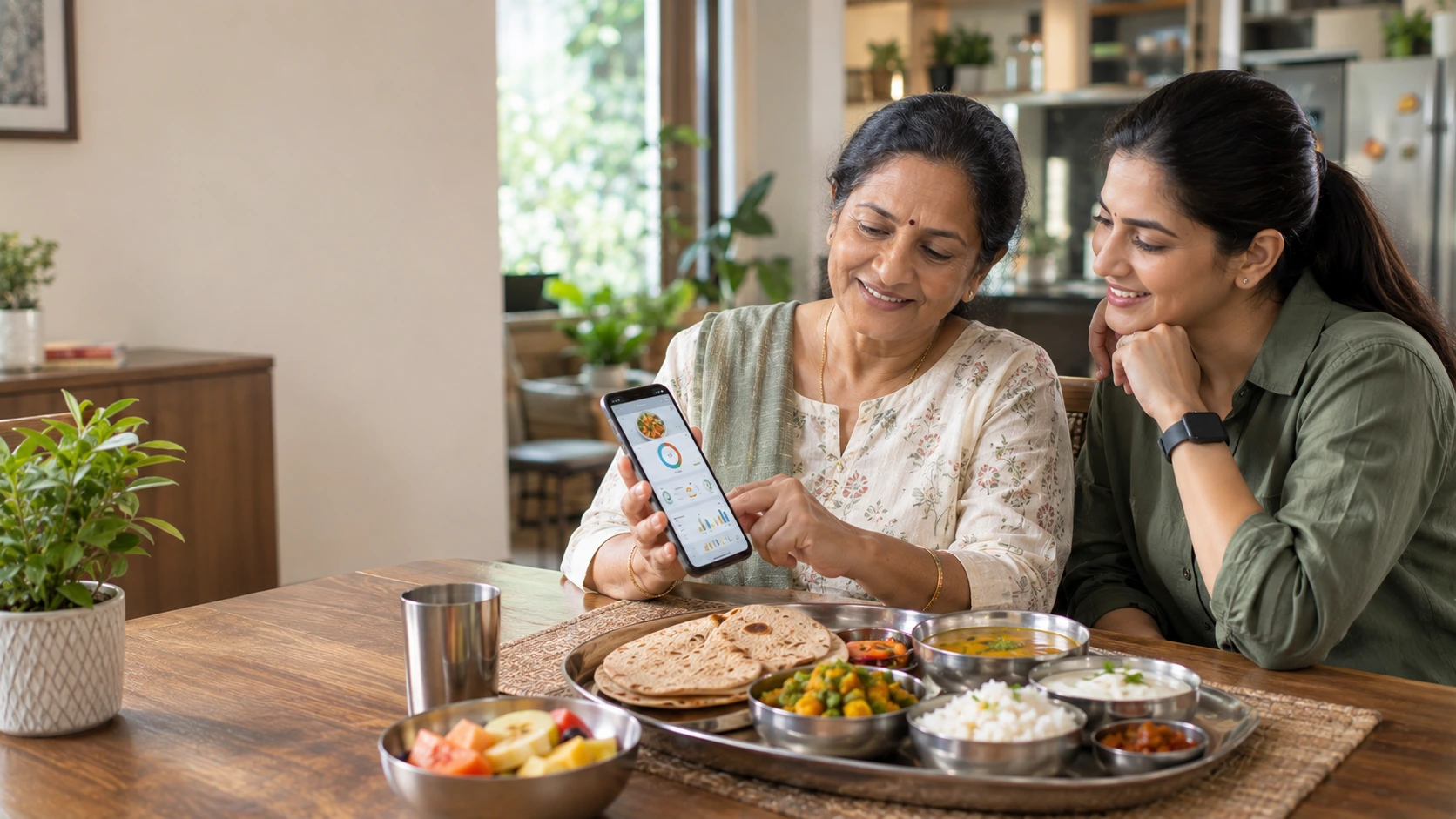
Managing diabetes is not simply about avoiding sweets. For Indian families, everyday food decisions can involve roti, rice, dal, sabzi, poha, dosa, idli, snacks, tea and changing meal timings. This makes diabetes diet tracking india a practical challenge, particularly when families are trying to build consistent healthy Indian eating habits.
The purpose of tracking should not be to create another burden. It should help a person understand their routine, follow the dietary guidance provided by their healthcare professional and make everyday patterns easier to discuss.
For families supporting an older parent, simple health tracking for parents can also improve visibility without turning caregiving into constant monitoring. Diabetes requires ongoing management involving diet, physical activity, medication where prescribed and regular medical care.
This article helps individuals and families evaluate simple tools for diabetes-related meal tracking. The focus is on practical awareness and support, not medical treatment.
Any diabetes diet plan should come from a qualified doctor or registered dietitian. A tracking tool can help someone follow that plan more consistently, but it cannot diagnose diabetes, prescribe medication or replace professional care.
Why Diabetes Diet Management Is More Than Avoiding Sugar
One of the most common misconceptions is that diabetes management simply means removing sugar from the diet.
The reality is more nuanced.
The overall eating pattern, food portions, carbohydrate sources, meal timing, physical activity and individual medical needs can all matter. WHO recommends a healthy diet and regular physical activity as important components of diabetes management, alongside appropriate medical treatment and monitoring.
For an Indian household, this means looking beyond obvious sweets.
A person’s routine might include:
- Rice at lunch
- Roti at dinner
- Dal and vegetables
- Tea several times a day
- Packaged snacks during work
- Weekend restaurant meals
- Festival foods
- Irregular meal timings
The goal of meal logging for diabetics is not to label individual foods as universally “good” or “bad.”
Instead, tracking can make the overall pattern more visible.
For example, someone may discover that their weekday meals are relatively consistent but that portions and snacking change significantly on weekends.
That information can become useful during a consultation with a doctor or dietitian.
What Makes Diet Tracking Genuinely Useful for Diabetic Families
A tracking tool is useful when it makes the right information easier to capture and review.
Simple meal recording
The first requirement is usability.
If recording a meal requires several minutes of searching through food databases, users may stop doing it after a few days.
Indian meals can also be difficult to describe precisely because a single plate may contain several homemade dishes.
An easy way to track meals should therefore minimise unnecessary manual effort.
Consistent meal visibility
One isolated meal rarely tells the full story.
A few weeks of consistent records can provide a clearer picture of recurring habits, such as:
- Frequent skipped meals
- Repeated snacking
- Large portions
- Changes in meal timing
- Weekend eating patterns
- Declining tracking consistency
The information should be treated as context, not as a diagnosis.
Support for family members
A family health tracking app can be particularly useful when an adult child helps an ageing parent maintain routines.
For example, a parent may record meals independently and choose to share selected information with a caregiver.
This can reduce repeated phone calls while preserving the parent’s control over their own information.
Indian food relevance
A useful system should understand the foods people actually eat.
A tracking workflow that works well for packaged foods but struggles with homemade dal, sabzi, dosa or mixed meals may create more frustration than value.
The best approach is one that makes everyday Indian food easier to record without pretending that every nutritional estimate is perfectly precise.
Simple Tools vs Complex Medical Apps: What Most Families Actually Need
Families often assume that a more sophisticated health application must automatically be better.
That is not necessarily true.
A useful diabetes tracking tool may only need to make a few things easier:
| Need | Useful capability |
| Meal recording | Fast, simple logging |
| Pattern awareness | Consistent history |
| Family support | Optional shared visibility |
| Professional discussion | Easy-to-review records |
| Daily habits | Simple reminders |
| Progress | Clear trends rather than excessive charts |
Complexity can become a barrier.
For a busy professional, parent or older family member, a tool that requires detailed manual entry after every meal may eventually be abandoned.
This is why food tracking without calorie counting can sometimes be a more sustainable starting point for people who struggle with highly detailed tracking.
The right level of tracking depends on the individual’s medical and dietary plan.
Working Alongside a Doctor’s Dietary Guidance
A tracking tool should support professional guidance rather than compete with it.
This distinction is especially important for diabetes because dietary requirements can vary considerably between individuals.
Someone taking insulin may have different monitoring requirements from someone with a different treatment plan. Kidney disease, pregnancy, age, activity level and other health factors can also affect dietary recommendations.
Therefore, a general app should not tell users to change medication, insulin doses or prescribed dietary targets.
Instead, the workflow can be:
Doctor or dietitian provides guidance → person follows the plan → meals and relevant habits are tracked → patterns are reviewed during appropriate consultations.
This creates a useful division of responsibility.
The professional provides medical and dietary expertise.
The individual provides the real-world information.
The technology helps organise that information.
The same principle applies when a caregiver helps an older parent. The caregiver can support consistency, but should not independently modify medical treatment.
What to Avoid: Apps That Overpromise Medical Results
Diabetes is a serious chronic condition, so health technology should be evaluated carefully.
Be cautious about tools that claim to:
- Cure diabetes through an app
- Replace a doctor or dietitian
- Predict medical outcomes with certainty
- Recommend medication changes automatically
- Guarantee blood sugar control
- Treat diabetes solely through food logging
A responsible nutrition app india should be clear about what it does and does not do.
Tracking is useful because it creates information.
Information can support better conversations and decisions.
It does not automatically become medical advice.
Families should also avoid turning tracking into a source of blame. If a parent misses a meal log, the immediate response does not need to be criticism.
The better question is:
“Is there anything making the routine difficult right now?”
That approach supports long-term consistency.
A Practical Diabetes-Friendly Tracking Checklist
Before choosing a tracking tool, families can use this checklist:
- Is meal logging simple enough to use every day?
- Can it handle common Indian diet patterns?
- Does it support practical healthy Indian eating habits?
- Can users review their meal history easily?
- Can adults choose what family members can see?
- Does it support health tracking for parents respectfully?
- Can information be shared with a doctor or dietitian when appropriate?
- Does it avoid making unsupported medical claims?
- Does it reduce manual tracking effort?
- Can users maintain sustainable health habits rather than relying on short-term challenges?
- Are nutritional estimates clearly presented as estimates where appropriate?
- Does the platform encourage consistency instead of perfection?
Nutrimate can be used in this supportive role by making meal logging simpler and more practical for Indian food. Its WhatsApp-first approach is designed around reducing the friction of everyday tracking, while family and caregiver functionality can help users share relevant information with family members when they choose to do so.
The phrase India’s #1 whatsapp meal logging feature and Unique Caregiver feature should be understood as a product positioning statement, not a medical claim. The underlying principle is more important: tracking should make everyday health routines easier without replacing professional care.
For someone managing diabetes, the most useful tool is ultimately one that fits their real life. If logging is simple, Indian meals are understood reasonably well, family support is respectful and information can be discussed with qualified professionals, tracking has a better chance of becoming a sustainable habit.
FAQs
The best approach is one that is simple enough to maintain consistently and fits the individual’s doctor or dietitian-prescribed plan. Tracking common Indian meals, portions, meal timing and recurring habits can provide useful context for professional discussions. The tool should support the care plan rather than replace it.
No. Apps cannot replace a doctor’s or registered dietitian’s individualised dietary guidance. They can help users record meals, maintain awareness and organise information that may be useful during consultations.
It should include simple meal logging, practical support for Indian foods, consistent history, clear information, optional family or caregiver sharing and appropriate privacy controls. It should also avoid unsupported claims about treating or curing diabetes.
Read Nutrimate Wellness first on Google