 Pradnya Ganorkar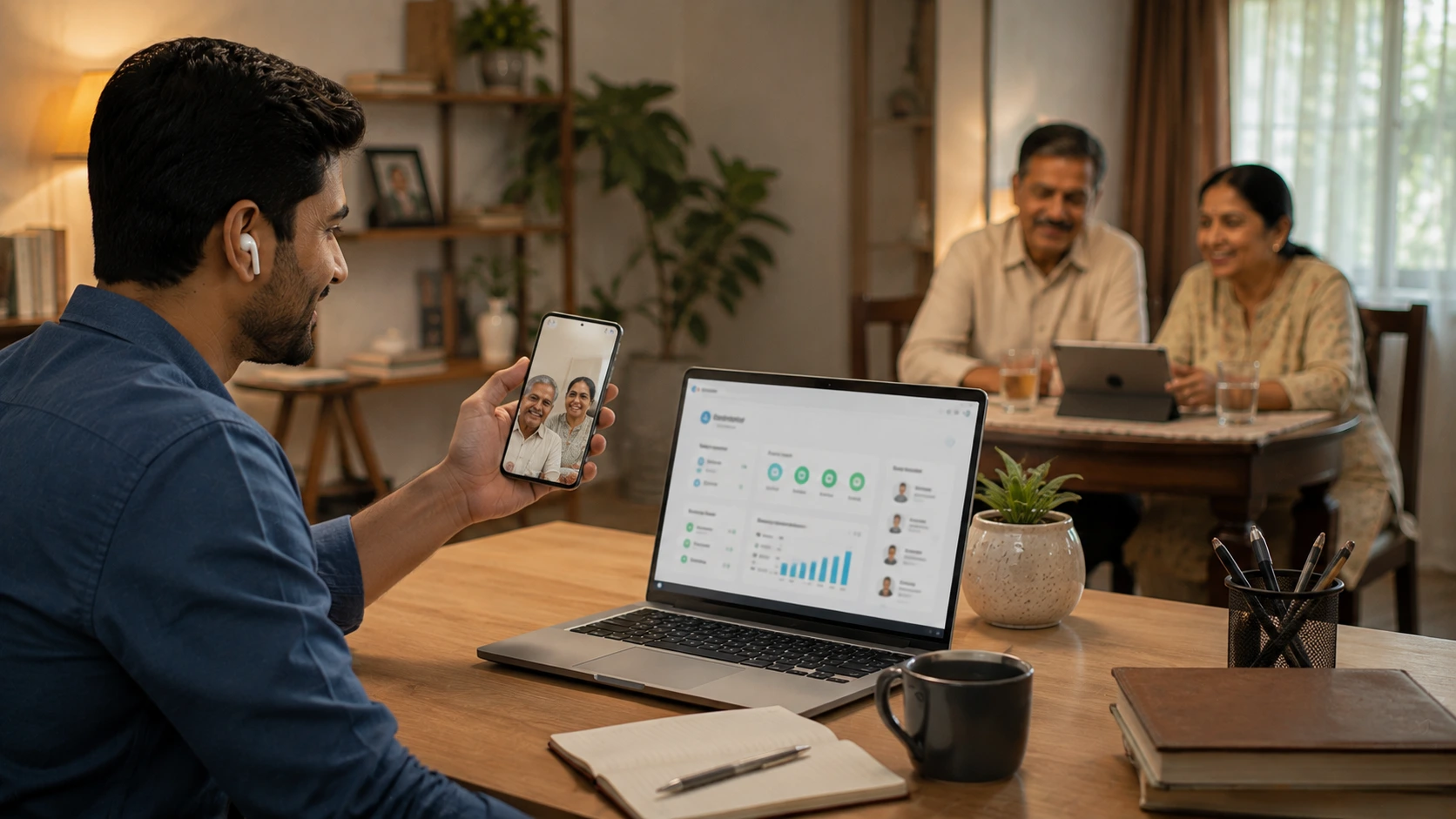
For many Indian professionals, living in another city does not mean caring less about their parents. It simply changes what caregiving looks like.
A son working in Bengaluru may have parents in Pune. A daughter building her career in Mumbai may have her family in Nagpur. The distance can make everyday health concerns harder to see, especially when parents are managing regular appointments, medicines, meals or lifestyle changes.
Health tracking for parents can help create visibility without turning every conversation into a health interrogation. A shared family health tracking app, for example, can give family members a clearer picture of relevant daily information when parents are comfortable sharing it.
The goal is not constant monitoring. It is informed, respectful involvement.
Why Distance Makes Caregiving Feel Harder, Not Just Logistically Different
When parents live nearby, small observations happen naturally.
You notice that your father is walking less. You see what your mother is eating. You remember when they last visited the doctor. You may accompany them to an appointment or help organise their medicines.
Distance removes many of these everyday signals.
Instead, information often arrives through short phone calls:
“Did you eat?”
“Did you take your medicine?”
“Did you go for your walk?”
“How are you feeling?”
These questions come from concern, but repeated frequently, they can make both sides uncomfortable.
The National Institute on Aging describes long-distance caregiving as a real caregiving role that can include coordinating care, organising records, arranging support and staying connected remotely.
The practical challenge is therefore not simply communication. It is creating a reliable way to stay informed without requiring constant calls.
The Guilt Many Working Professionals Carry
Working professionals often experience a specific kind of caregiving guilt.
You may be doing well professionally, meeting deadlines and supporting your own household, while still feeling that you should be doing more for your parents.
A missed call can feel significant.
A parent mentioning a health concern can immediately create worry.
A message saying “I am fine” may provide temporary reassurance but leave you wondering whether everything really is fine.
This emotional tension is understandable. But guilt is not a sustainable caregiving system.
A healthier approach is to replace the expectation of being physically present with consistent forms of support that are realistic from another city.
That might mean:
- Scheduling a fixed weekly health conversation
- Keeping important health information organised
- Coordinating responsibilities with siblings
- Helping arrange appointments when needed
- Supporting healthy routines without controlling them
- Using shared information only with your parents’ consent
The World Health Organization emphasises person-centred and coordinated care for older people, including support for both older adults and their carers.
The principle is important: support should strengthen a person’s independence, not unnecessarily take it away.
What Realistic Involvement Looks Like From Another City
Remote caregiving does not need to mean managing every detail.
Instead, think in terms of visibility, coordination and support.
1. Know the important information
Keep a simple record of information your parents are comfortable sharing, such as:
- Current healthcare providers
- Upcoming appointments
- Relevant health goals
- Regular health routines
- Important emergency contacts
- Recent reports or documents
2. Establish a predictable check-in
Rather than calling randomly several times a day, establish a routine.
For example:
Sunday: General health and routine check-in
Monthly: Review appointments and health goals
As needed: Coordinate specific healthcare requirements
Predictability can reduce anxiety for everyone.
3. Focus on patterns, not isolated days
One missed walk or one restaurant meal rarely tells the whole story.
What matters more is whether a routine is changing over time.
This is where health tracking for parents can become useful. Instead of asking repeatedly whether something happened, family members can review shared information when appropriate.
4. Let parents remain participants
A parent should understand what is being tracked, why it is being tracked and who can see it.
The most useful approach is collaborative:
“Would you be comfortable sharing this with me so I can stay updated?”
rather than:
“I need to monitor everything you are doing.”
That difference matters.
Simple Tools That Bridge the Distance Without Being Intrusive
Technology can reduce communication gaps, but it should not replace relationships.
A few simple systems can make remote caregiving easier.
| Need | Simple approach |
| Appointments | Shared calendar |
| Important documents | Organised digital folder |
| Family responsibilities | Shared task list |
| Routine updates | Scheduled check-in |
| Relevant health information | Opt-in shared tracking |
| Communication | Regular phone or video call |
| Emergency information | Easily accessible contact list |
A family health tracking app can add another layer when parents are comfortable using it.
For example, if a parent chooses to log meals, activity or other relevant information, a family member in another city may be able to see the information without repeatedly asking for updates.
This can be particularly useful for health tracking for parents where everyday habits matter to the family’s broader understanding of wellbeing.
Nutrimate’s caregiver-oriented approach fits into this principle by making health visibility more practical while keeping the individual’s participation central. Its broader positioning is based on simple, Indian-first health tracking rather than making technology the focus.
The important boundary is that digital visibility should complement professional healthcare, not replace a doctor, dietitian or other qualified healthcare professional.
Coordinating With Siblings or Local Caregivers
Remote caregiving becomes much easier when responsibilities are shared.
In many Indian families, one sibling may live close to the parents while another works in a different city or country.
Instead of expecting one person to manage everything, divide responsibilities according to proximity and availability.
For example:
| Responsibility | Possible owner |
| Local appointments | Sibling living nearby |
| Document organisation | Sibling living remotely |
| Regular phone check-ins | Shared between siblings |
| Emergency coordination | Agreed family member |
| Financial or administrative tasks | Whoever is best placed |
| Healthcare decisions | Parents and relevant professionals |
This avoids the common situation where one family member becomes the default caregiver while everyone else assumes they will handle it.
The National Institute on Aging similarly recommends coordinating long-distance caregiving responsibilities with family members, friends and people who live nearby.
Keep communication factual and respectful
Instead of sending multiple reminders, share useful observations.
For example:
Less helpful:
“You are not taking care of yourself.”
More helpful:
“I noticed your routine has changed recently. Do you want me to help organise anything?”
The second approach creates space for a conversation instead of creating defensiveness.
A Remote Caregiving Checklist
Use this checklist to create a simple system that works even when you live far away.
- Parents have agreed on what health information can be shared.
- Important healthcare contacts are organised.
- Upcoming appointments are visible to the relevant family members.
- A regular family check-in has been established.
- Siblings or local caregivers know their responsibilities.
- Important health documents are organised securely.
- Parents know how to contact family in an emergency.
- Shared tracking is used only with consent.
- Health patterns are discussed rather than used for criticism.
- Professional medical decisions remain with qualified healthcare providers.
- The parent’s independence and preferences remain central.
Remote caregiving is not about proving that you are involved every day. It is about creating a dependable way to remain connected when physical presence is not possible.
For a busy professional, that may be the difference between constantly worrying about what is happening and having a simple, respectful system that helps you stay informed.
References
- World Health Organization: Transforming health and social services towards more person-centred and integrated care
- National Institute on Aging: Long-distance caregiving
FAQs
Start with consent-based information sharing, regular check-ins, organised health records and coordination with siblings or local caregivers. A family health tracking app can also provide shared visibility into relevant daily information when parents are comfortable using it.
Replace the expectation of being physically present with realistic, consistent responsibilities. Regular calls, appointment coordination, organised records and shared family responsibilities can create meaningful involvement without requiring constant availability.
Shared calendars, secure document storage, family communication channels, task lists and consent-based health tracking can all help. The best system is one that parents understand, willingly participate in and find useful.
Read Nutrimate Wellness first on Google