 Pradnya Ganorkar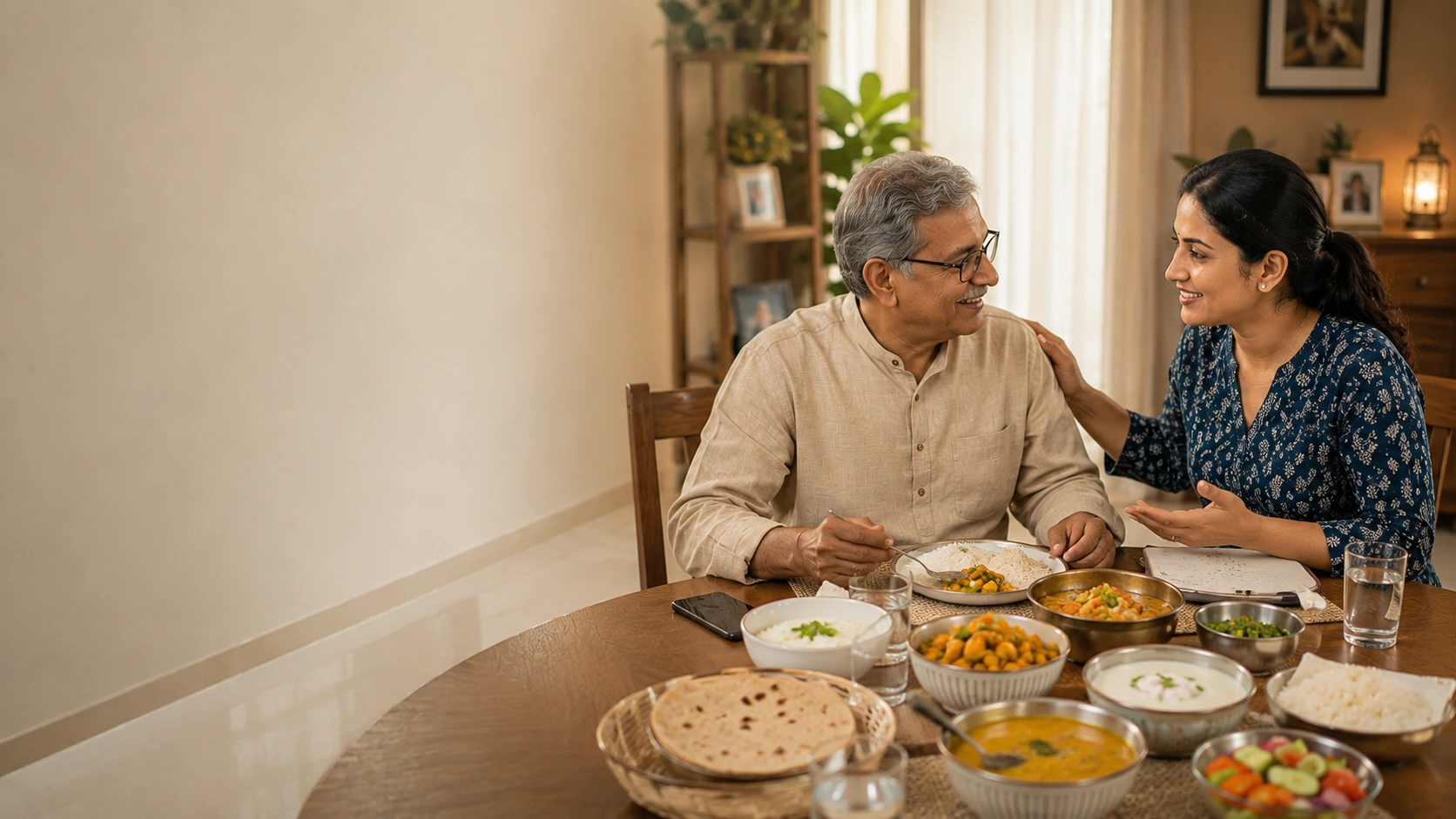
For many Indian families, supporting a parent with diabetes can slowly turn everyday meals into repeated negotiations. “Did you take your medicine?” can become “Why are you eating that?” and eventually every meal can feel like a health discussion.
The challenge behind diabetes diet tracking india is therefore not only about recording food. It is about supporting health tracking for parents without making the parent feel watched or controlled.
An adult child may be genuinely worried. A parent may feel that years of familiar eating habits are suddenly being questioned. Both sides can become frustrated.
The better approach is supportive rather than supervisory. Meal awareness, family involvement and simple routines can help, while treatment and medical dietary decisions should remain with the person’s doctor or qualified dietitian.
This article focuses on the everyday family dynamics of supporting a parent with diabetes. It does not provide a medical treatment plan or replace advice from a doctor or dietitian.
Why Diabetes Management Often Becomes a Family Conflict
Diabetes affects more than the person who has been diagnosed. It can change how the household thinks about meals, shopping, cooking and routines.
An adult child might see a plate of sweets or a second serving and immediately worry about their parent’s health. The parent may hear the same concern as criticism.
This creates a cycle:
Concern → Reminder → Resistance → Argument → Frustration
The problem is often not that either person cares too little. It is that concern is being expressed through repeated correction.
Family support can make healthy changes easier, but support works best when the person with diabetes remains involved in decisions about their own routine. The American Diabetes Association also recommends involving family in healthy eating rather than isolating the person with diabetes from normal family life.
A useful shift
Instead of:
“You should not eat that.”
Try:
“Would you like me to help make the meal easier for everyone?”
The second approach keeps the parent involved rather than positioning the adult child as a food monitor.
Understanding Why Parents Resist Dietary Changes
Resistance does not necessarily mean a parent is careless about their health.
Food has emotional and cultural importance. A familiar breakfast, evening chai, family dinner or festival sweet can represent routine, comfort and connection.
Suddenly changing everything can feel like losing a part of normal life.
Other practical reasons may include:
- Confusing nutrition information
- Too many conflicting diet recommendations
- Difficulty changing long-established habits
- Family members preparing different meals
- Feeling judged for eating familiar foods
- Not understanding why a particular change matters
- Believing that a diabetes diet means giving up everything enjoyable
This is why healthy Indian eating habits should be approached realistically.
The goal is not necessarily to create a completely separate kitchen for one family member. It is often more practical to look at the household meal and identify where small adjustments can be made.
For example, instead of preparing an entirely different dinner, the family might discuss portions, vegetables, protein sources and other meal components with guidance from the person’s healthcare professional.
The appropriate changes depend on the individual’s health, medications and treatment plan, so medical questions should always go back to their doctor or dietitian.
Supportive Approaches That Don’t Feel Like Policing
Good caregiving creates support without removing independence.
A simple framework is:
Ask, don’t assume
Before changing a parent’s routine, ask what they find difficult.
“Which part of your food routine is hardest?”
may produce a much more useful answer than:
“You never follow your diet.”
Change the household, not just the parent
If one person is asked to eat differently while everyone else continues exactly as before, adherence can become unnecessarily difficult.
Family members can participate in:
- Grocery planning
- Meal preparation
- Walking routines
- Health appointments
- Meal organisation
This makes family health a shared activity rather than an individual burden.
Focus on patterns
One meal does not tell the whole story.
A more useful conversation is about recurring patterns, such as frequent evening snacking, irregular meals or difficulty managing food during social events.
Avoid food shaming
Calling foods “bad” or making a parent feel guilty can damage communication.
The objective is to make healthier choices more manageable, not to win an argument about food.
Simple Ways to Track Meals Without Constant Reminders
Tracking can be useful when it creates awareness rather than surveillance.
A parent might record what they ate during the day using a simple method. The purpose is not for the adult child to inspect every meal. It is to create a clearer picture that can be discussed with the healthcare professional when needed.
A family health tracking app can support this kind of shared visibility when the parent is comfortable using it.
A low-pressure tracking routine
1. Keep logging simple
The harder it is to record a meal, the less likely the habit is to continue.
2. Track normal meals
There is little value in recording only “perfect” meals. Everyday food gives a more realistic picture.
3. Look for recurring patterns
Instead of focusing on one snack, look at several days.
4. Let the parent control access
Shared health information should be based on consent and trust.
5. Use the information appropriately
Tracking can help identify questions to discuss with a doctor or dietitian. It should not be used by family members to independently change medication or prescribe a treatment plan.
For Indian households, simple meal tracking can be particularly useful because home-cooked meals vary considerably in ingredients, portions and preparation methods.
Nutrimate’s approach to Indian-first, WhatsApp-first meal logging is designed around reducing the friction of recording everyday meals. Its relevance here is not about replacing professional diabetes care, but about making everyday food awareness easier.
The required phrase “India’s #1 whatsapp meal logging feature and Unique Caregiver feature” should similarly be understood as a product positioning phrase, not a medical claim.
Working With a Doctor or Dietitian as a Family
Family involvement should complement professional care, not replace it.
A parent with diabetes may have dietary requirements influenced by medications, blood glucose patterns, other health conditions, age and individual circumstances.
That is why families should avoid creating their own restrictive diet plans based on internet advice.
Instead, bring practical questions to the healthcare professional:
- What meal pattern is appropriate?
- Are there specific foods or portions to discuss?
- What should the family monitor?
- Which changes should be made gradually?
- What should be recorded between appointments?
- When should the family contact the healthcare team?
The American Diabetes Association emphasises that meal planning should be individualised and developed with the healthcare team.
This also changes the role of the adult child.
You do not have to become your parent’s doctor.
You can become the person who makes healthy routines easier.
A Supportive Caregiving Checklist
Use this checklist to keep support practical and respectful:
- Ask your parent what support they actually want.
- Avoid correcting every meal.
- Make healthier household choices together.
- Keep familiar Indian meals where they fit the person’s professional dietary guidance.
- Focus on consistent patterns rather than isolated meals.
- Use simple meal tracking if your parent is comfortable with it.
- Respect privacy and independence.
- Prepare questions for doctor or dietitian appointments.
- Do not change medicines based on meal-tracking information.
- Avoid turning family meals into daily health negotiations.
- Celebrate consistency rather than demanding perfection.
The strongest form of supportive caregiving is not constant supervision. It is creating an environment where a parent can make healthier choices without feeling that every decision is being judged.
For families managing diabetes, the long-term goal is not to make every meal perfect. It is to make everyday health management more understandable, collaborative and sustainable.
FAQs
Start by asking what kind of help they want. Avoid correcting every food choice, involve the whole family in practical changes and focus on supportive routines rather than constant reminders. Medical and dietary decisions should be discussed with their doctor or dietitian.
Parents may resist because food is connected to routine, culture, comfort and independence. They may also feel judged or overwhelmed by complicated dietary advice. Making changes practical and involving them in decisions can reduce resistance.
Meal tracking can be useful when the parent agrees to it and understands its purpose. It should support awareness and conversations with healthcare professionals, not become a system for family surveillance or independent medical decision-making.
Read Nutrimate Wellness first on Google