 Pradnya Ganorkar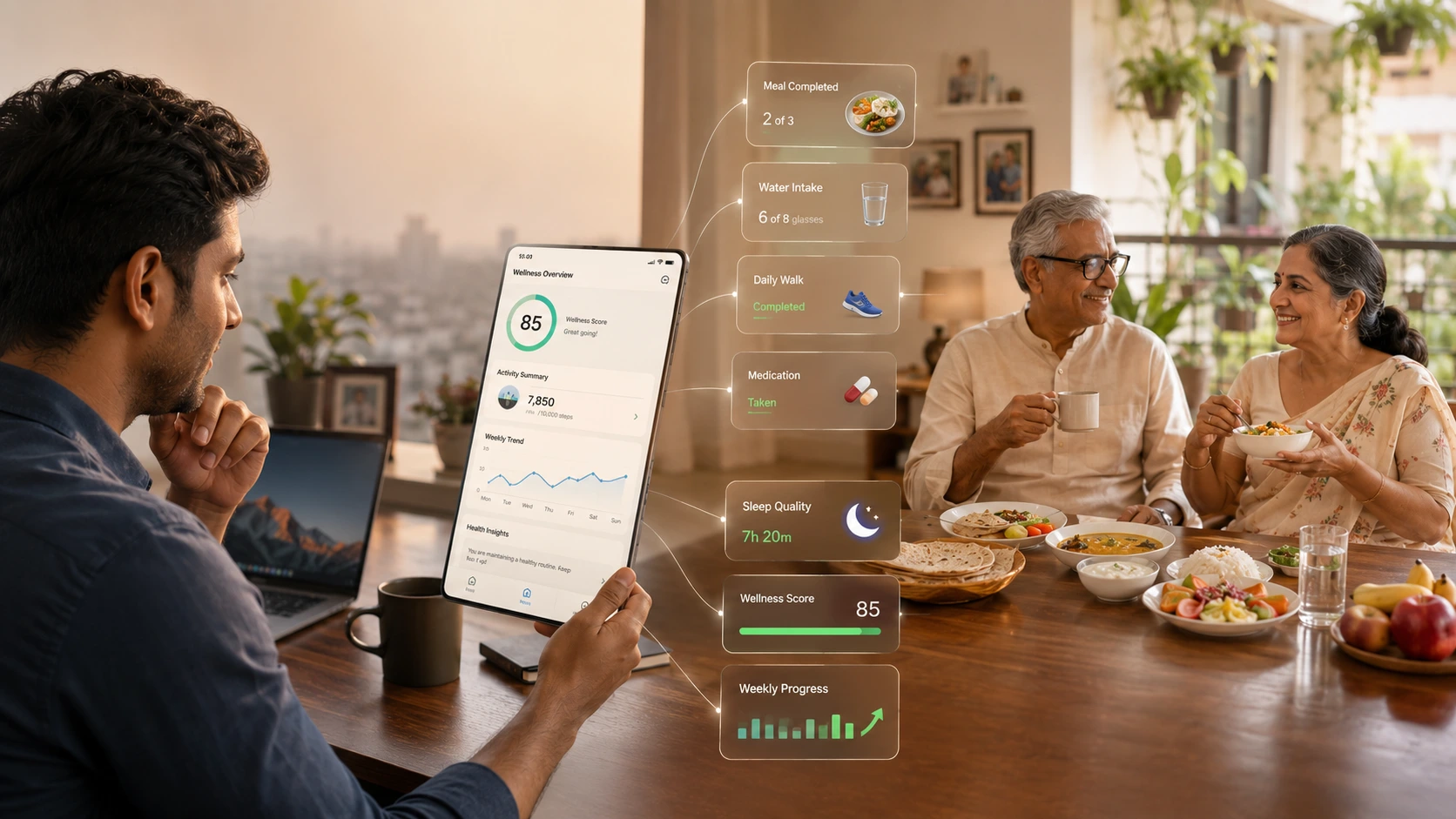
Your parents live in another city. Every evening you make the same phone call.
“Did you take your medicines?”
“How was your lunch?”
“Did you go for your walk today?”
The answers are usually reassuring, but deep down you still wonder whether you know the full picture.
For many Indian families, health tracking for parents becomes increasingly difficult as parents grow older and children move away for work. Between busy schedules, different cities, and changing health needs, staying informed often feels like guesswork rather than genuine support.
A reliable family health tracking app is not about monitoring every moment. It is about creating simple visibility into everyday habits that influence long-term wellbeing while respecting independence and dignity.
Why Caring for Parents’ Health Often Feels Like Guesswork
Most adult children want reassurance, not constant updates.
The challenge is that many important health habits happen quietly throughout the day.
Questions such as:
- Did they eat a balanced meal?
- Did they drink enough water?
- Did they go for their walk?
- Are they sleeping well?
- Are they following their doctor’s advice?
often have no clear answers unless someone is physically present.
For families managing conditions associated with lifestyle diseases India, uncertainty can create unnecessary anxiety.
Daily awareness is often more valuable than occasional conversations.
The Distance Problem: Caring From Another City
Modern Indian families are increasingly spread across different cities.
Parents may live in Nagpur while their children work in Pune, Bengaluru, Hyderabad, or abroad.
This distance creates practical challenges:
- Missed meals go unnoticed.
- Small routine changes are difficult to identify.
- Medication adherence becomes harder to verify.
- Regular physical activity may gradually decline.
- Family members rely only on phone conversations for updates.
Most people do not want to control their parents’ lives.
They simply want enough visibility to know when additional support may be needed.
This is where thoughtful caregiver health tracking can reduce uncertainty without becoming intrusive.
Why Annual Checkups Alone Miss So Much
Annual health checkups are important, but they provide only a snapshot of health.
Many everyday habits influence long-term wellbeing far more consistently.
These include:
- Eating balanced meals.
- Staying physically active.
- Drinking enough water.
- Maintaining regular sleep.
- Following medication schedules.
- Managing stress.
For example, someone may receive normal health reports during an annual checkup but gradually develop unhealthy eating patterns or become less active over several months.
Understanding these daily habits provides valuable context that annual reports alone cannot capture.
What Adult Children Actually Want to Know Day to Day
Most families are not looking for constant medical updates. They simply want reassurance that everyday routines are on track.
Useful day-to-day information includes:
- Whether meals were eaten regularly.
- Water intake throughout the day.
- Daily walking or light physical activity.
- Sleep quality.
- Medication reminders.
- General energy and wellbeing.
For parents managing conditions that require diabetes diet tracking india, or simply trying to maintain healthy Indian eating habits, these small daily observations often matter more than occasional detailed reports.
The goal is not to collect more data. It is to understand meaningful patterns that help families provide support when it is genuinely needed.
Simple Ways to Stay Informed Without Being Intrusive
Good caregiving should feel supportive, not controlling.
Simple approaches include:
Encourage Daily Habits Instead of Constant Check-ins
Rather than asking many questions every day, encourage routines that naturally build awareness.
For example:
- Regular meal timings.
- Daily walks.
- Drinking enough water.
- Consistent sleep schedules.
These habits support both family health and independence.
Focus on Trends, Not Individual Days
Everyone has days when they eat less or skip a walk.
Instead of worrying about isolated events, pay attention to patterns over weeks. Consistent changes in eating, activity, or energy often provide more useful insights than one-off incidents.
Keep Health Conversations Positive
Parents are more likely to stay engaged when conversations focus on wellbeing rather than criticism.
Celebrate healthy habits instead of pointing out missed ones.
Use Technology to Simplify Communication
Technology works best when it reduces effort for everyone involved.
Instead of asking parents to manually record every detail, simple shared tracking can make everyday health more visible without creating extra work. Nutrimate supports this approach through AI-powered, Indian-first health tracking and India’s #1 whatsapp meal logging feature and Unique Caregiver feature, allowing families to stay informed about everyday habits while respecting parents’ independence.
A Family Health Awareness Checklist
Use this checklist to build awareness together as a family:
✔ Encourage regular meal timings.
✔ Support healthy Indian eating habits instead of restrictive diets.
✔ Check hydration and daily activity.
✔ Monitor long-term patterns rather than isolated days.
✔ Keep communication supportive and respectful.
✔ Use shared health tracking to reduce guesswork instead of increasing supervision.
✔ Focus on consistency rather than perfection.
Small, everyday habits create a clearer picture of wellbeing and help families support ageing parents with confidence rather than uncertainty.
References
FAQs
The most effective approach is to focus on everyday habits rather than waiting for medical appointments. Regular updates on meals, physical activity, hydration, sleep, medication adherence, and overall wellbeing provide a clearer picture of long-term health. A family health tracking app can make it easier to share this information without requiring constant phone calls or making caregiving feel intrusive.
No. Annual checkups are valuable for assessing health at a specific point in time, but they do not reflect daily routines that influence long-term wellbeing. Monitoring consistent habits such as nutrition, activity, sleep, and medication adherence helps families identify meaningful changes between medical visits.
Rather than tracking every detail, focus on a few important indicators:
– Regular meals and hydration
– Physical activity and walking
– Medication routines
– Sleep quality
– Energy levels and overall wellbeing
– Changes in eating or daily habits over time
These patterns often provide a more practical understanding of parents health than occasional health reports alone.