 Pradnya Ganorkar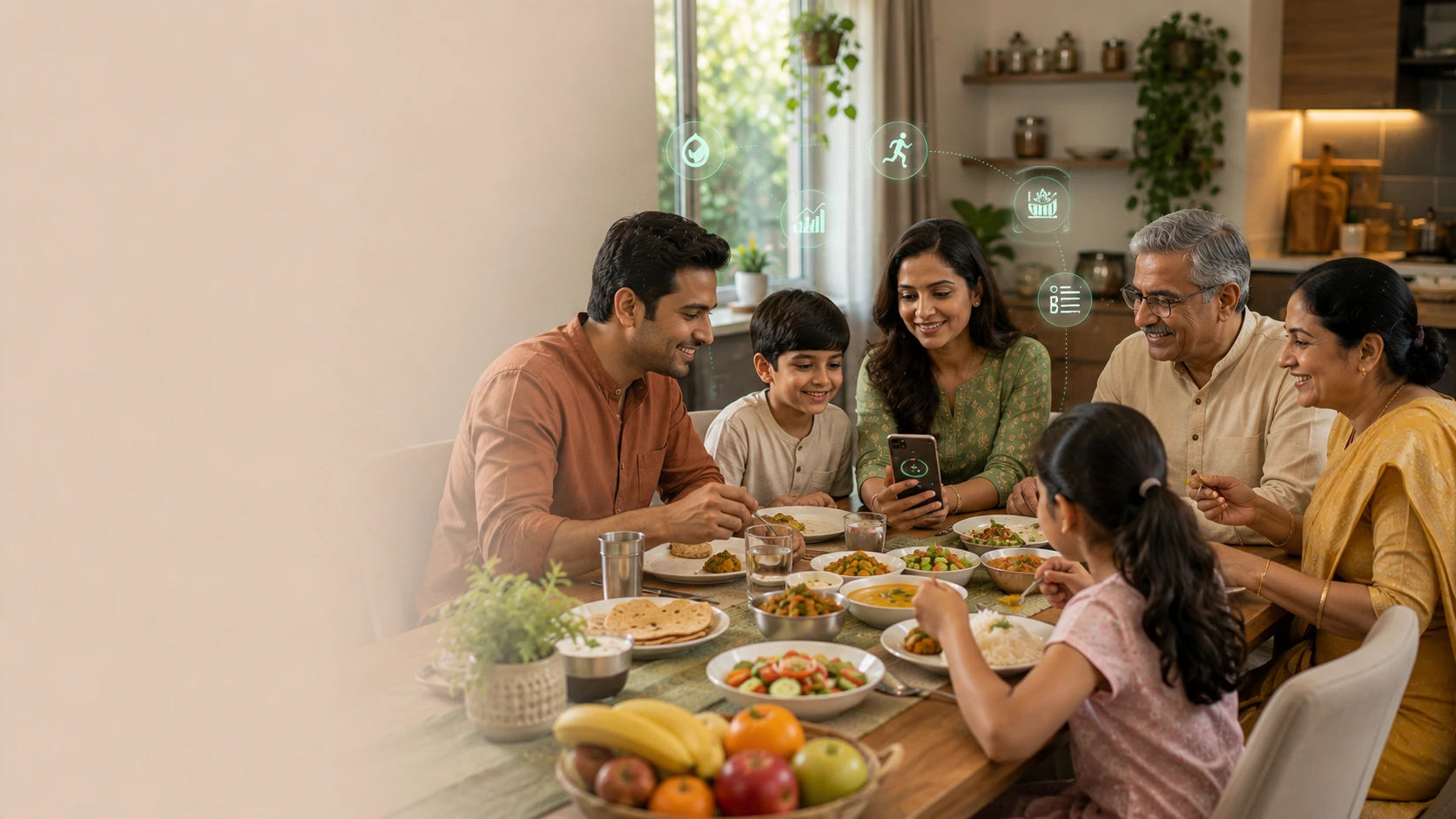
Many Indian families want to eat healthier.
Parents want better nutrition for their children. Working professionals want more energy. Older family members want to reduce lifestyle disease risks. Yet when people begin their health journey, they often assume that awareness means counting every calorie, weighing every ingredient, and tracking every bite.
This belief creates frustration.
In reality, a strong nutrition awareness family approach is not about obsession. It is about understanding food patterns, recognizing habits, and making informed choices consistently. For many households, building awareness is far more sustainable than strict calorie counting.
As conversations around family preventive health India, family wellness India, and long-term health continue to grow, families are discovering that simple awareness often creates better results than rigid restrictions.
The goal is not perfection.
The goal is understanding.
Why Families Don’t Need Obsessive Tracking
Many people associate healthy eating with strict food tracking.
They believe success requires:
- Recording every calorie
- Avoiding favorite foods
- Measuring every meal
- Following complicated diet plans
While calorie tracking can be useful in certain situations, most Indian families do not need this level of detail to improve their health.
The biggest challenge facing households today is often not a lack of information.
It is a lack of awareness.
Consider a common scenario.
A family may believe they eat healthy because they cook meals at home. However, daily tea with sugar, packaged snacks between meals, restaurant dinners on weekends, and sugary beverages can significantly influence overall nutrition quality.
Without awareness, these habits often go unnoticed.
Research from the World Health Organization highlights that healthy dietary patterns are built through sustainable food choices and long-term habits rather than short-term restrictions.
For most households, understanding food behavior matters more than tracking every calorie.
This is especially important in India, where meals are deeply connected to culture, family traditions, festivals, and social gatherings.
Healthy living should fit into family life, not compete with it.
Awareness vs Restriction
One of the biggest misconceptions about nutrition is that awareness and restriction are the same thing.
They are not.
Restriction focuses on what you cannot eat.
Awareness focuses on understanding what you are eating.
Restriction often creates:
- Food guilt
- Stress around meals
- Unsustainable habits
- All-or-nothing thinking
Awareness creates:
- Better decision-making
- Improved consistency
- Flexible eating habits
- Long-term behavior change
For example, awareness might help a family notice:
- Vegetables appear in only one meal per day.
- Weekend eating patterns differ significantly from weekdays.
- Protein intake is lower than expected.
- Evening snacking has increased.
These observations allow gradual improvements without creating unnecessary pressure.
Many successful examples of healthy eating habits for families begin with awareness rather than strict rules.
Instead of banning foods, families learn how often certain foods are consumed and whether eating patterns align with their goals.
This approach is often more effective because behavior change becomes practical and sustainable.
Common Food Blind Spots
Many Indian households unknowingly develop food habits that affect long-term health.
These habits are rarely obvious because they become part of everyday routines.
Understanding common blind spots can significantly improve food awareness India efforts.
Underestimating Liquid Calories
Tea, coffee, packaged juices, flavored milk, soft drinks, and sweetened beverages can contribute substantial calories and sugar throughout the week.
A family may focus on meal quality while overlooking beverages.
Low Protein Consumption
Many households consume adequate calories but insufficient protein.
Breakfasts dominated by carbohydrates, limited protein snacks, and inconsistent protein portions can affect satiety, muscle health, and overall nutrition.
Weekend Nutrition Drift
Healthy eating during weekdays is often followed by excessive indulgence during weekends.
The issue is not occasional treats.
The issue is losing awareness of frequency and quantity.
Hidden Packaged Foods
Even families preparing homemade meals may regularly consume:
- Chips
- Biscuits
- Namkeen
- Sweetened yogurt
- Processed snacks
These items often become routine rather than occasional.
Portion Expansion
Many people continue eating until the plate is empty rather than until hunger is satisfied.
Over time, portions gradually increase without conscious awareness.
Recognizing these patterns is one of the most valuable steps in building a stronger nutrition awareness family culture.
Building Awareness Through Small Changes
Families often fail when they attempt dramatic transformations.
Small changes are easier to maintain and more likely to become long-term habits.
The objective is not to redesign the household overnight.
The objective is to increase visibility.
Start Meal Conversations
Ask simple questions during meals:
- Did we include vegetables today?
- Was there enough protein?
- Did we eat because we were hungry or because food was available?
These conversations improve awareness without creating pressure.
Observe Patterns Instead of Judging Them
Families should focus on noticing habits before trying to change them.
For example:
- How often do we order food?
- How many packaged snacks do we consume?
- How frequently do we eat fruits?
Awareness often creates improvement naturally.
Create Shared Health Goals
Many families focus only on individual goals.
A better approach is developing household goals.
Examples include:
- Eating fruit daily
- Increasing vegetable variety
- Reducing sugary beverages
- Cooking more meals at home
This approach strengthens family meal planning India efforts and encourages collective accountability.
Use Simple Tracking Methods
Tracking does not need to be complicated.
Many families benefit from simple food logging systems that help identify patterns without requiring detailed calorie calculations.
Platforms like Nutrimate support this approach through AI-powered food awareness tools designed for Indian eating habits. Instead of focusing solely on numbers, users gain visibility into their daily choices through simple meal logging.
The platform’s India’s #1 whatsapp meal logging feature and Unique Caregiver feature also supports family involvement by helping caregivers stay informed about nutrition habits across generations.
Awareness becomes easier when logging feels effortless.
What to Monitor Weekly
Families often ask what information actually matters.
The answer is simpler than many people expect.
Rather than tracking dozens of metrics, focus on a few meaningful indicators.
Meal Quality
Review:
- Vegetable intake
- Fruit intake
- Protein consumption
- Homemade meal frequency
These indicators provide a clearer picture than calorie totals alone.
Family Eating Patterns
Observe:
- Dining together frequency
- Weekend eating habits
- Late-night snacking
- Restaurant meal frequency
These patterns often influence long-term health outcomes.
Hydration
Many people underestimate the impact of hydration on energy, appetite, and overall wellness.
Monitoring water intake can reveal simple opportunities for improvement.
Movement and Activity
Food awareness works best when combined with movement awareness.
Families can review:
- Daily steps
- Exercise frequency
- Outdoor activity
- Sedentary time
Health Trends
Simple observations such as:
- Energy levels
- Sleep quality
- Digestive comfort
- Mood stability
can provide valuable insight into overall wellness.
For families focused on parents health tracking, these indicators become especially useful because changes in daily habits often appear before more serious health concerns develop.
Regular observation supports better caregiver nutrition support and encourages preventive action rather than reactive decision-making.
Practical Household Framework
Building awareness does not require expensive programs, complicated apps, or strict diet rules.
Most successful households follow a practical framework that balances flexibility with consistency.
Step 1: Observe
Spend one week simply noticing:
- What the family eats
- When they eat
- Why they eat
No judgment.
Just awareness.
Step 2: Identify Patterns
Look for recurring behaviors.
Examples include:
- Frequent evening snacking
- Low vegetable intake
- Excessive packaged foods
- Inconsistent breakfast habits
Patterns reveal opportunities.
Step 3: Prioritize One Change
Trying to fix everything at once rarely works.
Choose one meaningful improvement.
Examples:
- Add protein to breakfast
- Include vegetables in two meals daily
- Reduce sugary beverages
Step 4: Build Family Participation
Health initiatives succeed when everyone participates.
This is especially important for healthy eating for parents, children, and older adults living together.
Shared involvement creates stronger accountability.
Step 5: Review Weekly
Instead of daily scrutiny, conduct a simple weekly review.
Discuss:
- What improved
- What felt difficult
- What should continue
Weekly reflection encourages consistency without creating stress.
For families interested in long-term family nutrition planning India, awareness is often the foundation that supports healthier choices, better routines, and improved outcomes over time.
Technology can support this process, but it should never replace it.
The most effective tools help families understand their habits rather than obsess over numbers. Nutrimate’s Indian-first approach focuses on making food awareness practical, helping households build healthier routines through simple meal visibility, Indian food intelligence, and consistency-focused tracking.
When families understand their habits, better choices become easier.
Reference:
1. World Health Organization (WHO) – Healthy Diet
https://www.who.int/news-room/fact-sheets/detail/healthy-diet
2. Harvard T.H. Chan School of Public Health – The Nutrition Source: Healthy Eating Plate
https://nutritionsource.hsph.harvard.edu/healthy-eating-plate/
FAQs
Most families do not need to count calories to improve their health. Building awareness around eating patterns, meal quality, portion sizes, and food choices is often more sustainable. A strong nutrition awareness family approach focuses on understanding habits rather than tracking every calorie.
Start by observing meal patterns, snack frequency, beverage consumption, fruit and vegetable intake, and dining habits. Simple food logging, weekly reviews, and family discussions can improve food awareness India efforts and support healthier long-term habits without creating unnecessary restrictions.
Read Nutrimate Wellness first on Google