 Pradnya Ganorkar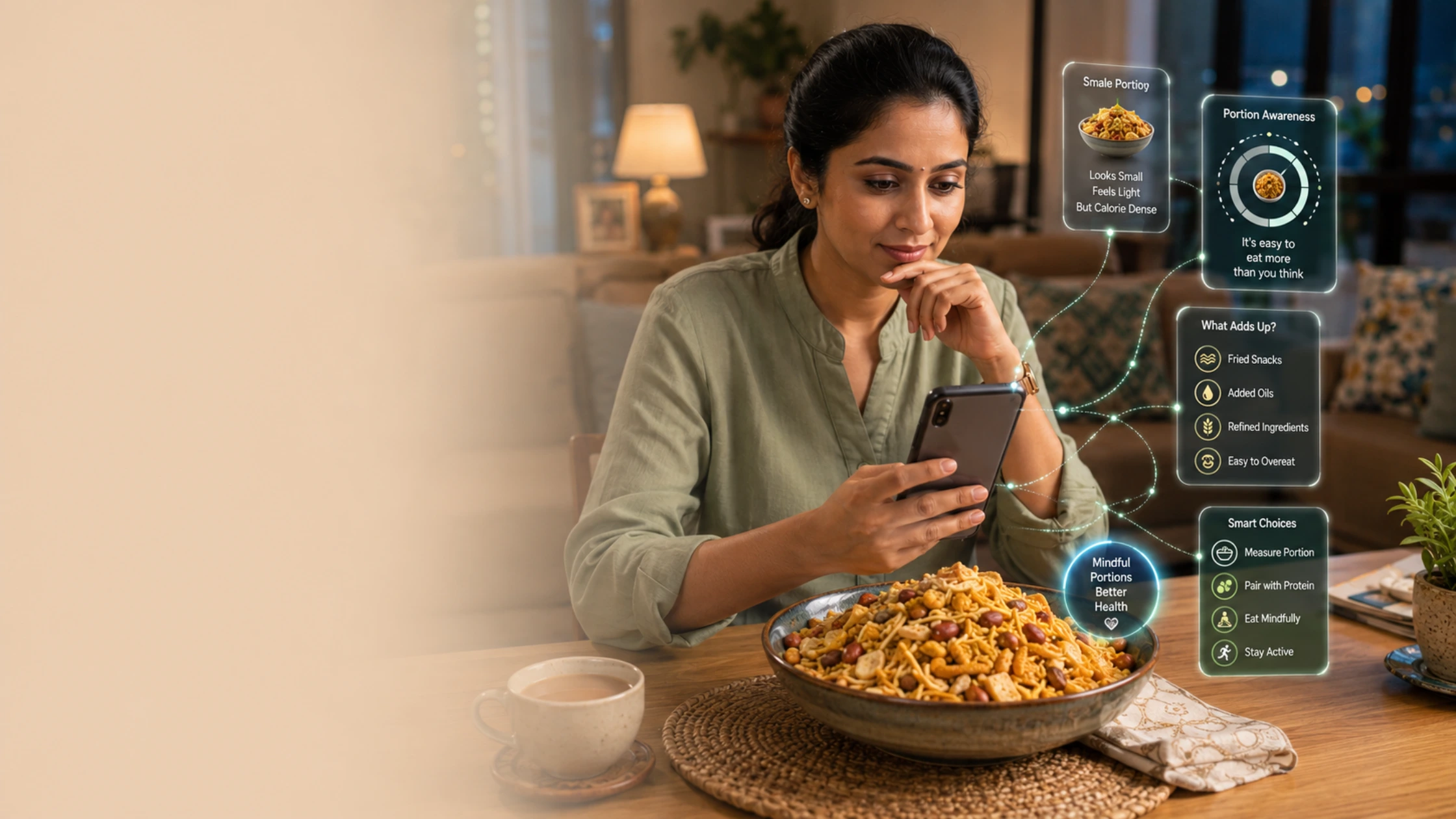
Many Indians are surprisingly careful about their meals.
They reduce sugar in tea, switch to brown bread, avoid soft drinks, and try to follow a healthier Indian diet.
Yet one area often escapes attention.
Snacking.
Particularly namkeen.
A handful of bhujia while watching television.
A bowl of mixture during evening tea.
A small serving of sev added to poha or chaat.
These habits feel harmless because the portions seem small.
However, understanding calories in namkeen is important because these snacks are often far more calorie-dense than most people realize.
For people trying to maintain a healthy lifestyle, improve fitness results, or manage weight, namkeen can become a hidden source of excess calories.
The goal of this article is not to tell you to stop eating namkeen.
Instead, it is to help you understand how portion size, ingredients, and frequency can influence overall health and nutrition awareness.
Why Namkeen Feels Harmless
One reason namkeen consumption is so common in India is familiarity.
Unlike desserts or fast food, namkeen often feels like a traditional household snack rather than an indulgence.
Many people associate it with:
- Evening chai
- Family gatherings
- Office snacks
- Travel food
- Festival treats
Because namkeen is woven into everyday life, people rarely think of it as a major contributor to calorie intake.
The Portion Illusion
A common mistake is assuming that small volume means low calories.
Namkeen is lightweight.
A bowl can look modest while containing significant energy.
This happens because most varieties are made using ingredients such as:
- Gram flour
- Refined flour
- Peanuts
- Fried lentils
- Oil
- Spices
These ingredients create foods that are highly calorie-dense.
The Mindless Snacking Problem
Many people cannot accurately recall how much namkeen they consumed yesterday.
This is where awareness becomes important.
Research consistently shows that people tend to underestimate snack consumption.
In many cases, individuals trying to lose weight focus entirely on meals while overlooking snacks.
This is one reason why diets fail long term.
The problem is not necessarily the main meals.
The problem is often the small, repeated habits between meals.
Calories in Popular Namkeen Types
Different namkeen varieties contain different nutritional profiles.
However, most are relatively calorie-dense due to frying and ingredient composition.
The following values are approximate and can vary by brand and preparation method.
| Namkeen Type | Approx Calories Per 100g |
| Bhujia | 520–580 |
| Sev | 520–600 |
| Chivda | 450–550 |
| Mixture | 500–600 |
| Aloo Bhujia | 530–590 |
| Peanut Mixture | 550–650 |
These figures explain why 100 gm namkeen calories can be surprisingly high.
For perspective:
100 grams of namkeen may contain calories comparable to:
- A full Indian lunch
- Multiple rotis and sabzi
- Several bowls of dal
This is why understanding 100 gram namkeen calories matters.
Bhujia
Bhujia is one of the most widely consumed snacks in India.
Its crunchy texture makes it easy to overeat.
A few handfuls can quickly add up.
Sev
Sev is often used as a topping rather than a standalone snack.
However, repeated additions to poha, bhel, and chaats increase total calorie intake substantially.
Chivda
Chivda is often perceived as healthier.
While some versions are lighter, many commercially prepared varieties still contain significant oil and calories.
Mixture
Mixture combines multiple ingredients including fried lentils, peanuts, sev, and spices.
The combination often makes it particularly energy-dense.
Understanding namkeen calories helps consumers make informed choices rather than relying on assumptions.
For a broader look at namkeen nutrition, portion sizes, and practical snack awareness, read our Namkeen Calories: A Nutritionist’s Guide to Indian Snack Nutrition.
The Difference Between 1 Handful and 1 Bowl
This is where most people underestimate intake.
One Handful
A typical handful of namkeen may weigh approximately 20 to 30 grams.
Calories:
- Around 100 to 180 calories
This may not seem excessive.
One Bowl
A standard bowl can easily contain:
- 60 to 100 grams
Calories:
- Approximately 300 to 600 calories
This is where 1 katori namkeen calories become important.
Depending on the variety and serving size, 1 katori namkeen calories can sometimes equal the calories found in a full meal.
Practical Example
Consider a working professional:
Breakfast:
- Poha
Lunch:
- Roti and sabzi
Dinner:
- Dal rice
Meals appear balanced.
However, if they consume:
- One bowl of mixture with evening tea
- Another serving while watching television
They may unknowingly add several hundred calories.
This hidden intake can significantly influence weight management outcomes.
Why Tracking Helps
Many people are shocked when they first log snacks.
Often, snacks contribute more calories than expected.
This is why tools focused on food tracking without calorie counting are becoming increasingly popular.
Awareness creates better decisions.
Hidden Oils and Ingredients
The calorie density of namkeen comes largely from preparation methods.
Deep Frying
Many traditional namkeen varieties are deep-fried.
Oil absorption increases calorie density significantly.
Refined Ingredients
Some products contain:
- Refined flour
- Added starches
- Processed ingredients
These increase calorie content while providing limited satiety.
Peanuts and Nuts
Peanuts are nutritious but energy-dense.
When combined with frying, calorie levels rise rapidly.
Added Salt
Although the discussion often focuses on calories, sodium is another consideration.
Frequent consumption may contribute to excess sodium intake.
Packaged Snack Misconceptions
Many consumers assume packaged snacks provide portion guidance.
However, serving sizes on labels often differ from actual consumption habits.
Learning how to read nutrition labels in india can improve awareness.
Key areas to check:
- Serving size
- Calories per serving
- Fat content
- Sodium content
Without understanding serving sizes, people often underestimate calories in 100 gm namkeen.
Better Snacking Alternatives
The solution is not complete restriction.
The solution is smarter choices.
Option 1: Roasted Chana
Benefits:
- Higher protein
- Better satiety
- Lower fat content
Particularly useful for individuals focused on protein for indian vegetarians.
Option 2: Sprouts Chaat
Supports:
- healthy Indian eating habits
- Protein intake
- Micronutrient intake
Option 3: Fruit + Nuts
Provides:
- Fiber
- Vitamins
- Better fullness
Option 4: Homemade Chivda
Prepared with:
- Less oil
- Better ingredient control
Option 5: Greek Yogurt or Curd
Helps increase protein intake while supporting satiety.
Healthy Snacking Comparison
| Snack | Approx Calories |
| 1 Bowl Mixture | 350–500 |
| Roasted Chana (30g) | 110–130 |
| Sprouts Chaat Bowl | 120–180 |
| Fruit Bowl | 80–150 |
| Plain Curd Bowl | 100–150 |
The goal is not eliminating namkeen.
The goal is balancing overall intake.
Awareness Without Restriction
One of the biggest mistakes in nutrition is turning foods into villains.
Namkeen is not inherently bad.
Problems arise when:
- Portions are uncontrolled
- Frequency is high
- Consumption becomes unconscious
Myth vs Reality
Myth:
Namkeen causes weight gain.
Reality:
Excess calorie intake causes weight gain.
Namkeen simply makes it easier to consume large amounts of calories quickly.
Myth:
Healthy eating means never eating snacks.
Reality:
Sustainable nutrition includes flexibility.
This aligns with Indian diet without dieting approaches that emphasize awareness rather than restriction.
Focus on Patterns
Ask:
- How often do I eat namkeen?
- What portion am I consuming?
- Is it replacing healthier foods?
- Am I eating because I am hungry or bored?
The Role of Tracking
Many people discover hidden patterns only after tracking meals and snacks.
Simple visibility often reveals:
- Frequent evening snacking
- Weekend overeating
- Portion size errors
Nutrimate helps simplify this process through AI-powered Indian food intelligence designed for real Indian eating habits.
Rather than obsessing over every calorie, users gain awareness of food patterns using WhatsApp-first meal logging.
This is especially useful because India’s #1 whatsapp meal logging feature and Unique Caregiver feature makes meal visibility easier for individuals and families alike.
Many users are surprised to discover that snack intake contributes significantly more calories than expected.
Awareness often drives behavior change better than restriction.
Building Sustainable Habits
Long-term success comes from:
- Better portion awareness
- Smarter snack choices
- Consistent habits
- Realistic expectations
These principles support:
- healthy lifestyle for busy Indians
- sustainable health habits
- sustainable health habits for Indians
- Better nutrition consistency
- Improved long-term outcomes
The most effective nutrition strategy is often the simplest one people can follow consistently.
Reference
- FSSAI Eat Right India Initiative
https://eatrightindia.gov.in
FAQ
The calorie content depends on the variety, but most namkeen products contain approximately 450 to 600 calories per 100 grams. Portion size plays a major role in total calorie intake.
Namkeen is not inherently unhealthy, but many varieties are calorie-dense, high in fat, and often high in sodium. Moderate portions can fit into a balanced diet.
Yes. Weight loss depends on overall calorie balance. Small, controlled portions of namkeen can be included as part of a sustainable eating plan when consumed mindfully.