 Pradnya Ganorkar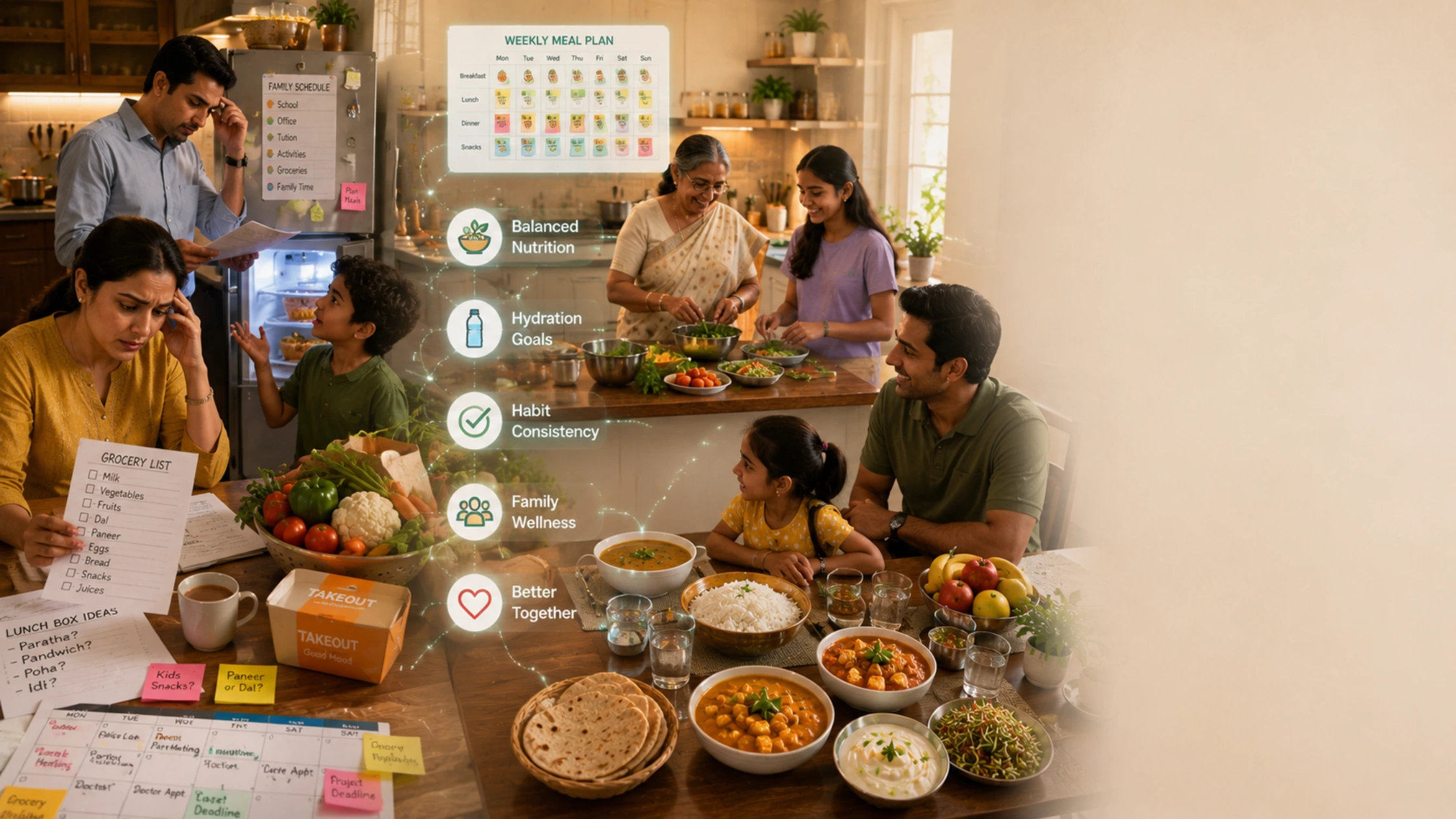
For many families, healthy eating is not difficult because they lack knowledge.
It becomes difficult because every day starts with the same question:
“What should we cook today?”
In many Indian households, meal decisions happen multiple times daily. Breakfast, lunch boxes, evening snacks, dinner, and special dietary needs often compete for attention. Over time, these constant decisions create stress, inconsistency, and frustration.
This is why family meal planning India has become increasingly important for modern households.
A structured meal planning system reduces daily stress, supports healthy eating habits for families, improves nutrition quality, and creates better long-term health outcomes.
The goal is not perfection.
The goal is creating a practical framework that works despite school schedules, office deadlines, family preferences, and busy lifestyles in india.
Why Most Family Meal Plans Fail
Most meal plans fail for a simple reason.
They are designed for ideal situations rather than real life.
Many families create ambitious plans that include:
- New recipes every day
- Complex meal preparation
- Strict nutrition rules
- Extensive grocery lists
The reality is different.
Parents return home tired.
Children reject unfamiliar foods.
Unexpected events disrupt schedules.
Relatives visit.
Work meetings run late.
The result is that carefully planned systems collapse within days.
The Real Problem Is Not Food
The problem is decision overload.
Many families spend significant mental energy deciding what to cook instead of following a predefined structure.
This is one reason why diets fail long term.
People rely on motivation instead of systems.
Meal Planning Should Reduce Effort
An effective plan should:
- Simplify choices
- Reduce stress
- Support consistency
- Improve nutrition awareness
The best meal plan is often the one that feels easiest to maintain.
Common Indian Household Challenges
Every household faces unique circumstances, but several challenges appear repeatedly across India.
Multiple Generations Under One Roof
A typical family may include:
- Young children
- Working adults
- Elderly parents
Each group has different nutritional needs.
Children may need growth-focused nutrition.
Adults may prioritize weight management.
Seniors may require easier digestion and better protein intake.
Balancing these needs is not easy.
Time Constraints
Modern work schedules leave limited time for planning.
This affects both urban and semi-urban households.
Many people searching for healthy lifestyle for busy Indians struggle because nutrition competes with dozens of daily responsibilities.
Food Preferences
One family member prefers rotis.
Another wants rice.
Children may dislike vegetables.
Seniors may avoid certain foods.
These differences often create nutritional compromises.
Nutrition Confusion
Questions commonly arise:
- Is Indian food and health compatible?
- Is rice unhealthy?
- Does roti cause weight gain?
- Is the roti rice weight gain myth true?
This confusion leads families to overcomplicate food decisions.
The reality is that traditional Indian meals can be highly nutritious when portions and balance are managed properly.
The Weekly Meal Planning Framework
The simplest approach to family nutrition planning India is creating a weekly structure rather than planning every meal from scratch.
Step 1: Create Meal Categories
Instead of deciding specific meals daily, define categories.
Example:
| Day | Lunch Theme | Dinner Theme |
| Monday | Dal + Rice | Roti + Sabzi |
| Tuesday | Rajma | Paneer |
| Wednesday | Khichdi | Mixed Vegetables |
| Thursday | Chole | Millet-Based Meal |
| Friday | Sambar Rice | Protein-Rich Dinner |
| Saturday | Family Favorite Meal | Light Dinner |
| Sunday | Special Family Meal | Leftover Utilization |
This framework dramatically reduces decision fatigue.
Step 2: Build Protein Into Every Meal
Many Indian families underestimate protein in average indian meal patterns.
Meals often contain:
- Rice
- Roti
- Vegetables
But limited protein.
Adding:
- Dal
- Paneer
- Curd
- Chana
- Sprouts
- Soy products
improves meal quality significantly.
This is especially important for protein for indian vegetarians.
Step 3: Rotate Core Ingredients
A weekly rotation prevents boredom while simplifying shopping.
Examples:
- Moong dal
- Chana dal
- Rajma
- Chole
- Paneer
- Soy chunks
This supports healthy Indian eating habits without requiring complicated meal plans.
Step 4: Prepare Components
Instead of preparing entire meals in advance:
- Chop vegetables
- Soak legumes
- Prepare curd
- Organize ingredients
This saves time while maintaining freshness.
Planning for Kids, Adults and Seniors
A common mistake in family nutrition planning India is treating everyone the same.
Different age groups have different needs.
Kids
Children need:
- Growth-supporting protein
- Calcium-rich foods
- Iron-rich foods
- Consistent meal timing
Examples:
- Paneer sandwiches
- Vegetable parathas
- Curd bowls
- Sprout chaat
Working Adults
Adults often struggle with:
- Irregular eating
- Stress eating
- Skipped meals
Many people searching for Indian diet for busy professionals benefit from meal structures rather than restrictive diets.
Focus on:
- Protein with every meal
- Fruit availability
- Portable snacks
- Consistent meal timing
Seniors
Older adults often need:
- Easy-to-chew foods
- Digestible protein
- Controlled portions
- Better hydration
Examples include:
- Khichdi
- Dal soups
- Soft paneer dishes
- Vegetable stews
This approach supports both family preventive health India goals and overall household wellbeing.
Grocery Planning Made Simple
Good meal planning starts before cooking.
It starts with shopping.
Create Three Grocery Categories
Essentials
Weekly staples:
- Rice
- Atta
- Dal
- Milk
- Curd
Proteins
Include:
- Paneer
- Soy chunks
- Eggs (if consumed)
- Sprouts
- Legumes
Vegetables & Fruits
Choose seasonal produce.
Seasonal foods are generally:
- More affordable
- Fresher
- Easier to source
The 80/20 Grocery Rule
Keep 80% of purchases predictable.
Leave 20% flexible.
This reduces waste while allowing variety.
Beware of Snack Misconceptions
Many households consume packaged snacks assuming they are harmless.
However:
- calories in namkeen
- 100 gm namkeen calories
- 100 gram namkeen calories
- 1 katori namkeen calories
- calories in 100 gm namkeen
- namkeen calories
can be surprisingly high compared with whole-food alternatives.
Awareness matters more than restriction.
Avoiding Decision Fatigue
One of the biggest barriers to healthy eating is not nutrition.
It is mental exhaustion.
Every decision consumes energy.
When meal choices become repetitive challenges, families naturally choose convenience.
Reduce Daily Decisions
Create:
- Fixed breakfast options
- Rotating lunches
- Structured dinner themes
This dramatically improves consistency.
Track Patterns Instead of Perfection
Many families do not realize what they actually eat.
This is where visibility becomes valuable.
Simple systems often reveal:
- Protein gaps
- Excess snacking
- Irregular meal timing
- Missing vegetables
Many people believe they eat well until they begin tracking.
Tools like Nutrimate simplify this process through AI-powered Indian food intelligence, WhatsApp-first convenience, and India’s #1 whatsapp meal logging feature and Unique Caregiver feature.
The purpose is not obsessive calorie counting.
It is awareness.
Many families prefer food tracking without calorie counting because it feels more sustainable.
Build Sustainable Habits
The goal is creating:
- sustainable health habits
- sustainable health habits for Indians
- Better consistency
- Less stress
- Improved nutrition awareness
These outcomes matter more than temporary dieting.
Practical Weekly Checklist
Every week ask:
✓ Did the family consume protein daily?
✓ Were vegetables included regularly?
✓ Was fruit available at home?
✓ Were snacks planned?
✓ Were grocery purchases aligned with meal plans?
✓ Did meal preparation feel manageable?
✓ Did everyone follow the plan most of the time?
Progress matters more than perfection.
Daily meal decisions create stress in almost every household.
The challenge is not a lack of information.
The challenge is creating a repeatable system.
Successful family meal planning India is not about complicated recipes, strict restrictions, or perfect execution.
It is about reducing friction.
Families that establish consistent routines often experience:
- Better nutrition
- Reduced stress
- Improved meal quality
- Greater consistency
- Stronger family wellness India outcomes
When meal visibility improves, planning quality improves as well.
Simple systems create sustainable results.
Reference
- FSSAI Eat Right India Initiative
https://eatrightindia.gov.in
FAQs
Start with a weekly framework instead of daily decisions. Create meal themes, build protein into every meal, prepare groceries in advance, and maintain a simple rotation of familiar family foods.
The easiest method is using recurring weekly meal categories such as dal days, paneer days, millet days, and family favorites. This reduces decision fatigue while maintaining variety and nutrition balance.
Read Nutrimate Wellness first on Google