 Pradnya Ganorkar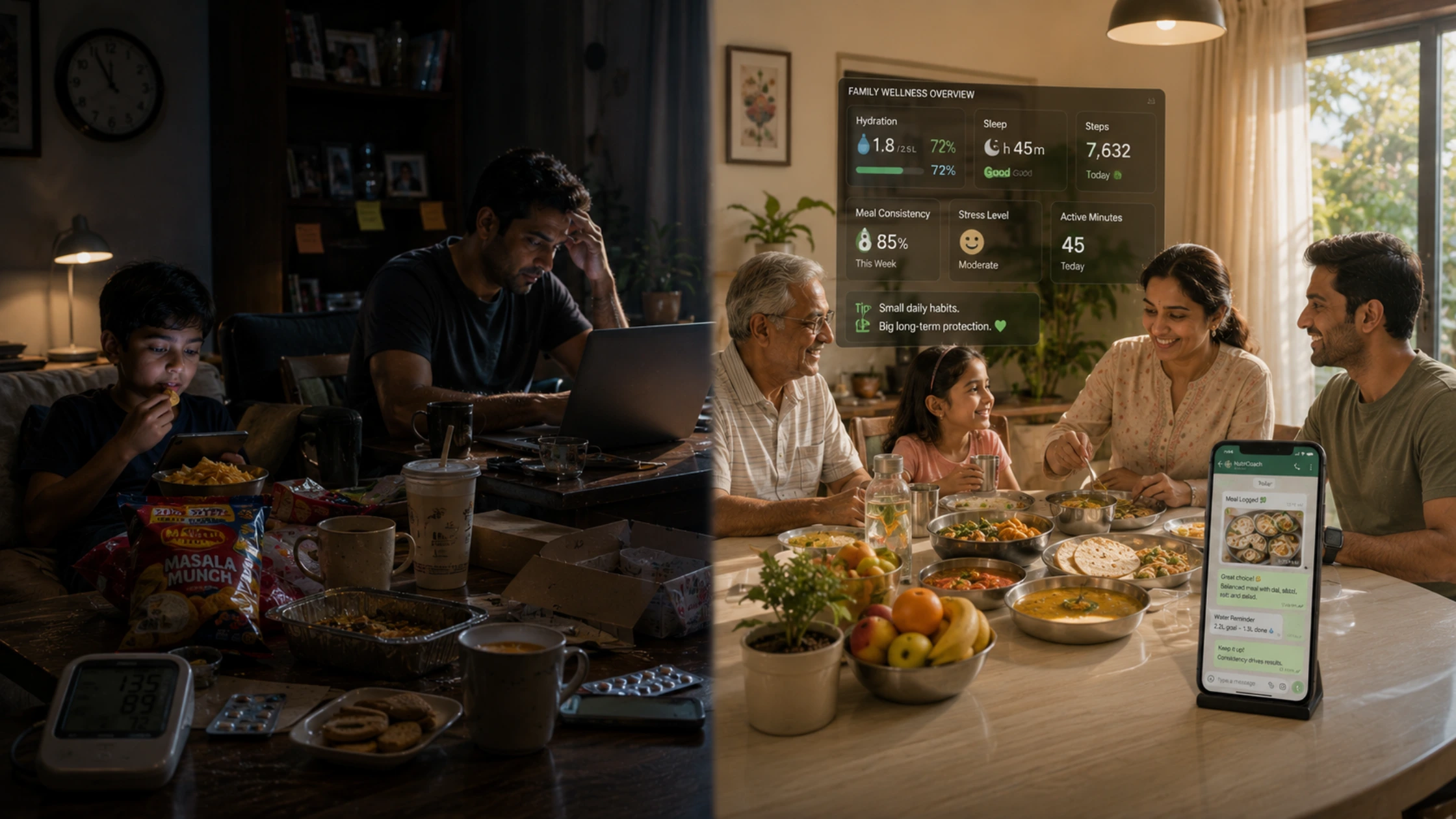
Most families do not notice health problems when they begin.
Because they rarely begin dramatically.
They usually start quietly.
One extra sugary chai every day.
Late-night dinners becoming normal.
Poor sleep routines.
Skipped breakfasts.
Weekend overeating.
Constant stress.
Zero movement after work.
Children consuming packaged snacks daily.
Parents ignoring fatigue for years.
These small patterns often look harmless individually.
But over time, they slowly become:
- Weight gain
- Prediabetes
- Fatty liver
- High blood pressure
- Chronic fatigue
- Digestive issues
- Burnout
- Poor sleep quality
- Lifestyle diseases
This is why family preventive health India is becoming increasingly important.
Many Indian households focus on treatment after symptoms appear.
Very few focus on everyday prevention.
According to the World Health Organization, noncommunicable diseases such as diabetes, heart disease, and obesity are strongly connected to daily behavioral patterns including diet, inactivity, sleep, and stress.
India is also experiencing rising metabolic health risks across urban and semi-urban families due to changing lifestyle behaviors, increasing processed food consumption, and lower physical activity levels.
The challenge is not lack of information.
Most families already know:
- Vegetables are healthy
- Sleep matters
- Sugar should be controlled
- Exercise is important
The real challenge is consistency.
Especially in modern Indian life where:
- Work schedules are exhausting
- Parents are overwhelmed
- Food delivery is constant
- Family eating habits are emotionally driven
- Daily routines are unstable
This is why small daily habits matter more than occasional “health resets.”
Long-term family wellness depends on sustainable everyday systems.
Not temporary motivation.
The Small Habit Problem
Most health problems develop slowly.
But families often only react when symptoms become visible.
For example:
- A father ignores poor sleep and stress for years until blood pressure rises.
- A child consumes packaged snacks daily and gradually develops unhealthy eating behavior.
- A working mother skips meals regularly and later experiences fatigue, hormonal imbalance, or burnout.
- Grandparents remain inactive after retirement and slowly lose mobility.
These are not isolated events.
They are accumulated patterns.
This is one of the biggest realities of household health habits India.
The issue is rarely one unhealthy meal.
It is repeated small behaviors over months and years.
Examples include:
- Daily sugary beverages
- Frequent late-night eating
- Minimal protein intake
- Sedentary work culture
- Constant emotional snacking
- Weekend binge eating
- Poor hydration
- Sleep inconsistency
Many Indian households normalize these patterns because they are culturally common.
That makes them difficult to notice early.
This is especially true for:
- Busy professionals
- Caregivers
- Parents
- Students
- Elderly family members
The bigger problem is that modern lifestyles quietly remove natural movement and routine structure.
Earlier generations often:
- Walked more
- Ate home-cooked meals consistently
- Had fixed meal timings
- Slept earlier
- Consumed less processed food
Today’s environment encourages:
- Sitting
- Stress eating
- Irregular routines
- Screen dependency
- Emotional eating
- Convenience food
This creates a gradual decline in overall family health.
Why Families Miss Early Warning Signs
One of the biggest challenges in family health management India is invisibility.
Lifestyle issues rarely appear suddenly.
They develop silently.
Common early warning signs include:
- Constant fatigue
- Mood instability
- Poor digestion
- Sugar cravings
- Sleep problems
- Reduced energy
- Brain fog
- Weight fluctuations
- Increased stress eating
Most families dismiss these symptoms as:
- “Normal stress”
- “Busy schedule”
- “Age”
- “Office pressure”
- “Temporary tiredness”
But these are often early lifestyle signals.
The problem becomes worse because Indian households are usually reactive, not preventive.
Families often prioritize:
- School
- Career
- Finances
- Responsibilities
While daily health gets ignored until a diagnosis appears.
This creates long-term problems related to:
- Diabetes
- Obesity
- Hypertension
- Fatty liver
- Heart disease
- Hormonal imbalance
Especially among urban families.
Many people trying to maintain a healthy lifestyle for busy Indians struggle because their environment itself promotes inconsistency.
Examples:
- Late-night work calls
- Emotional family eating
- Social overeating
- Food delivery dependency
- Irregular office schedules
This is why awareness matters more than perfection.
Preventive health starts with noticing patterns early.
Food, Sleep, Stress, Routine Patterns
Most lifestyle diseases are connected to a combination of behaviors.
Not one single food item.
This is important because many Indians focus too heavily on isolated foods.
Examples:
- “Is rice unhealthy?”
- “Does roti cause weight gain?”
- “Should I stop eating carbs?”
But health outcomes usually depend more on overall routines.
This includes:
- Sleep quality
- Stress management
- Meal consistency
- Physical activity
- Emotional eating patterns
- Portion balance
This is why the roti rice weight gain myth oversimplifies health completely.
Traditional Indian food and health can support wellness very effectively when routines are balanced.
For example:
- Dal + roti + sabzi can be healthy
- Idli + sambar can support balanced nutrition
- Poha with protein additions can work well
- Homemade khichdi remains nutritionally useful
The problem usually comes from:
- Excess processed food
- Constant snacking
- Sleep disruption
- Low protein intake
- Stress eating
- Inactivity
This is why healthy Indian eating habits matter more than aggressive dieting.
Families often attempt extreme diets temporarily.
But they rarely improve everyday systems.
That is one reason why diets fail long term.
Sustainable improvement requires:
- Better routines
- Shared awareness
- Flexible consistency
- Practical meal structure
Not perfection.
Preventive Health at Home
True prevention happens at home.
Not only inside clinics.
The most effective family preventive health India systems focus on small daily improvements.
Examples include:
1. Structured Meal Timing
Irregular eating increases:
- Energy crashes
- Cravings
- Overeating
- Stress snacking
Simple meal consistency improves stability dramatically.
2. Better Sleep Habits
Poor sleep affects:
- Blood sugar
- Hunger hormones
- Mood
- Stress response
- Energy
- Decision-making
Families often underestimate how deeply sleep affects overall health.
3. Reduced Processed Food Frequency
The issue is not occasional treats.
The issue is daily dependence on:
- Sugary beverages
- Packaged snacks
- Bakery items
- Processed convenience food
Especially for children.
4. Shared Health Awareness
When only one family member manages health, burnout increases.
Shared visibility creates better accountability.
This supports:
- parents health tracking
- Better family nutrition planning India
- Reduced mental overload
5. Emotional Health Support
Stress directly affects:
- Eating behavior
- Sleep
- Motivation
- Physical health
This is why stress free living India is becoming increasingly important for long-term wellness.
Real Family Examples
Example 1: The Working Couple
A couple in Pune:
- Orders food 4 times weekly
- Sleeps after midnight
- Skips breakfast
- Eats heavy dinners
Individually these habits seem manageable.
Combined over years, they increase metabolic risk significantly.
Example 2: The Caregiver Mother
A mother manages:
- School meals
- Parent medications
- Office work
- Household cooking
But ignores:
- Her own hydration
- Sleep
- Nutrition
- Recovery
This often contributes to:
- Fatigue
- Emotional burnout
- Hormonal issues
A common issue connected to caregiver burnout India.
Example 3: The Retired Parent
A retired father:
- Walks less
- Watches TV longer
- Snacks frequently
- Sleeps irregularly
The decline is gradual.
Which is why families often notice problems late.
Daily Awareness Framework
Most families do not need extreme wellness systems.
They need visibility.
A practical daily framework includes:
Morning
- Consistent wake-up timing
- Hydration
- Protein-inclusive breakfast
Afternoon
- Structured lunch timing
- Reduced sugary snacking
- Short movement breaks
Evening
- Controlled stress eating
- Earlier dinner timing
- Light activity
Night
- Reduced screen exposure
- Better sleep routine
- Stable bedtime
The goal is not perfection.
The goal is repeatable behavior.
This is where simple tracking systems can help reduce guesswork.
Nutrimate supports Indian-first health tracking through AI-powered WhatsApp-based meal visibility designed around real Indian food habits and everyday family routines.
Its India’s #1 whatsapp meal logging feature and Unique Caregiver feature help families observe patterns earlier instead of relying entirely on memory.
Many families discover:
- Repeated late-night eating
- Low protein intake
- High sugar frequency
- Weekend overeating
- Inconsistent hydration
- Emotional snacking cycles
Awareness creates earlier intervention opportunities.
Which is the foundation of preventive health.
Content Direction
Pain:
“Major issues often begin with ignored daily habits”
Most long-term health problems begin quietly through repeated daily behaviors.
Families rarely notice early warning signs because unhealthy patterns slowly become normalized.
Prevention becomes easier when households focus on consistency, visibility, and sustainable daily systems instead of extreme short-term solutions.
Product Integration
“Tracking daily patterns helps families notice issues earlier…”
Simple awareness systems help families recognize:
- Sleep inconsistency
- Emotional eating
- Irregular meal timing
- Processed food dependency
- Stress-driven habits
Nutrimate simplifies this through Indian-first meal visibility and WhatsApp-based tracking built for real Indian family lifestyles rather than restrictive diet culture.
References
FAQs
Families prevent lifestyle diseases by improving everyday habits such as sleep consistency, balanced nutrition, stress management, physical activity, hydration, and structured meal routines. Small sustainable changes are more effective than extreme diets.
The most important habits include regular sleep, balanced meals, reduced processed food intake, hydration, stress management, movement, and consistent eating routines. Long-term health outcomes are strongly shaped by repeated daily behaviors.
Read Nutrimate Wellness first on Google