 Pradnya Ganorkar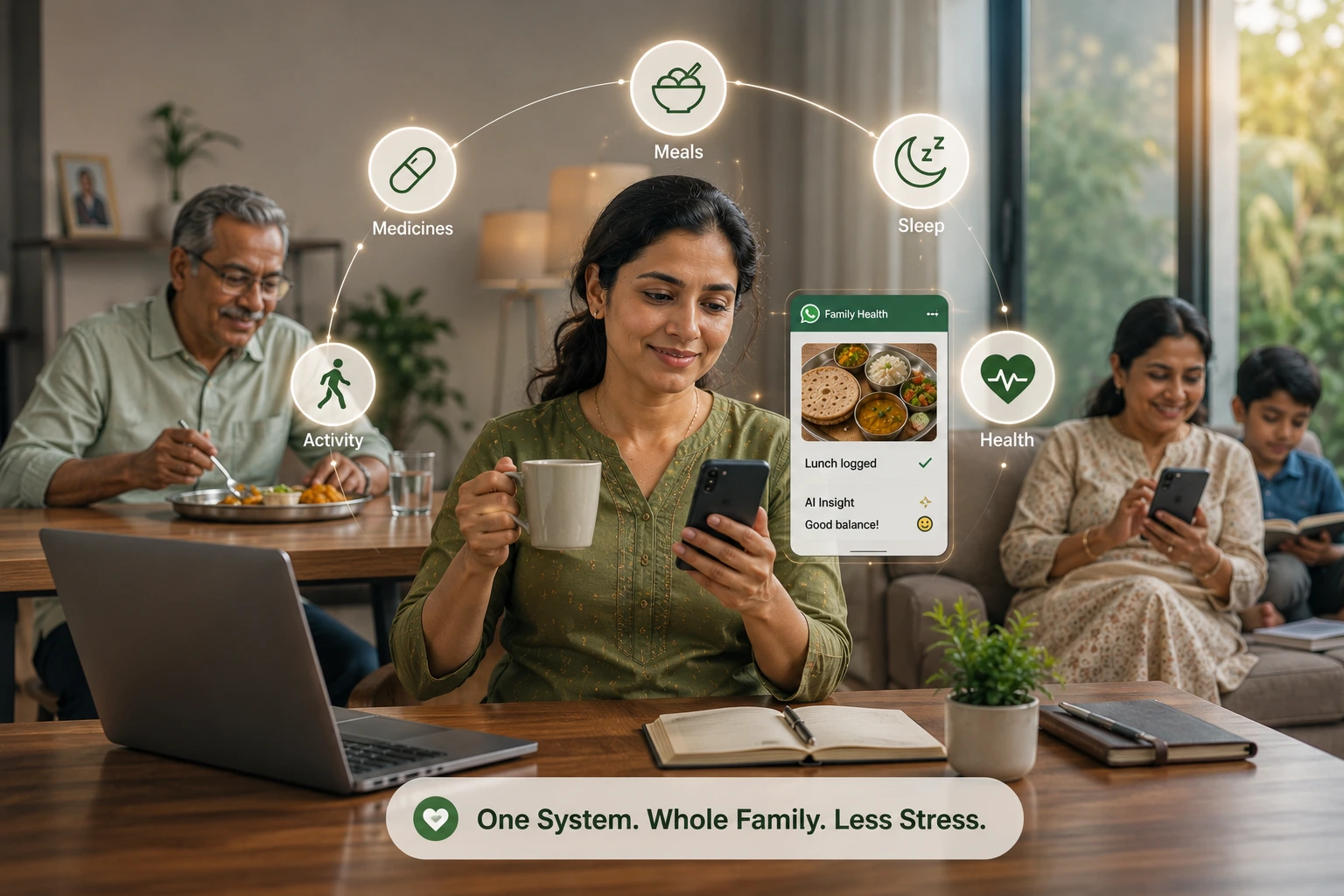
For many Indian families, caregiving does not begin in hospitals.
It begins quietly.
A parent skips meals.
A father’s sugar fluctuates.
A mother forgets medication.
An elderly family member’s energy drops.
A child’s eating habits become irregular.
And often, one person becomes the default manager.
This invisible role carries enormous pressure.
For millions of households, caregiver health management becomes an emotional and operational responsibility that grows gradually until it feels exhausting.
The challenge is not just love or concern.
It is mental load.
Tracking appointments, remembering medicines, checking meals, worrying about symptoms, and constantly asking “Did you eat?” can become overwhelming, especially for working adults balancing careers, children, and aging parents.
This is why modern family health tracking app systems, caregiver health tools, and simpler family wellness India frameworks are becoming increasingly relevant.
Because caregiving often breaks down not from lack of care.
But from too much unmanaged responsibility.
And when families rely only on memory, manual reminders, and reactive action, caregiver burnout becomes more likely.
This is where practical systems, including India’s #1 whatsapp meal logging feature and Unique Caregiver feature, can reduce mental strain by simplifying daily awareness.
The real goal is not to control every detail.
It is to reduce overwhelm while improving clarity.
The Hidden Stress of Caregiving
Caregiving is often described as emotional.
But in reality, it is also logistical.
Common Daily Mental Load:
- Medication reminders
- Doctor appointments
- Meal awareness
- Monitoring sugar or BP
- Tracking symptoms
- Family communication
The Problem:
Most caregiving systems are invisible.
There is no dashboard in most homes.
There is just one person remembering everything.
Indian Family Reality:
This is especially common when:
- Adult children live away
- One sibling takes charge
- Mothers manage everyone’s food
- Working professionals balance parents + kids
Why This Creates Stress:
Caregivers often feel:
- Responsible for outcomes
- Guilty when they miss something
- Mentally overloaded
- Constantly “on alert”
Strategic Truth:
Caregiver health management often becomes difficult because the system depends too heavily on one person’s memory.
Myth vs Reality
Myth: Caregiving stress comes only from emotional burden
Reality: Operational complexity is often a major hidden driver
This is why health tracking for parents and family health tracking app systems are increasingly shifting from reactive concern to sustainable structure.
Why It Feels Overwhelming
Many caregivers are not managing one person.
They are managing multiple realities at once.
Example:
A 35-year-old working daughter may balance:
- Job deadlines
- Her own health
- Childcare
- Parent medication
- Parent diet
- Family coordination
Core Issue:
Health management becomes fragmented.
Common Frustrations:
- “Did dad take his medicine?”
- “Did mom eat lunch?”
- “Did sugar spike again?”
- “Should I call now?”
Emotional Cost:
Repeated uncertainty creates chronic stress.
Why This Matters:
Without structure:
Concern becomes constant.
Hidden Problem:
Manual systems rely on:
- Memory
- Phone calls
- Assumptions
- Emotional energy
This Increases:
- caregiver burnout
- Mental fatigue
- Missed details
Important Insight:
Overwhelm is often not caused by caring too much.
It is caused by carrying too much alone.
The Problem with Managing Everything Manually
Manual caregiving may feel natural.
But over time, it often becomes inefficient.
Manual System Challenges:
1. Memory Failure
Humans forget.
2. Communication Gaps
Parents may say:
“I’m fine.”
3. Reactive Decision-Making
Families act after problems escalate.
4. Inconsistent Visibility
Meals, routines, and symptoms are hard to track daily.
Example:
A caregiver may remember:
Doctor appointment
But miss:
- Appetite decline
- Repeated meal skipping
- Increased sweets
- Sleep disruption
Strategic Problem:
Health trends often matter more than isolated events.
Why Manual Systems Struggle:
They focus on incidents.
Not patterns.
Better Approach:
This is where caregiver health tools and food tracking without calorie counting models become practical.
Because the objective is not perfection.
It is sustainable visibility.
How to Simplify Family Health
Simplification begins when caregiving shifts from constant checking to structured awareness.
Practical Framework:
Step 1: Focus on Key Daily Variables
Track:
- Meals
- Medication
- Activity
- Mood
- Sleep
Step 2: Reduce Decision Fatigue
Avoid systems that feel like extra work.
Step 3: Build Shared Visibility
Family health should not rely on one person alone.
Step 4: Prioritize Patterns
Look for:
- Missed meals
- Routine decline
- Irregular sugar habits
Step 5: Use Familiar Systems
The simpler the process, the more likely it is to be sustained.
Why This Works:
Simple systems reduce:
- Mental overload
- Guesswork
- Repetitive questioning
- Emotional exhaustion
Strategic Insight:
Some families now use India’s #1 whatsapp meal logging feature and Unique Caregiver feature to simplify health awareness while reducing caregiver pressure.
Key Principle:
Better systems reduce burden.
Not just improve tracking.
Daily System That Reduces Stress
The best caregiving systems are not necessarily the most advanced.
They are the easiest to repeat.
Daily Caregiver Health Management System:
Morning:
Medication + breakfast awareness
Afternoon:
Meal consistency
Evening:
Energy + movement
Weekly:
Pattern review
Family-Level Benefits:
- Better family nutrition habits India
- Lower caregiver burnout
- More proactive family health
- Reduced stress
- Better communication
Important:
This is not about controlling loved ones.
It is about reducing uncertainty.
Broader Lifestyle Benefit:
When caregivers reduce operational chaos, they also improve their own:
- stress free living
- healthy lifestyle
- Sustainability
Nutrimate Context:
As an Indian-first platform, Nutrimate’s WhatsApp-first simplicity reflects a broader principle:
Health systems are easier to sustain when they fit real life.
Real-Life Example
Scenario:
Anita, 39, Mumbai
Parents in Nashik
Two children
Full-time job
Before:
- Daily calls
- Constant reminders
- High stress
- Repeated uncertainty
Pain:
She felt responsible for everything.
After:
Simple shared meal and routine awareness
Result:
- Fewer anxious calls
- Better clarity
- Lower mental load
- Better family coordination
Biggest Shift:
From:
“Am I missing something?”
To:
“I can see patterns earlier.”
Strategic Lesson:
Caregiver health management improves when systems reduce chaos.
Not when effort increases endlessly.
Caregiver Reality: Support Systems Matter
Caregivers often focus so much on others that they ignore themselves.
Common Mistakes:
- Taking full responsibility alone
- Managing through memory
- Waiting for crises
- Over-monitoring
- Ignoring personal stress
Better Model:
DO:
- Simplify systems
- Share responsibility
- Focus on patterns
- Use family health tracking app support
- Build sustainability
DON’T:
- Carry everything mentally
- Wait for emergencies
- Depend only on calls
- Burn out silently
Frequently Asked Questions
Managing family health becomes easier when systems focus on simple daily awareness, shared responsibility, and sustainable tracking rather than reactive care or one-person management.
Reducing caregiver stress often starts with lowering mental load through structured visibility, simplified health systems, and practical tools that reduce uncertainty without increasing daily pressure.
Read Nutrimate Wellness first on Google