 Pradnya Ganorkar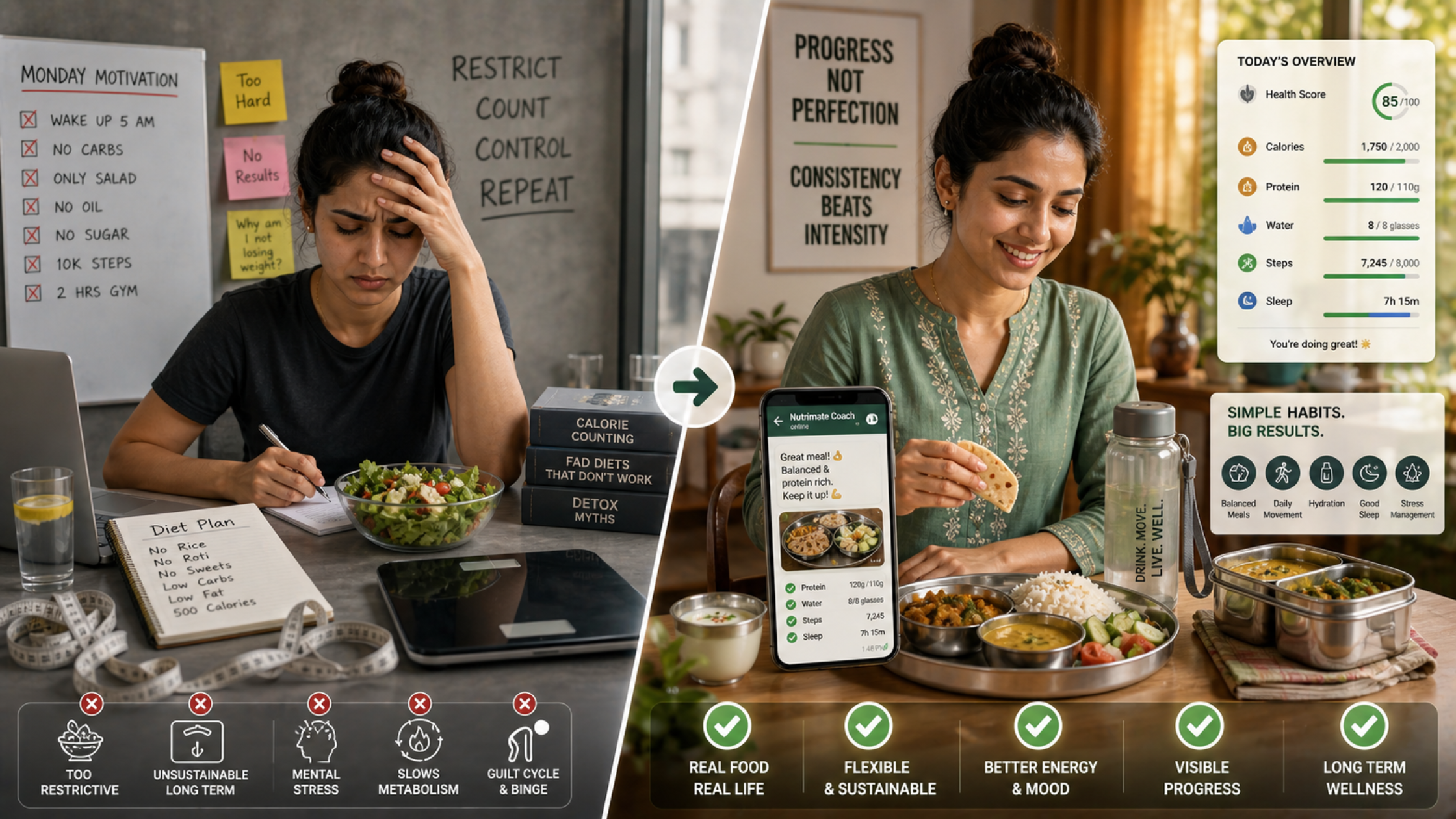
For many Indians, the word “diet” immediately feels like restriction.
No rice.
No roti.
No sweets.
No eating out.
No flexibility.
This is exactly why so many people searching for how to stay healthy without dieting often feel stuck between wanting better health and not wanting an unrealistic lifestyle.
The truth is simple.
For most people, health does not fail because of food alone.
It fails because the system feels too hard to sustain.
This is why healthy lifestyle for busy Indians often has less to do with extreme discipline and more to do with sustainability.
A practical Indian diet without dieting is not about eliminating your culture, family meals, or favorite foods.
It is about building repeatable systems around real life.
For most people, lasting lifestyle change comes from consistency, not restriction.
This is where sustainable health habits outperform temporary diets.
Why Dieting Feels Restrictive
Dieting often creates an immediate mental burden.
It usually begins with removal:
- Cut carbs
- Skip rice
- Avoid sweets
- No eating out
- Strict calorie counting
For many people, especially in India, this approach quickly becomes exhausting.
Why Restriction Feels Hard
Diets often clash with:
- Family meals
- Office lunches
- Festivals
- Travel
- Social eating
In many Indian households, food is not just nutrition.
It is:
- Culture
- Family bonding
- Routine
- Comfort
This is why restrictive plans often create emotional friction.
Common Thought Pattern:
“I can do this for a week.”
Not:
“I can do this for life.”
The Core Problem
Most diets are designed around short-term compliance, not sustainable behavior.
This is one reason why diets fail long term.
Myth vs Reality
Myth:
Health requires strict food control
Reality:
Health usually improves more through better patterns than extreme restriction
This matters especially in healthy lifestyle India contexts where sustainability determines success.
Why Diets Fail in Indian Households
Indian households are uniquely complex when it comes to food.
Unlike individualized Western meal prep systems, Indian meals often involve:
- Shared cooking
- Shared timing
- Traditional staples
- Regional food patterns
- Family influence
Practical Example:
A person may decide:
“I’m not eating rice.”
But if lunch at home is:
- Rice
- Dal
- Sabzi
The diet now creates conflict.
Common Indian Diet Challenges:
- Roti vs rice confusion
- Family expectations
- Eating outside
- Religious or festival foods
- Hospitality pressure
This is why many people struggle with:
- Indian food and health confusion
- roti rice weight gain myth fears
- Unrealistic fitness diet expectations
Bigger Issue:
Many diet plans fail because they are disconnected from healthy Indian eating habits.
What Works Better:
Systems that adapt to:
- Indian meals
- Family structure
- Portion awareness
- Daily consistency
This is where Indian diet for busy professionals and families needs practicality over perfection.
What “Healthy Without Dieting” Actually Means
Staying healthy without dieting does not mean ignoring nutrition.
It means removing unnecessary rigidity.
Definition:
How to stay healthy without dieting means improving:
- Eating patterns
- Portion awareness
- Meal regularity
- Food quality
- Consistency
Without:
- Extreme elimination
- Obsession
- Constant guilt
Core Principle:
Awareness > Restriction
Practical Shift:
Instead of:
“Never eat sweets”
Try:
“Understand frequency and portions”
Instead of:
“Rice is bad”
Try:
“How does rice fit my day?”
Indian-Specific Reality
For many Indians, sustainable health often means:
- Keeping roti
- Keeping rice
- Keeping dal
- Keeping sabzi
But improving:
- Balance
- Quantity
- Protein
- Timing
This Is Why:
Indian diet without dieting is often more sustainable than aggressive restriction.
Simple Habit-Based Approach
Health becomes easier when it is habit-based instead of rule-based.
Rule-Based:
- No carbs
- No sugar
- No eating out
Habit-Based:
- Eat balanced meals most days
- Add protein
- Reduce mindless snacking
- Walk regularly
- Improve awareness
Why Habits Work Better
Habits reduce decision fatigue.
They create defaults.
This is especially useful for:
- Working professionals
- Parents
- Frequent travelers
Key simple health habits for working professionals:
- Breakfast consistency
- Hydration
- Lunch balance
- Evening movement
- Sleep protection
Role of Awareness
This is where meal tracking, easy way to track meals, and simple meal tracking for Indian food become helpful.
Not as punishment.
But as clarity.
Instead of calorie obsession, many people do better with food tracking without calorie counting because awareness often improves behavior naturally.
This is why simple systems like Nutrimate’s Indian-first, WhatsApp-first approach can fit modern healthy lifestyle needs without adding unnecessary complexity.
Daily Indian Routine Example
A sustainable healthy lifestyle for busy Indians should feel realistic.
Morning:
- Water
- Balanced breakfast (poha + protein, eggs, idli, or paratha with balance)
- Avoid long fasting if it leads to overeating
Midday:
- Regular lunch
- Roti/rice + dal + sabzi + protein
- Portion awareness
Evening:
- Tea without excessive snacking
- Walk or movement
Dinner:
- Familiar home food
- Moderate portions
- Flexibility
Weekend:
Not perfection.
Just awareness.
Key Point:
The goal is not to “diet.”
The goal is to build sustainable health habits for Indians.
Do vs Don’t
DO:
- Build realistic health habits
- Use meal tracking for awareness
- Keep Indian food culturally relevant
- Focus on patterns
- Prioritize stress free living
DON’T:
- Eliminate staple foods unnecessarily
- Follow generic diet trends blindly
- Assume is Indian food healthy means “all or nothing”
- Depend only on motivation
- Quit after one imperfect day
Strategic Mindset Shift
The biggest mindset shift is this:
From:
“I need to go on a diet”
To:
“I need a system I can repeat”
This changes everything.
Why?
Because long-term health is usually built through:
- Repeatability
- Simplicity
- Awareness
- Flexibility
Not:
- Punishment
- Restriction
- Temporary intensity
This also connects strongly with how to stay consistent with health, because consistency is usually easier when systems fit real life.
Common Mistakes Indians Make
1. Demonizing Traditional Food
Assuming roti or rice are automatically unhealthy.
2. Overcorrecting
Starting extreme diets that fail quickly.
3. Ignoring Sustainability
Choosing plans that do not fit work or family.
4. Confusing Complexity With Effectiveness
Believing harder = better.
Better Alternative:
Simpler, repeatable sustainable health habits.
Frequently Asked Questions
Yes. You can stay healthy by improving meal quality, consistency, portion awareness, and daily habits without following restrictive diets. Sustainable systems often work better than temporary diet plans.
Yes. Traditional Indian food can absolutely support health when balanced properly. Roti, rice, dal, sabzi, and protein-rich foods can all fit into a healthy lifestyle when portions and consistency are managed well.
Read Nutrimate Wellness first on Google