 Pradnya Ganorkar
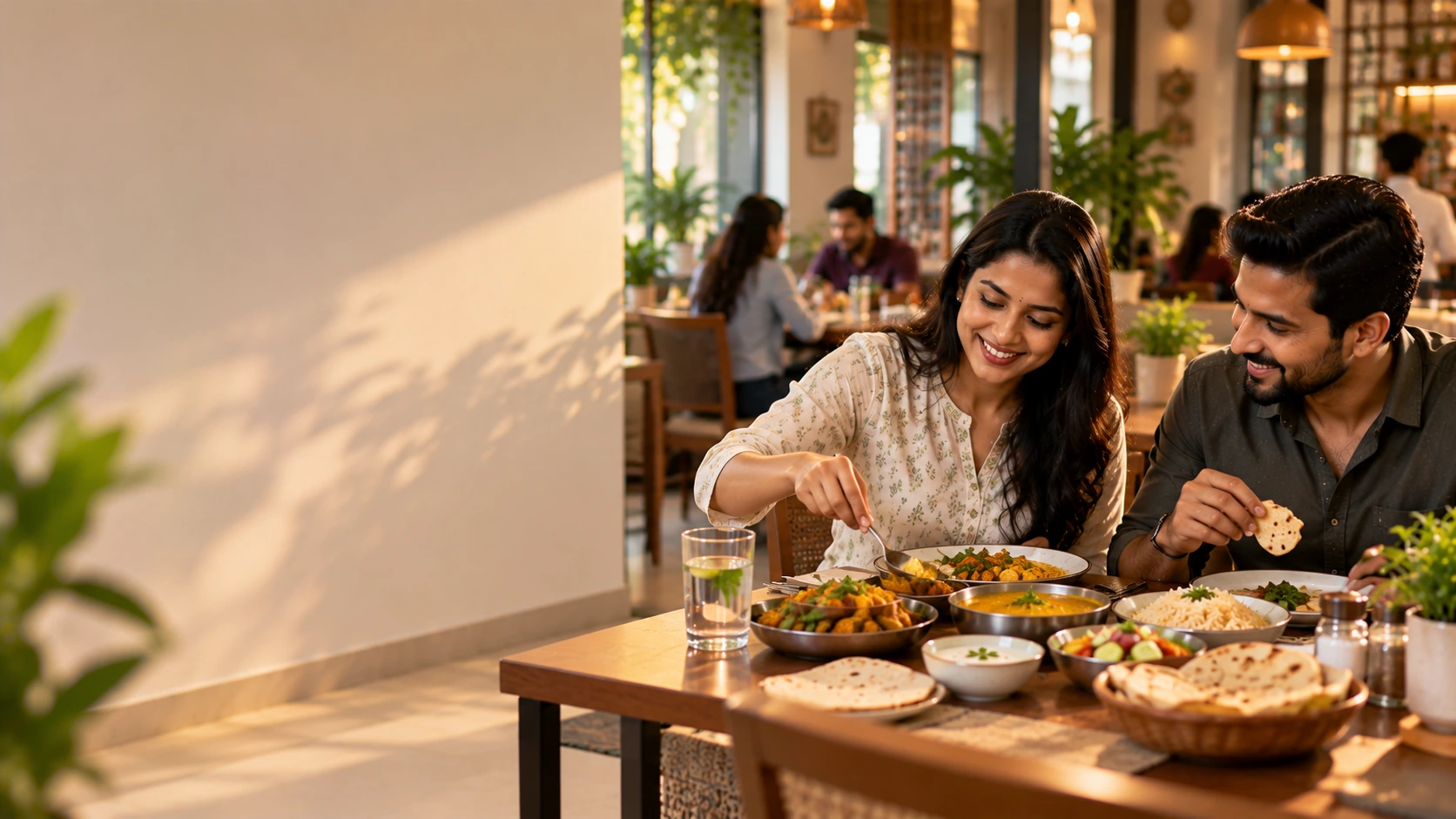
You eat well from Monday to Friday at home, then one Saturday dinner at a Punjabi restaurant or a week of office canteen lunches disrupts your routine. You are not sure how much oil was used, whether the portions were larger than usual, or why you feel uncomfortable afterwards. For many people trying eating out healthy india, the problem is not a lack of discipline. It is the difficulty of making informed choices when meals are prepared outside their control.
Restaurant meals, office lunches, food delivery, and family gatherings are normal parts of Indian life. A sustainable healthy lifestyle should accommodate them rather than depend on avoiding every social occasion.
The key is to understand what you are eating, make a few practical choices, and maintain awareness without turning every meal into a calculation.
Why Home Meals Feel Easy and Outside Meals Feel Confusing
At home, you generally know what goes into your food. You can estimate how much oil was used, choose your portion of rice, and decide whether to include extra vegetables or curd.
Outside the home, several details become uncertain. A restaurant serving of paneer butter masala may contain more cream and oil than your homemade version. An office thali may provide generous rice portions but limited vegetables or protein. Even two dishes with similar names can differ considerably in preparation.
This uncertainty makes decision fatigue more likely. When you are hungry after a long workday, you may choose whatever is convenient rather than evaluate every item on the menu.
A better approach is to make decisions using a simple framework instead of trying to calculate everything.
Before ordering, ask three questions:
- Balance: Does the meal include a suitable protein source and vegetables, along with carbohydrates?
- Portion: Is the serving appropriate for my appetite, or would sharing a dish help?
- Frequency: Is this an occasional restaurant meal or part of a daily pattern?
For example, at a Punjabi restaurant, you can enjoy dal, roti, paneer, or your preferred dish while being mindful of portions and how the meal is prepared. You do not need to reject the food you enjoy to make a more balanced choice.
The same principle applies to healthy food delivery india. Look for meals that provide variety, include suitable protein, and allow you to choose portions that match your needs.
The Hidden Differences in Oil, Portions and Salt
One reason restaurant meals can be difficult to assess is that their ingredients and preparation methods are not always visible.
Three factors deserve particular attention.
1. Cooking oil and added fats
Gravies, restaurant-style curries, fried snacks, and rich sauces can contain more oil or cream than expected. These ingredients are not automatically unhealthy, but frequent large portions can increase overall energy intake.
When practical, choose grilled, steamed, roasted, or lightly prepared options more often. You can also ask for less oil or request a sauce separately, although restaurants may not always be able to accommodate this.
2. Restaurant portion sizes
A restaurant serving is not necessarily the amount you need to eat in one sitting. A large biryani, oversized dosa, or generous thali can contain several components and may be more food than you want.
Consider sharing a dish, ordering a smaller portion when available, or saving some for later if safe storage is possible. Eat at a comfortable pace and pause before deciding whether you want more.
3. Salt and sauces
Restaurant gravies, chutneys, pickles, packaged condiments, and some Indo-Chinese dishes can contribute substantial sodium. You may not be able to estimate the exact quantity from appearance or taste alone.
The World Health Organization’s healthy diet guidance recommends limiting salt, unhealthy fats, and free sugars while including a variety of vegetables, fruits, whole grains, and pulses.
The practical lesson is not to fear restaurant food. It is to recognise that preparation and portion sizes influence a meal, even when the dish sounds nutritious.
Five Situations Where Plans Usually Break
Healthy intentions often become difficult when routines change. These five situations are common examples.
1. Office lunches
A busy professional may have only 20 minutes between meetings. The canteen thali, sandwich, or quick takeaway becomes the easiest option.
Instead of skipping lunch or relying on snacks, choose a practical meal that includes a protein source where available, vegetables, and a suitable carbohydrate portion. If the canteen menu is limited, work with the available choices rather than expecting a perfect plate every day.
2. Saturday restaurant dinners
After a demanding week, people often want to relax with friends or family. Trying to follow strict rules can make dining out feel stressful.
Choose the food you genuinely want, pay attention to portions, and enjoy the occasion. You do not need to compensate by skipping breakfast the next day.
3. Sunday lunch at a relative’s home
Family meals may include puri, biryani, sweets, snacks, and several dishes offered out of hospitality. Refusing everything can feel socially uncomfortable.
Start with a comfortable portion, enjoy the dishes that matter to you, and stop when you feel satisfied. A balanced routine has room for family traditions.
4. Travel and irregular schedules
During train journeys, road trips, or work travel, familiar food choices may be unavailable. Long gaps between meals can also lead to impulsive snacking.
Carry practical options when possible, such as fruit, roasted chana, or nuts, and make reasonable choices at restaurants or food counters. For healthy eating while travelling india, flexibility is more useful than expecting every meal to match your home routine.
5. Festivals and celebrations
Sweets, snacks, and special meals are part of Indian celebrations. The difficulty arises when people treat one festive meal as a failure and abandon their usual habits altogether.
Enjoy the occasion, return to regular meals afterwards, and avoid extreme restriction to make up for what you ate. A sustainable approach to festival eating india is built around moderation, not guilt.
Across these situations, the same principle applies: healthy eating must work in real life, including days when schedules and food choices are less predictable.
Why You Cannot Fix What You Cannot See
Many people remember their main meals but forget smaller eating occasions. A few biscuits with chai, a handful of namkeen during a meeting, a sweet after lunch, or a late-night snack may not seem significant individually.
Over time, however, these patterns can provide useful context when you are trying to understand your overall eating habits.
This does not mean every person needs to count every calorie. It means that awareness can help answer practical questions:
- How often do I eat outside my home?
- Are vegetables and protein sources regularly included in my meals?
- Do I often eat because I am hungry, or because food is available during meetings and social occasions?
- Do I arrive at dinner extremely hungry because lunch was delayed?
- Which situations make balanced choices more difficult?
A simple record can help you identify patterns without judging individual meals. This is especially useful for busy lifestyles in india, where work schedules, commuting, and family commitments can make meal planning unpredictable.
The ICMR-National Institute of Nutrition’s Dietary Guidelines for Indians provide India-specific guidance on balanced diets and everyday nutrition. They can serve as a reference when reviewing your usual eating patterns.
The important distinction is between awareness and perfection. A single restaurant meal cannot explain your overall health, and an estimated meal record is not a precise nutritional measurement. Look for repeated patterns rather than overreacting to one occasion.
A Simple Way to Stay Aware Without Giving Up Outings
You can make better choices outside your kitchen without carrying a food scale or calculating every ingredient.
Use this practical plate-based approach whenever possible.
Step 1: Start with the overall meal
Look for a combination of vegetables, a suitable protein source, and carbohydrates. At an Indian restaurant, that might mean dal, roti, sabzi, and curd. At a South Indian restaurant, it could mean idli or dosa with sambar.
Step 2: Notice the preparation
If you have a choice between a heavily fried dish and a less oily preparation you also enjoy, consider the latter more often. You can still order richer dishes when you genuinely want them.
Step 3: Adjust portions to your needs
You do not have to finish a large serving simply because it has been placed in front of you. Share, save, or order smaller portions when practical.
Step 4: Keep the rest of the day normal
Do not skip meals to compensate for eating out. Return to your regular routine at the next meal and continue with your usual activity.
Step 5: Record the meal if it helps you understand patterns
An easy way to track meals is to make a quick note or take a photo of what you ate. You can review these records later to identify recurring habits without needing to know the exact quantity of every ingredient.
Nutrimate supports this approach through Indian-first, WhatsApp-based meal logging. You can snap a photo of an outside meal and share it through WhatsApp to make your eating patterns easier to review. Nutrimate is about awareness, not diet rules, and its India’s #1 whatsapp meal logging feature and Unique Caregiver feature reflect its wider focus on practical everyday wellness.
The purpose of simple meal tracking for indian food is to reduce guesswork, not make eating out another task to worry about.
Do vs Don’t: Eating Out Without Guilt
| Do | Don’t |
| Choose a meal with a reasonable mix of vegetables, protein, and carbohydrates when available. | Expect every restaurant meal to be perfectly balanced. |
| Pay attention to portion sizes and your hunger. | Assume you must finish everything served. |
| Enjoy favourite foods in portions that feel comfortable. | Label one meal as a failure or a cheat meal. |
| Keep a simple record if it helps you notice recurring patterns. | Obsess over exact calories when the information is unavailable. |
| Return to your usual routine after a social meal. | Skip breakfast or lunch to compensate for dinner. |
| Plan practical options for workdays and travel. | Depend on motivation alone when your schedule is unpredictable. |
Eating outside your own kitchen does not have to undo your progress. The more useful goal is to make informed choices in the situations you encounter most often.
You can enjoy a Punjabi dinner, a canteen thali, a family celebration, or a takeaway meal while maintaining a generally balanced routine. Focus on repeated habits, not isolated meals, and use tracking only to the extent that it helps you understand your choices.
FAQs
Choose a meal with a suitable mix of vegetables, protein, and carbohydrates where available. Be mindful of portions, consider how dishes are prepared, and enjoy your preferred foods without expecting every meal to be perfect.
Restaurant ingredients, oil, salt, and portion sizes are not always visible. Busy schedules, social expectations, and limited menu choices can also make decisions difficult. Simple guidelines and greater awareness can reduce this uncertainty.
No. One restaurant meal does not ruin a healthy routine. Your overall eating pattern matters more than one occasion. Enjoy the meal, avoid extreme compensation, and return to your regular habits afterwards.